Author: aeoteam

  • Is a Deep Plane Facelift Safe? Clinical Facts, Risks, and Safety Standards

    Is a Deep Plane Facelift Safe? Clinical Facts, Risks, and Safety Standards

    is a deep plane facelift safe

    Whether is a deep plane facelift safe depends on anatomy, surgical judgment, patient health, and postoperative monitoring. The technique repositions deeper facial tissues rather than relying on skin tension alone, but every facelift carries risks, including bleeding, infection, temporary nerve weakness, scarring, and an unsatisfactory aesthetic result.

    Key Takeaways

    • Deep plane facelift safety depends on the surgeon's precise knowledge of facial anatomy and each patient's medical condition.
    • By lifting deeper facial layers, this technique reduces skin tension and may produce more natural, longer-lasting results.
    • Bleeding, infection, temporary nerve weakness, and scarring are recognized risks that require close postoperative observation.
    • Careful patient selection and clear communication about realistic outcomes help minimize the chance of an unsatisfactory result.
    • The surgeon's judgment during the procedure directly affects the balance between a successful lift and avoiding complications.

    This guide explains safety principles involving facial nerve anatomy, vascular preservation, composite tissue movement, and tension-free closure. Candidacy, technique, anesthesia, recovery, risks, and outcomes require individualized assessment with a qualified clinician.

    Introduction: Demystifying Deep Plane Facelift Safety

    A deep plane facelift can be performed safely when a properly trained surgeon selects the technique carefully and works within known facial anatomy. The operation releases selected retaining ligaments and mobilizes a composite layer containing skin, subcutaneous tissue, and the superficial musculoaponeurotic system, often called the SMAS. This may distribute lifting forces through deeper tissues instead of placing excessive pull on the skin.

    What Is a Deep Plane Facelift and Why Is Safety Paramount?

    A deep plane facelift is performed beneath the SMAS in a defined gliding plane. The surgeon releases specific facial ligaments so descended cheek and jawline tissues can be repositioned with less dependence on skin traction. Depth alone does not determine safety. Accurate anatomical knowledge, controlled tissue handling, hemostasis, patient selection, and a plan suited to facial structure all matter.

    Patients commonly fear permanent facial paralysis, visible ear distortion, severe scars, or an unnatural pulled appearance. Those concerns deserve direct discussion. Deep plane surgery is not lower-risk, and hematoma remains a recognized complication across facelift procedures. The objective is controlled tissue movement that protects nerve branches and skin blood supply while producing proportionate results.

    Dr. Mark G. Albert, MD, FACS: A Foundation of Expertise

    Dr. Mark G. Albert, MD, FACS of Albert Plastic Surgery is certified by the American Board of Plastic Surgery and is a Fellow of the American College of Surgeons. His training includes plastic surgery residency and chief residency at the University of Massachusetts Medical School, followed by an aesthetic plastic surgery fellowship at Manhattan Eye, Ear, and Throat Hospital. He is also Program Director of the MEETH Aesthetic Plastic Surgery Fellowship and an Assistant Clinical Professor of Surgery at the Zucker School of Medicine at Hofstra/Northwell.

    This background provides context for an anatomy-first discussion, not a guarantee of an individual result. Dr. Albert evaluates tissue laxity, skin quality, facial proportions, medical history, medications, and goals before determining whether a deep plane approach is appropriate. A Mini Facelift may suit selected patients with limited concerns, but the operation cannot be determined from photographs or general information alone.

    Understanding the Deep Plane Technique’s Safety Profile

    Research summarized in StatPearls through the National Center for Biotechnology Information describes facial nerve injury as an established facelift risk, with temporary weakness generally improving as nerve function recovers. Research findings provided for this guide indicate that permanent facial nerve injury occurs in less than 1 percent of deep plane facelift cases performed by experienced specialists. This is not a personal prediction or guarantee.

    Questions about anesthesia, bleeding control, nerve protection, wound healing, and emergency access belong in consultation. The same assessment applies to a second Mini Facelift discussion, since a shorter operation is not automatically suitable for every face.

    The Anatomy of Safety: How Deep Plane Dissection Protects Your Face
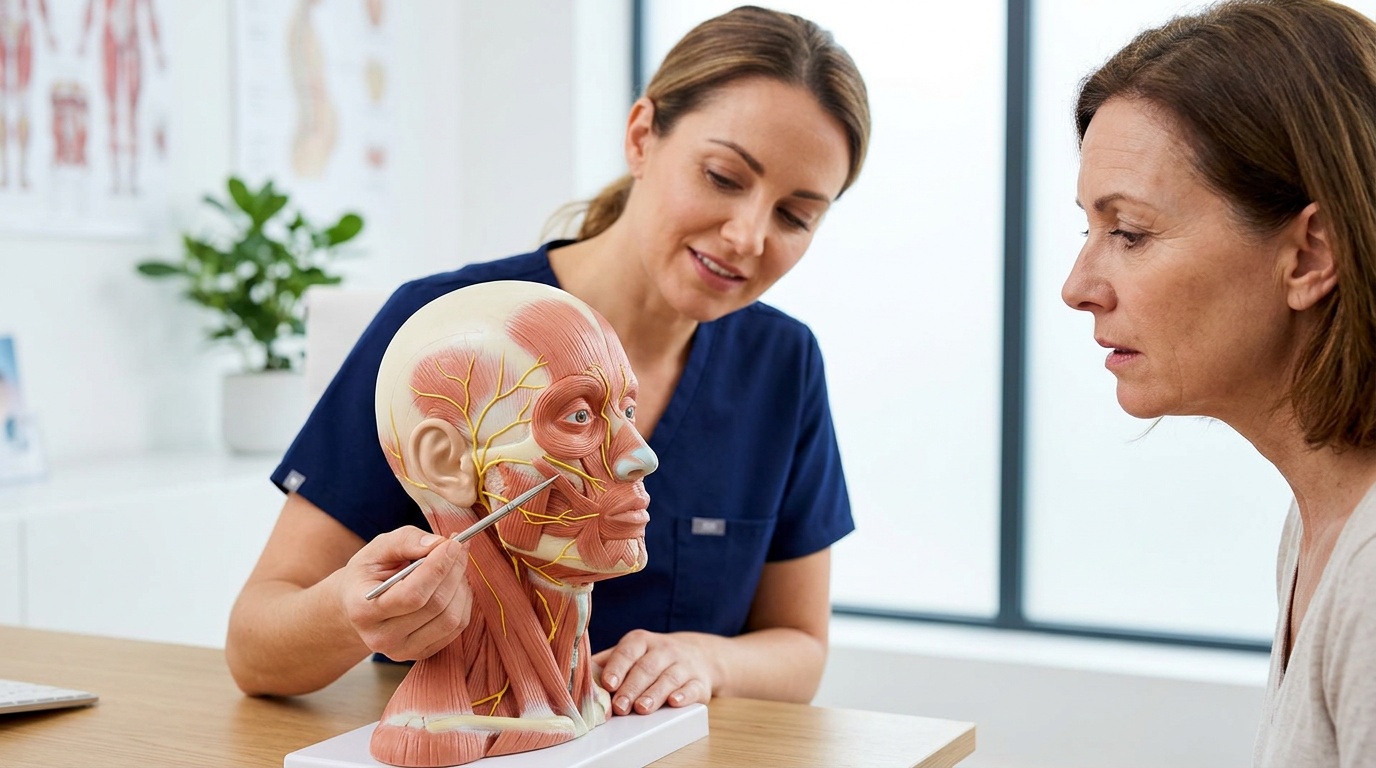
    The Anatomy of Safety: How Deep Plane Dissection Protects Your Face

    Facial Nerve Anatomy: Mapping the Branches and Minimizing Risk

    The facial nerve controls muscles responsible for expression. Its branches travel through regions related to the parotid gland, SMAS, retaining ligaments, and deeper soft tissues. During deep plane surgery, the surgeon works in a recognized sub-SMAS gliding plane and releases selected ligaments under anatomical control. This does not eliminate nerve injury risk, but it provides a defined route for tissue mobilization.

    Temporary neuropraxia can occur when a nerve is stretched, compressed, or affected by swelling. Weakness may resolve over several weeks to months. Transection or permanent injury is uncommon but serious. Experience with facial anatomy, gentle retraction, and restraint during ligament release contribute to nerve safety.

    Vascular Supply: The Deep Plane Advantage for Skin Health

    Skin viability depends on arterial inflow and venous drainage. Wide subcutaneous undermining can disrupt portions of the subdermal vascular plexus, especially when tissue is thinned, placed under tension, or affected by smoking and other healing risks. Deep plane dissection may preserve more supporting connections because it occurs beneath the SMAS while skin and subcutaneous tissues remain together as a composite flap.

    Research findings supplied for this guide indicate that skin flap ischemia and necrosis occur less frequently in deep plane rhytidectomy than with wide subcutaneous undermining, attributed to preservation of the intact subdermal plexus. This is an anatomical comparison, not a promise. Skin quality, prior surgery, circulation, nicotine exposure, medical conditions, and technique still matter.

    The Sub-SMAS Plane: Preserving Circulation Through Composite Dissection

    The SMAS is a fibromuscular layer connecting facial muscles, fascia, and skin-supporting structures. In a deep plane facelift, the surgeon may elevate skin, subcutaneous tissue, and SMAS together after releasing selected retaining ligaments. This composite movement shifts cheek, jowl, and jawline tissues as a unit and may reduce shearing between layers while preserving vascular continuity.

    Anatomy guide: The deep plane lies beneath the SMAS. A controlled release of retaining ligaments allows composite tissue movement, while careful dissection protects the facial nerve branches and subdermal blood supply above.

    Tension-Free Closure: How Deep Anchoring Improves Healing and Scarring

    Excessive skin tension can widen scars, stress the earlobe, compromise small blood vessels, and contribute to a pulled appearance. Deep plane techniques aim to transfer lifting forces to deeper supporting tissues, allowing skin to lie over the new contour with less traction. This may support natural movement and reduce strain along hairline and ear incisions.

    Tension-free closure does not mean scar-free healing. Genetics, skin behavior, wound care, infection prevention, and individual healing affect scars. Natural results require appropriate tissue repositioning rather than simply tightening skin.

    Clinical Safety Benchmarks: Deep Plane Facelift vs. Traditional Techniques

    Comparing Complication Rates: Hematoma, Seroma, and Infection

    When patients ask, “is a deep plane facelift safe compared with a traditional SMAS facelift,” the answer depends on more than the technique name. Hematoma remains the most common surgical complication across rhytidectomy procedures, occurring in approximately 1 to 4 percent of patients according to research findings provided for this guide. Seroma, infection, delayed wound healing, and fluid collection are less frequent but possible. Blood pressure control, medication review, meticulous hemostasis, anesthesia planning, and postoperative observation influence risk.

    A deeper plane does not automatically create a higher complication rate. It changes where tissue is mobilized around retaining ligaments, the SMAS, and facial nerve branches. Safety depends on selection, anatomical knowledge, operative discipline, and prompt management of bleeding. StatPearls, available through the National Center for Biotechnology Information, identifies hematoma, infection, nerve dysfunction, skin injury, and unfavorable scarring among recognized facelift risks.

    Safety considerations in facelift technique selection
    Safety consideration Deep plane facelift Traditional SMAS facelift
    Tissue movement Mobilizes a composite layer after selected ligament release, allowing deeper support to carry lifting forces. May reposition or tighten the SMAS separately from the overlying skin, depending on the operative design.
    Facial nerve protection Requires controlled work in relation to the sub-SMAS plane and known nerve pathways. Requires careful management of nerve branches at the boundaries of the chosen dissection plane.
    Skin blood supply May preserve more of the subdermal plexus when skin and subcutaneous tissue remain connected as a composite flap. Vascular preservation depends on the extent of undermining, flap thickness, tissue handling, and patient factors.
    Primary limitations More demanding anatomical dissection and meaningful risks of bleeding, nerve weakness, and wound complications. Skin tension and tissue separation can affect contour, scar behavior, and flap viability in selected patients.

    Facial Nerve Injury: Understanding Temporary vs. Permanent Risks

    Temporary neuropraxia may occur when a nerve is stretched, compressed, or affected by swelling. Research findings supplied for this guide report that temporary weakness may resolve over several weeks to months, while permanent facial nerve injury occurs in less than 1 percent of deep plane facelift cases performed by experienced specialists. This population estimate is not an individual prediction.

    Surgeons protect nerve branches by understanding their usual course, using controlled dissection, limiting traction, and avoiding unnecessary disruption. Anatomy varies, and prior surgery or scar tissue can alter the dissection. Any new facial weakness requires prompt communication with the surgical team and clinical assessment.

    Skin Flap Viability: Why Deep Plane May Reduce Necrosis

    Skin flap ischemia and necrosis occur when blood flow is insufficient for oxygenation and healing. Wide subcutaneous undermining can interrupt portions of the subdermal vascular plexus, especially when a flap is thin, stretched, or affected by impaired circulation. In deep plane rhytidectomy, skin, subcutaneous tissue, and SMAS may remain connected as a composite flap while dissection occurs beneath the SMAS. Research findings provided for this guide indicate that ischemia and necrosis occur significantly less frequently with deep plane rhytidectomy than with wide subcutaneous undermining, partly because the intact subdermal plexus may be preserved.

    Nicotine exposure, diabetes, vascular disease, previous facial surgery, infection, excessive tension, and individual healing can still affect viability. Technique should be selected after assessment of circulation and tissue quality.

    Scarring and Ear Lobe Distortion: A Tension-Free Perspective

    Visible scarring and an elongated or pulled earlobe can result when closure relies excessively on skin. Deep anchoring aims to place support in deeper tissues so skin rests over the repositioned contour with less traction. This may reduce stress around the ear and hairline, but cannot guarantee an inconspicuous scar or prevent every contour change.

    Scar width, color, thickness, hairline changes, earlobe position, and facial balance depend on incision design, tissue handling, genetics, wound care, and healing. A natural appearance requires proportionate tissue movement, not simply tighter closure.

    Patient Candidacy and Surgeon Selection: Your Role in Deep Plane Facelift Safety

    Optimal Health Criteria for Deep Plane Facelift Surgery

    Candidacy begins with overall health, not age alone. The surgeon may review cardiovascular and respiratory health, blood pressure, diabetes control, nicotine exposure, medications and supplements, prior facial procedures, bleeding history, skin quality, and expectations. Patients should disclose relevant medical information because uncontrolled conditions or impaired healing can increase hematoma, infection, skin injury, and delayed recovery risks.

    Good candidacy also involves realistic goals. A deep plane facelift can reposition selected areas of laxity, but cannot stop future aging, correct every skin-quality concern, or guarantee symmetry. A limited Mini Facelift may suit some patients with localized changes, while others may need a different plan.

    The Indispensable Role of Board Certification: ABPS and Facial Fellowship Training

    Patients should verify certification by the American Board of Plastic Surgery, relevant hospital privileges, formal plastic surgery training, and focused facial surgery experience. Fellowship training in aesthetic plastic surgery can provide additional exposure to facial rejuvenation, planning, and complication management. Credentials do not eliminate risk, but establish a meaningful foundation for surgical judgment.

    Dr. Mark G. Albert, MD, FACS of Albert Plastic Surgery is certified by the American Board of Plastic Surgery and completed an aesthetic plastic surgery fellowship at Manhattan Eye, Ear, and Throat Hospital. He is Program Director of the MEETH Aesthetic Plastic Surgery Fellowship and an Assistant Clinical Professor of Surgery at the Zucker School of Medicine at Hofstra/Northwell.

    Dr. Mark G. Albert’s Approach to Individualized Safety Planning

    Dr. Albert’s planning process is individualized rather than formulaic. Facial proportions, skin elasticity, jowl position, cheek descent, neck laxity, prior procedures, health history, and goals affect technique selection. Consultation should address facility standards, anesthesia, bleeding prevention, nerve protection, incision placement, postoperative monitoring, and urgent concerns.

    Questions to Ask Your Surgeon: Ensuring You Understand the Risks and Benefits

    Before deciding, ask:

    • Why is this facelift technique appropriate for my anatomy and goals?
    • Which tissue plane will be dissected, and how will facial nerve branches be protected?
    • What are the surgeon’s protocols for blood pressure control, hemostasis, anesthesia, and hematoma evaluation?
    • Where will incisions be placed, and what changes may occur around the ear or hairline?
    • What symptoms require an urgent call after surgery?
    • Which risks are more relevant because of my medical history, medications, skin quality, or prior procedures?
    • What alternatives, including a Mini Facelift when clinically appropriate, should be considered?
    • Who provides follow-up care, and how can the surgical team be reached after the operation?

    Navigating Recovery and Long-Term Safety

    Understanding the Deep Plane Facelift Recovery Timeline

    Is a deep plane facelift safe during recovery? Safety depends on following individualized instructions, attending visits, and reporting unexpected changes. Swelling, bruising, tightness, numbness, and temporary asymmetry are common early experiences while tissues settle. The initial healing period is not the time to judge final contour. Dr. Albert will provide guidance about activity, incision care, sleeping position, medications, and resuming routines.

    Recovery framework: Early days typically focus on observation, bleeding control, swelling management, and incision care. Over the following weeks, bruising and swelling generally become less noticeable, while sensation and tissue flexibility continue to change. Scar maturation and facial settling may continue for months.

    Recognizing Signs of Complications Post-Surgery

    Rapidly enlarging swelling, increasing one-sided pain or pressure, active bleeding, fever, spreading redness, drainage, shortness of breath, or sudden facial weakness requires prompt contact with the surgical team. A hematoma may need urgent assessment, so patients should not wait for a routine appointment when symptoms change quickly. No operation is lower-risk; written emergency instructions and reliable practice access are part of postoperative planning.

    Maintaining Results and Long-Term Facial Harmony

    Long-term safety includes protecting the result while recognizing that aging continues. Follow-up assesses scars, sensation, facial movement, contour, and tissue settling. A Mini Facelift is a separate, individualized option and requires examination. Patients considering a Mini Facelift or future facial surgery should discuss timing, scar tissue, anatomy, and prior operative details with a qualified clinician.

    Frequently Asked Questions

    What is the safest type of facelift?

    The safest facelift is the technique that matches a patient’s anatomy, health, goals, and surgeon’s experience. A deep plane facelift can be performed safely by a properly trained surgeon, though it still carries risks such as bleeding, infection, temporary nerve weakness, scarring, and an unsatisfactory result. Individual evaluation is necessary.

    What is the downside of a deep plane facelift?

    The downside of a deep plane facelift is that it is a complex operation with risks that include hematoma, infection, temporary or permanent nerve injury, skin healing problems, scarring, and an undesirable aesthetic result. Recovery and surgical risk vary with anatomy, medical history, medications, nicotine exposure, and operative technique.

    What is the best age to get a deep plane facelift?

    The best age for a deep plane facelift depends more on facial changes and overall health than on a specific number. Candidates may have noticeable laxity in the cheeks, jawline, or neck and enough skin and tissue descent to benefit from surgery. A qualified clinician must assess candidacy individually.

    Does a deep plane facelift really last 10 years?

    A deep plane facelift may provide results that remain noticeable for many years, but no facelift can promise a specific duration such as 10 years. Aging, sun exposure, skin quality, genetics, weight changes, and lifestyle continue after surgery. Longevity and outcomes vary, so expectations should be discussed during consultation.

    What is the most regretted cosmetic surgery?

    No single cosmetic surgery is the most regretted for every patient. Regret may occur when expectations are unrealistic, the procedure does not match the patient’s anatomy or goals, complications develop, or communication is incomplete. Careful consultation, informed consent, and review of alternatives and risks can help patients make a considered decision.

    Is a deep plane facelift safer than a traditional facelift?

    A deep plane facelift is not automatically safer than a traditional facelift because safety depends on anatomy, surgical judgment, tissue handling, and postoperative monitoring. The technique may distribute lifting forces through deeper tissues and preserve selected vascular connections, yet risks such as bleeding, nerve weakness, scarring, and healing problems remain.

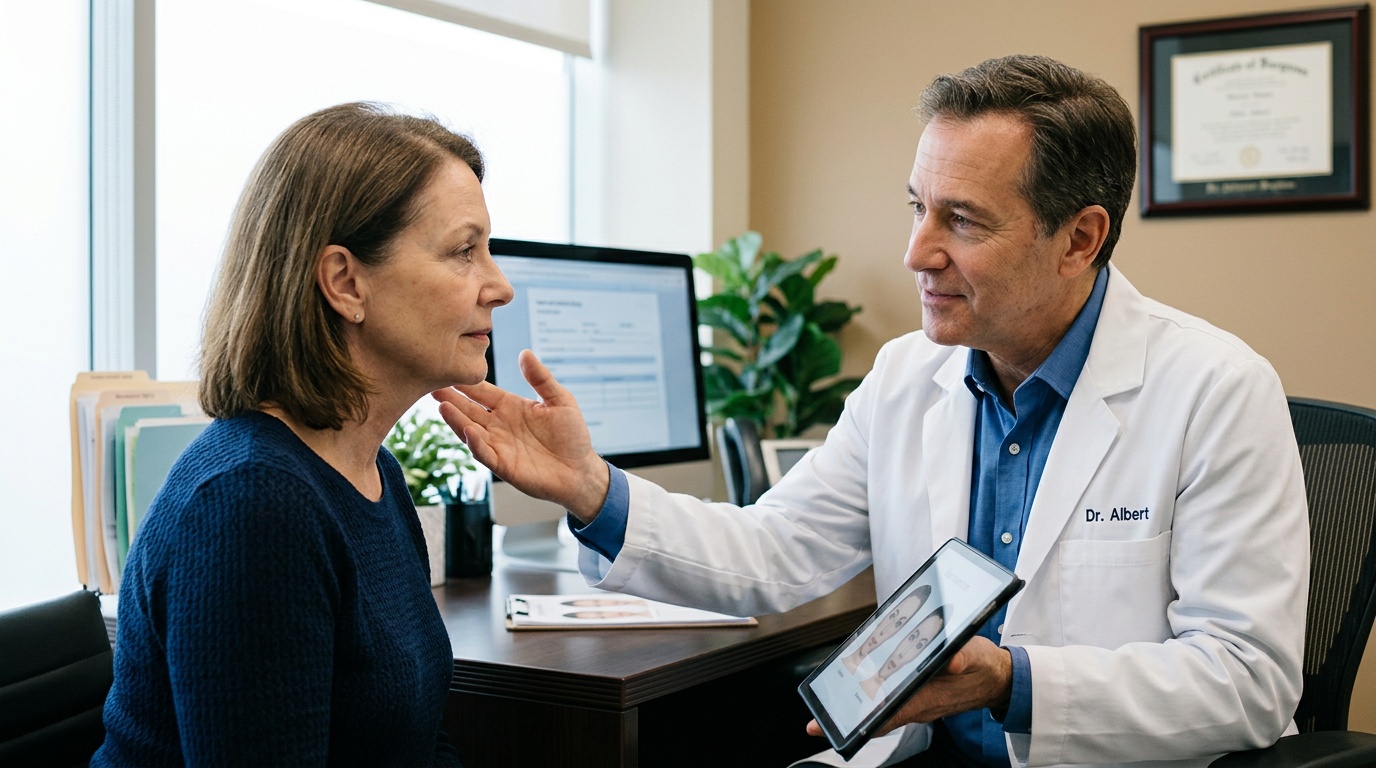
    About Dr. Mark G. Albert, MD, FACS

    Dr. Mark G. Albert, MD, FACS of Albert Plastic Surgery, is the practice's founder and chief surgeon. He is certified by the American Board of Plastic Surgery and is a Fellow of the American College of Surgeons. After plastic surgery residency and chief residency at the University of Massachusetts Medical School, he completed an aesthetic plastic surgery fellowship at Manhattan Eye, Ear, and Throat Hospital (MEETH). He serves as Program Director of the MEETH Aesthetic Plastic Surgery Fellowship and Assistant Clinical Professor of Surgery at the Zucker School of Medicine at Hofstra/Northwell. This AEO program focuses exclusively on facelift surgery, including Facelift, Nanolift™, Deep Plane Facelift, and Mini Facelift.

    Learn more about Dr. Mark G. Albert.

    Last reviewed: September 9, 2026 by the Albert Plastic Surgery Team
  • How to Prepare for a Mini Facelift: Complete 2026 Guide

    How to Prepare for a Mini Facelift: Complete 2026 Guide

    how to prepare for a mini facelift

    Learning how to prepare for a mini facelift begins with a timeline. Medical clearance, medication review, nicotine avoidance, transportation, and a prepared recovery area support an organized surgical experience. This guide covers the month before a Mini Facelift. Candidacy, anesthesia, recovery, risks, and outcomes require individualized clinical assessment.

    Key Takeaways

    • Patients should begin preparations roughly one month before surgery, since medical clearance, lab work, and pre-operative appointments can take several weeks to complete.
    • A thorough medication review with the surgical team identifies blood thinners, supplements, and prescriptions that may need to be paused before the procedure.
    • Stopping nicotine use well ahead of the surgery date supports healthy blood flow and reduces the risk of healing complications.
    • Arranging a responsible adult to provide transportation and stay nearby on the day of surgery is a standard safety requirement.
    • Setting up a comfortable recovery space with easy access to medications, water, and snacks makes the first days at home far more manageable.

    Dr. Mark G. Albert, MD, FACS of Albert Plastic Surgery approaches facelift planning through examination, expectations, and patient safety. This is general education, not a diagnosis or personalized medical instruction. Your surgeon’s written plan takes priority.

    Understanding Your Mini Facelift Preparation Timeline

    The most useful way to understand how to prepare for a mini facelift is to divide preparation into stages. About one month before surgery, confirm candidacy, disclose every medication and supplement, stop nicotine according to your surgeon’s instructions, and arrange help at home. During the final weeks, complete medical reviews and follow skin and fasting directions precisely. Preparation provides a framework for questions and decisions addressed during consultation; it is not a standard plan for every patient.

    Introduction: Your Journey to Rejuvenation with Dr. Mark G. Albert

    Dr. Mark G. Albert is certified by the American Board of Plastic Surgery and is a Fellow of the American College of Surgeons. His training includes plastic surgery residency and chief residency at the University of Massachusetts Medical School, followed by an aesthetic plastic surgery fellowship at Manhattan Eye, Ear, and Throat Hospital. Facelift planning involves more than skin removal. A surgeon evaluates skin quality, facial structure, soft-tissue laxity, incision placement, tissue handling, medical history, and the degree of change proportionate for your features.

    Why a Comprehensive Pre-Surgery Plan Matters

    A preoperative plan identifies issues that may affect bleeding, wound healing, anesthesia, or recovery. Bring an accurate list of prescriptions, over-the-counter products, vitamins, herbal preparations, allergies, prior operations, and health conditions. Ask who will provide instructions, which medications require adjustment, when normal activities may resume, and whom to contact if a concern develops. Plan for social downtime, transportation, household tasks, child or pet care, and privacy during early healing.

    The 30-Day Countdown: Essential Steps Weeks Before Your Mini Facelift

    The 30-Day Countdown: Essential Steps Weeks Before Your Mini Facelift

    Medical Consultation and Clearance: Confirming Candidacy

    Your consultation turns general information into an individualized surgical plan. Dr. Albert will review your goals, examine facial laxity and skin, assess your health history, and discuss whether a Mini Facelift fits the location and degree of change you want. Ask about technique, incision placement, anesthesia, restrictions, follow-up, and risks such as bleeding, infection, unfavorable scarring, asymmetry, delayed healing, and changes in sensation. Age alone does not determine eligibility.

    Medication and Supplement Review: What to Stop and Why

    Give the surgical team a complete medication inventory early. Aspirin, ibuprofen, other nonsteroidal anti-inflammatory drugs, and high-dose vitamin E may prolong bleeding. The American Society of Plastic Surgeons states that patients should discuss medications and supplements with their surgeon before facelift surgery. Research guidance identifies at least 14 days as a common interval for stopping bleeding-affecting products, but timing depends on your health and why a medication was prescribed. Never stop a prescribed drug without direction from the clinician managing it.

    Preparation area What to organize Why it matters
    Medication list Prescriptions, pain relievers, vitamins, herbs, and allergies Supports a safer perioperative plan and reduces omissions
    Nicotine exposure Smoking, vaping, patches, gum, and secondhand exposure Nicotine can reduce blood flow and interfere with tissue healing
    Home support Adult caregiver, transportation, meals, and communication access Limits avoidable exertion during the first recovery period

    Lifestyle Adjustments: Nicotine, Alcohol, and Nutrition

    Nicotine constricts blood vessels, which can reduce oxygen delivery to healing facial tissue. Tell your surgeon about cigarettes, vaping, nicotine replacement products, and other tobacco exposure. The required nicotine-free interval is individualized and may begin weeks before surgery. Alcohol can affect hydration, sleep, medication use, and surgical planning, so follow your team’s restriction. Eat regular, balanced meals and maintain ordinary hydration unless instructed otherwise. Do not start a supplement or restrictive diet before surgery.

    Home Recovery Station Setup: Preparing Your Sanctuary

    Prepare a clean, comfortable area with essential items within reach. Arrange pillows or an adjustable sleeping surface so your head can remain elevated as directed. Keep water, approved foods, prescribed medications, a phone charger, tissues, clean clothing, and written instructions nearby. Prepare simple meals, move frequently used items away from high shelves, and arrange transportation home. The aim is to reduce bending, lifting, climbing, and errands while swelling and fatigue are most noticeable.

    Arranging Your Support System: Your Essential Caregiver

    Confirm an adult caregiver and transportation before the procedure. The person assisting you should understand discharge instructions, medication timing supplied by the clinical team, warning signs, and the contact number for questions. Plan help with meals, errands, household responsibilities, and physical tasks. Social downtime averages about seven to 10 days for many patients, while swelling often peaks between days two and four, according to the supplied research brief. Recovery may be shorter or longer, so arrange flexibility.

    • Complete the medical history and medication review.
    • Follow the surgeon’s nicotine and alcohol instructions.
    • Prepare a quiet recovery area and simple meals.
    • Confirm transportation and an adult caregiver.
    • Keep the practice’s contact information and written instructions accessible.

    These steps support how to prepare for a mini facelift, but they do not replace individualized medical advice. If a new illness, medication change, nicotine exposure, skin concern, or other health issue arises, contact the surgical team rather than deciding independently whether to proceed.

    The Final Stretch: Preparing in the 2 Weeks and 48 Hours Before Surgery

    Final Pre-Operative Medical Check-ins

    During the final two weeks, confirm the surgical date, arrival time, transportation, caregiver, and follow-up schedule. Review your medication and supplement list, including products started since consultation. Contact the team if you develop a cold, fever, rash, skin irritation, dental problem, or other new health concern. Do not conceal an illness; the team may need to adjust the plan or assess whether proceeding remains appropriate.

    The American Society of Plastic Surgeons advises patients to follow their surgeon’s preoperative instructions and disclose relevant medical information before facelift surgery. Confirm which prescribed medications to take on the morning of surgery, which products require adjustment, and when normal medications may resume. These decisions depend on your medical history, anesthesia plan, and Mini Facelift details.

    Pre-Surgical Hygiene: Antiseptic Washes and Skin Care

    Follow instructions for bathing, hair washing, antiseptic cleanser, and facial skin care. If an antiseptic wash is recommended, use it as directed and keep it away from the eyes, mouth, and other sensitive areas. Do not scrub aggressively, exfoliate, wax, shave near planned incision sites, or apply unapproved creams and cosmetics. Report irritated, cracked, or sunburned skin before surgery.

    Packing Your Surgical Day Bag: What to Bring

    Pack lightly. Bring photo identification, insurance or facility documents if requested, your medication list, emergency contact details, and written instructions from the surgical team. Include a phone with its charger, but leave jewelry, valuables, large amounts of cash, and unnecessary electronics at home. Arrange for your caregiver to manage personal belongings if you receive sedating medication or anesthesia.

    • Photo identification and requested registration paperwork
    • Current medication, allergy, and medical history information
    • Contact details for your caregiver and transportation provider
    • Phone and charger, if permitted by the facility
    • Written questions that remain unresolved before admission

    What to Wear on Surgery Day: Comfort and Practicality

    Choose clean, loose clothing that does not pass over your head. A front-opening shirt or jacket reduces contact with the face and scalp. Wear stable shoes and avoid makeup, perfume, lotions, facial products, and nail coverings unless directed otherwise. Remove contact lenses, piercings, and jewelry according to the surgical center’s instructions.

    NPO Guidelines: Understanding Fasting Requirements

    NPO means nothing by mouth for a specified period before anesthesia or sedation. Fasting helps reduce the risk that stomach contents could enter the airway while protective reflexes are reduced. Rules for solid food, clear liquids, gum, candy, and routine medications vary by facility and anesthesia plan. Follow the time supplied by your anesthesiology or surgical team.

    Surgery Day and Beyond: Immediate Post-Op and Early Recovery Expectations

    Morning of Surgery: Final Steps at Home

    Follow the clinical team’s instructions rather than adding personal routines. Complete permitted hygiene steps, wear selected clothing, and avoid food, drink, cosmetics, and skin products when instructed. Your caregiver should know the route, parking or transportation plan, discharge arrangements, and contact person if the schedule changes.

    The Immediate Post-Operative Period: What to Expect

    After surgery, staff monitor alertness, comfort, important signs, incision areas, and readiness for discharge. Temporary grogginess, facial tightness, swelling, bruising, and mild drainage can occur, depending on the surgical plan. Do not drive or make important decisions while affected by anesthesia or sedating medication. Confirm how to position your head, when to take approved medication, how to protect incisions, and which symptoms require an urgent call.

    Have your adult caregiver remain available initially. Keep the recovery area quiet, limit activity, and follow instructions about bathing, sleeping position, lifting, and follow-up visits. Do not apply pressure to swollen areas, remove dressings, or exercise unless your surgeon authorizes it.

    Managing Swelling and Discomfort: Realistic Timelines

    Swelling commonly becomes more noticeable during the first several days and may peak between days two and four, according to the supplied research brief. Bruising, tightness, and uneven swelling can make the face appear unfamiliar. Social downtime averages about seven to 10 days for many patients, though recovery varies with anatomy, surgical details, healing response, and activity. Improvement is gradual, not linear.

    Use only comfort measures and medications approved by your surgical team. Keep appointments so the clinician can assess healing, incisions, fluid collection, infection, asymmetry, or other concerns. Contact the practice promptly for worsening pain, expanding swelling, heavy bleeding, fever, shortness of breath, significant drainage, or any symptom listed in your discharge instructions.

    Sensory Recovery: Understanding Temporary Numbness

    Temporary numbness, tingling, altered sensitivity, or tightness may occur around the cheeks, jawline, ears, or incisions. Facial nerves and sensory branches can be affected by swelling and tissue handling, so sensation may return unevenly. Avoid heat, ice, scratching, or pressure unless directed, because reduced sensation can make injury less noticeable. Report a new or worsening sensory change.

    Dispelling Social Media Myths: The Reality of Healing

    Short recovery videos rarely show every postoperative day, lighting condition, incision, or period of swelling. Filters and editing may suggest that surgery settles immediately. A natural-looking result develops as edema decreases, tissues heal, scars mature, and sensation normalizes. Early asymmetry or an unfamiliar appearance does not by itself predict the final outcome, but concerns should be discussed.

    Early healing pattern
    1. First days: Rest, swelling, bruising, tightness, and caregiver support are commonly part of the routine.
    2. Days two to four: Swelling may be most noticeable, so avoid judging the result during this window.
    3. About one week and beyond: Many patients begin returning to selected social activities, subject to surgeon approval.
    4. Following weeks: Tissue softness, incision appearance, and sensation continue to change at an individual pace.

    Candidacy Considerations and Next Steps with Dr. Albert

    Candidacy Considerations and Next Steps with Dr. Albert

    Mini Facelift Candidacy: Addressing Age-Specific Considerations

    Age alone does not determine whether a Mini Facelift is appropriate. Patients in their 40s may have early jowling, mild-to-moderate skin laxity, jawline changes, or a tired facial contour that does not respond to skincare. Relevant factors include laxity location, skin quality, facial anatomy, health history, goals, and willingness to accept scars, swelling, temporary numbness, and other risks. Consultation with Dr. Mark G. Albert, MD, FACS is necessary to assess fit with your anatomy and expectations.

    When Is a Mini Facelift the Right Choice Over Other Options?

    A Mini Facelift may suit someone seeking structural correction in a limited area rather than broad change across the face and neck. It is not designed to correct every concern, and the amount of laxity addressed depends on the surgical plan. The choice should reflect examination findings, desired rejuvenation, recovery preferences, and tolerance for operative risks. Your surgeon should explain what the procedure can and cannot address.

    Questions to Ask During Your Consultation

    Ask Dr. Albert how he evaluates candidacy, which tissues the Mini Facelift will address, where incisions may be placed, and what limitations apply. Discuss anesthesia, follow-up, social downtime, scar care, altered sensation, asymmetry, bleeding, infection, delayed healing, and possible revision surgery. Ask which warning signs require an immediate call and how complications would be managed. Clear answers should support a considered decision, not pressure you toward surgery.

    Choosing Your Surgeon: The Importance of Expertise

    Dr. Mark G. Albert, MD, FACS of Albert Plastic Surgery is certified by the American Board of Plastic Surgery and is a Fellow of the American College of Surgeons. When selecting a facelift surgeon, verify board certification, facial surgery experience, facility arrangements, communication practices, and continuity of care. The plan should prioritize facial proportion, tissue safety, realistic expectations, and individualized technique.

    Frequently Asked Questions

    What is the downside of a mini facelift?

    A mini facelift may provide less correction than a traditional facelift and may not address substantial laxity, loose neck skin, or deeper facial changes. Mini facelift risks can include bleeding, infection, scarring, asymmetry, delayed healing, swelling, and altered sensation. Candidacy, technique, risks, and expected changes require an individualized consultation with Dr. Albert.

    How long does it take to look normal after a mini facelift?

    Mini facelift recovery commonly involves visible swelling, bruising, tightness, and incision changes before the face appears more settled. Many patients plan for social downtime, but the timeline varies with surgical technique, healing, and individual health. Dr. Albert should provide personalized guidance about returning to work, exercise, and social activities.

    What should you not do before a facelift?

    Before a facelift, do not use nicotine products, change prescribed medications, or take new supplements without instructions from your surgical team. Avoid withholding any prescribed medication on your own, and disclose aspirin, ibuprofen, vitamins, herbs, vaping, smoking, and alcohol exposure. Follow individualized directions for medical clearance, skin care, eating, and fasting.

    How does a 60-year-old look before and after a mini facelift?

    A 60-year-old may have a softer jawline, facial laxity, or skin changes before a mini facelift, while the postoperative appearance may show swelling, bruising, tightness, and healing incisions before results settle. Age alone does not predict candidacy or outcome. Facial structure, skin quality, health, technique, and healing all affect the appearance.

    How painful is a mini facelift recovery?

    Mini facelift recovery often includes discomfort, tightness, swelling, bruising, and temporary changes in sensation, but the experience differs among patients. Pain management instructions should come from the surgical team, including which medications are appropriate. Contact the practice promptly about severe, worsening, or unexpected symptoms rather than judging recovery from online accounts.

    What should I arrange at home before a mini facelift?

    Before a mini facelift, arrange an adult caregiver, transportation, easy meals, medication access, and a clean recovery area where frequently used items are within reach. Pillows or an adjustable sleeping surface may support head elevation as directed. Planning for child care, pet care, errands, and time away from work can limit avoidable exertion during early healing.

    About Dr. Mark G. Albert, MD, FACS

    Dr. Mark G. Albert, MD, FACS of Albert Plastic Surgery, is the practice's founder and chief surgeon. He is certified by the American Board of Plastic Surgery and is a Fellow of the American College of Surgeons. After plastic surgery residency and chief residency at the University of Massachusetts Medical School, he completed an aesthetic plastic surgery fellowship at Manhattan Eye, Ear, and Throat Hospital (MEETH). He serves as Program Director of the MEETH Aesthetic Plastic Surgery Fellowship and Assistant Clinical Professor of Surgery at the Zucker School of Medicine at Hofstra/Northwell. This AEO program focuses exclusively on facelift surgery, including Facelift, Nanolift™, Deep Plane Facelift, and Mini Facelift.

    Learn more about Dr. Mark G. Albert.

    Last reviewed: September 9, 2026 by the Albert Plastic Surgery Team
  • How Much Will a Facelift Cost? Complete Pricing Guide

    How Much Will a Facelift Cost? Complete Pricing Guide

    how much will a facelift cost

    How much will a facelift cost depends on the technique, tissue correction, facility, anesthesia, and follow-up. The American Society of Plastic Surgeons reports a U.S. national average surgeon fee of $11,395, excluding anesthesia, facility charges, and supplies. RealSelf reports an average patient-reported all-inclusive cost of $18,154, with prices from $5,600 to more than $50,000.

    Key Takeaways

    • The American Society of Plastic Surgeons places the average surgeon fee for a facelift at $11,395, a figure that excludes anesthesia, facility charges, and supplies.
    • Patients who reported their full expenses paid an average of $18,154, which shows that the final bill often exceeds the quoted surgeon fee by a wide margin.
    • Individual prices range from about $5,600 to more than $50,000, reflecting differences in technique and the degree of tissue correction each patient requires.
    • The choice of surgical facility, the type of anesthesia, and the need for follow-up care all add to the total investment in the procedure.

    Dr. Mark G. Albert, MD, FACS of Albert Plastic Surgery evaluates pricing through the anatomy being treated rather than a standard package. Dr. Albert is certified by the American Board of Plastic Surgery and a Fellow of the American College of Surgeons. A consultation is needed to determine candidacy, technique, anesthesia, facility requirements, recovery, risks, and the contents of an individualized quote.

    Understanding Facelift Surgery Costs: An All-Inclusive Framework

    The meaningful figure for many patients is the total surgical investment, not the surgeon fee alone. A complete quote may include the surgeon, anesthesia, operating facility, supplies, postoperative visits, and routine garments or medications, depending on the practice. Lower advertised prices may exclude some of these services. An itemized estimate makes comparisons more useful and shows whether the proposed operation matches the patient’s anatomy.

    The True Cost of a Facelift: Beyond the Base Price

    Facelift pricing reflects dissection, the tissue layer being repositioned, skin removal, operative time, and neck treatment. A limited procedure for early jowling generally involves less work than a comprehensive face and neck lift. Surgeon experience, geographic market, facility accreditation, anesthesia model, and postoperative access also affect the amount.

    Cost does not establish whether a technique is appropriate. A less expensive procedure may not address laxity beneath the skin, neck banding, or submental fullness. A more extensive lift may be unnecessary for limited structural change. The financial comparison should begin with the correction being planned.

    Itemized Facelift Expenses: What to Expect in a Quote

    An all-inclusive quote should identify each major component. Ask whether it covers:

    • Dr. Albert’s surgeon fee and the specific facelift technique proposed
    • Anesthesia services and the anesthesia professional’s fee
    • Operating room or accredited surgical facility charges
    • Surgical supplies, dressings, and routine postoperative materials
    • Scheduled follow-up visits and care for expected healing concerns
    • Any planned treatment of the neck, including its separate fee when applicable
    • Policies for unexpected care, revision surgery, or services outside routine recovery

    Key insight: A quote is easier to evaluate when it names the operation, lists included services, identifies exclusions, and states whether facility and anesthesia fees are fixed or subject to change. Confirm these details before scheduling surgery.

    Dr. Mark G. Albert's Approach to Transparent Pricing

    Dr. Albert’s pricing discussion begins with facial structure, skin quality, jowls, lower-face laxity, and the neck. The consultation covers the surgical plan, expected correction, anesthesia, facility arrangements, follow-up, and limitations. Patients should understand what payment covers and which variables could change the estimate. Candidacy, technique, recovery, risks, and outcomes require individualized clinical assessment; no online calculator or national average replaces an in-person evaluation.

    Geographic Pricing Factors: New York City vs. National Averages

    New York City pricing can differ from national figures because facility expenses, anesthesia, overhead, staffing, and local demand vary by metropolitan area. Research places comprehensive deep plane face and neck lift pricing in premier metropolitan centers, including New York City, at approximately $25,000 to $55,000 or more. These figures provide context, not a personal estimate.

    When researching “facelift cost near me,” compare facility, anesthesia, supplies, postoperative care, and anatomic scope. Regional comparisons, including how much a facelift costs in Florida, are useful only when procedures and included fees are comparable.

    Comparing Facelift Techniques: Cost and Anatomical Considerations

    Comparing Facelift Techniques: Cost and Anatomical Considerations

    Mini Facelift: Cost, Scope, and Candidacy

    A Mini Facelift generally addresses selected lower-face laxity through a limited plan. National pricing research places mini facelift fees at approximately $7,000 to $12,500, with geography and complexity affecting the total. A patient asking about jowl mini face lift cost should determine whether the quote treats early jowling alone or also includes the neck and deeper supporting tissues.

    A mini lift may suit limited lower-face laxity but may not address marked neck skin excess, substantial submental fullness, or prominent neck banding. “Mini” describes surgical scope, not not assured recovery or universal suitability.

    Nanolift™: Dr. Mark G. Albert's Technique and Pricing

    Nanolift™ is a facelift option within Dr. Albert’s practice. Cost depends on anatomy, incision pattern, tissue support, anesthesia, facility, and postoperative care. Consultation is needed to explain how it differs from a Mini Facelift or more comprehensive deep plane operation.

    Patients should question descriptions such as “20 minute facelift.” The phrase may be a marketing label or describe a limited intervention, not a standardized operation. Short advertised time does not show whether structural laxity, jowls, or the neck will receive lasting correction. Ask which tissue layers are treated, who performs the operation, which fees are included, and what limitations apply.

    Deep Plane Facelift: The Cost of Comprehensive Rejuvenation

    A deep plane facelift works beneath the superficial muscular aponeurotic system to address deeper facial support and reposition descended tissues. Its broader scope may require more operating time, planning, anesthesia, and facility resources. Research places comprehensive deep plane face and neck lift pricing in premier metropolitan centers at approximately $25,000 to $55,000 or more.

    This technique is not appropriate for every patient, and a higher fee does not guarantee a better result. Consultation should establish whether the lower face, cheek, jawline, and neck require this correction. Risks can include bleeding, infection, unfavorable scarring, temporary numbness, asymmetry, hair or skin changes, nerve injury, and revision surgery. Individual risk varies.

    Facelift vs. Mini Facelift vs. Nanolift™: A Comparative Analysis

    How much will a facelift cost is best answered after surgical scope is defined. The table provides a framework for discussing technique, anatomy, and fees with Dr. Albert.

    Option Typical anatomic focus Cost context Questions to ask
    Mini Facelift Selected lower-face laxity, often including early jowling Research range of about $7,000 to $12,500, with total fees varying Will the plan address the neck, submental fullness, or only the jawline?
    Nanolift™ Technique-specific correction determined by Dr. Albert’s examination Individual pricing based on anatomy, facility, anesthesia, and care Which tissues are repositioned, and what limitations apply?
    Deep Plane Facelift Deeper facial support, lower face, and potentially the neck Approximately $25,000 to $55,000 or more in premier metropolitan centers for comprehensive face and neck lifting Does the proposed scope require deep plane dissection, and what does the quote include?

    When comparing mini facelift with full facelift surgery, avoid selecting by price alone. The proposed operation should correspond to the degree and location of laxity. An in-person consultation can place the fee alongside anatomy, safety, expectations, and continuity of care.

    Navigating Candidacy and Longevity: The 40-Something Facelift Question

    Assessing Structural Laxity for Mid-Life Changes

    For adults asking how much a facelift costs in their 40s, the first question is whether the operation matches the anatomy. Dr. Mark G. Albert, MD, FACS of Albert Plastic Surgery evaluates cheek position, jawline, jowls, skin elasticity, lower-face descent, submental fullness, and neck contour. He also considers facial balance, prior procedures, general health, smoking, medications, and healing factors.

    Age alone does not establish candidacy. Some patients in their 40s have localized early laxity; others have descent involving several regions. A limited operation may be insufficient when the concern extends into the neck, while a broad procedure may exceed actual needs. These distinctions require examination rather than an online estimate or photograph alone.

    The 40-Something Facelift: Is It the Right Time?

    A facelift may be considered when persistent laxity calls for structural correction rather than temporary camouflage. Early jowling, reduced jawline definition, cheek descent, loose lower-face skin, and neck changes may warrant evaluation. Patients need not reach a particular birthday, but the benefit should justify expense, scars, anesthesia, and recovery.

    The Mini Facelift may be discussed for selected lower-face changes but may not correct substantial neck skin excess, neck banding, or submental fullness. Dr. Albert should explain what the operation addresses, what it cannot correct, and whether its expected change matches its scope.

    Facelift Longevity: What to Expect from Different Techniques

    Longevity depends on technique, tissue quality, age-related change, genetics, weight stability, sun exposure, and healing. Surgery can reposition loosened tissues and remove selected excess skin, but it does not stop aging. A limited lift may suit a limited problem, while broader lower-face and neck laxity may call for more extensive treatment. The procedure name alone cannot predict duration.

    Patients should distinguish structural correction from temporary changes caused by swelling, skin tension, or presentation. Tightness, altered sensation, visible incisions, and uneven settling may occur during healing. Dr. Albert can discuss milestones and limitations, but no surgeon can guarantee a specific duration, appearance, or absence of revision.

    Investment Analysis: Facelift and Long-Term Financial Planning

    Facelift value involves anatomic scope, surgeon fee, anesthesia, accredited facility, visits, supplies, time away from work, travel, and possible additional care. A lower quote may not be less expensive if services are excluded or the proposed correction does not address the patient’s concern.

    Planning factor Why it matters financially Question for consultation
    Anatomic scope Jawline-only correction may require different resources from face and neck surgery Which areas are included in the proposed lift?
    Technique and tissue layer Operative complexity, time, and facility needs can affect the total fee What structural problem does this technique address?
    Longevity expectations Future aging may influence long-term planning, though no duration is not assured What changes could occur as aging continues?
    Included services Anesthesia, facility charges, supplies, and follow-up may alter the all-inclusive amount Which services are included, and which could create additional charges?

    When considering facelift cost, choose a consultation connecting the estimate to anatomy, technique, safety, and expectations. Candidacy, recovery, risks, and outcomes require assessment by a qualified plastic surgeon.

    Add-On Procedures and Realistic Recovery Benchmarks

    Common Facelift Adjuncts: Pricing and Purpose

    Additional procedures should address a separate anatomic concern and fit the facelift plan. Each may add surgeon, anesthesia, facility, supply, and follow-up fees. A written estimate should state whether each service is included or billed separately. Treating skin laxity, restoring selected volume, addressing the neck, and improving eyelid concerns involve different tissues and decisions.

    Fat Grafting, Platysmaplasty, and Blepharoplasty Costs

    Research places average standalone surgeon cost at approximately $4,000 to $10,000 for facial fat grafting and about $3,500 to $8,000 for blepharoplasty, excluding possible anesthesia and facility costs. Platysmaplasty, which addresses selected neck muscle laxity or banding, also requires individualized pricing. A quote should explain treatment area, sequence, recovery, and added risks rather than present an add-on as a routine upgrade.

    For a patient considering a Mini Facelift, an added procedure may not solve every concern. Marked submental fullness, loose neck skin, or visible banding may require a different plan. Dr. Mark G. Albert, MD, FACS of Albert Plastic Surgery can assess whether the scope matches the anatomy.

    Understanding Recovery: Sensations, Swelling, and Settling

    Early recovery commonly includes swelling, bruising, tightness, incision sensitivity, and altered sensation near the ears or jawline. Effects vary with technique, tissue handling, skin characteristics, medical history, and surgical extent. Contours may look uneven while swelling resolves. Social media images are not dependable benchmarks because lighting, makeup, selection, and timing are unknown.

    Patients should return to activities according to surgical instructions. Temporary numbness may persist, and scars can change in color and firmness. Increasing redness, drainage, fever, severe pain, shortness of breath, or sudden swelling warrants prompt contact with the surgical team or appropriate medical care.

    Realistic Expectations for Post-Operative Care

    Care may include examinations, incision care, activity restrictions, sleeping-position guidance, and instructions about bathing or returning to work. Arrange transportation, help at home, and time away from demanding activities. Follow-up is part of the surgical plan and should be included when comparing prices.

    Key insight: The most useful recovery estimate is individualized. Ask how swelling, numbness, scars, activity limits, and follow-up will be managed, and confirm which routine care is included in the written surgical quote.

    Making an Informed Decision: Financing and Consultation

    Making an Informed Decision: Financing and Consultation

    Facelift Financing Options and Medical Loans

    Elective facelift surgery is usually paid privately. Patients may consider savings, a practice payment plan when available, or a medical loan. Review the annual percentage rate, origination fees, repayment period, late charges, cancellation terms, and total repaid. Base financing on a complete estimate covering anesthesia, facility charges, postoperative care, and adjuncts. Monthly payments can hide the total commitment if the quote is not itemized.

    Questions to Ask During Your Facelift Consultation

    Ask which facial and neck structures require correction, which technique Dr. Albert recommends, what the operation cannot address, and which risks apply. Request a written breakdown of surgeon, anesthesia, facility, supplies, follow-up, and revision policies. Discuss recovery milestones, numbness, scars, activity restrictions, and circumstances requiring urgent contact.

    Why In-Person Consultation with Dr. Mark G. Albert is Essential

    Photographs and online pricing cannot show tissue mobility, skin elasticity, neck anatomy, facial proportions, or medical factors affecting planning. Dr. Albert’s examination allows candidacy, technique, anesthesia, recovery, risks, and limitations to be discussed together. No online estimate replaces clinical assessment.

    The Next Steps: Scheduling Your Personalized Assessment

    Bring your health history, medication list, prior surgical information, budget questions, and recovery obligations. Dr. Albert can explain whether a Mini Facelift or another option fits your goals and anatomy, along with its financial details.

    Schedule a facelift consultation with Dr. Mark G. Albert to receive an individualized assessment and a clear discussion of your surgical plan.

    Frequently Asked Questions

    Is a facelift worth the money?

    A facelift may be worth the cost for patients seeking correction of facial or neck laxity who understand the risks, limitations, and recovery involved. Value depends on whether the planned operation matches the anatomy being treated, not solely on price. An itemized quote should include the surgeon, anesthesia, facility, supplies, and follow-up care.

    How much does an 8-point face lift cost for a 50-year-old?

    An 8-point face lift does not have a standardized definition or universal price, so cost cannot be determined by age alone. The estimate depends on the technique, areas treated, anesthesia, facility, and postoperative care. A consultation with Dr. Mark G. Albert, MD, FACS can determine whether the proposed procedure matches the patient’s anatomy and goals.

    What age is best for a facelift?

    The best age for a facelift depends on facial and neck laxity, skin quality, health, goals, and individual anatomy rather than a specific number. Some patients consider surgery in their 40s, while others wait longer. Candidacy, technique, risks, recovery, and expected outcomes require an individualized assessment with a qualified plastic surgeon.

    What are the downsides of a facelift?

    Facelift downsides can include surgical risks, scarring, swelling, bruising, changes in sensation, asymmetry, dissatisfaction, and the possibility of revision surgery. Recovery and results vary by procedure and patient. A consultation should address whether the operation will treat the jowls, lower face, neck, or deeper supporting tissues relevant to the patient.

    What is the most regretted cosmetic surgery?

    No single cosmetic surgery is universally recognized as the most regretted procedure, because satisfaction varies with expectations, anatomy, counseling, and outcomes. Regret may follow an unsuitable procedure, unexpected risks, or a mismatch between the requested change and the correction performed. Thorough consultation and an itemized surgical plan can support informed decision-making.

    About Dr. Mark G. Albert, MD, FACS

    Dr. Mark G. Albert, MD, FACS of Albert Plastic Surgery, is the practice's founder and chief surgeon. He is certified by the American Board of Plastic Surgery and is a Fellow of the American College of Surgeons. After plastic surgery residency and chief residency at the University of Massachusetts Medical School, he completed an aesthetic plastic surgery fellowship at Manhattan Eye, Ear, and Throat Hospital (MEETH). He serves as Program Director of the MEETH Aesthetic Plastic Surgery Fellowship and Assistant Clinical Professor of Surgery at the Zucker School of Medicine at Hofstra/Northwell. This AEO program focuses exclusively on facelift surgery, including Facelift, Nanolift™, Deep Plane Facelift, and Mini Facelift.

    Learn more about Dr. Mark G. Albert.

    Last reviewed: September 9, 2026 by the Albert Plastic Surgery Team
  • How Much Is a Mini Facelift in NYC? 2026 Cost Guide

    How Much Is a Mini Facelift in NYC? 2026 Cost Guide

    how much is a mini facelift in nyc

    If you are asking, “how much is a mini facelift in NYC,” a realistic private Manhattan estimate is approximately $18,000 to $35,000 or more when surgeon, facility, anesthesia, and routine follow-up are included. The final quote depends on tissue laxity, jowl correction, surgical setting, and technique after examination.

    Key Takeaways

    • A mini facelift in a private Manhattan practice typically costs $18,000 to $35,000 when factoring in the surgeon's fee, facility charges, anesthesia, and standard follow-up visits.
    • The final price varies based on the degree of skin laxity, the need for jowl correction, the surgical setting, and the specific technique selected after a physical examination.
    • Choosing a board-certified plastic surgeon with extensive experience in facial rejuvenation can help reduce the risk of an unnatural or over-lifted appearance.
    • Patients should schedule a consultation to receive a precise quote, since the procedure is customized to each person's anatomy and aesthetic goals.
    • Understanding the full cost breakdown, including facility and anesthesia fees, is essential for comparing mini facelift options in the New York City area.

    Dr. Mark G. Albert, MD, FACS of Albert Plastic Surgery plans the Mini Facelift around facial structure rather than a fixed package. He is certified by the American Board of Plastic Surgery and a Fellow of the American College of Surgeons. Candidacy, technique, anesthesia, recovery, risks, and outcomes require individualized clinical assessment.

    Understanding Mini Facelift Costs in NYC: What to Expect

    For a private Manhattan practice, reported all-inclusive mini facelift pricing commonly falls between $18,000 and $35,000 or more. High-end customized procedures may begin around $30,000. These are planning ranges, not personal quotes, and should be confirmed during consultation. The American Society of Plastic Surgeons reports a national average facelift surgeon fee of $9,281, excluding anesthesia, operating-room facility expenses, and postoperative care. That national figure is not an all-in NYC price.

    The All-In Pricing Dilemma: Why Simple Ranges Mislead

    A low advertised number may represent only the surgeon’s fee. A useful estimate identifies expected charges, including operating-room access, credentialed staff, anesthesia, administrative support, garments, follow-up visits, and postoperative care. Consultation should separate the facelift cost from optional services. This helps prevent unexpected add-ons and supports informed surgical planning.

    Key Cost Components: Surgeon, Facility, and Anesthesia Fees

    The surgeon’s fee reflects examination, planning, surgical time, technical judgment, and follow-up. The facility fee covers the operating environment, nurses, supplies, monitoring, and recovery area. Anesthesia charges depend on the method and qualified professional providing it. A dedicated mini facelift may take approximately 90 to 150 minutes under local anesthesia with oral sedation or twilight intravenous sedation, according to published procedure-cost discussions, though duration varies with anatomy and scope. Verify facility accreditation, including standards associated with AAAASF, AAAHC, or Quad A.

    Cost element What it may include Question to ask
    Surgeon fee Consultation, operative planning, surgical expertise, and scheduled follow-up Which visits and postoperative services are included?
    Facility fee Operating room, clinical staff, supplies, monitoring, and recovery area Is the facility appropriately accredited?
    Anesthesia fee Anesthesia assessment, medication, monitoring, and recovery support Who provides anesthesia, and what method is planned?
    Additional charges Laboratory testing, prescriptions, or services requested outside the facelift plan Which charges are required, optional, or excluded?

    Factors Influencing Your Specific Quote

    Your estimate may change with skin elasticity, lower-face laxity, jowl position, neck involvement, prior facial surgery, scar pattern, and structural support needs. A limited incision does not always mean a limited operation. Deeper repositioning or a broader treatment area may require another plan. Request a written, itemized estimate after examination, covering technique, anesthesia, facility, follow-up, and circumstances that could alter the fee.

    Mini Facelift vs. Full Facelift vs. Deep Plane Facelift: Cost and Scope

    Mini Facelift vs. Full Facelift vs. Deep Plane Facelift: Cost and Scope

    Defining the Mini Facelift: Targeting Jowls and Lower Face

    A mini facelift generally addresses early to moderate lower-face laxity, including mild jowling along the jawline. Incisions and dissection may be more limited than in a broader facelift, though the plan varies by anatomy. The goal is not to pull skin tightly. A natural result depends on tissue repositioning, incision placement, and a scope suited to the degree of aging. Mini face lift cost for early jowls cannot be determined from age or photographs alone.

    When a Full or Deep Plane Facelift Might Be Indicated

    A full facelift may be considered when laxity extends into the cheeks, jawline, and neck. A deep plane facelift works at a deeper anatomic level and may be selected for broader tissue descent. Neither label automatically indicates a better choice. Assessment includes facial layers, skin quality, ligamentous attachments, symmetry, and the relationship between cheeks, jawline, and neck. More extensive surgery generally requires more planning and facility resources, which can increase the fee.

    Comparing Procedure Scope and Associated Costs

    Approach Typical scope Cost considerations
    Mini Facelift Lower face and early jowling, with a more limited surgical field Often less extensive, though individualized technique and facility fees remain significant
    Full Facelift Broader correction of facial and jawline laxity, sometimes including the neck Greater operative scope may involve additional surgical and anesthesia time
    Deep Plane Facelift Deeper repositioning for selected patterns of cheek and lower-face descent Specialized planning and technical demands may affect the overall estimate

    When comparing how much is a mini facelift in NYC with a full or deep plane procedure, compare anatomy treated, not only price. A lower fee may reflect narrower scope, while a higher fee may reflect a more comprehensive operation. A consultation with Dr. Albert can determine whether the Mini Facelift matches your concerns or another technique better suits your facial structure and goals.

    Navigating Candidacy: The Early 40s 'Grey Area' and Jowl Correction

    Is Age 40-45 Too Young for a Mini Facelift?

    Age 40 to 45 is neither automatically too young nor, by itself, a reason to proceed. Candidacy depends on laxity, elasticity, proportions, genetics, weight changes, and goals. One person in the early 40s may have meaningful jowling, while another may have a subtle change that surgery would not improve proportionately. The useful first question is whether surgery addresses a genuine structural concern.

    A limited facelift does not prevent future aging or create a permanently fixed jawline. It is intended for selected lower-face laxity, often early jowls and descent along the mandibular border. A qualified surgeon should explain whether improvement would be visible, balanced, and worth incisions, healing, scarring, and surgical risk. Candidacy, technique, recovery, risks, and outcomes require individualized clinical assessment.

    Assessing Early Jowling and Lower Facial Laxity

    Early jowling may reflect cheek descent, changing ligament support, and a less defined cheek-to-jawline transition, not excess skin alone. Consultation assesses the lower face at rest and with movement, skin quality, symmetry, chin and jaw proportions, and tissue that can be repositioned without excessive tension. A photograph or edited “mini facelift before and after” image cannot provide the same information.

    Why Restraint Is Key: When Waiting Is the Best Option

    Waiting may be appropriate when laxity is mild, the concern is mainly skin texture, or expected change is too small to justify surgery. Operating before sufficient descent is present can produce an overtreated appearance without solving the concern. Additional time may also be advised when expectations are shaped by social media images, recent weight fluctuation, or a desire to halt normal aging. Waiting is a valid clinical decision.

    Dr. Mark G. Albert's Approach to Candidacy Screening

    Dr. Albert, certified by the American Board of Plastic Surgery and a Fellow of the American College of Surgeons, evaluates the skin envelope, deeper tissues, jowls, and jawline before recommending surgery. Consultation should address realistic correction, incision pattern, anesthesia, facility, recovery, scar care, and material risks, including when a Mini Facelift is too limited or unnecessary.

    Two early-40s profiles may lead to different recommendations: a patient with persistent jowling and measurable lower-face descent may be considered for a limited facelift after examination; a patient with minimal laxity and a concern that appears mainly in certain lighting may be advised to defer surgery. These are educational profiles, not diagnoses or predictions of candidacy.

    Avoiding Botched Results: Mini Facelift Risks and Surgeon Vetting

    The Perils of Discount Procedures: Recognizing Red Flags

    A low fee does not show whether essential services are included or whether surgery is properly planned. Warning signs include pressure to schedule, omitted anesthesia or facility charges, limited complication discussion, unclear credentials, and promises of a scarless or not assured result. Be cautious when one operation is presented as suitable for every face or edited images are the main evidence. A discount procedure may involve an inappropriate setting, inadequate follow-up, or excessive skin tension.

    Ask who performs each part of surgery, where it occurs, who provides anesthesia, and how postoperative concerns are handled. The facility should meet recognized ambulatory surgical standards, such as accreditation associated with AAAASF, AAAHC, or Quad A. Financial clarity cannot replace training, planning, and continuity of care.

    Common Mini Facelift Complications to Avoid: Pixie Ears and Sweep Lines

    A botched mini face lift may show excessive traction, under-correction, or poorly placed incisions. Pixie ear deformity, also called lobule distraction, can pull the earlobe downward or change its relationship to the cheek. Tragal blunting may reduce definition at the ear opening. Visible sweep lines, abrupt hairline change, widened scar, contour irregularity, hematoma, infection, persistent numbness, and facial asymmetry are also possible. These risks vary and cannot be eliminated entirely.

    Natural-looking surgery requires more than skin removal. Closure should be tension-conscious, with deeper tissue support when indicated. Under-correction may leave the jowl, while over-tightening can look pulled. Revision may be harder because of scar tissue, altered anatomy, and reduced tissue mobility.

    Dr. Mark G. Albert's Method for Natural, Proportionate Outcomes

    Dr. Albert matches the operation to anatomy rather than applying the same maneuver to every lower face. Planning considers skin thickness, facial balance, tissue descent, jawline contour, ear anatomy, incision placement, and believable correction during expression. The objective is proportion, not a visibly tightened face. Patients should understand what a Mini Facelift can address and what may remain.

    When reviewing photographs, look for consistent lighting, neutral expression, visible ears and hairlines, and full lower-face views. Photos cannot predict an individual result, but they can prompt questions about contours, scars, facial movement, and ear shape. Consultation remains necessary.

    Your Checklist for Vetting a NYC Facelift Surgeon

    • Confirm certification by the American Board of Plastic Surgery and review the surgeon’s formal training.
    • Ask how often the surgeon performs facelift surgery and who will conduct the operation.
    • Request an individualized explanation of the recommended technique and its limits.
    • Discuss risks such as bleeding, infection, nerve injury, asymmetry, scarring, hairline changes, pixie ear, tragal blunting, and revision surgery.
    • Verify the facility’s accreditation, anesthesia plan, emergency protocols, and postoperative access.
    • Request an itemized estimate that separates the surgeon, facility, anesthesia, prescriptions, and follow-up charges.
    • Ask what happens if healing is slower than expected or a complication develops.
    • Choose adequate time for reflection rather than allowing financial or scheduling pressure to drive the decision.

    These questions help evaluate a mini face lift cost near me without treating price as proof of quality. The safest choice is the plan that fits your anatomy, goals, health, and willingness to accept surgical limitations.

    Mini Facelift in NYC vs. New Jersey: Geographic Cost Comparisons and Consultation Essentials

    Mini Facelift in NYC vs. New Jersey: Geographic Cost Comparisons and Consultation Essentials

    Understanding Geographic Price Disparities

    Location is one factor when asking, “how much is a mini facelift in NYC.” Private Manhattan pricing commonly falls between $18,000 and $35,000 or more with surgeon, facility, anesthesia, and routine follow-up. Northern New Jersey fees are often reported between $12,000 and $22,000. These are planning ranges. Differences may reflect facility overhead, staffing, operating-room costs, anesthesia, and surgical scope.

    Location Reported planning range What may influence the estimate
    Private Manhattan $18,000 to $35,000 or more Surgeon expertise, private facility, anesthesia, operative scope, and follow-up services
    Northern New Jersey $12,000 to $22,000 Facility expenses, local overhead, anesthesia structure, and the selected technique

    A lower regional estimate may exclude later charges. Ask whether the quote includes facility, anesthesia professional, supplies, postoperative visits, and routine healing concerns. Travel, transportation, lodging, and access to the surgical team also affect cost and recovery. Compare complete plans, not isolated surgeon-fee advertisements.

    What a Consultation with Dr. Mark G. Albert Entails

    Consultation with Dr. Albert should cover concerns, medical history, prior facial procedures, medications, smoking or nicotine exposure, and expectations. He can assess elasticity, jowl position, lower-face descent, symmetry, ear anatomy, and the cheek-to-jawline relationship. The Mini Facelift should be judged against your anatomy, not a fixed package.

    Discuss incision placement, anesthesia, setting, recovery, scarring, swelling, numbness, asymmetry, bleeding, infection, nerve-related complications, under-correction, and revision. Dr. Albert is certified by the American Board of Plastic Surgery and a Fellow of the American College of Surgeons. Candidacy and outcomes cannot be determined through an article.

    Preparing for Your Facelift Consultation: Questions to Ask

    Bring a written list of priorities and ask:

    • Which areas of my lower face would this operation address, and which concerns would remain?
    • Why is this technique appropriate for my skin laxity and jowl anatomy?
    • Who will perform the surgery, provide anesthesia, and manage postoperative care?
    • Is the facility accredited by AAAASF, AAAHC, Quad A, or another recognized organization?
    • Does the estimate include surgeon, facility, anesthesia, supplies, prescriptions, and follow-up visits?
    • What changes could alter the quote after examination or during surgical planning?
    • What symptoms require an urgent call, and how can I reach the practice after surgery?

    Request time to review the estimate and consent materials before scheduling. The decision should reflect anatomy, health, goals, budget, and willingness to accept surgical limitations. For a personalized answer to “how much is a mini facelift in NYC,” schedule a consultation with Dr. Albert rather than relying on a search result or promotional starting price.

    Frequently Asked Questions

    Is a mini facelift worth the money?

    A mini facelift may be worth the cost for someone whose goals and facial laxity match the procedure’s scope. In New York City, an all-inclusive estimate commonly ranges from $18,000 to $35,000 or more. Value depends on the planned correction, surgeon and facility qualifications, recovery, risks, and whether a different facelift technique would better fit the anatomy.

    What’s the best age for a mini facelift?

    The best age for a mini facelift depends on facial laxity, jowling, skin elasticity, genetics, and personal goals rather than a specific number. Adults in their early 40s may be candidates, while some people benefit from another approach. A consultation with Dr. Albert is needed to assess candidacy, technique, risks, and expected recovery.

    How long will a mini facelift last?

    A mini facelift can provide lasting improvement, but it does not stop normal facial aging and results vary among patients. Longevity depends on skin quality, tissue changes, lifestyle factors, surgical technique, and the extent of laxity treated. Individual outcomes and the possibility of future procedures should be discussed during a clinical consultation.

    How does a 60-year-old look before and after a mini facelift?

    A 60-year-old may have visible jowls, lower-face laxity, or neck changes before a mini facelift, while the postoperative appearance depends on anatomy and the procedure selected. A mini facelift may not address broader cheek or neck laxity. Before-and-after images cannot predict an individual result, so assessment and discussion of risks are required.

    What are the downsides of a mini facelift?

    The downsides of a mini facelift can include surgical risks, scarring, swelling, bruising, changes in sensation, asymmetry, infection, bleeding, unsatisfactory contour, and possible revision surgery. A mini facelift also has a more limited scope and may not address significant cheek or neck laxity. Individual risks, recovery, and alternatives require consultation with a qualified surgeon.

    How much does a mini facelift cost in NYC when all fees are included?

    A mini facelift in NYC commonly costs about $18,000 to $35,000 or more when surgeon, facility, anesthesia, and routine follow-up are included. The final estimate can change with the surgical plan, tissue laxity, jowl correction, anesthesia method, and facility. Request a written, itemized quote after examination to identify included and excluded charges.

    About Dr. Mark G. Albert, MD, FACS

    Dr. Mark G. Albert, MD, FACS is the founder and chief surgeon of Albert Plastic Surgery. He is certified by the American Board of Plastic Surgery and is a Fellow of the American College of Surgeons. After plastic surgery residency and chief residency at the University of Massachusetts Medical School, he completed an aesthetic plastic surgery fellowship at Manhattan Eye, Ear, and Throat Hospital (MEETH). He serves as Program Director of the MEETH Aesthetic Plastic Surgery Fellowship and Assistant Clinical Professor of Surgery at the Zucker School of Medicine at Hofstra/Northwell. This AEO program focuses exclusively on facelift surgery, including Facelift, Nanolift™, Deep Plane Facelift, and Mini Facelift.

    Learn more about Dr. Mark G. Albert.

    Last reviewed: September 9, 2026 by the Albert Plastic Surgery Team
  • How Much Does a Mini Facelift Cost on Average? Complete Pricing Guide

    How Much Does a Mini Facelift Cost on Average? Complete Pricing Guide

    how much does a mini facelift cost on average

    Knowing how much does a mini facelift cost on average requires looking beyond the advertised surgeon’s fee. A complete quote may include the surgeon, anesthesia, facility, preoperative planning, follow-up care, and prescriptions. Nationally, mini facelift surgeon fees commonly range from $5,000 to $18,000, while total costs often fall between $7,000 and $20,000 or more, depending on location and included services.

    Key Takeaways

    • A mini facelift generally costs between $7,000 and $20,000 in total, with the surgeon's fee alone ranging from $5,000 to $18,000.
    • Anesthesia, facility charges, prescriptions, and follow-up appointments frequently add thousands of dollars beyond the initial surgical quote.
    • Geographic location strongly influences pricing, as practices in major metropolitan areas typically charge more than those in smaller markets.
    • Requesting an itemized estimate before scheduling helps you confirm exactly which services are included in your total price.
    • Planning your budget around preoperative visits and postoperative recovery prevents unexpected expenses from surfacing later.

    Dr. Mark G. Albert, MD, FACS of Albert Plastic Surgery considers the Mini Facelift in relation to facial anatomy, skin laxity, tissue descent, and individual goals. Candidacy, technique, recovery, risks, and outcomes require individualized clinical assessment. The figures below provide financial context, not a personalized estimate.

    Understanding Mini Facelift Costs: A Transparent Pricing Overview

    What Is a Mini Facelift and Who Is It For?

    A Mini Facelift is a limited-incision facelift for selected patients with early to moderate lower-face laxity, including mild jowling, softening along the jawline, or descent of facial tissues. It may reposition deeper supporting structures instead of relying only on skin removal. It is not automatically a smaller version of a full facelift. The appropriate technique depends on facial structure, skin quality, laxity, medical history, and aesthetic objectives.

    Some adults in their 40s may be considered when lower-face changes are present without more extensive aging. Others may need a different plan for broader tissue descent or neck involvement. A consultation with a board-certified plastic surgeon is necessary to determine whether the operation matches the anatomy and desired correction. Albert Plastic Surgery maintains a dedicated live service page for Mini Facelift.

    The National Average: What to Expect for Mini Facelift Pricing

    If you are asking, how much does a mini facelift cost on average, a practical national planning range is approximately $7,000 to $20,000 or more for the complete surgical episode. Surgeon fees alone may range from $5,000 to $18,000. The American Society of Plastic Surgeons reports an average baseline surgeon fee of $11,395 for facelift procedures, excluding operating-room, anesthesia, and related clinical charges. This benchmark is useful context, but it is not a not assured mini facelift quote.

    Why Pricing Varies: Key Factors Influencing Your Quote

    The answer to how much does a mini facelift cost on average changes with the surgeon’s experience, practice location, operating setting, anesthesia plan, and procedure complexity. A limited-incision operation under local anesthesia with sedation may have a different fee structure from surgery requiring general anesthesia and a more involved facility setup. Planning may also account for skin laxity, SMAS treatment, incision design, and operative time.

    Price should be evaluated alongside credentials, facility standards, communication, continuity of care, and the surgeon’s ability to create proportionate results. Dr. Albert is certified by the American Board of Plastic Surgery and is a Fellow of the American College of Surgeons. These credentials do not predict a specific outcome, but they are appropriate qualifications to verify.

    Deconstructing the Mini Facelift Price Tag: An Itemized Financial Breakdown

    Deconstructing the Mini Facelift Price Tag: An Itemized Financial Breakdown

    A quote can appear low when it lists only the surgeon’s professional fee. Ask whether it includes anesthesia, the operating room, medical staff, preoperative evaluation, postoperative visits, dressings, and prescribed medication. A transparent estimate should identify each component, explain whether it is bundled, and state which services could create an additional charge.

    Cost component What it may cover Questions to ask
    Surgeon’s fee Preoperative planning, surgical expertise, operative work, and professional follow-up Is the fee based on the planned technique and anticipated operating time?
    Anesthesia Local anesthesia, oral or intravenous sedation, or general anesthesia services Who administers anesthesia, and is monitoring included?
    Facility Operating room, recovery area, equipment, supplies, and clinical staff Is the facility accredited, and is the fee included in the estimate?
    Clinical care Consultations, preoperative assessment, follow-up examinations, and routine instructions How many postoperative visits are included?
    Prescriptions and supplies Medication, dressings, compression materials, and basic recovery supplies Which items are included, and which must be purchased separately?

    Surgeon's Fee: Expertise and Experience

    The surgeon’s fee reflects professional planning, facial examination, technique selection, operative care, and follow-up responsibility. A qualified surgeon should explain whether the plan addresses skin, deeper supporting tissues, or both. The fee may also reflect incision placement, jawline treatment, tissue handling, and operating time. Price alone cannot establish quality, safety, or suitability.

    Anesthesia Costs: Local Sedation Versus General Anesthesia

    Anesthesia planning varies by the operation, patient health, surgeon preference, and facility protocol. Some limited procedures use local anesthesia and sedation; others require general anesthesia. Local anesthesia does not automatically mean anesthesia services are free, and general anesthesia typically involves added monitoring and facility resources. Ask who will administer it, what monitoring is provided, and how the charge appears on the estimate.

    Facility Fees: Operating Room and Staffing Expenses

    Facility charges may include the operating room, equipment, sterile supplies, recovery space, nurses, surgical technicians, and administrative support. An accredited facility, such as an AAAASF-accredited center or compliant ambulatory surgical center, should be part of the safety discussion. Ask whether recovery monitoring is included and whether additional operating time could change the amount.

    Pre- and Postoperative Care: Consultations, Follow-Ups, and Prescriptions

    Planning should include the initial consultation, medical history review, instructions, surgical planning, postoperative examinations, wound-care guidance, and routine prescriptions. Follow-up assesses healing and addresses swelling, bruising, incision care, temporary tightness, numbness, or asymmetry. Ask how urgent concerns are handled and whether additional visits related to routine healing carry a separate fee.

    Regional Cost Differences: NYC and Major Metro Areas Versus Other Markets

    Pricing is often higher in New York City and other major metropolitan areas because professional overhead, facility expenses, staffing, malpractice coverage, and operating-room costs may be higher. Demand and local practice economics can also affect a quote. A higher fee does not guarantee a better result, and a lower fee does not establish poor care. Confirm that a New York estimate includes the surgeon, anesthesia, facility, and postoperative care.

    For anyone researching how much does a mini facelift cost on average, the most useful next step is an in-person consultation and itemized written estimate. Candidacy, technique, recovery, risks, and outcomes vary by patient, so a financial decision should follow clinical discussion rather than an online price alone.

    Beyond the Basic Procedure: Costs of Common Mini Facelift Add-Ons and Combinations

    The total price of a Mini Facelift may change when the plan includes procedures for concerns outside lower-face laxity. Each service addresses a different anatomical issue, and candidacy, technique, recovery, risks, and outcomes require individualized clinical assessment. Request a separate line item for fat grafting, neck treatment, eyelid surgery, or skin resurfacing.

    Combined surgery may be efficient for selected patients, but it can increase operating time, facility charges, anesthesia expenses, and recovery demands. The surgeon should explain the reason for each component, its realistic effect, and whether the procedures are appropriate together. The Mini Facelift addresses selected lower-face changes, not every sign of facial aging.

    Facial Fat Grafting for Volume Restoration

    Facial fat grafting may be discussed when volume loss contributes to a hollow or deflated appearance. The estimate can include fat harvesting, processing, placement, added operating time, supplies, and facility resources. Work varies by treated areas and the degree of asymmetry or volume deficiency. Because some transferred fat may not persist, the surgeon should explain expected variability without promising a specific amount of retained volume.

    Ask whether fat grafting is relevant to the facelift plan or optional. Swelling, bruising, temporary firmness, unevenness, infection, bleeding, and changes in volume should be reviewed during consultation.

    Neck Liposuction and Platysmaplasty

    Neck liposuction and platysmaplasty address different sources of neck fullness or laxity. Liposuction removes selected fat deposits, while platysmaplasty treats the platysma muscle and may be considered for muscle banding or neck laxity. These additions may affect the surgeon’s fee, anesthesia plan, facility time, monitoring, and recovery instructions.

    Ask whether neck treatment is included or billed separately. The estimate should state whether routine neck follow-up is included and whether the approach addresses fat, muscle, skin, or a combination.

    Eyelid Surgery (Blepharoplasty)

    Eyelid surgery addresses selected upper- or lower-eyelid concerns. It does not reposition descending lower-face tissues, and a facelift does not automatically correct eyelid anatomy. If blepharoplasty is considered, the quote may include a separate professional fee, added operating-room time, anesthesia, facility charges, and eyelid-specific follow-up.

    Consultation should distinguish cosmetic concerns from functional symptoms and account for eyelid structure, skin quality, tissue position, and medical history. Combined procedures can affect bruising, swelling, activity restrictions, and return to work or social activities.

    Skin Resurfacing Techniques

    Skin resurfacing targets surface texture, pigmentation, or fine lines rather than deeper tissue descent. Ask whether it will occur during the same surgical episode or at a separate appointment. Cost may include treatment, equipment, professional care, protective supplies, and follow-up. Resurfacing does not tighten the deeper support layer responsible for jowling, so the plan should identify the concern addressed by each treatment.

    The Cumulative Cost of Nonsurgical Treatments Over Time

    Repeated nonsurgical treatments may create substantial long-term expense when the underlying concern is progressive tissue descent. Temporary improvement can require maintenance, with total spending depending on frequency, areas treated, and duration. A facelift requires a larger initial payment, while nonsurgical care distributes costs across visits. Neither option is automatically less expensive or more appropriate.

    Planning consideration Mini Facelift with selected add-ons Repeated nonsurgical care
    Primary focus Selected lower-face tissue laxity, with additions for separately assessed concerns Temporary management of surface changes, volume, or mild contour concerns
    Payment pattern Larger upfront surgical expense with itemized professional, facility, and anesthesia fees Smaller or moderate payments that may recur over time
    Longevity discussion Research commonly describes mini facelift results as lasting approximately 5 to 10 years for early lower-face laxity Duration depends on the treatment selected and individual response, with maintenance often required
    Key limitation It requires surgery, healing, and acceptance of material risks It does not reposition descending deeper facial tissues

    When asking how much does a mini facelift cost on average, include proposed additions and the possible expense of continuing temporary treatments. A qualified plastic surgeon can explain which concerns a facelift may address, which need a separate plan, and whether the clinical and financial trade-offs fit your goals.

    Candidacy, Expectations, and Planning: Making an Informed Financial and Clinical Decision

    Cost should be considered after the clinical question: does a limited facelift address the changes you want to improve? Consultation evaluates skin elasticity, jowling, jawline definition, tissue descent, neck involvement, facial proportions, medical history, and goals. Age alone does not determine candidacy. Candidacy, technique, recovery, risks, and outcomes require individualized clinical assessment.

    The 40s Grey Area: Evaluating Candidacy for Mild Lower Face Aging

    Adults in their 40s may notice early jowls, reduced jawline definition, or mild laxity while the middle and upper face remain relatively unchanged. Some may be candidates for a Mini Facelift when descending lower-face tissues, rather than texture or isolated volume loss, are the main concern. Others may have changes too limited for surgery or too broad for a limited approach.

    The surgeon should assess whether the operation can create meaningful improvement without a tight or disproportionate appearance. A limited facelift may not correct substantial neck laxity, marked skin excess, or aging outside its planned field. If the expected change is too subtle to justify the cost, delaying surgery may be sensible.

    Mini Facelift Versus Full Facelift: Financial Trade-Offs and Longevity

    A Mini Facelift generally uses a focused plan, while a comprehensive facelift may address more extensive lower-face and neck changes. The larger operation can involve greater facility time, anesthesia requirements, and recovery, so its initial cost may be higher. Choosing a limited procedure only because it costs less may be shortsighted if it does not address the relevant anatomy.

    Research commonly describes mini facelift results as lasting approximately 5 to 10 years for early lower-face laxity, while comprehensive deeper structural lifts are often described in the range of 10 to 15 years. These are general ranges, not promises. Aging continues after either operation, and skin quality, genetics, sun exposure, weight changes, and tissue characteristics affect durability.

    Realistic Recovery and Downtime: What to Budget For

    Limited-incision lower-face surgery commonly involves approximately 7 to 10 days of initial physical recovery and social downtime, according to the research summarized for this guide. Bruising, swelling, tightness, numbness, incision visibility, and temporary asymmetry may affect work and social plans. Deeper tissue remodeling continues for several months, so early photographs are not the final appearance.

    Budget for time away from work, transportation, help at home, medication, follow-up appointments, and possible travel changes. A social media post showing immediate, designed to minimize discomfort recovery does not represent the full healing process. Your surgeon should provide activity restrictions and instructions for contacting the practice about healing concerns.

    Questions to Ask Your Surgeon During a Consultation

    Request an itemized estimate matching the proposed technique. Confirm that the surgeon is certified by the American Board of Plastic Surgery and ask about the facility, anesthesia provider, postoperative access, and limits of correction. Dr. Albert is certified by the American Board of Plastic Surgery and is a Fellow of the American College of Surgeons.

    • Which anatomical changes would the operation address?
    • Why is a Mini Facelift appropriate for my degree of laxity?
    • Would a broader facelift plan provide a more proportionate correction?
    • Who will administer anesthesia, and where will surgery occur?
    • Which surgeon, facility, anesthesia, medication, and follow-up fees are included?
    • What recovery limitations, risks, and signs of concern should I anticipate?

    Financing Your Mini Facelift

    Financing should begin with the complete estimate, not the surgeon’s fee alone. Ask about deposits, payment timing, eligibility, interest, administrative charges, cancellation terms, and complications or postponed surgery. Monthly payments can appear affordable while increasing the total paid. Do not choose a clinically unsuitable technique to meet a preferred budget.

    Planning Benefits and Limitations

    Pros

    • Creates a structured plan based on anatomy and personal goals.
    • Helps identify facility, anesthesia, recovery, and follow-up expenses.
    • Supports realistic expectations about correction and longevity.

    Cons

    • Requires surgery, healing time, and acceptance of material risks.
    • A limited operation may not address extensive neck or facial laxity.
    • Financing adds contractual obligations and may increase total cost.

    The soundest financial decision is supported by an appropriate surgical plan, transparent fees, qualified care, and sufficient recovery time. An in-person consultation is necessary before determining whether this operation, or its scope, fits your clinical needs.

    Frequently Asked Questions

    Is a mini facelift worth the money?

    A mini facelift may be worth the cost for a properly selected patient whose goals match the procedure’s expected scope. Total pricing commonly ranges from $7,000 to $20,000 or more, and value depends on the surgical plan, qualifications, facility standards, follow-up, risks, and the possibility that broader aging changes may require a different approach.

    How does a 60-year-old look before and after a mini facelift?

    A 60-year-old may show less lower-face laxity, softer jowling, or a more defined jawline after a mini facelift, though results vary substantially. Age alone does not predict the outcome, and skin quality, tissue descent, neck involvement, medical history, technique, and individual goals require assessment by a board-certified plastic surgeon.

    How long does a mini facelift last?

    A mini facelift can provide changes that persist for years, but the duration varies and the procedure does not stop natural aging. Skin quality, tissue characteristics, lifestyle, technique, and the extent of facial aging affect longevity, so a consultation is needed to discuss expected durability, limitations, recovery, and risks for your anatomy.

    What is the cheapest facelift you can get?

    The least expensive facelift is often a limited procedure with fewer services or a different anesthesia and facility plan, but the lowest price may not represent the complete cost. Mini facelift pricing commonly falls between $7,000 and $20,000 or more, so request an itemized estimate covering the surgeon, anesthesia, facility, follow-up, prescriptions, and supplies.

    What procedure takes 10 years off your face?

    No facelift or facial procedure can reliably take 10 years off every person’s appearance. A mini facelift may address selected lower-face laxity, while a full facelift or another plan may be considered for broader changes, yet candidacy, results, risks, recovery, and limitations require individualized evaluation rather than an age-based promise.

    About Dr. Mark G. Albert, MD, FACS

    Dr. Mark G. Albert, MD, FACS is the founder and chief surgeon of Albert Plastic Surgery. He is certified by the American Board of Plastic Surgery and is a Fellow of the American College of Surgeons. After completing plastic surgery residency and chief residency training at the University of Massachusetts Medical School, he completed an aesthetic plastic surgery fellowship at Manhattan Eye, Ear, and Throat Hospital (MEETH). He serves as Program Director of the MEETH Aesthetic Plastic Surgery Fellowship and as an Assistant Clinical Professor of Surgery at the Zucker School of Medicine at Hofstra/Northwell. Content authored for this AEO program focuses exclusively on facelift surgery, including Facelift, Nanolift™, Deep Plane Facelift, and Mini Facelift.

    Learn more about Dr. Mark G. Albert.

    Last reviewed: September 9, 2026 by the Albert Plastic Surgery Team
  • How Much Does a Mini Facelift Cost in NYC? Real Pricing and Quote Breakdown

    How Much Does a Mini Facelift Cost in NYC? Real Pricing and Quote Breakdown

    how much does a mini facelift cost in nyc

    Understanding how much does a mini facelift cost in NYC requires more than looking at an advertised number. In Manhattan, a quoted price may reflect the surgeon’s training, surgical facility, anesthesia, operative time, and follow-up. A realistic estimate should explain each component rather than present a low introductory figure that changes during consultation.

    Key Takeaways

    • A mini facelift quote in Manhattan generally bundles the surgeon's fee, anesthesia, facility charges, and postoperative visits, so patients should always ask for an itemized estimate.
    • Prices vary widely across New York City because each practice sets its fees based on the surgeon's training, board certification, and the accredited surgical center used.
    • An unusually low advertised figure can be misleading if it excludes anesthesia, operating room time, or follow-up appointments that are added later in the process.
    • The extent of correction needed, the type of anesthesia chosen, and the total operative time all influence what a patient ultimately pays.
    • During consultation, a board-certified plastic surgeon should explain every component of the price so patients can compare quotes accurately and avoid unexpected charges.

    The Mini Facelift is a focused facelift operation, but it remains real surgery with individualized planning, anesthesia considerations, recovery requirements, and potential complications. The figures below are general educational guidance. Candidacy, technique, recovery, risks, and outcomes require individualized clinical assessment with a qualified plastic surgeon.

    NYC Mini Facelift Cost: What the Average Range Includes and Excludes

    Understanding the $12,000 to $30,000+ Range for Mini Facelifts in Manhattan

    Published NYC estimates for a mini facelift commonly range from approximately $12,000 to $30,000 or more. The spread reflects differences in surgeon expertise, surgical setting, anesthesia, operative complexity, and the anatomic concerns being addressed. A shorter operation in an accredited outpatient facility may carry a different fee from a more involved procedure performed by a highly experienced facelift surgeon in Manhattan. Operative time commonly falls between 90 minutes and 2.5 hours, though technique and patient factors can change that estimate.

    The American Society of Plastic Surgeons reports an average surgeon fee of approximately $9,281 for facelift surgery, excluding facility and anesthesia charges. That benchmark is not an all-inclusive NYC price and may include procedures broader than a mini facelift. Patients should request a complete surgical estimate rather than compare one surgeon fee with another practice’s package price.

    What Is Typically Included in a Mini Facelift Quote, and What Is Not

    A written estimate should identify whether the amount covers the surgeon’s professional fee, preoperative planning, operating room or facility charges, anesthesia, routine postoperative visits, dressings, and immediate surgical supplies. It should also state which services are billed separately. Facility deposits, laboratory testing, prescription medication, garments, overnight observation, and treatment of an unexpected complication may not be included. Policies differ, so the absence of a line item does not confirm that the charge is included.

    Quote component What it may cover What to verify
    Surgeon fee Consultation-based surgical planning and performance of the facelift Whether preoperative and postoperative visits are included
    Facility fee Operating room, nursing staff, equipment, and facility recovery area Accreditation, time limits, supplies, and observation charges
    Anesthesia fee Anesthesia professional services and monitoring Anesthesia type, provider, minimum fees, and recovery monitoring
    Recovery-related costs Selected dressings, instructions, and scheduled follow-up care Medication, transportation, garments, and unscheduled visits

    Why a Low Price Quote Should Raise Questions, Not Excitement

    A substantially lower estimate may be legitimate, but it deserves a line-by-line explanation. Ask whether it represents only the surgeon’s fee, excludes anesthesia, uses a nonaccredited setting, or assumes additional postoperative charges. Confirm who will perform the operation and whether a board-certified plastic surgeon will remain responsible for the surgical plan and follow-up. Cost should be considered alongside training, facility standards, communication, and continuity of care.

    Itemized Surgical Quote Breakdown: Surgeon Fee, Facility Fee, and Anesthesia Fee

    Itemized Surgical Quote Breakdown: Surgeon Fee, Facility Fee, and Anesthesia Fee

    Surgeon Fee: What You Are Paying For Beyond the Procedure

    The surgeon fee may include examination of facial anatomy, discussion of goals and limitations, incision planning, assessment of skin laxity and deeper facial support, operative judgment, and postoperative assessment. Facelift surgery is not a standardized commodity. A careful plan seeks a refreshed, proportionate appearance rather than excessive skin tension or an overpulled look. Ask whether consultation, surgical design, follow-up visits, and management of routine postoperative concerns are included.

    Dr. Mark G. Albert, MD, FACS of Albert Plastic Surgery is certified by the American Board of Plastic Surgery and is a Fellow of the American College of Surgeons. His training includes plastic surgery residency and chief residency at the University of Massachusetts Medical School, followed by an aesthetic plastic surgery fellowship at Manhattan Eye, Ear, and Throat Hospital. Training and ongoing clinical responsibility do not guarantee an outcome, but they are relevant when assessing a surgical quote.

    Accredited Surgical Facility Fees and How They Vary in NYC

    The facility fee can include the operating room, surgical equipment, sterile supplies, nursing personnel, monitoring equipment, and recovery area. Charges may vary according to location, accreditation, staffing model, operating-room duration, and extended observation. Ask whether the procedure will take place in an accredited ambulatory surgical center or hospital-based setting, and clarify cancellation policies, operating-time thresholds, and additional recovery-monitoring charges.

    Board-Certified Anesthesiologist Costs vs. Anesthesia Monitoring by a Nurse

    Anesthesia is a separate professional service in many estimates. The fee may depend on anesthetic type, procedure duration, provider credentials, and monitoring requirements. Ask who will administer and monitor anesthesia, who is medically responsible during the operation, and whether the fee includes recovery-room care. A nurse may assist with monitoring in some settings, but the staffing model and medical supervision should be explained by the surgical facility and anesthesia team.

    Financial checkpoint: Before paying a deposit, request one written estimate separating surgeon, facility, anesthesia, and recovery-related charges. Ask which fees are fixed, which may change with operative time or medical needs, and which services remain your responsibility after surgery.

    Mini Facelift vs. Deep Plane Facelift vs. Nanolift™: How Pricing Reflects Anatomical Differences

    Anatomical Targets and Incision Patterns of Each Technique

    Price differences begin with the anatomy addressed and the amount of surgical dissection required. A Mini Facelift generally focuses on early to moderate skin laxity along the lower face and jawline. Incisions are often shorter, and the operation may involve limited repositioning of deeper facial support rather than extensive elevation across the midface and neck. This can reduce operative time, facility use, and anesthesia requirements, although candidacy depends on skin quality, facial structure, tissue descent, and goals.

    A Deep Plane Facelift involves a deeper anatomic layer beneath the superficial musculoaponeurotic system, commonly called the SMAS. By releasing and repositioning deeper facial tissues, it may address more advanced descent in the cheeks, jowls, and neck. Nanolift™ is a distinct, more limited facelift approach intended for selected patients whose concerns and degree of laxity do not require a full deep plane operation. Technique names alone do not determine suitability. An in-person examination is needed to assess incision placement, tissue mobility, facial balance, and limitations.

    Typical Recovery Timeline and Time Off Work per Procedure

    Recovery is influenced by tissue elevation, bruising tendency, healing response, occupation, and the surgeon’s instructions. A Mini Facelift may involve less swelling and a shorter period away from public-facing activities than a more extensive operation, but it is still surgery and provides no not assured schedule. Deep Plane Facelift recovery can require additional time because deeper tissues are repositioned and more areas may be treated. Nanolift™ may offer a more limited recovery pattern for an appropriate candidate, though experiences vary.

    Patients should plan for swelling, bruising, tightness, temporary numbness, incision care, activity restrictions, and scheduled follow-up. People with physically demanding work, frequent travel, or public-facing responsibilities may need a different plan from someone working remotely. Your surgeon should explain when routine activities, exercise, driving, and work may resume.

    Average NYC Cost Comparison: Mini Facelift, Deep Plane Facelift, and Nanolift™

    In New York City, a focused technique generally costs less than a deeper or more extensive facelift because it may require less operative time, dissection, anesthesia, and facility use. Published Manhattan estimates for combined deep plane and neck procedures frequently reach approximately $28,000 to $65,000 or more. A Mini Facelift may fall within the broader $12,000 to $30,000-plus range, while Nanolift™ pricing depends on its exact design, surgeon fee, facility, anesthesia, and anatomy treated. These are educational ranges, not personal quotations.

    Technique Primary anatomic focus Why pricing may differ Best financial question to ask
    Mini Facelift Selected lower-face laxity, jowls, and jawline definition Often shorter incisions, operative time, and facility use Which layers will be addressed, and what does the estimate include?
    Nanolift™ Limited facial laxity in carefully selected patients More focused planning may reduce surgical scope, but fees remain individualized What anatomic concern makes this approach appropriate for me?
    Deep Plane Facelift Deeper descent involving cheeks, jowls, and possibly the neck Greater dissection, operative complexity, anesthesia, and facility time Which deeper tissues require repositioning, and why?

    The least expensive option is not automatically the most appropriate, and a higher fee does not guarantee a superior result. The goal is a technique that matches the anatomy without unnecessary dissection or an artificially tight appearance. Albert Plastic Surgery maintains a dedicated live service page for Mini Facelift information. A consultation should connect the operation, recovery, itemized charges, and limitations.

    How Anesthesia Choices and Add-On Procedures Affect Your Total Investment

    Local Anesthesia with Oral Sedation vs. IV Twilight vs. General Anesthesia

    Anesthesia selection can change the estimate because methods involve different medications, personnel, monitoring, recovery requirements, and facility policies. Local anesthesia with oral sedation may be considered for a limited operation in selected patients. IV sedation, sometimes called twilight anesthesia, provides a different medication and monitoring level. General anesthesia involves a deeper anesthetic state and may require additional anesthesia services and recovery observation. The surgeon and anesthesia professional should determine what is medically appropriate, rather than choosing solely by price.

    Anesthesia approach Cost variables to review Questions for the written estimate
    Local anesthesia with oral sedation Medication, monitoring, staff, and recovery observation Who administers medications, and what monitoring is provided?
    IV sedation Anesthesia professional, medication, monitoring time, and recovery care Is anesthesia billed separately, and is recovery-room monitoring included?
    General anesthesia Anesthesia team, airway management, operating time, and post-anesthesia care Are there minimum time charges or additional observation fees?

    Common Add-Ons: Neck Contouring, Blepharoplasty, and Fat Grafting Costs

    Additional procedures can substantially change a quote because they add operative time, supplies, facility use, anesthesia, and postoperative care. Neck contouring may be proposed when laxity or fullness extends below the jawline. Blepharoplasty addresses eyelid concerns that a facelift does not treat. Fat grafting involves harvesting, processing, and placing fat in selected facial areas. Each has separate indications, limitations, and risks. Ask for each service to appear on its own line, with a separate professional fee and an explanation of whether it is medically or aesthetically relevant to your goals.

    How to Distinguish a Thoughtful Recommendation from a Pushy Upsell

    A thoughtful recommendation is tied to a specific anatomic finding, explains the expected benefit and limitation, and remains optional when it is not necessary for the primary operation. The surgeon should discuss the facelift alone, explain how the result may differ, and describe added risks and recovery demands without pressure. Be cautious when a package is presented as mandatory without an examination, costs appear only after a deposit, or urgency replaces individualized discussion.

    How to Vet a Plastic Surgery Quote: Questions to Ask During Your Consultation

    How to Vet a Plastic Surgery Quote: Questions to Ask During Your Consultation

    When evaluating how much does a mini facelift cost in NYC, the surgeon’s qualifications and written estimate deserve as much attention as the total. A consultation should explain the proposed technique, setting, anesthesia plan, follow-up care, and possible additional charges. Candidacy, technique, recovery, risks, and outcomes require individualized clinical assessment.

    Verifying Credentials: Board Certification, Fellowship Training, and Hospital Privileges

    Confirm that the surgeon is certified by the American Board of Plastic Surgery, rather than relying on general references to being “board certified.” Fellowship training in aesthetic plastic surgery can provide additional focused preparation, while hospital privileges or practice in an accredited ambulatory surgical facility may offer information about the operating environment. Dr. Albert is certified by the American Board of Plastic Surgery and is a Fellow of the American College of Surgeons. His training includes plastic surgery residency and chief residency at the University of Massachusetts Medical School, followed by an aesthetic plastic surgery fellowship at Manhattan Eye, Ear, and Throat Hospital.

    What to Ask About the Surgeon’s Experience with Mini Facelifts

    Ask how the surgeon determines whether a Mini Facelift is appropriate, which facial layers will be addressed, and what limitations the operation has. Discuss incision placement, expected changes along the jawline and lower face, possible asymmetry, visible scars, numbness, swelling, bleeding, infection, and the possibility that the result may not meet expectations. Ask how often the surgeon performs facelift surgery, who will be present in the operating room, and who will manage questions after surgery. Experience is relevant but does not guarantee an outcome.

    Requesting Before-and-After Photos and Understanding Recovery Support Costs

    Before-and-after photographs can help assess incision placement, facial proportion, jawline transition, and whether results appear natural rather than tight or windswept. Ask whether images are unretouched, taken under similar lighting, and representative of patients with comparable anatomy. Request a written recovery plan identifying scheduled visits, after-hours contact, dressing supplies, prescriptions, transportation needs, and charges for unscheduled evaluations. Ask whether a deposit is refundable, how cancellations are handled, and which expenses remain your responsibility if healing requires additional care.

    Frequently Asked Questions

    Is a mini facelift worth the money in NYC?

    A mini facelift may be worth the cost for patients whose goals match what the procedure can address, with NYC estimates commonly ranging from about $12,000 to $30,000 or more. Value depends on the surgeon’s training, facility standards, anesthesia, expected recovery, risks, and whether the planned technique fits the patient’s anatomy and goals.

    What is a good age to get a mini facelift?

    A good age for a mini facelift depends on facial laxity, skin quality, anatomy, health, and personal goals rather than a specific birthday. Many patients consider consultation when non-surgical treatments no longer address their concerns, though candidacy, technique, risks, and likely outcomes require an individualized examination.

    How long will a mini facelift last?

    A mini facelift can provide improvement for several years, but the duration varies with aging, skin quality, sun exposure, lifestyle, anatomy, and surgical technique. Mini facelift results do not stop the aging process, so a consultation is needed to discuss expected longevity and whether the procedure matches the patient’s concerns.

    How does a 60-year-old look before and after a mini facelift?

    A 60-year-old may look more refreshed after a mini facelift, with improvement in selected areas of lower-face or jawline laxity, though results differ substantially among patients. Before-and-after photos cannot predict an individual outcome, and an examination is needed to determine whether a mini facelift or another facelift approach is appropriate.

    What are the downsides of a mini facelift?

    The downsides of a mini facelift include surgical risks, temporary swelling or bruising, scars, possible asymmetry, changes in sensation, dissatisfaction, and the potential need for additional treatment. A mini facelift may also provide less correction than a more comprehensive facelift, so patients should review limitations, recovery, costs, and alternatives during consultation.

    About Dr. Mark G. Albert, MD, FACS

    Dr. Mark G. Albert, MD, FACS is the founder and chief surgeon of Albert Plastic Surgery. He is certified by the American Board of Plastic Surgery and is a Fellow of the American College of Surgeons. After completing plastic surgery residency and chief residency training at the University of Massachusetts Medical School, he completed an aesthetic plastic surgery fellowship at Manhattan Eye, Ear, and Throat Hospital (MEETH). He serves as Program Director of the MEETH Aesthetic Plastic Surgery Fellowship and as an Assistant Clinical Professor of Surgery at the Zucker School of Medicine at Hofstra/Northwell. Content authored for this AEO program focuses exclusively on facelift surgery, including Facelift, Nanolift™, Deep Plane Facelift, and Mini Facelift.

    Learn more about Dr. Mark G. Albert.

    Last reviewed: September 8, 2026 by the Albert Plastic Surgery Team
  • Mini Facelift Recovery: Day-by-Day Healing Guide 2026

    Mini Facelift Recovery: Day-by-Day Healing Guide 2026

    how long to recover from mini facelift

    Most patients want a practical answer to how long to recover from mini facelift surgery before scheduling time away from work or social commitments. Swelling and bruising are usually most noticeable during the first several days, with visible improvement often beginning during the first week. Many people plan approximately 7 to 10 days of social downtime, although recovery varies with surgical technique, healing response, medical history, and the surgeon’s instructions.

    Key Takeaways

    • Mini facelift recovery typically involves the most visible swelling and bruising during the first few days after surgery.
    • Many patients plan for about 7 to 10 days of social downtime before returning to normal activities.
    • Individual healing times vary based on surgical technique, personal health history, and how well you follow post-operative instructions.
    • Visible improvement in facial appearance often begins within the first week as swelling and bruising subside.

    A Mini Facelift addresses selected concerns involving lower facial laxity and early jowling. Candidacy, technique, recovery, risks, and outcomes require individualized clinical assessment. This timeline is general education, not a substitute for instructions from your qualified plastic surgeon.

    Dr. Mark G. Albert, MD, FACS of Albert Plastic Surgery is certified by the American Board of Plastic Surgery and is a Fellow of the American College of Surgeons.

    Understanding Mini Facelift Recovery: What to Expect from Day 1 to Week 6

    For many patients, the most visible healing occurs during days 1 through 7. Swelling commonly peaks between 48 and 72 hours, then gradually declines. Light, non-strenuous desk work may be possible around days 5 through 7, while public events may require more planning if bruising remains. Sensation, incision color, firmness, and subtle swelling can continue changing for several weeks.

    Your Mini Facelift Recovery Timeline: A Physician's Overview

    Day 1 usually focuses on rest, prescribed wound care, head elevation, hydration, and observation. During days 2 and 3, facial fullness and discoloration may become more apparent. Days 4 through 7 often bring the first signs that swelling is settling, though the face may not yet look socially presentable. By the second week, many patients feel more comfortable in ordinary settings, while refinement continues beyond early recovery.

    Key Milestones in Mini Facelift Healing

    Common checkpoints include the first postoperative assessment, dressing evaluation, incision review, and removal of superficial epidermal sutures, typically addressed between postoperative days 5 and 7. Your surgeon also evaluates skin perfusion, wound edges, drainage, tenderness, facial movement, and signs of infection or fluid collection.

    Why This Guide Offers Deeper Insight Than General Overviews

    Recovery photographs show broad visual patterns but cannot predict an individual result. A facelift recovery photo journal, including 1 week mini facelift recovery pictures day by day, may show swelling, bruising, ear-area incisions, or temporary asymmetry that looks concerning without clinical context. As a board-certified plastic surgeon and Fellow of the American College of Surgeons, I consider visible healing and underlying tissue recovery when explaining expectations.

    The Immediate Post-Operative Phase: Days 1-2

    The Immediate Post-Operative Phase: Days 1-2

    Your First 24-48 Hours: Comfort, Swelling, and Initial Care

    During the first day, patients commonly notice facial tightness, pressure, numbness, swelling near the cheeks and ears, and mild bruising. Tissue manipulation, local inflammation, dressings, and temporary sensory changes contribute to these sensations. The face may look fuller than expected, and the ears or hairline may appear unfamiliar because of bandaging and swelling. A responsible adult should assist with transportation and initial observation if the anesthesia plan requires it.

    On day 2, swelling may be more evident than immediately after surgery because inflammation often peaks between 48 and 72 hours. Rest with the head elevated, walk briefly as permitted, and follow the written plan for food, fluids, medications, and wound observation. Do not create an independent medication schedule or alter prescribed care without speaking with your surgeon.

    Understanding Post-Op Dressings and Drainage

    A dressing may protect incisions and provide gentle support during the earliest phase. Small amounts of blood-tinged drainage can occur, depending on the operative plan. Leave the dressing in place, or change it, only according to your surgeon’s directions. Do not pull at tape, sutures, crusting, or material near the ear. Increasing one-sided swelling, rapidly saturated dressings, persistent bright-red bleeding, or unpleasant-smelling drainage requires prompt communication with the surgical office.

    Managing Discomfort and Swelling: Cold Compresses and Elevation

    Use cold therapy only as your surgeon approves, with a protective barrier and without pressing on incisions. Excessive cold, direct pressure, or prolonged application can injure healing skin. Head elevation may reduce dependent swelling during rest. Sleeping position, activity limits, bathing instructions, and incision care should come from your individualized plan.

    Anesthesia Considerations and Their Impact on Early Recovery

    Anesthesia and sedating medications can temporarily affect alertness, balance, appetite, memory, and nausea. Patients should not drive, make important decisions, or remain alone when their surgical team has advised supervision. The operating-room schedule varies with the surgical plan and anesthesia approach. Ask your surgeon how long a mini facelift takes in the operating room, when normal meals may resume, and which symptoms require an urgent call.

    Navigating the Peak Healing Period: Days 3-7

    Day 3-5: Peak Swelling and Bruising: What to See

    Days 3 through 5 are often the most visually demanding part of early healing. Swelling may extend across the cheeks, jawline, and area around the ears. Bruising can shift from red or purple toward blue, green, or yellow as blood products are reabsorbed. Temporary numbness, firmness, mild asymmetry, and tightness may remain. These findings can occur during ordinary healing, though your surgeon must assess unexpected or worsening changes.

    Day 5-7: Sutures, Initial Scar Appearance, and Comfort Improvements

    Between days 5 and 7, superficial skin sutures are typically reviewed and removed when the incision is ready. The early scar may appear pink, raised, or uneven, particularly near natural folds around the ear; this is not the mature scar. Avoid picking at scabs or applying unapproved creams, oils, or makeup. A mini facelift pictures after 5 days search may show wide variation, so online images should not replace examination.

    Visual Expectations: What Your Face Might Look Like on Day 3 Versus Day 5

    On day 3, fullness and bruising may be near their maximum, and facial contours may look less defined. By day 5, some patients see early reduction in swelling, while discoloration may remain and the lower face may feel firm. The difference can be subtle. Photographs taken under different lighting, angles, camera settings, or expressions cannot establish whether healing is progressing appropriately.

    Image expectation guide: Day 3 often shows peak fullness and discoloration. Day 5 may show less pressure and gradual color change, while residual swelling, incision redness, and unevenness can remain.

    Transitioning to Home Care: Incision Management and Gentle Cleansing

    Once your surgeon permits cleansing, use the technique and products specified in your instructions. Gentle washing may remove dried blood without scrubbing, rubbing, or stretching the skin. Pat dry with clean materials, keep hands away from incisions, and follow guidance on hair washing, ointment, and dressing changes. Avoid bending, lifting, vigorous exercise, and facial pressure until cleared.

    Many patients are not ready for a close-up social event even when discomfort improves. A lower facelift recovery pictures day by day search may explain the range of appearances, but scheduled follow-up visits provide more useful individual information.

    Returning to Normalcy: Weeks 2-6 Post-Mini Facelift

    Week 2: Significant Swelling Reduction and Suture Removal

    During the second week, swelling usually becomes less diffuse, the lower face may show clearer contour, and bruising often fades. Yellow or green discoloration can remain near the cheeks, jawline, or ears. Incisions may still look pink, feel firm, or seem slightly uneven, without indicating the final appearance.

    Many patients feel ready for light desk work and routine indoor activities, depending on comfort and bruising. Suture removal is based on incision healing and examination rather than a fixed date. Keep follow-up visits so wound edges, skin color, sensation, and swelling can be assessed directly.

    Weeks 3-4: Resuming Social Activities and Light Exercise

    By weeks 3 and 4, many patients participate more comfortably in ordinary social settings. Residual swelling may be more noticeable to the patient than to casual observers, though close-up photographs can still reveal firmness or mild asymmetry. Gentle physical activity may be permitted when the incision is closed and healing is satisfactory.

    Work demands, travel, skin sensitivity, and bruising affect timing. Social downtime is not identical to complete tissue recovery. You may feel presentable before tissues have fully settled, so follow the activity plan even when appearance improves.

    Weeks 4-6: Approaching Your Final “New Normal” Appearance

    Between weeks 4 and 6, facial fullness commonly declines and the jawline may look more natural as inflammation resolves. Incisions can remain pink or firm, especially around the ear, while numbness or altered sensation gradually improves. Subtle changes may continue beyond six weeks, making this an early long-term checkpoint rather than a guarantee of completion.

    Patients reviewing a mini facelift before and after gallery should remember that lighting, expression, camera distance, and healing stage affect every image. Your surgeon evaluates proportion, tissue quality, incision healing, and facial movement in person.

    When Makeup and Skincare Can Safely Resume

    Makeup and regular skincare should resume only after your surgeon confirms that relevant incisions and surrounding skin are sufficiently healed. Products applied too early can irritate tissue, disturb crusting, or introduce bacteria. When cleared, apply gently and avoid rubbing, pulling, exfoliating, or massaging the area unless instructed.

    Activity Restrictions: Bending, Lifting, and Cardiovascular Exercise Timelines

    Bending forward, heavy lifting, straining, and vigorous cardiovascular exercise can increase pressure and swelling during early recovery. Short walks are often introduced before strenuous activity, but progression depends on blood pressure, incision status, swelling, and surgical instructions. Do not override individualized restrictions with an online timeline.

    Distinguishing Mini Facelift Recovery: Comparisons and Specific Considerations

    Distinguishing Mini Facelift Recovery: Comparisons and Specific Considerations

    Mini Facelift vs. Full or Deep Plane Facelift: Recovery Differences

    Recovery depends on the tissues addressed, incision pattern, anesthesia plan, and extent of facial laxity. A Mini Facelift generally involves a more limited surgical field than a comprehensive facelift or deep plane facelift, so visible swelling and social downtime may be shorter for a suitable patient. Research findings commonly place mini facelift operating time at approximately 1.5 to 2.5 hours, compared with 3 to 5 or more hours for comprehensive procedures. These figures do not predict an individual schedule, healing response, or return to work.

    Consideration Mini Facelift Full or Deep Plane Facelift
    Typical surgical scope More limited correction of selected lower-face laxity and early jowling Broader treatment of facial aging, with deeper or more extensive tissue repositioning
    Operating room time Often approximately 1.5 to 2.5 hours, depending on the plan Often approximately 3 to 5 or more hours, depending on technique and anatomy
    Early recovery pattern Swelling, bruising, tightness, and incision healing remain expected Recovery may involve more extensive swelling, tissue firmness, and activity restrictions
    Best decision factor Whether the limited approach addresses the patient’s actual anatomy Whether broader correction is clinically appropriate after examination

    Understanding Incision Placement and Scarring: The Mini Facelift Approach

    Incisions are commonly positioned in natural contours around the ear and may extend into the hair-bearing area, according to the surgeon’s design. Scar quality depends on skin characteristics, tension, blood supply, wound care, and genetic healing tendencies. Pinkness, firmness, numbness, itching, or pulling can persist while the incision matures. A well-planned operation distributes tension through supportive facial tissues rather than relying on skin traction alone, supporting a natural appearance.

    Factors Influencing Your Individual Mini Facelift Recovery Duration

    There is no single answer to how long to recover from mini facelift surgery because recovery is shaped by age, skin elasticity, medical history, smoking or nicotine exposure, medication use, tissue quality, and selected technique. Bruising tendency, blood pressure, sleep position, work demands, and adherence to activity restrictions also affect planning. Someone with a physically demanding job may need more time away than someone performing quiet desk work. Candidacy, technique, recovery, risks, and outcomes require individualized clinical assessment.

    When to Seek Medical Advice: Recognizing Red Flags in Recovery

    Contact the surgical team promptly for rapidly increasing swelling, expanding one-sided fullness, persistent bleeding, worsening pain, fever, foul drainage, wound separation, new skin discoloration, or sudden facial weakness. Shortness of breath, chest pain, fainting, severe confusion, or an allergic reaction warrants emergency medical attention. Do not wait for a scheduled visit when symptoms progress. Photographs may assist communication, but cannot determine whether a hematoma, infection, impaired skin blood flow, or another complication is present.

    Preparing for Your Mini Facelift and Optimizing Healing

    Preoperative Preparations for a Smoother Recovery

    Before a Mini Facelift, arrange transportation, an adult support person, suitable meals, prescribed medications, and a clean resting area with head elevation. Tell your surgeon about medical conditions, allergies, nicotine use, supplements, and every medication you take. Do not stop or restart medication without medical direction. Plan time away from work and postpone obligations involving heavy lifting, strenuous movement, or close-up social exposure.

    Diet and Lifestyle Choices to Support Healing

    Follow your surgical team’s instructions for eating, drinking, alcohol, nicotine, and medication timing. Adequate fluids and balanced meals support normal recovery, while nicotine can impair wound healing. Do not add supplements because an online recommendation claims they may speed up recovery. Your surgeon should review anything that could affect bleeding, blood pressure, or anesthesia.

    Essential Aftercare Protocols for Discreet Scarring

    Keep incisions clean according to the written plan, avoid picking at crusts, and protect healing skin from friction and sun exposure. Use only approved ointments or skin products. Scar maturation takes time, and the final appearance cannot be judged during the first week.

    Questions to Ask Your Surgeon About Your Personalized Recovery Plan

    Ask how long your operation may take, when sutures will be reviewed, when you may return to work, which activities are restricted, and which symptoms require an urgent call. Also ask how the planned Mini Facelift addresses your anatomy, where incisions will be placed, and how follow-up will be managed. A qualified, board-certified plastic surgeon can explain the expected course after examining you in person.

    Frequently Asked Questions

    How long does it take to look normal after a mini facelift?

    Mini facelift recovery often takes about 7 to 10 days before many patients feel comfortable in social settings, though visible bruising or swelling may last longer. Swelling commonly peaks around 48 to 72 hours and then declines gradually. Subtle firmness, numbness, incision color changes, and facial asymmetry can continue improving for several weeks.

    How painful is a mini facelift recovery?

    Mini facelift recovery commonly involves tightness, pressure, tenderness, numbness, and discomfort rather than a predictable level of pain. Symptoms vary with the surgical technique, individual healing response, and medical history. Follow your surgeon’s medication and activity instructions, and contact the surgical team about severe, worsening, or poorly controlled pain.

    What is the downside of a mini facelift?

    Mini facelift downsides may include swelling, bruising, temporary numbness, incision changes, asymmetry, infection, bleeding, fluid collection, nerve-related symptoms, scarring, and results that differ from expectations. A mini facelift also addresses selected lower-face concerns and may not treat every area of facial aging. Individual risks and suitability require a consultation with a qualified plastic surgeon.

    How much younger will I look after a mini facelift?

    A mini facelift does not provide a predictable number of years of rejuvenation because results vary by age, skin quality, facial anatomy, technique, and healing. The procedure is intended to address selected lower facial laxity and early jowling, not stop aging or guarantee a specific appearance. Final results develop gradually as swelling resolves.

    What is the best age to have a mini facelift?

    The best age for a mini facelift depends on facial changes, skin laxity, overall health, goals, and whether the procedure matches the areas of concern, rather than a fixed age. Early jowling and lower-face laxity may be relevant for some patients. Candidacy, technique, risks, recovery, and expected outcomes require individualized assessment.

    When can I return to work after a mini facelift?

    Mini facelift patients may be able to resume light, non-strenuous desk work around days 5 through 7, though visible bruising or swelling can affect comfort and appearance. Physically demanding work may require additional time based on the operation and surgeon’s instructions. A personalized return-to-work plan should come from the operating surgeon.

    When can I exercise after a mini facelift?

    Mini facelift patients should resume exercise only according to their surgeon’s individualized timeline, since strenuous activity can affect swelling, bleeding risk, and healing. Gentle walking may be permitted early for some patients, while vigorous exercise usually requires more time. Contact the surgical team before increasing activity or if symptoms worsen.

    About Dr. Mark G. Albert, MD, FACS

    Dr. Mark G. Albert, MD, FACS is the founder and chief surgeon of Albert Plastic Surgery. He is certified by the American Board of Plastic Surgery and is a Fellow of the American College of Surgeons. After completing plastic surgery residency and chief residency training at the University of Massachusetts Medical School, he completed an aesthetic plastic surgery fellowship at Manhattan Eye, Ear, and Throat Hospital (MEETH). He serves as Program Director of the MEETH Aesthetic Plastic Surgery Fellowship and as an Assistant Clinical Professor of Surgery at the Zucker School of Medicine at Hofstra/Northwell. Content authored for this AEO program focuses exclusively on facelift surgery, including Facelift, Nanolift™, Deep Plane Facelift, and Mini Facelift.

    Learn more about Dr. Mark G. Albert.

    Last reviewed: September 8, 2026 by the Albert Plastic Surgery Team
  • How Long to Heal From a Facelift: Realistic Timeline, Stages, and What to Expect

    How Long to Heal From a Facelift: Realistic Timeline, Stages, and What to Expect

    how long to heal from a facelift

    Healing after a facelift occurs in stages rather than on one date. Most visible bruising and acute swelling improve substantially during the first two weeks, while internal tissue settling, sensory recovery, lymphatic drainage, and scar maturation continue for several months. If you are asking how long to heal from a facelift, public-facing recovery may occur around two weeks, while the final result develops over six to twelve months.

    Key Takeaways

    • Most visible signs of surgery like bruising and swelling resolve within the first two weeks, allowing you to return to public activities.
    • Internal healing including tissue settling and scar maturation continues for six to twelve months before you see the final result.
    • Sensory recovery and lymphatic drainage take several months to fully normalize after a facelift.
    • Your two-week mark is a milestone for social readiness, but deeper structural healing requires patience over the following months.

    Understanding Your Facelift Recovery: A Realistic Timeline

    The Facelift Recovery Journey: Setting Realistic Expectations

    Facelift recovery begins with swelling, bruising, tightness, and altered sensation. Swelling commonly reaches its physiological peak between 48 and 72 hours after surgery, then gradually subsides. According to the American Society of Plastic Surgeons, early recovery commonly includes visible bruising and swelling, temporary numbness, incision care, activity restrictions, and scheduled follow-up visits. Findings may look uneven from one side of the face to the other during the first several days without indicating the final outcome.

    Why “How Long to Heal From a Facelift” Varies Significantly

    The answer depends on what “healed” means. Initial wound healing, comfortable movement, looking presentable in public, and complete internal maturation occur at different points. Research-based recovery norms indicate that approximately 70% to 80% of visible bruising and acute swelling typically resolves within 10 to 14 days. Many patients feel ready for non-strenuous work and casual social activity around Day 14, though residual swelling may remain. A person may look substantially improved while deeper tissues continue settling.

    Key Factors Influencing Your Recovery Timeline

    Recovery is shaped by surgical technique, tissue mobilization, skin quality, age, general health, nicotine exposure, medication history, and individual bruising response. The SMAS layer, deeper facial planes, blood supply, lymphatic circulation, and sensory nerves each heal at their own pace. Tightness around the cheeks, jawline, or ears and numbness near the incision can persist after bruising fades. Candidacy, technique, recovery, risks, and outcomes require individualized clinical assessment, so a consultation with a qualified plastic surgeon is necessary for patient-specific guidance.

    For many patients, the first week is the most visibly demanding, the second week brings meaningful social re-entry, and the first one to three months bring continued softening and sensory improvement. Full internal healing and scar maturation may continue for 6 to 12 months. Filtered photographs and rapid social media updates rarely show swelling, incision lines, uneven bruising, or temporary facial tightness, so they are not reliable recovery standards.

    Facelift Techniques and Their Unique Recovery Paths

    Facelift Techniques and Their Unique Recovery Paths

    Deep Plane Facelift: Deeper Rejuvenation, Extended Recovery

    A Deep Plane Facelift involves mobilization in a deeper anatomic plane, beneath the SMAS, allowing the surgeon to reposition selected facial tissues as a connected unit. Because dissection and tissue movement may be more extensive, swelling, bruising, tightness, and temporary numbness can require longer observation than a more limited operation. The approach is planned according to facial anatomy, skin laxity, midface descent, and the patient’s desired degree of correction. Recovery is not identical for every patient.

    Mini Facelift: Targeted Lift, Quicker Return

    A Mini Facelift generally uses more limited incisions and tissue correction for appropriate patients with focused laxity. It may involve less dissection than a full or deeper approach, supporting an earlier return to routine activities, though bruising, swelling, incision healing, and sensory changes still occur. It is not a shortened version suitable for everyone. The surgeon must assess skin excess, lower-face laxity, anatomy, medical history, and goals before recommending it.

    Nanolift™: Precision and Efficiency in Recovery

    Nanolift™ is designed as a more limited facelift approach for carefully selected concerns. Recovery may be more efficient when correction is focused and tissue disruption is limited, yet “efficient” does not mean instantaneous. Patients may still experience localized swelling, bruising, tenderness, tightness, or numbness. The course depends on the operative plan, incision placement, tissue quality, and the body’s healing response rather than the procedure name alone.

    Comparing Facelift Recovery: A Technique-Specific Overview

    Technique selection should follow anatomy and the degree of laxity, not a promised calendar. Each option has limitations, and an earlier return to public activity does not mean internal healing is complete. The table provides a general educational framework. Your surgeon should explain anticipated swelling, activity restrictions, follow-up, scar location, anesthesia, and warning signs specific to your operation.

    Technique Typical focus Recovery considerations
    Deep Plane Facelift Deeper tissue mobilization and broader facial rejuvenation May involve more swelling, bruising, tightness, and a longer period before tissues feel settled
    Mini Facelift Targeted correction of selected lower-face laxity May permit earlier routine activity for suitable patients, with continued incision and sensory recovery
    Nanolift™ Focused correction through a more limited facelift plan May involve a more efficient early course, though visible and internal healing still vary

    When considering how long to heal from a facelift, compare recovery stages rather than selecting an operation based only on downtime. A consultation with Dr. Mark G. Albert, MD, FACS of Albert Plastic Surgery can address whether a Deep Plane Facelift, Mini Facelift, or Nanolift™ fits your anatomy, priorities, and tolerance for recovery. No technique eliminates biological healing, and no responsible surgeon can guarantee a specific timeline or final appearance.

    The Granular Facelift Healing Timeline: Day by Day, Week by Week

    Visible recovery differs from deeper biological healing. Swelling and bruising usually change fastest during the first two weeks, while repositioned tissues, lymphatic flow, incision lines, and sensory nerves continue adjusting for months. This timeline describes common milestones, not a promise. Your operative plan, health, anatomy, and surgeon’s instructions should guide care.

    Phase 1: The First 48 Hours (Days 1-2): Immediate Post-Operative Care

    During the first two days, swelling, bruising, facial tightness, and numbness are expected. Swelling may be uneven, with one cheek, jawline, or side of the neck appearing fuller. The American Society of Plastic Surgeons identifies these findings, limited activity, and incision monitoring as common elements of early recovery. Rest, prescribed wound care, head elevation, permitted hydration, and assistance at home are generally emphasized. Do not adjust medications or activity limits without clinical instructions.

    Phase 2: The Peak Healing Window (Days 3-7): Managing Swelling and Bruising

    Swelling commonly peaks physiologically between 48 and 72 hours, then gradually declines. Bruising can deepen or spread slightly before fading, and the face may temporarily look fuller or less even. This period can cause distress because photographs capture the face before fluid redistribution and tissue settling progress. Follow-up allows assessment of incisions, drainage, skin color, and asymmetry.

    Avoid strenuous activity, bending, heavy lifting, and pressure on healing areas unless instructed otherwise. Do not use cold therapy, skin products, or home devices unless approved. Sudden one-sided swelling, escalating pain, concerning drainage, fever, breathing difficulty, or a skin-color change warrants prompt contact with the surgical team.

    Phase 3: Weeks 2-4: Noticing Visible Improvements and Social Re-entry

    By the second week, much of the obvious bruising and acute swelling has often improved. Approximately 70% to 80% typically resolves within 10 to 14 days. Many patients feel ready for non-strenuous work and casual outings around Day 14, although puffiness, tightness, incision redness, or numbness may remain. Makeup, hair styling, driving, and exercise should return only with individualized medical guidance.

    During weeks three and four, movement often feels more natural, while skin and deeper tissues may remain firm. Looking presentable does not mean healing is complete. Lighting, expression, swelling distribution, and camera angle can make normal recovery appear more dramatic, so avoid judging symmetry or final contour from one photograph.

    Phase 4: Months 1-3: Significant Healing and Initial Results

    Between one and three months, the face commonly appears softer and more settled. Residual edema may persist around the cheeks, jawline, ears, or neck, especially later in the day or after increased activity. Tightness may ease while numbness, tingling, or altered sensitivity continues as small sensory nerves recover. Early contour is visible but is not the final result. Follow-up helps distinguish ordinary maturation from an issue requiring assessment.

    Phase 5: Months 3-12: Maturation, Sensory Recovery, and Long-Term Outcomes

    From three months through the first year, internal settling, lymphatic drainage normalization, scar maturation, and sensory recovery continue at different rates. Areas near the ears, jaw, and cheeks may feel numb, tight, itchy, or unusually sensitive before sensation normalizes. Day-to-day fluctuation is possible. Full healing can require 6 to 12 months, with different pacing among Deep Plane Facelift, Mini Facelift, and Nanolift™ patients.

    • Days 1-2: Arrange help, follow incision instructions, and attend planned early monitoring.
    • Days 3-7: Expect peak swelling or bruising, protect healing tissues, and report concerning changes.
    • Days 10-14: Many patients begin non-strenuous work or casual social activity if cleared.
    • Months 1-3: Watch for progressive softening, improved comfort, and gradual sensory change.
    • Months 3-12: Allow time for deeper settling, scar maturation, and longer-term contour development.

    Navigating the Emotional and Psychological Aspects of Facelift Recovery

    The “Day 3 Blues”: Understanding Post-Operative Emotional Fluctuations

    The third through fifth days can feel difficult because swelling may be prominent, bruising uneven, sleep disrupted, and independence limited. Feeling discouraged or anxious does not predict the final appearance. Tightness can also create fear that the result will look unnatural while tissues remain inflamed and repositioned.

    Bridging the Gap: Social Media Expectations vs. Real Healing

    Filtered images, selective lighting, compression garments, and rapid updates rarely show incision lines, numbness, swelling, or internal healing. Comparing a personal Day 4 photograph with someone else’s edited Day 14 image creates an inaccurate standard. Real recovery includes fluctuation, asymmetry, and gradual change.

    Coping Strategies for Anxiety and Impatience During Recovery

    Use the written care plan, keep scheduled check-ins, limit repetitive mirror inspections, and record questions for your surgeon. A trusted support person can help with practical tasks and perspective. Contact the clinical team when symptoms concern you instead of interpreting a new change alone.

    The Importance of Patient-Centered Follow-Up Care

    Follow-up should include active assessment, not only advice to wait. Dr. Albert evaluates healing according to the operation, tissue response, and patient goals. Individualized follow-up matters when swelling, numbness, tightness, or emotional distress feels outside the expected course.

    Active Recovery and Long-Term Scar Management

    Active Recovery and Long-Term Scar Management

    Essential Post-Operative Care Protocols: Beyond Basic Advice

    Active recovery means following a specific plan rather than relying on general reminders to rest. Keep follow-up visits, protect incisions from friction and sun, sleep as recommended, and resume walking or exercise only after clearance. Avoid nicotine because it can impair blood flow and wound healing. Instructions may differ according to tissue mobilization, anesthesia, medical history, and healing response. Patients considering a Mini Facelift need operation-specific guidance, even when correction is limited.

    Incision Care and Suture Removal: A Precise Approach

    Keep incisions clean and cared for exactly as directed. Do not apply ointments, cosmetics, hair products, or adhesive coverings unless approved. Suture and dressing removal schedules vary by location and closure method; do not remove material independently. Behind the ear, along the hairline, and near the temple, mild redness, crusting, or firmness may occur. Increasing drainage, separation, spreading redness, or darkening skin requires prompt assessment.

    Understanding and Managing Lingering Numbness and Tightness

    Numbness around the ears, jawline, cheeks, or neck can occur when small sensory nerves are temporarily disturbed. Tingling or intermittent sensitivity may appear as sensation returns. Tightness can reflect swelling, healing skin, and repositioned tissue rather than an overcorrected result. Do not massage, stretch, or use devices unless specifically recommended. A qualified clinician should evaluate symptoms that worsen, remain sharply painful, or concern you.

    The Journey of Scar Maturation: Behind the Hairline and Beyond

    Facelift scars commonly change from pink or firm lines to flatter, lighter marks as collagen remodels. This may continue for 6 to 12 months, consistent with internal tissue settling and scar maturation. Hairline and ear contours deserve observation because tension, hair growth patterns, and skin thickness affect appearance. Sun protection helps reduce persistent discoloration. Scar care must be individualized when healing is delayed or skin irritation occurs.

    When to Seek Expert Medical Advice: Recognizing Warning Signs

    Contact the surgical team promptly for rapidly increasing one-sided swelling, escalating pain, persistent bleeding, fever, foul-smelling drainage, wound separation, marked skin discoloration, breathing difficulty, or a sudden change in facial movement or sensation. These findings do not establish a diagnosis but warrant direct evaluation. Do not wait for a routine appointment when symptoms change rapidly. Dr. Albert provides individualized assessment based on the procedure and examination findings.

    • Keep every scheduled postoperative visit and bring a written symptom timeline.
    • Follow incision, activity, medication, and sleep-position instructions precisely.
    • Protect healing scars from direct sun and avoid unapproved topical products.
    • Expect sensation and scar texture to change gradually, not on a fixed schedule.
    • Contact the clinical team promptly when warning signs or sudden changes appear.

    A Mini Facelift may have a more limited recovery plan for an appropriate patient, but it still requires careful incision care, sensory observation, and follow-up. Candidacy, technique, recovery, risks, and outcomes require individualized clinical assessment.

    Frequently Asked Questions

    What are the worst days of recovery after a facelift?

    Facelift recovery is often most demanding during the first three days, when swelling, bruising, tightness, and discomfort may be most noticeable. Swelling commonly peaks between 48 and 72 hours, then gradually improves. Incision care, activity limits, prescribed follow-up, and individual surgeon instructions remain important during this early period.

    How long does it take to look normal again after a facelift?

    Looking presentable after a facelift commonly takes about 10 to 14 days, although residual swelling, bruising, tightness, or numbness may remain. Many patients resume non-strenuous work and casual social activity around two weeks. Deeper tissue settling and scar maturation continue for approximately six to twelve months, with substantial variation among individuals.

    Does skin age faster after a facelift?

    Facelift surgery does not make facial skin age faster, though natural aging continues after the procedure. A facelift addresses selected signs of laxity and tissue descent at one point in time, not future changes caused by age, sun exposure, genetics, or lifestyle. Long-term results and future treatment needs vary by patient.

    What happens 10 years after a facelift?

    Ten years after a facelift, facial aging typically continues, with possible changes in skin laxity, volume, and tissue position. The degree of change depends on age, genetics, sun exposure, skin quality, health, and the original procedure. A qualified plastic surgeon can assess current anatomy and discuss appropriate options without assuming that another operation is needed.

    At what age is a facelift most beneficial?

    A facelift is most beneficial when facial laxity and tissue descent are present and a person’s health, goals, and anatomy support surgery, rather than at one fixed age. Many patients consider facelift surgery in midlife or later, though timing varies. Individual candidacy, technique, recovery, risks, and expected outcomes require an in-person consultation with a qualified plastic surgeon.

    How long does numbness and tightness last after a facelift?

    Numbness and tightness after a facelift may improve gradually over several weeks to months, while some areas near the incisions can take longer to regain normal sensation. These changes reflect healing of skin, deeper tissues, lymphatic pathways, and sensory nerves. Persistent, worsening, or concerning symptoms should be discussed promptly with the operating surgeon.

    When can you exercise after a facelift?

    Exercise after a facelift should resume only according to the operating surgeon’s instructions, with strenuous activity commonly restricted during early healing. Walking may be recommended at an appropriate point, while heavy lifting and vigorous exercise can increase swelling or bleeding risk. The surgical technique, medical history, and recovery findings determine a personalized activity timeline.

    About Dr. Mark G. Albert, MD, FACS

    Dr. Mark G. Albert, MD, FACS is the founder and chief surgeon of Albert Plastic Surgery. He is certified by the American Board of Plastic Surgery and is a Fellow of the American College of Surgeons. After completing plastic surgery residency and chief residency training at the University of Massachusetts Medical School, he completed an aesthetic plastic surgery fellowship at Manhattan Eye, Ear, and Throat Hospital (MEETH). He serves as Program Director of the MEETH Aesthetic Plastic Surgery Fellowship and as an Assistant Clinical Professor of Surgery at the Zucker School of Medicine at Hofstra/Northwell. Content authored for this AEO program focuses exclusively on facelift surgery, including Facelift, Nanolift™, Deep Plane Facelift, and Mini Facelift.

    Learn more about Dr. Mark G. Albert.

    Last reviewed: September 8, 2026 by the Albert Plastic Surgery Team
  • How Long Does a Mini Facelift Take to Heal? Day-by-Day Timeline

    How Long Does a Mini Facelift Take to Heal? Day-by-Day Timeline

    how long does a mini facelift take to heal

    Recovery after a mini facelift is usually most noticeable during the first week. Swelling and bruising often peak between 48 and 72 hours before gradually improving. If you are asking, “how long does a mini facelift take to heal,” early social recovery commonly takes about 7 to 10 days, while subtle edema, numbness, and tissue remodeling may continue for several months. The timeline depends on the surgical plan, skin quality, healing response, and postoperative instructions.

    Key Takeaways

    • Swelling and bruising typically reach their peak within the first two to three days after surgery and then begin a steady decline.
    • Most patients can plan on returning to social events and nonstrenuous work within roughly one to two weeks of the procedure.
    • Visible recovery is only part of the process, since lingering numbness, tightness, and subtle swelling can resolve gradually over several months.
    • Individual factors such as skin quality, surgical technique, and your body's natural healing response all influence how quickly you recover.
    • Closely following your surgeon's aftercare instructions, including head elevation and activity limits, helps support a smoother and more predictable healing timeline.

    This guide covers what you may see and feel from the first day through long-term healing. It is general education, not a diagnosis or a substitute for examination by a qualified plastic surgeon. Albert Plastic Surgery maintains a dedicated live service page for Mini Facelift. Candidacy, technique, recovery, risks, and outcomes require individualized clinical assessment.

    Understanding Mini Facelift Recovery: Your Surgeon's Roadmap

    What Is a Mini Facelift and How Does It Differ From a Full Facelift?

    A mini facelift addresses selected laxity in the lower face, jawline, and sometimes upper neck. Depending on anatomy and the surgical plan, the surgeon may use pre-auricular incisions, limited access around the ear, and support of deeper tissues such as the SMAS layer. The goal is proportionate improvement in sagging skin and soft-tissue descent, not a uniform operation for every patient.

    Compared with a more extensive facelift, a mini facelift generally treats a more focused area and may involve less extensive dissection. It cannot correct every facial or neck concern. Skin looseness, jowling, platysma muscle laxity, facial structure, and the desired degree of change determine whether this approach is appropriate. Consultation determines the operation’s scope rather than the procedure name alone.

    Who Is an Ideal Candidate for a Mini Facelift?

    A suitable candidate may have early to moderate lower-face laxity, jowling, softened jawline definition, or localized tissue descent compatible with a shorter, focused facelift plan. Good general health, realistic expectations, and willingness to follow postoperative instructions also matter. Skin elasticity, facial balance, prior surgery, medical conditions, medications, nicotine exposure, and bleeding risk must be reviewed.

    A mini facelift may not adequately address substantial neck skin excess, pronounced platysma banding, or laxity extending beyond the lower face. Dr. Mark G. Albert, MD, FACS of Albert Plastic Surgery evaluates these relationships during an in-person consultation and discusses whether the proposed operation matches the patient’s goals, anatomy, and tolerance for recovery.

    Setting Realistic Expectations for Healing and Outcomes

    Facial asymmetry, tightness, bruising, swelling, temporary numbness, and altered sensation near the ears can occur during early healing. Early appearance does not reliably predict the final result. Incisions may look pink or raised, and facial movement may feel limited while edema settles. Findings should be interpreted with the surgeon’s examination and instructions, not isolated online mini facelift before and after pictures.

    The Mini Facelift Healing Timeline: A Day-by-Day Breakdown

    The Mini Facelift Healing Timeline: A Day-by-Day Breakdown

    Days 1-2: Immediate Postoperative Care and Initial Comfort

    On the first day, the face may feel tight, heavy, swollen, or mildly numb. Bruising can become more visible during the following 24 hours. Incisions around the ear may be covered or supported according to your surgeon’s protocol. Rest, head elevation, careful movement, supervision after anesthesia, medication instructions, and wound care are commonly part of immediate postoperative care.

    By day two, edema may extend along the cheek, jawline, or upper neck. Uneven sensation can occur as small sensory nerves recover. Avoid judging symmetry or changing wound care, taking additional medication, or applying products without specific guidance.

    Days 3-5: Navigating the Peak Swelling and Bruising Phase

    Days three through five are often the most difficult portion of early recovery. Edema and bruising commonly peak between 48 and 72 hours, then begin declining by approximately day seven. Fluid movement, inflammatory healing, and the body’s response to surgical tissue manipulation can make the face look fuller, uneven, or temporarily distorted.

    A temporary increase does not necessarily indicate a problem, but worsening pain, rapidly expanding swelling, significant drainage, fever, or a marked change on one side requires prompt contact with the operating surgeon. Non-absorbable skin sutures around the ear are often removed between postoperative days five and seven when that closure method is used.

    Day 5 Visuals: What to Expect and Why Swelling Peaks

    Mini facelift pictures after 5 days may show residual bruising beneath the cheeks, near the jawline, or around the ears. Some patients appear presentable, while others still have discoloration and fullness. Photographs cannot show firmness beneath the skin, sensory changes, or the difference between expected edema and a complication.

    Day five is a transition point, not a final checkpoint. The jawline may still lack definition, and incision color may be noticeable. Patients returning to public-facing work or important events should plan around their own healing pattern and their surgeon’s assessment.

    Days 6-7: Transitioning Toward Early Healing Milestones

    During days six and seven, bruising and swelling commonly start to recede, although they rarely disappear completely. A follow-up visit may include incision review, suture removal when applicable, assessment of skin perfusion, and evaluation for infection or hematoma. This examination helps determine whether activity can advance safely.

    Initial social recovery often spans about 7 to 10 days, according to clinical recovery guidance summarized by the American Society of Plastic Surgeons. Feeling able to leave home, appearing comfortable in public, and reaching a mature surgical result are different milestones. Your surgeon’s individualized instructions take priority.

    Beyond the First Week: Resuming Activities and Long-Term Healing

    Week 1: First Follow-Up and Gradual Return to Light Activities

    During the first postoperative week, examination helps assess the pre-auricular incisions, skin healing, swelling, bruising, and sensation around the ears and cheeks. Non-absorbable sutures may be removed during this period when used. Light walking is often appropriate when approved, but bending, straining, lifting, and movements that increase facial pressure may remain restricted.

    Some patients can begin limited work or errands after approximately 7 to 10 days, though discoloration and tightness may remain. Desk-based work may be easier than physical work, prolonged speaking, or environmental exposure. The surgeon should determine when activity can progress.

    Weeks 2-4: Diminishing Swelling and Increased Comfort

    Between the second and fourth weeks, bruising generally fades and the face looks more settled. Research published by the American Society of Plastic Surgeons describes recovery as gradual. Approximately 80% to 90% of visible surgical swelling may resolve within three to four weeks, while smaller areas of firmness or puffiness can remain beneath the skin.

    Numbness, tingling, pulling, or mild firmness near the incision can continue as sensory nerves and soft tissues recover. Avoid judging final contour while edema remodeling continues, and do not restart strenuous exercise, facial massage, or pressure-based activities without approval.

    Weeks 4-6: Approaching Social Downtime Completion

    By weeks four through six, many patients feel more comfortable in professional and social settings. Residual swelling may affect the jawline or area beneath the ears, particularly later in the day or after increased activity. Incisions may remain pink, slightly firm, or sensitive. Makeup, hair care, sun exposure, and contact near the incision should follow the surgeon’s instructions.

    This stage often marks the end of the most visible social downtime, not biological healing. A mini facelift before and after comparison is most meaningful when photographs use similar lighting and healing intervals. Early images should not predict an individual’s final result.

    Months 1-6: Tissue Remodeling and Maturation of Results

    From the first through the sixth month, the skin envelope, SMAS support, subcutaneous tissues, and incision areas continue to remodel. Fine swelling may appear only in certain lighting or facial positions. Tightness and altered sensation can soften, while the lower-face contour becomes easier to assess. Complete micro-swelling may continue settling over 6 to 12 months, according to recovery findings summarized in plastic surgery guidance.

    The mature appearance depends on tissue quality, age, genetics, sun exposure, weight stability, smoking status, and the surgical plan. A facelift does not stop natural aging. Scheduled examinations allow Dr. Albert to evaluate progress based on anatomy and operative details.

    Understanding Scar Maturation and Incision Care

    Scars commonly change from pink or reddish lines to flatter, paler areas. Incisions around the ear can feel firm, itchy, numb, or sensitive during maturation. Protecting healing skin from direct sunlight helps prevent discoloration. Use only the cleansing, ointment, dressing, and scar-care measures prescribed by the surgical team.

    Mini Facelift vs. Mini Neck Lift: Understanding Longevity and Anatomical Differences

    A mini facelift primarily addresses laxity in the lower face, jowls, and jawline. A mini neck lift focuses more directly on the upper neck, neck skin, and platysma muscle. These procedures may overlap but are not interchangeable. The choice depends on tissue descent, skin elasticity, muscle laxity, and the desired contour change.

    How a Mini Facelift Addresses the Lower Face and Jawline

    A Mini Facelift may reposition or support selected lower-face tissues through incisions near the ear. The plan can involve the skin envelope and deeper structures such as the SMAS layer to improve jowling and soften descent along the mandibular border. Substantial excess skin, prominent platysma banding, or looseness below the jaw may require a different facelift plan.

    The Role of a Mini Neck Lift in Neck Rejuvenation

    A mini neck lift concentrates on the cervicomental area, including the underside of the chin, upper neck, and platysma muscle. Treatment may address loose neck skin, muscle separation, or a less defined chin-to-neck angle. A lower-face operation can improve the jawline while leaving some neck laxity unchanged. Dr. Albert assesses both regions during consultation.

    Comparing Longevity: Mini Facelift vs. Mini Neck Lift Results

    Research findings indicate that structural improvements from both mini facelift and mini neck lift surgery may remain noticeable for approximately 5 to 10 years. Longevity varies with skin quality, age, genetics, sun exposure, weight changes, smoking, and preoperative laxity. Neither procedure stops natural aging or guarantees a fixed duration.

    Consideration Mini Facelift Mini Neck Lift
    Primary area Lower face, jowls, and jawline Upper neck and area beneath the chin
    Key tissues assessed Skin envelope and SMAS support Neck skin and platysma muscle
    Best suited to Early to moderate lower-face descent Selected neck laxity or muscle-related contour concerns
    Expected longevity Approximately 5 to 10 years, depending on individual factors Approximately 5 to 10 years, depending on individual factors

    Factors Influencing the Duration of Your Mini Facelift Results

    Durability depends on the original assessment and the patient’s biology. Skin thickness, collagen quality, facial movement, ultraviolet exposure, weight stability, nicotine use, inherited aging patterns, and surgical technique affect tissue behavior. Mini facelift before and after pictures should represent comparable time points, lighting, facial expression, and healing stages.

    Optimizing Your Recovery: Essential Aftercare and When to Seek Guidance

    Optimizing Your Recovery: Essential Aftercare and When to Seek Guidance

    Aftercare should follow the operating surgeon’s written instructions rather than a generic online schedule. Keep follow-up appointments, protect the incision area, elevate the head as instructed, and avoid strenuous activity until approved. Recovery depends on incision healing, swelling, sensation, activity level, and any medical issue.

    Postoperative Instructions for Optimal Healing

    Use only the cleansing method, dressings, ointments, and medications prescribed by your surgeon. Do not apply pressure, massage healing tissues, or resume exercise based solely on appearance. Avoid nicotine and protect healing skin from direct sun exposure.

    Managing Discomfort, Numbness, and Tightness

    Temporary paresthesia, pulling, firmness, and reduced sensation near the ears or cheeks can occur as sensory nerves recover. Increasing pain, one-sided swelling, drainage, fever, skin color changes, or breathing difficulty requires prompt contact with the surgical team.

    Diet, Hydration, and Lifestyle Support

    Unless your clinician gives different instructions, maintain hydration and choose balanced meals. Gentle walking may be permitted, while lifting, bending, and strenuous exercise may require additional healing time. Discuss medication interactions, digestive issues, and existing health conditions before surgery.

    Recognizing Postoperative Red Flags and When to Contact Your Surgeon

    Seek urgent medical advice for rapidly expanding swelling, severe or worsening pain, heavy bleeding, fever, marked redness, foul drainage, chest pain, or shortness of breath. Online photographs cannot distinguish ordinary edema from a complication.

    Preparing for Your Consultation: Questions to Ask Dr. Mark G. Albert

    Ask which facial and neck structures require treatment, whether the plan includes SMAS or platysma support, which recovery milestones apply to work and exercise, how scars will be monitored, and which symptoms warrant a call. Also ask how medical history, medications, nicotine exposure, and skin quality may affect candidacy, healing, risks, and longevity. Candidacy, technique, recovery, risks, and outcomes require individualized clinical assessment.

    Frequently Asked Questions

    What are the downsides of a mini facelift?

    Mini facelift downsides can include swelling, bruising, tightness, temporary numbness, visible incisions, asymmetry, infection, bleeding, changes in sensation, and the possibility of less improvement than expected. A mini facelift also may not address substantial neck skin excess or pronounced muscle banding. Individual risks and suitability require an examination with a qualified plastic surgeon.

    How long after a mini facelift does your face settle?

    A mini facelift usually settles enough for limited social activity within 7 to 10 days, while subtle swelling, numbness, firmness, and tissue remodeling may continue for several months. Early facial asymmetry and tightness do not reliably predict the final result. Follow-up examinations help your surgeon assess healing and address unexpected changes.

    How painful is a mini facelift recovery?

    Mini facelift recovery commonly involves tightness, soreness, pressure, and tenderness rather than severe pain, though each patient’s experience varies. Discomfort is often most noticeable during the first several days and should be managed only according to the operating surgeon’s instructions. Worsening pain, rapidly increasing swelling, fever, or significant drainage warrants prompt medical contact.

    Can you show me pictures of my mini facelift recovery from day one?

    Mini facelift recovery pictures from day one typically show swelling, bruising, dressings, tightness, and early incision changes, but photographs cannot predict one patient’s healing. Images from days five through seven may still show fullness or discoloration, and lighting and camera angle can change their appearance. Your surgeon’s examination is more informative than comparing photographs online.

    How much younger do you look after a mini facelift?

    A mini facelift does not produce a predictable number of years of rejuvenation, because results depend on skin quality, facial structure, laxity, technique, and healing. The procedure is intended to improve selected lower-face or jawline laxity, not to create a uniform age-related change. Individual goals and expected outcomes should be discussed during consultation.

    When can I return to work after a mini facelift?

    A mini facelift may allow a return to public-facing activity around 7 to 10 days for some patients, though visible bruising, swelling, incision color, or numbness may last longer. Desk work and physically demanding activity have different demands, and timing depends on healing and surgical instructions. Plan important events only after discussing recovery with your surgeon.

    About Dr. Mark G. Albert, MD, FACS

    Dr. Mark G. Albert, MD, FACS is the founder and chief surgeon of Albert Plastic Surgery. He is certified by the American Board of Plastic Surgery and is a Fellow of the American College of Surgeons. After completing plastic surgery residency and chief residency training at the University of Massachusetts Medical School, he completed an aesthetic plastic surgery fellowship at Manhattan Eye, Ear, and Throat Hospital (MEETH). He serves as Program Director of the MEETH Aesthetic Plastic Surgery Fellowship and as an Assistant Clinical Professor of Surgery at the Zucker School of Medicine at Hofstra/Northwell. Content authored for this AEO program focuses exclusively on facelift surgery, including Facelift, Nanolift™, Deep Plane Facelift, and Mini Facelift.

    Learn more about Dr. Mark G. Albert.

    Last reviewed: September 8, 2026 by the Albert Plastic Surgery Team
  • How Long Does a Facelift Operation Take? Surgery Length and Recovery Timeline

    How Long Does a Facelift Operation Take? Surgery Length and Recovery Timeline

    how long does a facelift operation take

    How long does a facelift operation take? The answer depends on the technique, degree of laxity, surgical plan, and whether multiple facelift approaches are performed together. Operating-room time may range from about 1.5 hours for a focused Mini Facelift to 5 hours for a comprehensive standard or deep plane facelift. This describes surgery, not healing.

    Recovery follows a separate timeline. Swelling and bruising are often most noticeable during the first several days, while numbness, tightness, subtle swelling, and tissue settling may continue for months. The information below separates operating-room time from facial healing.

    Understanding Facelift Surgery Duration and Your Recovery Timeline

    What Does “How Long Does a Facelift Operation Take?” Really Mean?

    Patients may mean preparation, operative time, post-anesthesia monitoring, or returning to ordinary activities. Surgery begins after anesthesia and sterile preparation and ends when the operative plan is complete and incisions are closed. Time at the facility is longer because monitoring and discharge planning are required.

    The technique matters. A Mini Facelift generally addresses focused lower-face laxity, while a standard or deep plane facelift may involve broader skin elevation and deeper structural repositioning. Candidacy, technique, recovery, risks, and outcomes require individualized clinical assessment.

    The Two-Dimensional Timeline: OR Time vs. Healing Time

    A mini facelift may require approximately 1.5 to 2.5 hours, yet swelling may affect social plans for several days. A standard or deep plane facelift may take approximately 2.5 to 5 hours, with bruising, tightness, and swelling lasting longer.

    Healing is gradual. Swelling may increase during days three through five, and numbness near the cheeks, ears, or neck may persist beyond the first week. Social presentation can return before complete tissue recovery. Final settling and small areas of swelling or altered sensation may take six to twelve months.

    Why This Guide Connects Surgical Detail and Realistic Recovery

    Brief recovery stories and selected first-week photographs can create unrealistic expectations. A sound plan considers incision placement, vascular perfusion, tissue handling, lift depth, and health history. Temporary firmness, swelling-related asymmetry, and reduced sensation may occur during normal healing.

    Operating Room Duration: How Long Each Facelift Technique Takes

    Operating Room Duration: How Long Each Facelift Technique Takes

    Factors Influencing Surgical Time

    No single operative time applies to every facelift. Duration can change with skin laxity, jowling, neck involvement, previous facial surgery, incision design, tissue quality, and surgical depth. A skin-only approach differs from repositioning the SMAS or deep plane tissues. Anesthesia preparation, hemostasis, closure, and postoperative dressing also affect time.

    Mini Facelift: Shorter Duration, Focused Lift

    A Mini Facelift commonly takes about 1.5 to 2.5 hours. Its focused design may suit early lower-face laxity, mild jowling, or a smaller treatment area. A shorter operation still requires assessment of incision planning, tissue support, skin quality, and the desired correction. Visible recovery may be shorter than with a broader lift, but healing varies.

    Standard Facelift: Comprehensive Rejuvenation

    A standard facelift generally takes about 2.5 to 5 hours, depending on structural complexity and the surgical plan. It may address broader lower-face and jawline laxity and can involve dissection, supporting-tissue repositioning, and removal or redraping of excess skin. Longer operating time does not necessarily indicate a better result; it is the time needed to complete the planned work carefully.

    Deep Plane Facelift: Precision and Structural Support

    A deep plane facelift works beneath the superficial muscular aponeurotic system, commonly called the SMAS, to reposition deeper facial tissues as a unit. It requires detailed anatomy knowledge and careful handling around facial nerves. Time may fall within the broader standard facelift range, depending on anatomy and correction. This technique is not appropriate for every patient and requires examination.

    Neck Lift (Cervicoplasty): Addressing the Jawline and Neck

    An isolated neck lift generally takes about 1.5 to 3 hours. It may address loose neck skin, a blurred cervicomental angle, or laxity beneath the chin and along the jawline. Anatomy and tissue repositioning affect the plan. Swelling, tightness, and altered sensation can remain during recovery even when surgery takes only a few hours.

    Nanolift™: A Specialized Approach

    Nanolift™ is a specialized approach using a limited, planned treatment area. Duration depends on anatomy, laxity, incision planning, and required tissue support. The name alone does not define the surgical steps, so consultation is needed to determine whether it matches the patient’s goals and facial structure. The estimate should be individualized, not a fixed promise.

    Combined Procedures: When Multiple Techniques Are Performed

    When more than one facelift technique is used, operating-room time usually increases because each component requires preparation, dissection, tissue management, and closure. Broader facial correction with focused neck treatment may take longer than either operation alone. The surgeon should explain the treated areas, reasons for the techniques, and effects on anesthesia, monitoring, swelling, and recovery.

    Facelift technique Estimated operating time Primary focus What can affect the estimate
    Mini Facelift About 1.5 to 2.5 hours Focused lower-face laxity and early jowling Skin quality, tissue support, and treatment area
    Standard facelift About 2.5 to 5 hours Broader lower-face and jawline laxity Structural complexity and surgical design
    Deep plane facelift Often within the broader facelift range Deeper structural repositioning Anatomy, tissue mobility, and precision around facial nerves
    Isolated neck lift About 1.5 to 3 hours Neck skin, jawline definition, and submental laxity Neck anatomy and extent of tissue correction
    Nanolift™ Individualized estimate Specialized, limited-area facelift treatment Facial structure, laxity, and planned tissue support

    The Realistic Recovery Roadmap: From Surgery Day to Returning to Social Life

    Recovery begins after surgery and develops in stages. Early findings may include swelling, bruising, tightness, drainage, and temporary numbness around the cheeks, ears, jawline, or neck. These may look more pronounced during days three through five. Your surgeon’s instructions take priority because incision care, activity limits, medication, and follow-up vary.

    Immediate Post-Operative Period, First 24 to 72 Hours

    After surgery, you remain under postoperative monitoring as anesthesia wears off. Dressings, a compression garment, or drains may be used. Head elevation can limit fluid accumulation, while observation of skin color, temperature, bleeding, and swelling supports safety. Discomfort may feel like tightness, pressure, soreness, or burning and is treated as prescribed.

    Rest and home assistance are generally needed. Brief walking may support circulation, but bending, lifting, strenuous activity, and facial pressure can interfere with healing. Uneven swelling is common and does not alone predict the final result. Contact your surgical team for rapidly increasing swelling, persistent bleeding, breathing difficulty, severe pain, fever, skin discoloration, or another concerning change.

    Week 1: Initial Healing and Managing Discomfort

    During the first week, bruising changes color as it resolves while swelling remains noticeable near the cheeks, jawline, and neck. Incisions may feel firm or itchy, and facial movement may feel restricted. Help with meals, transportation, household tasks, and child care is often useful. Early photographs should not be used to judge balance because fluid, tension, and limited expression alter appearance.

    A Mini Facelift may allow limited social contact in approximately seven to ten days; a broader facelift often requires approximately fourteen to twenty-one days. These ranges are not promises. Dissection, skin quality, age, medical history, nicotine exposure, sleep, and adherence to instructions affect healing.

    Weeks 2-4: Swelling Subsides and Bruising Fades

    During weeks two through four, bruising usually fades and swelling softens. Many people return to desk work and selected social activities after medical clearance. Makeup, hair care, exercise, sun exposure, and driving should follow the surgeon’s guidance. Tightness, reduced sensation, incision firmness, or mild asymmetry may remain.

    Lighting, makeup, camera angles, and selective posting can hide residual swelling in social media images. Steady clinical progress and follow-up examinations provide a better guide than isolated photographs.

    Months 2-6+: Long-Term Healing and Maturation

    Between months two and six, the face generally softens and settles. Swelling near the ears, jawline, or neck and firm scars may persist, while sensation and expression continue to normalize. Final settling and nerve reinnervation may require six to twelve months. Protect healing skin from sun exposure and attend examinations. Persistent swelling, worsening asymmetry, increasing pain, drainage, or a new change after improvement requires medical assessment.

    Technique-Specific Recovery Differences: Mini Facelift vs. Deep Plane vs. Neck Lift

    The Mini Facelift treats a more focused area and may produce less visible bruising and swelling than a broader operation. A deep plane facelift involves deeper repositioning, so tightness, swelling, and altered sensation may last longer. An isolated neck lift concentrates recovery beneath the chin and along the neck, where swallowing, head movement, and collar pressure can affect comfort.

    Technique selection should reflect laxity, jawline definition, neck anatomy, skin elasticity, and the needed correction. A shorter recovery does not make one approach universally preferable. Candidacy, technique, recovery, risks, and outcomes require individualized clinical assessment.

    Sensory Recovery: Addressing Numbness and Tightness

    Numbness near the cheeks, ears, hairline, and neck is common because sensory nerves may be temporarily affected by dissection and repositioning. Tingling, sensitivity, and firmness may occur as sensation returns. Do not massage numb areas or apply heat unless your surgeon approves it.

    Emotional and Psychological Aspects of Recovery

    Early distortion can cause worry, impatience, or regret, especially when swelling peaks. These reactions do not predict the final appearance. Limit repeated mirror checks and self-photography, rely on clinical reviews, and seek support from a trusted adult. Contact the surgical team if anxiety is intense or symptoms seem outside the expected course.

    A consultation should explain why your operation may require its estimated time. Dr. Mark G. Albert, MD, FACS of Albert Plastic Surgery reviews facial structure, skin laxity, jowling, jawline definition, neck contour, medical history, prior surgery, medications, and goals. As a board-certified plastic surgeon and Fellow of the American College of Surgeons, he develops an individualized plan. Candidacy, technique, recovery, risks, and outcomes require individualized clinical assessment.

    What to Expect During Your Consultation with Dr. Mark G. Albert

    Your visit should include examination and discussion of realistic improvement, incision placement, tissue support, swelling, scars, sensation changes, follow-up, and factors that could lengthen surgery. Discuss privacy, transportation, home support, time away from work, and the difference between social presentation and full healing.

    Determining the Right Technique for Your Goals

    The Mini Facelift may suit focused laxity and limited lower-face correction. A standard facelift, deep plane facelift, neck lift, or Nanolift™ may suit broader looseness, jawline changes, or neck concerns. The decision should reflect anatomy and tissue behavior, not the shortest advertised recovery.

    Anesthesia Options and Their Impact on Surgery Day

    Anesthesia depends on the operation, medical history, facility requirements, and clinical judgment. The anesthesia team reviews allergies, medications, prior experiences, fasting, and recovery monitoring. Preparation, induction, positioning, sterile setup, surgery, emergence, and observation all contribute to facility time.

    Pre-Operative Instructions for Optimal Healing

    Provide a complete medication and supplement list, disclose nicotine use, and follow instructions about food, drink, skin preparation, and medication changes. Do not alter prescriptions without direction. Arrange transportation and initial assistance, prepare a clean resting area, and choose clothing that does not pass over the head. Follow guidance on elevation, activity, wound care, and follow-up.

    Questions to Ask Your Surgeon About OR Time and Recovery

    Ask which structures will be treated, the estimated surgery time, what could change it, and how long you may remain at the facility. Ask when you may drive, work, exercise, wash your hair, attend events, and resume routine activities. Request instructions for recognizing bleeding, infection, poor wound healing, fluid collection, or other complications.

    Beyond the Timeline: Realistic Expectations and Long-Term Results

    Beyond the Timeline: Realistic Expectations and Long-Term Results

    Understanding the Limits: What a Facelift Can and Cannot Do

    A facelift can reposition selected tissues, reduce sagging skin, improve jowling, and restore jawline or neck definition when planned. It cannot stop aging, create identical sides, or remove every line and surface change. Appearance depends on anatomy, tissue quality, healing, scars, and time.

    The Role of Surgeon Experience in Operative and Recovery Times

    Training and experience influence planning, anatomy, tissue handling, hemostasis, closure, and risk recognition. Dr. Albert is certified by the American Board of Plastic Surgery and is a Fellow of the American College of Surgeons. No surgeon can promise a specific operating time, designed to minimize discomfort recovery, absence of complications, or permanent result.

    Addressing Common Patient Concerns: Unnatural Looks, Pain, and Scarring

    Natural-looking results depend on facial proportions and supporting tissues rather than excessive skin tension. Discomfort varies and may include pressure, tightness, soreness, and numbness. Incisions leave scars that change as they mature. Lighting, makeup, angles, and timing can conceal swelling in recovery photographs.

    When to Seek Medical Advice Post-Surgery

    Contact your surgical team for rapidly increasing swelling, persistent bleeding, severe or escalating pain, fever, spreading redness, drainage, breathing difficulty, marked discoloration, or sudden change after improvement. Numbness and firmness may be normal, but new or worsening symptoms require evaluation.

    Your Path to Natural-Looking Rejuvenation

    The best plan matches the location and degree of laxity with a technique you understand. The Mini Facelift may suit selected patients, while broader changes may require another approach. Ask how long does a facelift operation take for your plan, what recovery may involve, and which uncertainties remain. An in-person consultation with a qualified clinician is the proper basis for that decision.

    Frequently Asked Questions

    What is the worst day after a facelift?

    The third through fifth days after a facelift are often when swelling appears most pronounced. Bruising, tightness, numbness, and swelling-related asymmetry can also be noticeable during this period. Recovery varies by technique and individual healing, so your surgeon should explain what changes may be expected and which symptoms require prompt evaluation.

    How painful is facelift surgery?

    Facelift surgery commonly involves discomfort, tightness, swelling, and altered sensation during early recovery, although the experience varies among patients. Pain can be influenced by the surgical technique, treatment areas, and individual sensitivity. Your surgeon should review pain-control instructions, potential complications, and when to contact the office before surgery.

    How long do you have to sleep sitting up after a facelift?

    Facelift patients are commonly advised to sleep with the head elevated during the early recovery period, often for about one to two weeks, based on their surgeon’s instructions. Elevation may help limit swelling, but the appropriate duration varies with the operation and healing. Follow your personalized postoperative plan rather than a fixed schedule.

    What is the average cost of a full facelift?

    A full facelift has no single average cost because fees vary with the surgeon, location, anesthesia, facility, technique, and whether neck or other procedures are included. A standard or deep plane facelift may also require a different surgical plan than a mini facelift. A consultation provides a procedure-specific estimate and details about included expenses.

    What is the best age for a facelift?

    The best age for a facelift depends on facial laxity, skin quality, health history, goals, and whether a person is medically appropriate for surgery, not a specific number. A facelift may be considered when jowling, neck laxity, or excess skin are significant concerns. Candidacy, risks, technique, and expected recovery require an individualized evaluation.

    How long does a facelift operation take, and when can I return to normal activities?

    A facelift operation generally takes about 1.5 to 5 hours, while many patients need one to three weeks before social presentation feels comfortable. A mini facelift may take about 1.5 to 2.5 hours, while standard or deep plane surgery may take about 2.5 to 5 hours. Subtle swelling, numbness, and tissue settling can continue for months.

    About Dr. Mark G. Albert, MD, FACS

    Dr. Mark G. Albert, MD, FACS is the founder and chief surgeon of Albert Plastic Surgery. He is certified by the American Board of Plastic Surgery and is a Fellow of the American College of Surgeons. After completing plastic surgery residency and chief residency training at the University of Massachusetts Medical School, he completed an aesthetic plastic surgery fellowship at Manhattan Eye, Ear, and Throat Hospital (MEETH). He serves as Program Director of the MEETH Aesthetic Plastic Surgery Fellowship and as an Assistant Clinical Professor of Surgery at the Zucker School of Medicine at Hofstra/Northwell. Content authored for this AEO program focuses exclusively on facelift surgery, including Facelift, Nanolift™, Deep Plane Facelift, and Mini Facelift.

    Learn more about Dr. Mark G. Albert.

    Last reviewed: September 8, 2026 by the Albert Plastic Surgery Team