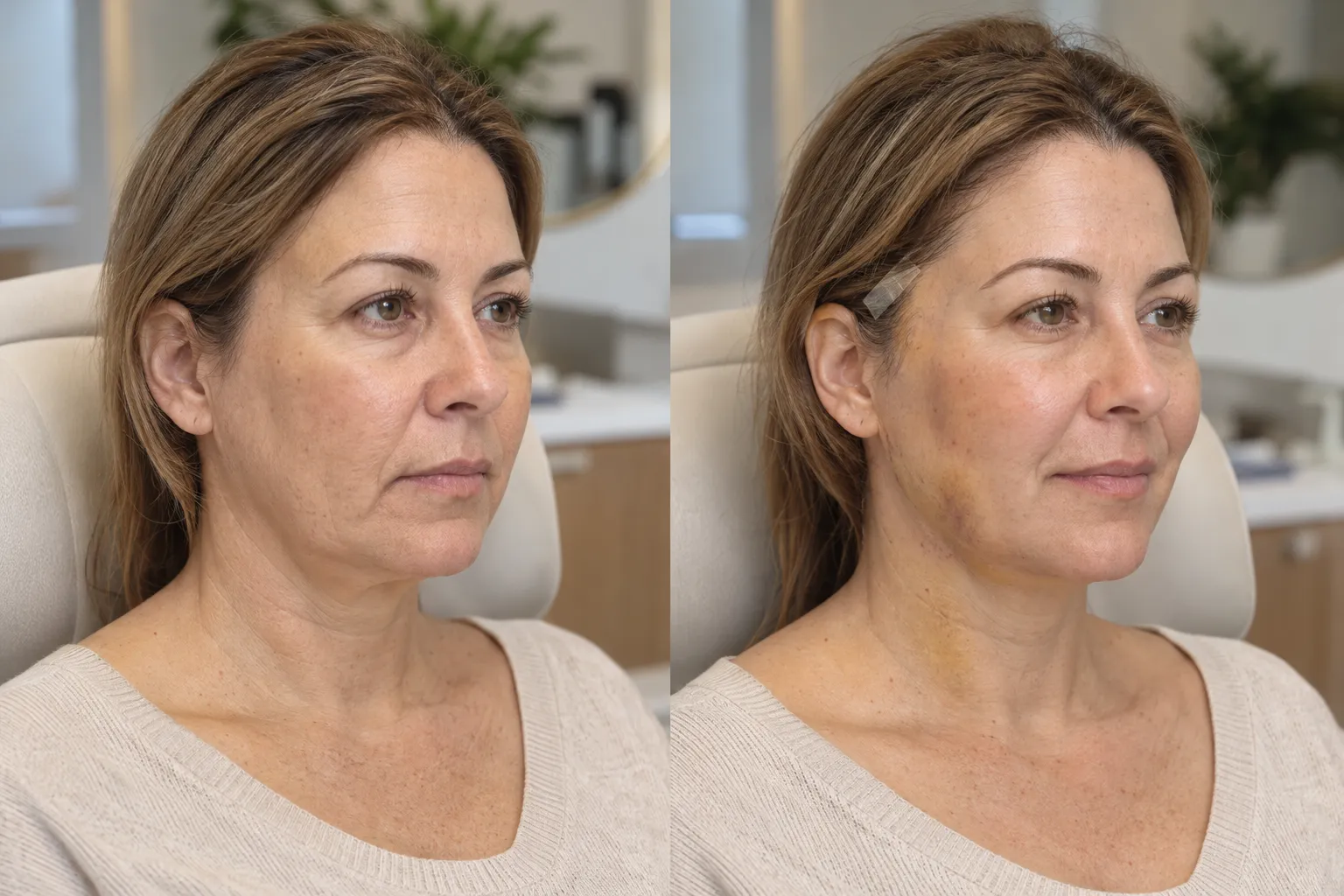
mini facelift famous face lift before and after
Searching mini facelift famous face lift before and after results can raise a practical question: do the photos show a change that could suit your face, or only an appealing image? A Mini Facelift is a facelift approach generally focused on earlier or more localized signs of lower-face aging. The right technique depends on your anatomy, goals, health, and an in-person assessment.
Key Takeaways
- A mini facelift addresses earlier or more localized signs of aging in the lower face rather than widespread skin laxity across the entire face.
- Before and after photos are useful for understanding the range of possible changes, but individual results depend on anatomy, skin quality, and surgical planning.
- Recovery is often shorter than a full facelift, yet swelling and bruising during the first several days are normal and should be expected.
- Cost varies based on surgeon expertise, geographic location, anesthesia, and the specifics of the surgical plan.
- The only way to know whether a mini facelift suits your goals is through an in-person consultation with a qualified facial plastic surgeon.
Dr. Mark Albert is certified by the American Board of Plastic Surgery and is a Fellow of the American College of Surgeons. This guide explains what a Mini Facelift can address and how to assess before-and-after images without treating a photograph as a forecast of your own result.
What Is a Mini Facelift, and How Does It Differ From a Full or Deep Plane Facelift?
A Mini Facelift is a surgical procedure intended to improve selected signs of facial aging, often around the lower face and jawline. The extent of the incision, tissue work, and treatment area can differ from a full facelift or Deep Plane Facelift. “Mini” does not mean every patient has a minor operation or a shorter recovery. Before recommending an approach, a surgeon must assess facial anatomy, skin quality, degree of laxity, medical history, and desired change.
What a Mini Facelift Actually Addresses (and What It Doesn't)
Depending on the plan, a Mini Facelift may address mild to moderate looseness and changes in definition along the lower cheeks or jawline. It does not stop aging, and it may not adequately address extensive laxity or changes outside its planned treatment area. The term does not guarantee a particular incision, tissue technique, or outcome. A measured plan aims to preserve facial character rather than create a visibly pulled appearance, but results vary from patient to patient.
Mini Facelift vs. Full Facelift vs. Deep Plane Facelift: A Side-by-Side Comparison
Names alone do not establish how much surgery is appropriate. Ask which areas the proposed operation targets, what tissues will be addressed, where incisions are expected, and why that plan fits your features. A full facelift generally refers to broader facial rejuvenation than a more limited approach; a Deep Plane Facelift describes a particular technique involving deeper facial tissues. Details vary by surgeon and patient, so a label should not replace discussion of the operative plan.
| Approach | General focus | Questions to discuss |
|---|---|---|
| Mini Facelift | Selected, often lower-face changes | Which signs are within the planned treatment area? |
| Full facelift | Broader facial aging concerns | Which facial regions and tissues will be addressed? |
| Deep Plane Facelift | A deeper-tissue surgical technique | Why is this technique suitable for my anatomy and goals? |
Who Is a Good Candidate for a Mini Facelift?
A person considering this operation may have localized lower-face concerns and realistic expectations about the degree of change. General health, healing considerations, facial structure, skin characteristics, and personal priorities also matter. No online description or gallery can determine candidacy. At consultation, Dr. Albert can assess whether a Mini Facelift is a reasonable option or whether another facelift approach better matches the individual findings. Candidacy, technique, recovery, risks, and outcomes require individualized clinical assessment.
How Should You Read Mini Facelift Before and After Photos (Including 'Famous Face Lift' Results)?
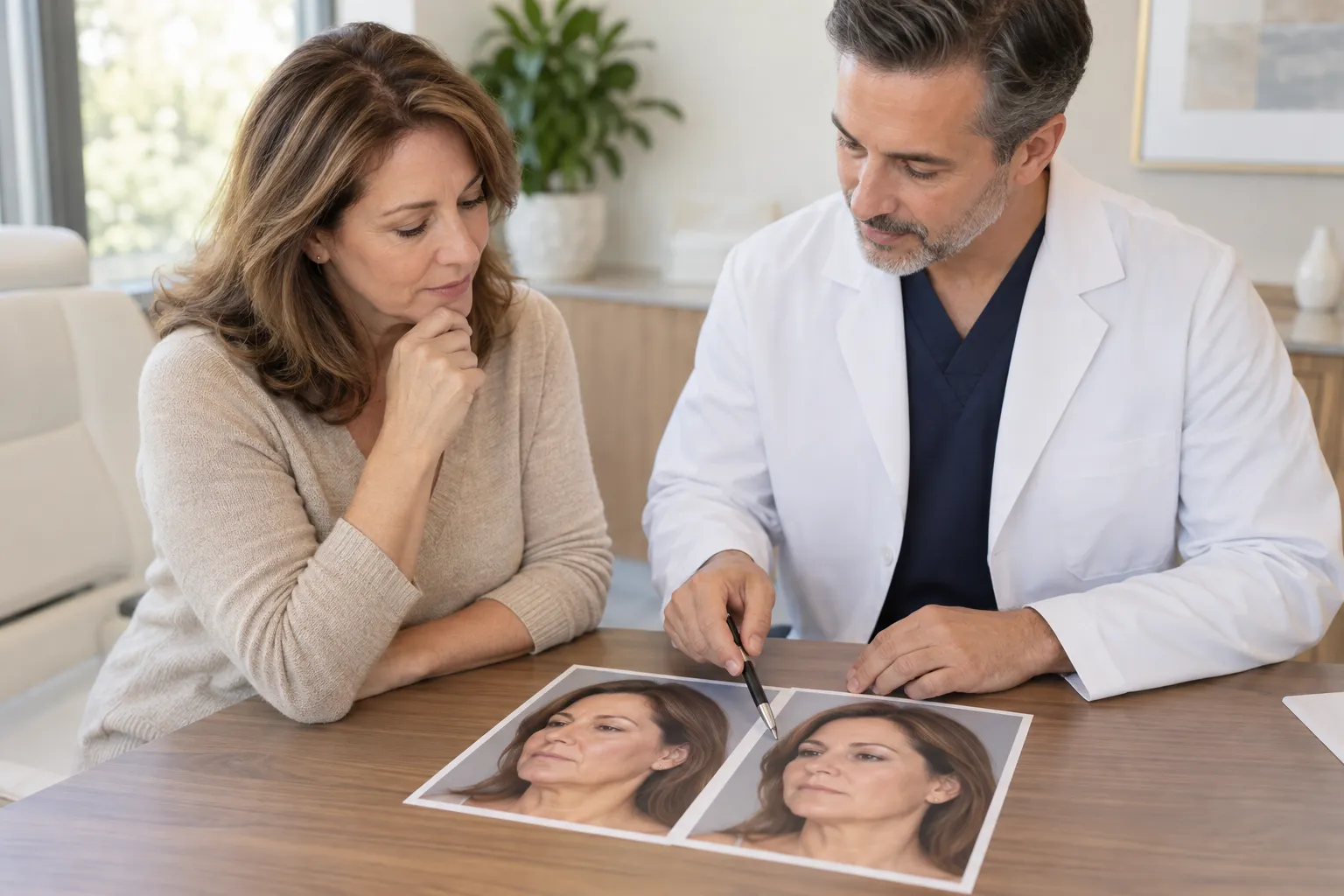
What Realistic Before and After Photos Can Tell You
Mini face lift before and after pictures can show how a surgeon’s work may look across different faces, but they cannot predict your result. Look for changes in the areas the procedure is meant to address and note what remains unchanged. A useful gallery shows multiple patients, consistent views, and images taken at a stated point in healing. When reviewing mini facelift famous face lift before and after examples, focus on proportion and facial expression, not a single dramatic transformation.
Lighting, Angles, and Retouching: How to Spot a Misleading Photo
Lighting, camera distance, head position, facial expression, makeup, and image editing can change how skin texture and contours appear. Compare images with similar angles and neutral expressions. Ask when each photo was taken and whether it was edited beyond ordinary cropping or color correction. Early postoperative images may show swelling or bruising, while later photographs may show more settled changes. If the gallery does not explain timing or image standards, ask the surgeon’s office for context rather than drawing conclusions from appearance alone.
The Truth About Celebrity 'Famous Face Lift' Results and Setting Realistic Expectations
Celebrity images rarely provide reliable evidence that a person had a facelift, much less a particular technique. Public photographs may differ in lighting, makeup, expression, editing, and timing, and a person’s medical details may not be public. The search phrase mini facelift famous face lift before and after may lead to speculation, but a celebrity’s appearance cannot serve as a personal outcome estimate. Use verified, consented patient images from a surgeon’s gallery as discussion material, not as a promise of matching results.
A Checklist for Evaluating a Surgeon's Before and After Gallery
Use these questions when reviewing a gallery or discussing images during consultation:
- Are the before and after views taken from comparable angles and under similar lighting?
- Does the gallery identify the approximate time after surgery for each image?
- Are there examples of people with facial features and concerns similar to yours?
- Can the surgeon explain which changes came from the planned facelift and which concerns remain?
- Are the images presented as examples rather than a guarantee of your outcome?
Bring images that reflect your goals and ask what is, and is not, comparable to your facial anatomy. Discussing the limits of photographs helps set expectations before choosing a surgical plan.
What Does Mini Facelift Recovery Really Look Like, Day by Day and After 5 Days?
Recovery after a Mini Facelift varies with the surgical plan, individual healing, and the clinician’s instructions. Initial healing commonly takes about one to two weeks, though swelling and bruising can take longer to fade, and final changes may continue to settle over several months. A calendar estimate cannot determine when you will feel ready for work or social activities. Arrange transportation, help at home, and time away from work according to your surgeon’s guidance.
Days 1-3: Swelling, Bruising, and Early Healing
During the first few days, prioritize rest and follow-up care. Swelling, bruising, tightness, and tenderness around treated areas may be noticeable. The face can look uneven as swelling develops and changes, so early appearance is not a reliable preview of the eventual result. Keep follow-up appointments and follow your surgical team’s instructions for incision care, activity, and when to contact the office. Another patient’s recovery is not a timetable for your own.
Day 5: What You’ll Actually Look and Feel Like, and When You Can Return to Work
At five days, some patients may still have visible bruising, swelling, or incision-related changes. Mini facelift pictures after 5 days can show examples, but images cannot predict your appearance or readiness to resume normal routines. Whether returning to work is reasonable depends on your healing, the nature of your job, your comfort, and your surgeon’s assessment. Physical work may require a different timeline from a desk-based role. Ask your surgeon before planning around a specific date.
Weeks 2-6: Activity Limits, Scar Maturation, and When Results Settle
As early bruising and swelling ease, many people gradually return to daily activities, but the pace is individual. Your surgeon should advise when to resume exercise, strenuous movement, and other activities that could stress healing tissues. Incision lines continue to mature after initial healing, and residual swelling can affect facial contours. The appearance at two weeks is not necessarily the settled outcome. Keep scheduled visits so the surgeon can assess healing and adjust activity guidance when appropriate.
Risks and Complications Every Patient Should Understand Before Surgery
A Mini Facelift, like other surgery, carries risks. Possible complications include bleeding or a collection of blood beneath the skin, infection, problems with wound healing, visible scarring, changes in sensation, asymmetry, and risks related to anesthesia. The likelihood and significance of complications vary with a person’s health and surgical plan. Discuss your medical history, individual risk factors, and symptoms that require prompt attention with a qualified clinician before deciding.
Recovery Considerations
Potential advantages
- A planned period of follow-up allows the surgical team to monitor healing.
- Activity can be increased gradually in response to individual progress and clinical advice.
Limitations and risks
- Bruising, swelling, and time away from usual routines may extend beyond five days.
- Complications are possible, and no recovery schedule or outcome can be not assured.
Contact your surgeon promptly about concerns during recovery. Seek urgent medical care for severe or rapidly worsening symptoms, including difficulty breathing, chest pain, or uncontrolled bleeding.
How Much Does a Mini Facelift Cost, and How Long Do Results Last?
The cost of a Mini Facelift depends on the proposed operation and services included in the quote. Request an itemized estimate stating which fees are included, what could be billed separately, and when payment is due.
Cost Breakdown: Surgeon Fees, Facility Fees, Anesthesia, and Financing
A written estimate may separate the surgeon’s fee from charges for the surgical facility, anesthesia, and related care. Ask whether preoperative appointments, follow-up visits, and required supplies are included. If financing is available, review the interest rate, fees, repayment schedule, and consequences of missed payments before signing. The lowest quote does not show by itself what the plan includes or whether the surgeon’s qualifications and proposed care fit your needs.
| Cost item | What to ask |
|---|---|
| Surgeon fee | What does the fee cover, and who performs the operation? |
| Facility and anesthesia | Are these listed separately, and what facility is planned? |
| Follow-up care | Which postoperative visits and services are included? |
| Financing | What are the full repayment terms and any added fees? |
Factors That Change the Price (Location, Technique, Combined Procedures)
Geography, the surgeon’s experience, the location of surgery, and the scope of the planned technique can affect the estimate. A more involved plan may have different facility or anesthesia costs than a limited operation. Ask how the proposed plan changes recovery needs and total fees. A quote is meaningful only when you understand the services it covers and have discussed the medical reasons for the approach.
How Long Mini Facelift Results Last, and When a Revision Might Be Considered
Facelift results do not stop the natural aging process, and their duration varies with individual anatomy, healing, and other personal factors. No fixed timeline can predict how long a particular result will remain noticeable. A revision is not automatic when facial changes continue over time. If you have concerns about your outcome or later changes, discuss them with a qualified clinician who can assess your healing and goals before considering further surgery.
How Do You Choose the Right Mini Facelift Surgeon? FAQs With Dr. Mark Albert's Guidance

Dr. Mark Albert is certified by the American Board of Plastic Surgery and is a Fellow of the American College of Surgeons. Credentials are one part of choosing a surgeon; a clear explanation of the operation, its limitations, and the follow-up plan matters too. Candidacy, technique, recovery, risks, and outcomes require individualized clinical assessment.
Credentials, Technique, and Consultation Questions to Ask
Confirm that the surgeon is certified by the American Board of Plastic Surgery, and ask who will perform each part of your care. Ask why the suggested Mini Facelift fits your concerns, what it is unlikely to change, where incisions are planned, and how risks and follow-up will be handled. Dr. Albert’s profile provides information about his training and professional background.
- What specific areas would the proposed operation address?
- What risks or personal health considerations should I understand?
- What services and follow-up are included in the written estimate?
For someone searching “mini facelift near me,” distance can be one practical factor, but also consider access to scheduled follow-up and clear communication with the surgical team. You can learn more about Dr. Mark Albert and request a facelift consultation to discuss individual questions.
Frequently Asked Questions
How long does it take to look normal after a mini facelift?
Most visible swelling and bruising after a mini facelift settle over the first few weeks, with a more settled appearance developing gradually over subsequent months. Recovery timing varies by patient, anatomy, and healing response, so a personalized recovery timeline should come from a consultation with a qualified facelift surgeon such as Dr. Mark Albert.
How much does a mini facelift typically cost?
Mini facelift cost varies widely depending on the surgeon's training, geographic location, anesthesia, facility fees, and the extent of the planned surgery. Because the procedure is individualized, an accurate estimate requires an in-person consultation where the operative plan is discussed in detail.
Can I find pictures of famous facelifts before and after online?
Celebrity before and after images circulate online, but they rarely provide reliable evidence that a person had a facelift or which technique was used. Public photos may differ in lighting, makeup, expression, editing, and timing, so celebrity appearance should not be treated as an outcome estimate for any individual.
Are there mini facelift before and after pictures for jowls?
Many facelift surgeons maintain before and after galleries that include patients treated for jowls and lower-face concerns. Useful galleries show multiple patients, comparable angles and lighting, and the approximate time after surgery, and they present examples rather than a guarantee of matching results.
What is the downside of a mini facelift?
A mini facelift targets selected, often lower-face signs of aging and may not adequately address extensive skin laxity or changes outside its planned treatment area. Like all surgery, it carries risks, results vary from patient to patient, and it does not stop aging, so candidacy and limitations require individualized clinical assessment.
How should I evaluate mini facelift before and after photos?
Compare images with similar angles, lighting, and neutral expressions, and ask when each photo was taken relative to surgery and whether it was edited. A trustworthy gallery identifies timing, includes patients with features similar to yours, and explains which changes came from the procedure and which concerns remain.
Who is a good candidate for a mini facelift?
A reasonable candidate for a mini facelift typically has localized lower-face concerns, such as mild to moderate looseness along the jawline, along with realistic expectations and general health that supports healing. No online description can determine candidacy, so an in-person assessment with a qualified surgeon is necessary.
Leave a Reply