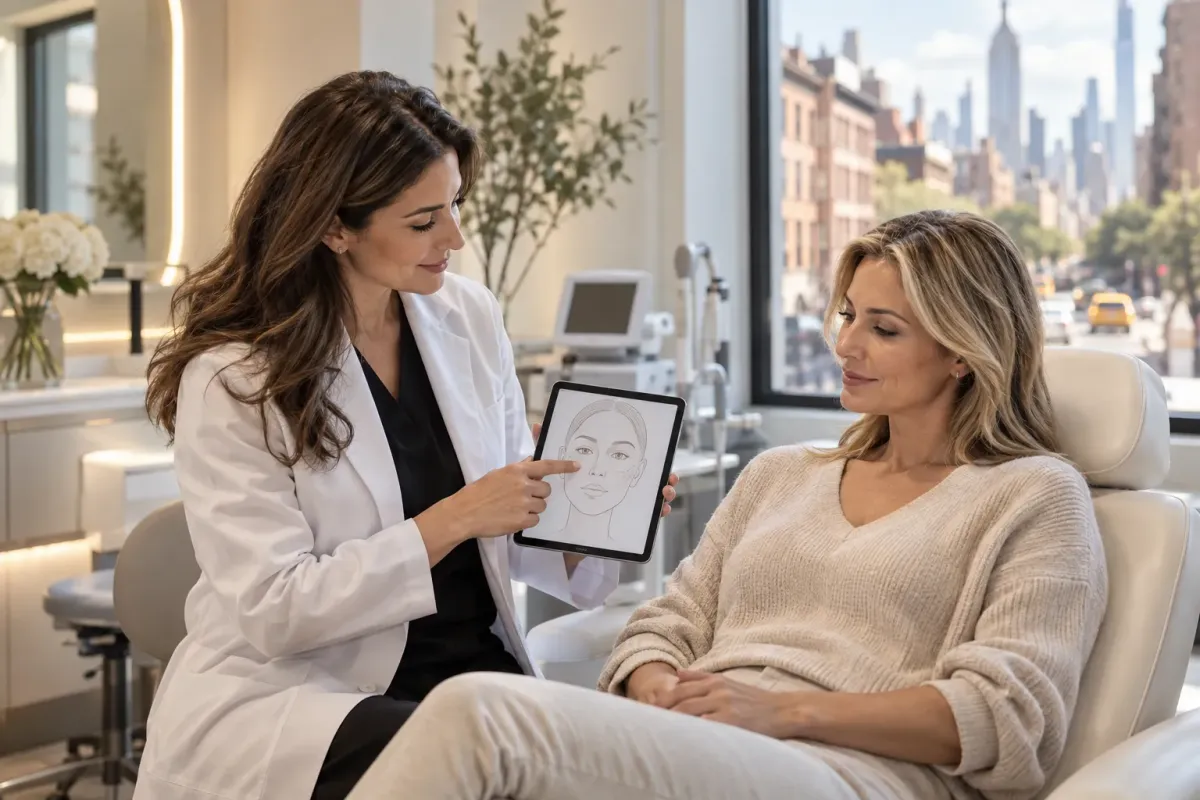
Where can I find Nanolift™ in New York, NY?
Where can I find Nanolift™ in New York, NY? Dr. Mark Albert developed the technique and offers it through Albert Plastic Surgery in New York City. The Nanolift™ service page describes a facelift technique performed under local anesthesia, with an incision concealed beneath the lower sideburn hair.
Key Takeaways
- Nanolift™ is a facelift technique developed by Dr. Mark Albert, a board-certified plastic surgeon practicing in New York City.
- The procedure is performed under local anesthesia, which allows patients to remain awake during surgery.
- The incision is designed to be hidden beneath the lower sideburn hair, supporting a discreet, natural-looking result.
- Availability is limited to Dr. Albert's practice, so patients seeking this specific technique should schedule a consultation to discuss candidacy.
- As with any facelift option, suitability, technique, and recovery vary by patient and require an in-person evaluation.
Understanding who performs the procedure, how it is described, and what “scarless” means can help you prepare informed questions. A consultation is needed to determine whether this approach fits your facial anatomy, goals, and medical history.
Where Can I Find Nanolift™ in New York, NY? The Direct Answer
Dr. Mark Albert offers Nanolift™ at Albert Plastic Surgery in New York City. To ask about the procedure or arrange a consultation, use the practice’s consultation and contact page. A clinician can discuss the technique and assess whether it may be appropriate for you.
Dr. Mark Albert: Developer of the Nanolift™ Technique
Dr. Mark Albert is a plastic surgeon certified by the American Board of Plastic Surgery and a Fellow of the American College of Surgeons. He developed the Nanolift™ technique. His training includes plastic surgery residency and chief residency at the University of Massachusetts Medical School, followed by an aesthetic plastic surgery fellowship at Manhattan Eye, Ear, and Throat Hospital. He is also Program Director of that fellowship and an Assistant Clinical Professor of Surgery at the Zucker School of Medicine at Hofstra/Northwell. Read Dr. Albert’s professional biography.
Albert Plastic Surgery: Location, Contact, and How to Book a Consultation
Albert Plastic Surgery is the practice where Dr. Albert offers the procedure. For current location details and appointment guidance, contact the practice directly through its online consultation request page. During an appointment, you can discuss your concerns, ask about the surgical plan and anesthesia, and learn what further assessment may be needed. Confirm logistical details with the office before making travel arrangements.
Why Seeing the Technique’s Developer Matters
Meeting with the surgeon who developed a technique gives you an opportunity to ask how it is planned and what its limits may be in your individual case. It does not establish that the procedure is right for every patient or guarantee a particular result. Ask how your skin laxity, facial structure, health history, and expectations affect the recommendation, and whether another facelift approach may be more appropriate.
What Is Nanolift™ and How Does It Differ From a Mini or Deep Plane Facelift?
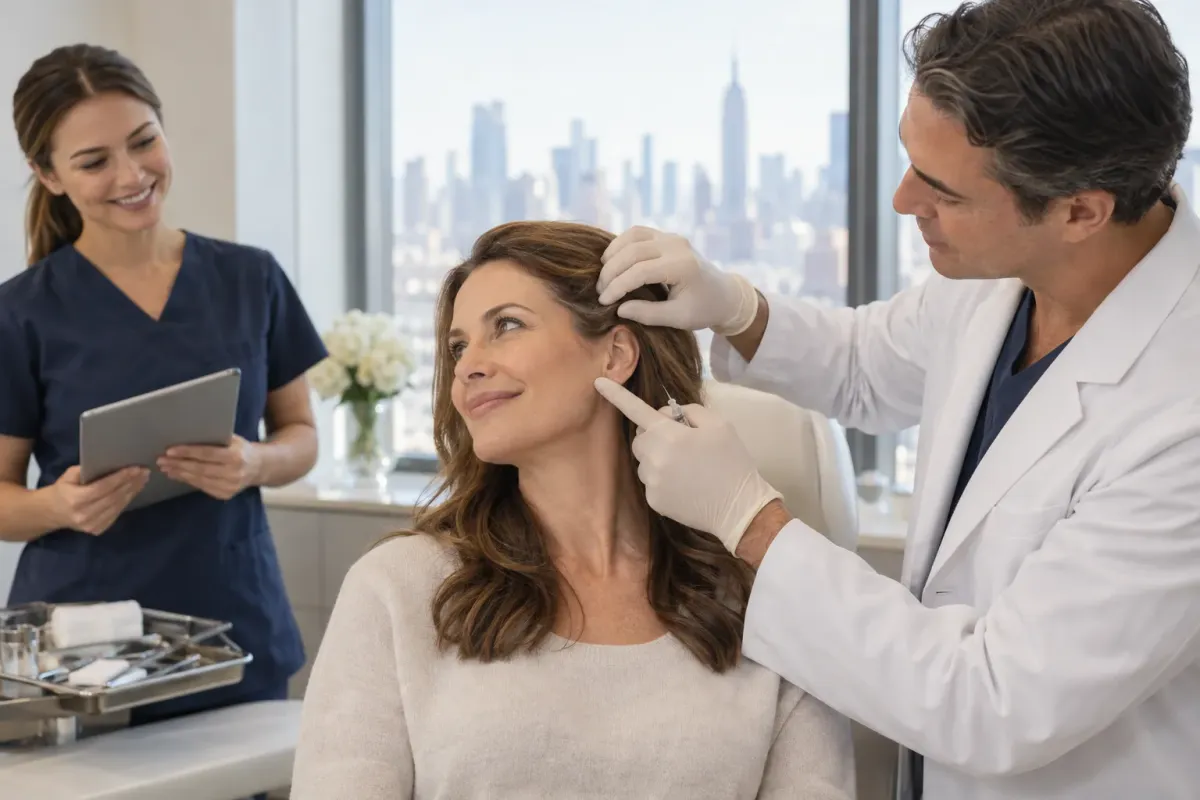
How the Nanolift™ Procedure Works: Hidden Incisions, Local Anesthesia, and the Scarless Approach
Albert Plastic Surgery’s Nanolift™ service page describes an incision hidden beneath the lower sideburn hair and local anesthesia for the procedure. Concealing the incision in the hair-bearing area is intended to make it difficult to see; “scarless” should not be understood as meaning that no incision or scar exists. Healing and scar appearance vary among individuals. The local-anesthesia approach described for Nanolift™ should not be assumed to apply to every facelift or every patient. Your surgeon can explain the planned technique and anesthesia after evaluating your needs.
Nanolift™ vs. Mini Facelift vs. Deep Plane Facelift: Matching Technique to Degree of Laxity
These options differ in their surgical approach and the concerns they may address. Nanolift™ is presented as a limited facelift approach, while a mini facelift and a deep plane facelift involve distinct techniques and may be considered for different patterns or degrees of facial aging. A procedure name alone cannot establish which option is suitable. Skin laxity, lower-face contour, facial anatomy, health factors, and the changes a patient seeks all inform planning. Dr. Albert’s mini facelift and deep plane facelift pages describe those approaches.
Is Nanolift a Surgical Procedure? Understanding What “Scarless” Really Means
Yes. Nanolift™ is a surgical facelift technique, not a nonsurgical treatment: it involves an incision, and its anesthesia and surgical plan require clinical assessment. “Scarless” refers to the incision’s concealed placement, not the absence of incision, healing, or potential visible marks. As with other surgery, risks and recovery vary. A consultation with a qualified plastic surgeon is the appropriate setting to review the procedure, alternatives within facelift surgery, limitations, and personal considerations.
Nanolift™ vs. Threads and Fillers: A Permanent Alternative to Repeated Treatments
The word “permanent” can suggest a guarantee, which no facelift can provide. A surgical lift is intended to create longer-lasting changes than treatments that may need repeating, but aging continues and individual outcomes vary. Dr. Mark Albert’s Nanolift™ is a facelift technique. Its suitability and expected longevity depend on a patient’s anatomy, surgical plan, healing, and aging over time. The comparison below focuses on facelift options, since the appropriate approach requires an assessment rather than a treatment label alone.
Comparison Table: Nanolift™ vs. Mini Facelift vs. Thread Lift vs. Dermal Fillers
Facelift procedures differ in their surgical approach and the concerns they are designed to address. The table outlines general distinctions among the facelift options; it cannot predict an individual’s result, recovery, or costs. Dr. Albert’s service information describes Nanolift™ as using local anesthesia and an incision concealed beneath the lower sideburn hair. An incision can still heal with a scar, and its visibility varies. Anesthesia, downtime, and the full surgical plan depend on clinical assessment.
| Facelift option | General approach | Incision and anesthesia | Longevity and cost considerations |
|---|---|---|---|
| Nanolift™ | A limited facelift approach for selected patients. | Described with an incision concealed beneath the lower sideburn hair and local anesthesia. A scar may form. | Surgical changes may be longer-lasting than temporary treatments, but aging continues. A personalized quote is needed. |
| Mini facelift | A distinct facelift technique considered according to facial anatomy and the degree of laxity. | Incisions and anesthesia depend on the surgical plan. | Longevity and fees vary by patient and procedure details. |
| Deep plane facelift | A different surgical approach that may be considered for a different pattern of facial aging. | Incisions and anesthesia are determined by the surgeon’s plan. | Expected results, recovery, and costs require individual discussion. |
Longevity and Value: Why Repeated Non-Surgical Treatments Add Up
When considering value, compare the total financial and time commitment with the type of change sought. A surgical fee may include several components, while repeated appointments for temporary treatments can create ongoing expenses. Neither a lower initial price nor a longer-lasting surgical result establishes the better choice for every person. Ask what the quoted fee includes, what follow-up care is planned, and what costs may arise later. A clinician can explain the expected duration and limitations of a particular facelift approach without promising a fixed lifespan.
Avoiding the 'Pillow Face' Problem: What Patients Dislike About Filler-Based Results
Some people worry that added facial fullness could look puffy or unlike their natural features. That concern is a useful prompt to describe your preferences clearly, including the degree of definition you hope to maintain. Facial aging concerns such as lower-face laxity or a less defined jawline need careful assessment; they do not automatically indicate that a particular operation is appropriate. A consultation should address what a facelift can change, what it cannot address, and how the proposed plan relates to your facial proportions.
Who Is a Candidate for Nanolift™, What Does Recovery Look Like, and What Does It Cost in NYC?
Candidacy: Age, Skin Laxity, and Realistic Goals (Why a Consultation Decides)
Nanolift™ is described as an option for some people noticing early lower-face aging, but age alone does not determine candidacy. Skin laxity, facial structure, health history, healing considerations, and personal goals all matter. A clinician needs to assess these factors before recommending a technique. The aim of a consultation is not to promise a specific contour, but to establish whether the procedure’s approach and limitations fit the individual. Patients should also discuss concerns that may fall outside the scope of a facelift.
- Describe the changes you hope to address and the outcome that would feel natural to you.
- Share relevant medical history and ask how it may affect the surgical plan.
- Discuss the incision, anesthesia, likely recovery needs, and realistic limits.
Recovery and Downtime After Nanolift™ Compared to a Traditional Facelift
Recovery varies with the patient and the operation performed. Local anesthesia is part of the Nanolift™ approach described by Albert Plastic Surgery, but that fact alone cannot predict downtime or make surgery appropriate for a particular person. Swelling, bruising, incision healing, activity restrictions, and follow-up needs should be discussed with the surgeon. A broader facelift may involve a different plan and recovery experience. Before scheduling, ask what support and time away from usual activities may be needed in your specific case.
Cost of Nanolift™ in New York City and What Pricing Includes
Nanolift™ pricing in New York City depends on the individualized surgical plan and the services included, so a consultation is needed for a meaningful quote. Ask whether the estimate covers the surgeon’s fee, facility costs, anesthesia, and planned follow-up, and request clarification about any items billed separately. Comparing estimates is most useful when each one describes the same scope of care. Cost should be considered alongside the surgeon’s qualifications, the proposed technique, safety planning, and continuity of care.
Risks, Limitations, and How to Choose a Qualified Nanolift™ Surgeon in NYC
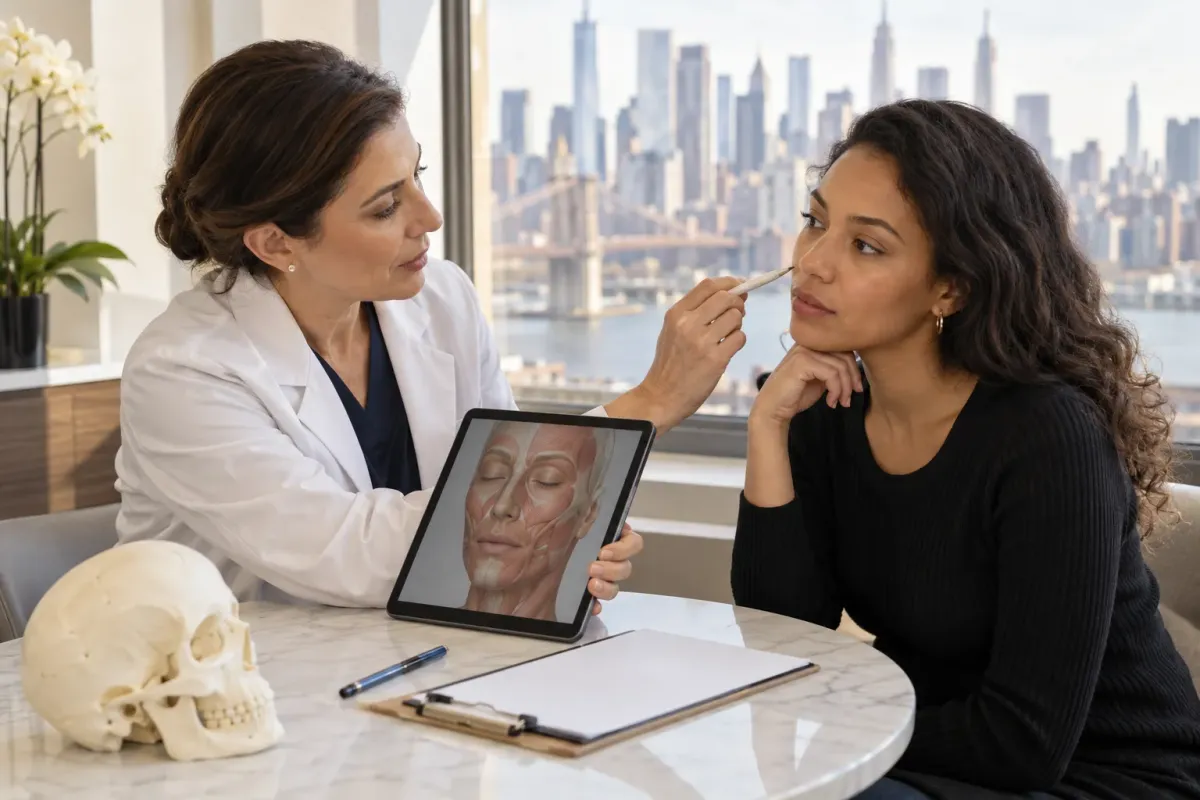
Choosing a surgeon for Nanolift™ involves more than confirming that the technique is offered. Ask how the surgeon evaluates facial anatomy, explains tradeoffs, and plans follow-up care. The procedure is surgery, and individual health, healing, and expectations affect both risk and outcome. A careful discussion should leave you with a clear understanding of the proposed approach and its limits, without pressure to proceed.
Potential Risks and Complications of Nanolift™: An Honest Discussion
Facelift surgery can involve bleeding, infection, swelling, bruising, scarring, changes in sensation, delayed healing, or an outcome that differs from expectations. Anesthesia also has risks that depend on the patient and plan. The incision for Nanolift™ is placed beneath the lower sideburn hair, but an incision can leave a scar, and its visibility varies with healing. No description of a concealed incision eliminates surgical risk. Ask which risks are most relevant to your health history and what instructions or follow-up are part of your care.
Credentials to Verify: Board Certification, FACS, and Facelift-Specific Experience
Confirm that your surgeon is certified by the American Board of Plastic Surgery, and ask about training and experience in facelift surgery and the specific technique being considered. Dr. Mark Albert is certified by the American Board of Plastic Surgery, is a Fellow of the American College of Surgeons, and developed Nanolift™. His professional biography provides further information about his credentials and teaching roles. Credentials are one part of selection; clear communication, individualized planning, and a willingness to discuss limitations also matter.
Questions to Ask During Your Nanolift™ Consultation
Use the appointment to understand the recommendation, not simply to confirm a decision you have already made. Consider bringing these questions:
- What features of my anatomy and health history affect the surgical plan?
- What changes may be realistic, and what concerns are outside the procedure’s scope?
- What risks, incision care, follow-up, and recovery needs should I plan for?
- What alternatives within facelift surgery might be appropriate, and why?
- What does the estimate include, and whom should I contact with concerns after surgery?
Candidacy, technique, recovery, risks, and outcomes require individualized clinical assessment. If you would like to discuss your questions with Dr. Mark Albert, you can request a consultation without an obligation to proceed.
Frequently Asked Questions
Where can I find Nanolift™ in New York, NY?
Dr. Mark Albert offers Nanolift™ at Albert Plastic Surgery in New York City. You can ask about the technique or request a consultation through the practice's contact page, where a clinician can discuss the procedure and assess whether it may suit your needs.
Is Nanolift a surgical procedure?
Yes, Nanolift™ is a surgical facelift technique, not a nonsurgical treatment. It involves an incision, and its anesthesia and surgical plan require clinical assessment. The term scarless refers to the incision's concealed placement beneath the lower sideburn hair, not the absence of an incision or scar.
What is Nanolift and how is it different from a mini facelift?
Nanolift™ is a limited facelift approach developed by Dr. Mark Albert, while a mini facelift uses a distinct technique. These options may be considered for different patterns or degrees of facial aging. A consultation is needed to determine which approach fits your anatomy, skin laxity, and goals.
Who is the ideal candidate for Nanolift?
Candidacy for Nanolift™ can only be determined through a consultation with a qualified plastic surgeon. Factors such as skin laxity, facial structure, health history, and personal expectations all influence the recommendation, and another facelift approach may be more appropriate for some patients.
Who developed the Nanolift technique?
Dr. Mark Albert developed the Nanolift™ technique. He is certified by the American Board of Plastic Surgery, a Fellow of the American College of Surgeons, and completed an aesthetic plastic surgery fellowship at Manhattan Eye, Ear, and Throat Hospital, where he now serves as Program Director.
Why does seeing the surgeon who developed a technique matter?
Meeting the developer of a technique gives you the chance to ask how it is planned and what its limits may be in your case. It does not guarantee a particular result, so ask how your anatomy, health history, and expectations affect the recommendation.
How should I prepare for a Nanolift consultation?
Confirm appointment and location details with Albert Plastic Surgery before making travel arrangements. During the consultation, you can discuss your concerns, ask about the surgical plan and anesthesia, and learn what further assessment may be needed to determine whether the approach fits you.
Leave a Reply