
mini facelift loose neck skin at 40
If you are researching a mini facelift for loose neck skin at 40, the key question is not your age alone. A mini facelift may improve early jowling and lower-face laxity, but it does not necessarily tighten loose skin or muscle bands in the neck. The areas treated depend on your anatomy, the surgical plan, and the technique selected after an in-person assessment.
Key Takeaways
- At age 40, skin laxity in the neck often reflects early changes that may not require a full facelift, but the right procedure depends on the underlying anatomy rather than the number on a birthday.
- A mini facelift is designed to address the lower face and early jowling, and it typically offers limited correction for loose neck skin or visible muscle bands.
- Patients with meaningful neck laxity may need a technique that extends into the neck, which is why an in-person evaluation is essential before choosing an approach.
- Understanding what each facelift technique can and cannot treat helps set realistic expectations and supports a more informed conversation with a qualified surgeon.
- Candidacy, technique selection, and recovery vary by patient, so individualized planning during a consultation remains the safest way to determine the right option.
Dr. Mark Albert is certified by the American Board of Plastic Surgery and is a Fellow of the American College of Surgeons. Understanding what each facelift option can address can help you ask focused questions during a consultation; no single procedure suits everyone.
Why loose neck skin shows up around age 40
Changes in the neck can become noticeable by the 40s, though timing and degree vary. Skin may lose elasticity, and the tissues beneath it can change with age. Sun exposure, genetics, weight changes, and individual skin characteristics also influence the jawline and neck. Some people first notice mild looseness beneath the chin or early vertical bands; others have little neck change at the same age.
What a mini facelift treats, and what it usually does not
A Mini Facelift generally focuses on the lower face, where early jowls and mild laxity can soften the jawline. The name alone does not establish that the neck is included. A limited lower-face operation may have little effect on loose neck skin or prominent neck bands if those areas are not specifically addressed in the surgical plan.
Why the answer depends on your anatomy, not just your age
Whether a mini facelift includes meaningful neck treatment depends on the location and extent of laxity, skin quality, and the relationship between the jawline and neck. A person in their 40s with changes mainly around the lower face may need a different plan from someone with more visible neck looseness. Candidacy, technique, recovery, risks, and expected outcomes require individualized clinical assessment.
In practical terms, the answer to “does a mini facelift include the neck” is: not necessarily. Ask the surgeon which neck tissues the proposed operation treats, what improvement is realistic, and whether a separate or combined approach is being considered.
Mini Facelift vs Neck Lift vs Mini Face and Neck Lift: What Each Procedure Actually Treats
How a mini facelift differs from a full facelift
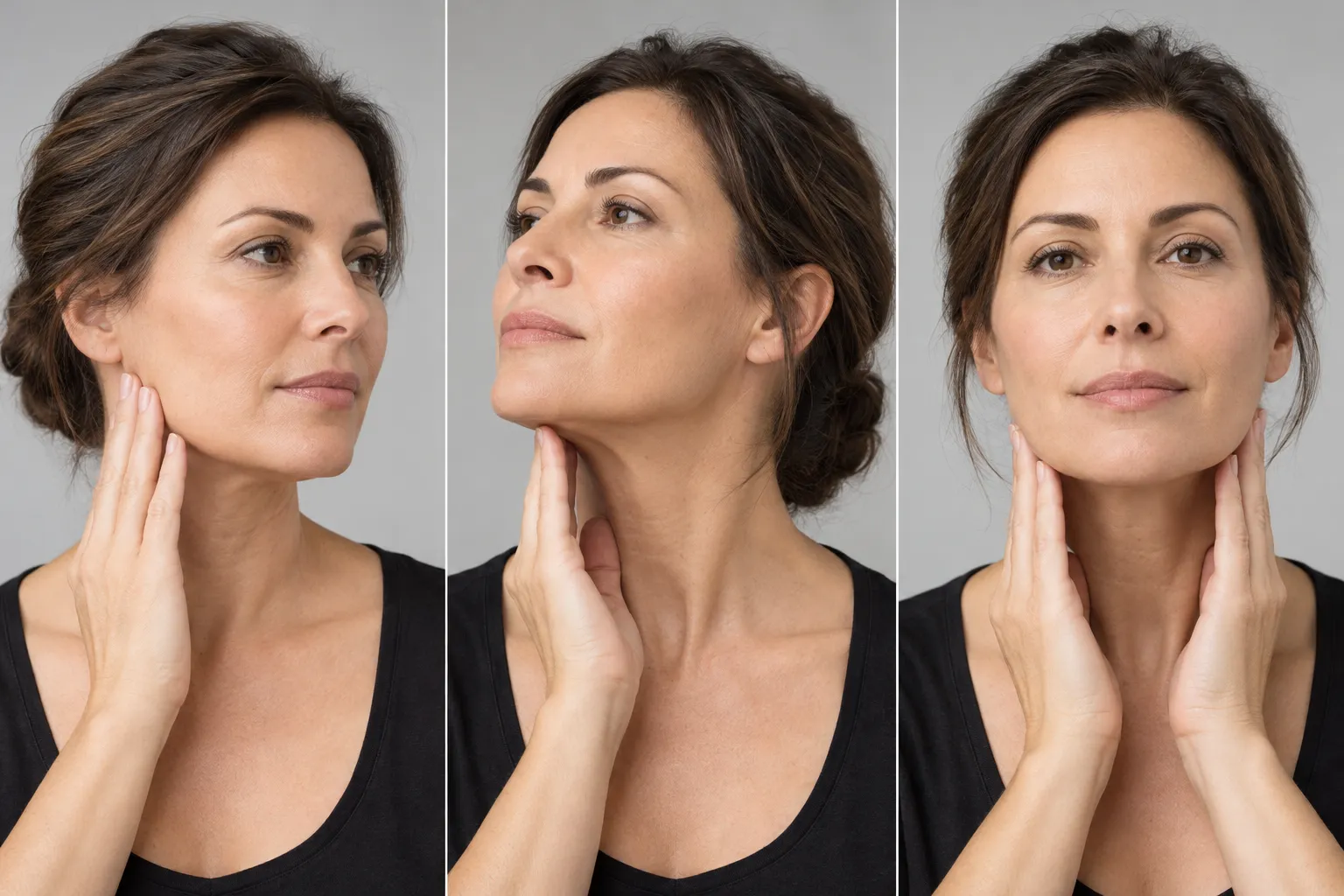
A mini facelift typically uses shorter incisions and addresses a more limited area of the lower face than a full facelift. It may be considered when changes are relatively early and concentrated around the jawline. A full facelift can address a broader pattern of facial laxity, and its plan may include the neck when indicated. Neither label guarantees a particular result or extent of treatment; the operative plan defines which areas are addressed.
Comparison table: area treated, incisions, downtime, and results
The table offers general orientation, not a prediction of individual recovery or outcome. Incision placement, tissues treated, and downtime vary with the procedure and patient. A consultation should establish whether the concern is primarily lower-face laxity, neck skin, neck bands, or a combination.
| Option | Typical focus | Incisions and recovery | Considerations |
|---|---|---|---|
| Mini facelift | More limited lower-face laxity and early jowls | Often shorter incisions and less downtime than a full facelift; individual recovery varies | May not address significant neck laxity on its own |
| Neck lift | Neck skin and, when appropriate, underlying neck structures | Incisions and recovery depend on the planned technique | Designed around neck concerns rather than broad lower-face changes |
| Mini face and neck lift | Selected lower-face and neck concerns together | Plan and downtime depend on the areas treated | May be discussed when both areas show changes that warrant treatment |
| Full facelift | A broader pattern of facial laxity, potentially including the neck | Extent of incisions and recovery varies with the surgical plan | May be a closer fit when concerns extend beyond a limited lower-face area |
When combining a mini facelift with a neck lift makes sense at 40
A combined approach may be discussed when early jowling and neck laxity are both present and the planned treatment can address each concern. Age alone does not establish a need for combined surgery. Assessment should identify whether visible looseness comes from skin, underlying tissues, neck bands, or several factors, then explain the likely scope and limitations of the proposed operation.
When a full facelift is the better match
A broader facelift plan may be considered when laxity extends across more of the face and neck than a limited procedure is designed to treat. A larger operation is not automatically preferable; appropriate scope depends on anatomy, goals, health, and an informed discussion of risks and recovery. The American Society of Plastic Surgeons reported more than 52,000 neck lift procedures in the United States in 2021. This reflects neck-focused surgery as a distinct option, not that it is appropriate for every patient.
Is a Mini Facelift Right for You at 40? Candidacy and Before-and-After Expectations
Signs of aging a mini facelift can address in your 40s: early jowls and mild banding
When researching a mini facelift for loose neck skin at 40, first consider where the change is most noticeable. A Mini Facelift is generally intended for selected lower-face concerns, such as early jowls and mild looseness near the jawline. Its effect on the neck depends on the surgical plan; the procedure name alone does not mean that neck skin or muscle bands will be treated.
A consultation can help distinguish lower-face laxity from neck-specific concerns, including loose skin beneath the chin or visible vertical bands. If both areas are involved, the surgeon should explain which tissues the proposed operation addresses and what may remain afterward. A limited procedure may not fit a concern that is primarily in the neck.
Skin elasticity and degree of laxity: why they matter more than your birth year
Age does not determine candidacy by itself. Skin elasticity, the degree and location of looseness, tissue position, health history, and personal goals inform the assessment. Two people who are both 40 may have different patterns of skin laxity and need different surgical plans. A clinician should discuss whether the expected change is proportionate to the extent of surgery being considered.
Use this checklist to organize your questions, not to determine candidacy on your own:
- Are my main concerns early jowls, loose neck skin, visible bands, or a combination?
- Which areas would the proposed operation treat, and which would it leave unchanged?
- How might my skin quality and degree of laxity affect the plan?
- What limitations and risks should I weigh against the expected improvement?
Before and after at 40: natural-looking improvement, not transformation
Before-and-after photographs can show the kinds of changes a surgeon may present, but individual images cannot predict your result. When reviewing mini facelift photos, look for patients with concerns and anatomy similar to yours, consistent image angles, and an explanation of which areas were treated. Ask whether the photographs represent a similar surgical plan and stage of healing.
A realistic goal is a more defined lower-face contour when the anatomy and operation support that change, not a promised jawline or neck. The phrase “face lift at 40 before and after” may describe very different procedures and starting points. Dr. Mark Albert’s Mini Facelift planning requires an individualized clinical assessment; outcomes vary, and no photograph can guarantee your result.
Non-surgical options for early neck laxity and their limits
Some people with early neck changes prefer to postpone surgery. Approaches that are not facelift surgery do not reposition tissue through a facelift operation, and their effects and limitations differ. They should not be treated as equivalent to a surgical plan for loose skin or muscle bands. Discuss any other approach separately with a qualified clinician rather than assuming it will address the same concerns.
Recovery, Downtime, and Cost: What to Plan For
Day-by-day recovery timeline: the first two weeks and beyond
Recovery after a Mini Facelift varies with the operation, individual healing, and the surgeon’s instructions. A search for mini facelift recovery pictures day by day may show a range of bruising and swelling, but online photos are not a personal forecast. Ask the surgical team what changes are typical at each stage and whom to contact if your recovery differs from the plan.
- First days: Rest and follow your surgical team’s care instructions. Swelling, bruising, and tightness may be present.
- Remainder of week one: Healing continues, and follow-up visits help the team assess progress. Activity should follow individualized guidance.
- Week two: Some patients may feel ready for more routine activities, while visible swelling or bruising can persist. Timing varies.
- After two weeks: Subtle swelling and tissue settling may continue. Ask your surgeon when to resume exercise and other strenuous activity.
Scars, swelling, and returning to work and exercise
Incisions are placed according to the surgical plan, and scars need time to mature. Their visibility varies with incision location, healing, and individual skin characteristics. Swelling and bruising can affect comfort in public, so plan time away from work and social commitments based on your surgeon’s advice, not a fixed online timeline. Your care team should provide specific instructions about incision care, activity, and follow-up.
Mini facelift cost vs. mini face and neck lift cost: what affects the price
No single cost applies to every patient, and a quoted fee should be tied to the exact operation proposed. Treatment scope, facility and anesthesia arrangements, surgeon’s fees, and follow-up care can affect the total. Ask for an itemized estimate and confirm what is included before comparing plans. A mini face and neck lift cost may differ from a lower-face-only plan because the treated areas and operative details differ.
| Cost factor | What to be clear |
|---|---|
| Planned treatment areas | Whether the estimate covers the lower face, the neck, or both |
| Surgeon and facility fees | Which professional and facility services are included |
| Anesthesia and follow-up | How these services are arranged and reflected in the estimate |
| Additional care | Whether routine post-operative visits and supplies are included |
When asking about mini facelift cost, request a written estimate for your proposed plan; a general online range may not reflect your needs.
Risks and limitations to discuss at your consultation
Facelift surgery has risks, and the chance of complications varies with the patient and procedure. Discuss bleeding, infection, anesthesia-related concerns, scarring, changes in sensation, asymmetry, delayed healing, and the possibility that the result may not fully address your concern. Ask how your health history may affect risk, what the recovery plan includes, and what symptoms require prompt medical attention. Candidacy, technique, recovery, risks, and outcomes require individualized clinical assessment.
How to Choose a Qualified Facelift Surgeon and What to Ask
Surgeon selection checklist: board certification and facelift-specific experience
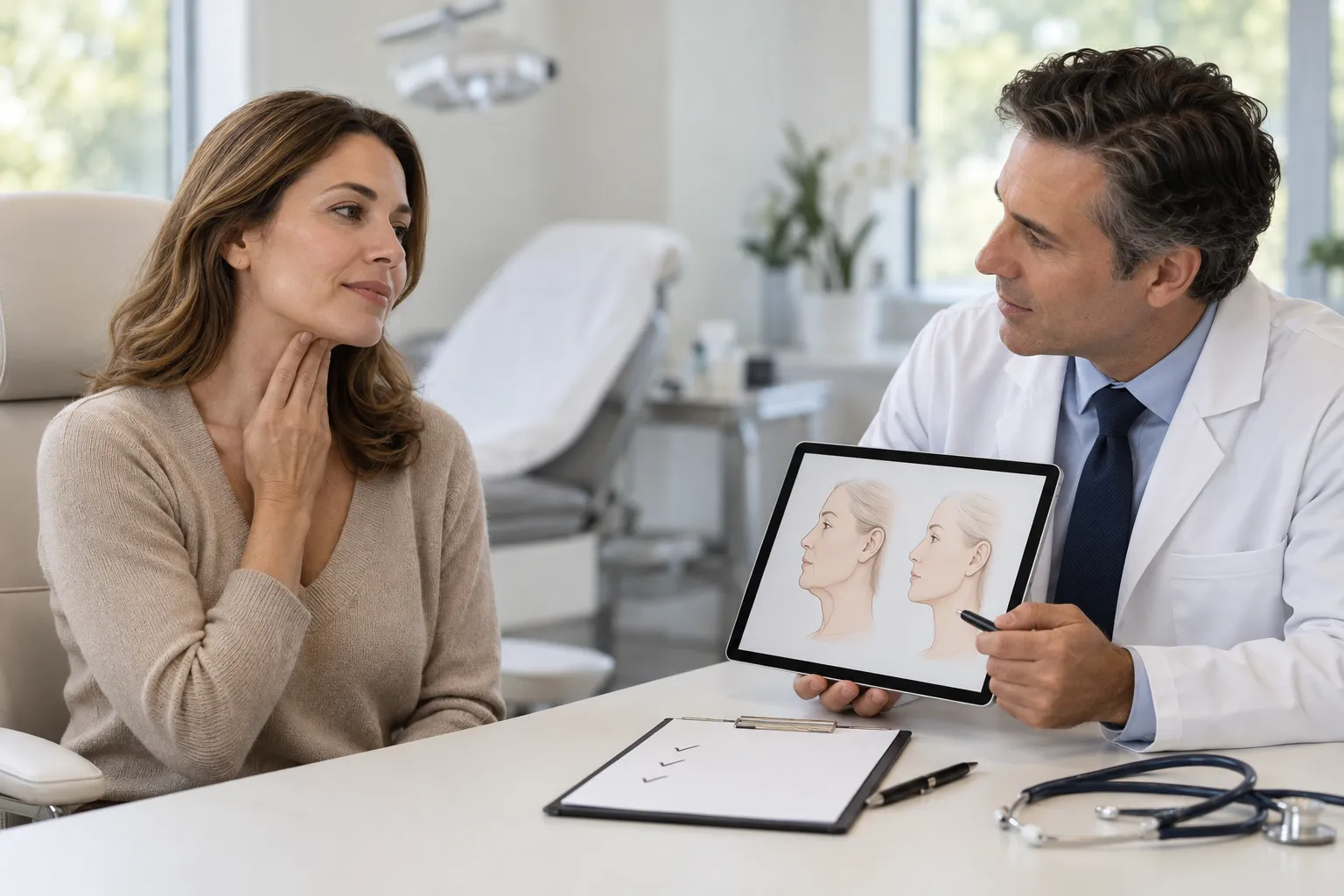
Choose a surgeon with recognized plastic surgery credentials and experience assessing facelift concerns involving both the lower face and neck. Board certification by the American Board of Plastic Surgery and Fellowship in the American College of Surgeons are credentials you can verify. Dr. Mark Albert holds both credentials. He is also Program Director of the MEETH Aesthetic Plastic Surgery Fellowship and an Assistant Clinical Professor of Surgery at the Zucker School of Medicine at Hofstra/Northwell.
- Confirm board certification and review the surgeon’s training and professional background.
- Ask how often the surgeon evaluates and performs facelift procedures relevant to your concerns.
- Review photographs of patients with similar starting concerns, and ask what areas were treated.
- Expect a clear discussion of alternatives, limitations, risks, recovery, and follow-up care.
Questions to bring to your consultation about your neck
Bring specific questions so you understand the proposed operation, not just its name. Ask whether your main concern is lower-face laxity, neck skin, visible bands, or a combination, and which tissues the plan would address. Ask what changes may remain, where incisions would be placed, how your health history affects the assessment, and what recovery signs should prompt a call to the surgical team. Request a written estimate identifying the planned treatment and included care.
Schedule a facelift consultation with Dr. Mark Albert
If you are considering a Mini Facelift, an in-person consultation can help determine whether the proposed scope fits your anatomy and goals. Dr. Mark Albert’s practice offers facelift surgery in New York City, and the Mini Facelift is one option to discuss. Candidacy, technique, recovery, risks, and outcomes require individualized clinical assessment. You can request a facelift consultation with Dr. Mark Albert without assuming that a particular procedure is right for you.
Frequently Asked Questions
What causes loose neck skin at 40?
Loose neck skin at 40 usually reflects a gradual loss of skin elasticity and changes in the tissues beneath the skin. Timing and degree vary by person, and factors such as sun exposure, genetics, weight changes, and individual skin characteristics all influence how the jawline and neck age.
Does a mini facelift include the neck?
A mini facelift does not necessarily include the neck. It generally focuses on the lower face, where early jowls and mild laxity soften the jawline, and it may have little effect on loose neck skin or vertical bands unless those areas are specifically addressed in the surgical plan.
Is a mini facelift or neck lift better for loose neck skin at 40?
The better option depends on your anatomy, not your age alone. A mini facelift suits lower-face laxity and early jowls, while a neck lift is designed around neck skin and, when appropriate, underlying neck structures. An in-person assessment should determine which procedure, or combination, fits your concerns.
When is combining a mini facelift with a neck lift appropriate at 40?
A combined approach may be discussed when early jowling and neck laxity are both present and the planned treatment can address each concern. Age alone does not establish a need for combined surgery; the assessment should identify whether looseness comes from skin, underlying tissues, neck bands, or several factors.
What should I expect from a mini facelift at 40 before and after?
A mini facelift at 40 is generally intended to improve early jowls and mild looseness near the jawline, so realistic expectations center on the lower face rather than the neck. Its effect on the neck depends on the surgical plan, and expected outcomes require an individualized clinical assessment during consultation.
When is a full facelift a better choice than a mini facelift?
A full facelift may be a closer fit when laxity extends across more of the face and neck than a limited lower-face procedure is designed to treat. A larger operation is not automatically preferable; the appropriate scope depends on anatomy, goals, health, and an informed discussion of risks and recovery.
What questions should I ask about neck treatment during a facelift consultation?
Ask the surgeon which neck tissues the proposed operation treats, what improvement is realistic, and whether a separate or combined approach is being considered. Because candidacy, technique, recovery, and risks vary by patient, these questions are best answered through an in-person examination rather than a procedure name alone.
Leave a Reply