
deep plane facelift complications
Deep plane facelift complications can include bleeding, infection, temporary or lasting nerve changes, and problems with skin healing. The technique releases and repositions deeper facial tissues, so benefits and risks depend on anatomy, planning, and the surgeon’s training. No facelift approach is lower-risk, and published rates cannot predict an individual outcome.
Key Takeaways
- The deep plane technique works on deeper facial structures, so both the benefits and the potential complications depend heavily on your anatomy, the surgical plan, and your surgeon's specific training.
- Meaningful risks include bleeding, infection, nerve changes that may be temporary or lasting, and difficulties with skin healing, so discussing these openly during consultation is important.
- Published complication rates describe populations, not individuals, and no facelift approach can promise a lower-risk experience or a predictable outcome for any one patient.
- Careful surgeon vetting, including verifying board certification and deep plane experience, helps you make an informed decision before committing to surgery.
The Deep Plane Facelift is one option within facelift surgery. The sections below describe its differences and symptoms that may need prompt attention. Candidacy, technique, recovery, risks, and outcomes require individualized clinical assessment.
What Is a Deep Plane Facelift, and How Does It Differ From Other Techniques?
A deep plane facelift releases selected retaining ligaments and repositions the superficial musculoaponeurotic system (SMAS), the supportive tissue layer beneath the skin, together with overlying facial tissues. This differs from approaches that tighten or reshape the SMAS without the same degree of release, and from skin-only lifts that rely more on redraping skin. The technique may address sagging in the midface and lower face, but no approach suits every patient or prevents all signs of aging.
The anatomy behind the technique: SMAS, the deep plane, and facial nerve branches
The deep plane is a surgical plane beneath the SMAS. Work in this region requires detailed knowledge of facial anatomy, including branches of the facial nerve that control movement. The temporal, zygomatic, buccal, marginal mandibular, and cervical branches travel through different areas of the face and neck, and their locations matter when planning dissection. Temporary weakness or lasting injury is possible, even when a surgeon takes care to protect these structures.
Deep plane vs. SMAS vs. mini facelift: risk, recovery, cost, and longevity compared
Names for facelift methods do not always describe identical operations. A SMAS facelift typically reshapes or lifts that tissue layer; a mini facelift generally uses a more limited approach; and skin-only methods rely more on skin tightening. MACS describes a short-scar approach that lifts tissue with suspension. Dissection extent, incision pattern, anesthesia, recovery, cost, and potential risks vary by surgeon and patient. Claims that one method is universally safer or lasts a set number of years deserve caution.
| Approach | General focus | Decision points |
|---|---|---|
| Deep plane | Releases selected ligaments and repositions deeper tissues with the skin | Extent of dissection, nerve anatomy, surgeon training, and recovery plan |
| SMAS | Lifts or reshapes the supportive tissue layer | Specific maneuver and degree of tissue elevation |
| Mini or MACS | Typically uses a more limited lift or shorter access | Amount and location of laxity, incision plan, and expected scope |
| Skin-only | Redrapes skin without the same deeper tissue work | Skin tension, scar placement, and suitability for the concern being addressed |
Why technique choice changes the complication profile
Different tissue planes and dissection areas create different technical demands. More extensive release may involve closer work around facial nerve branches, while skin tension and blood supply matter across facelift methods. Technique names alone cannot establish an individual risk level. A consultation should cover why the surgeon recommends an approach, how it fits your anatomy and goals, and its limitations and alternatives. The label Deep Plane Facelift describes an operation, not a promised result or recovery.
Deep Plane Facelift Complications: Every Named Risk, Its Signs, and How Urgent It Is
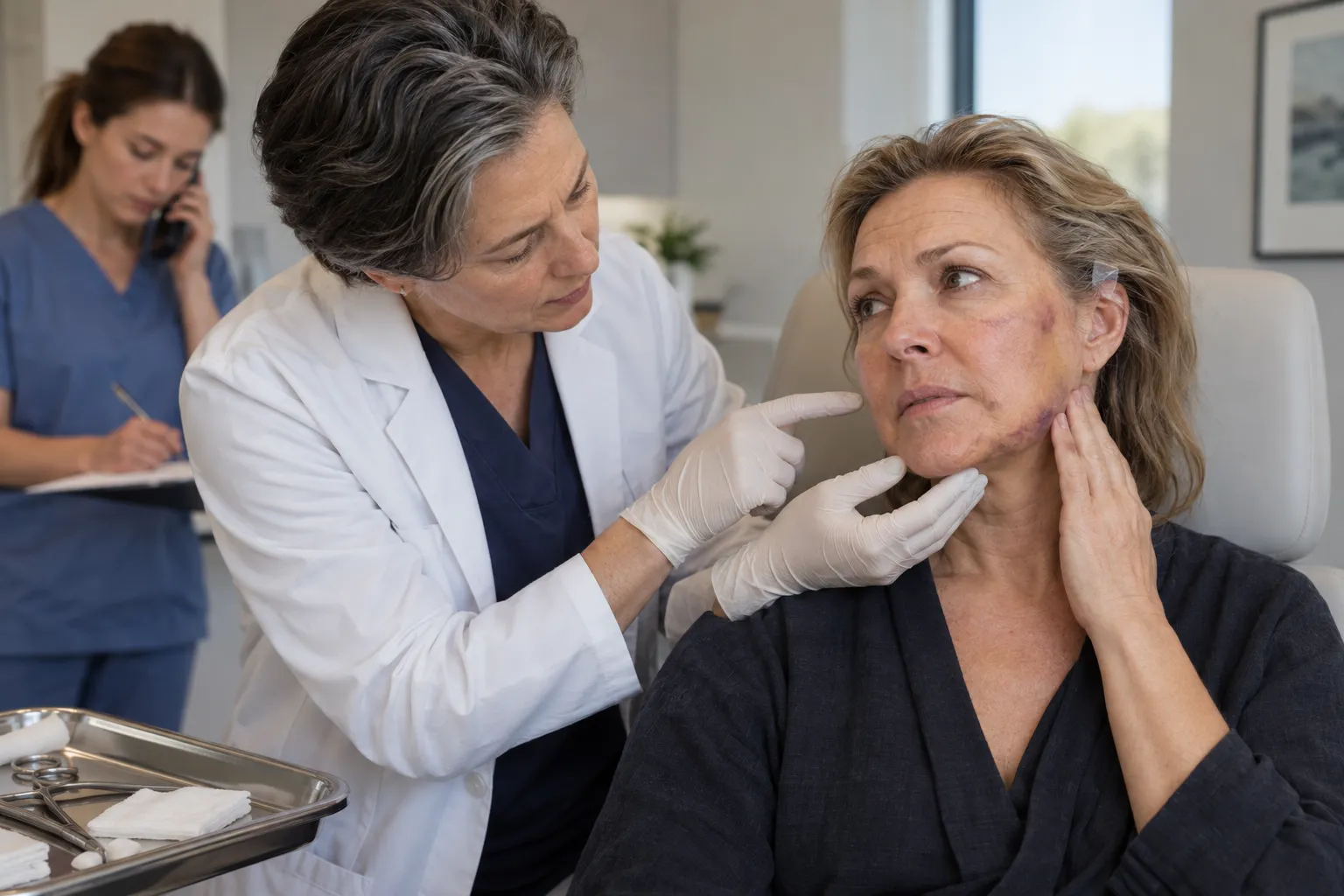
Possible problems range from temporary swelling to uncommon events requiring urgent care. Symptoms and timing can overlap, so this guide cannot determine whether a specific change is normal. Follow the operating surgeon’s instructions and contact the surgical team promptly about new or worsening symptoms. Sudden vision changes, rapidly expanding swelling, or severe pain need immediate assessment.
Named complications: signs and urgency
| Complication | What it may involve | Possible signs and timing | Urgency and response |
|---|---|---|---|
| Hematoma | Blood collecting beneath the skin | Rapid, one-sided swelling, pressure, or increasing pain, often early after surgery | Urgent. Contact the surgeon immediately; emergency evaluation may be needed. |
| Seroma | Fluid collecting beneath the skin | Soft swelling or a fluid-like pocket | Contact the surgeon for assessment and management. |
| Infection | Infection in the surgical area | Increasing redness, warmth, tenderness, drainage, or fever | Prompt clinical assessment is needed. |
| Nerve injury | Temporary or lasting change in facial movement or sensation | Weakness, asymmetry, or altered feeling | Report promptly; the surgeon can assess the affected area and next steps. |
| Skin blood-flow problems or necrosis | Reduced circulation that can damage skin | Dusky, pale, or darkening skin, blistering, or worsening wound edges | Urgent contact with the surgeon is appropriate. |
| Scarring or delayed healing | Visible, widened, raised, or slow-healing incision | Changes around incision lines during healing | Discuss at follow-up; seek earlier advice for opening wounds or worsening changes. |
| Hair loss near incisions | Temporary or persistent loss around the hairline | Thinning or loss near incision sites | Raise at follow-up, or sooner if accompanied by skin changes. |
| Other concerns | Bruising, swelling, numbness, asymmetry, or anesthesia-related events | Effects vary by person and may change during recovery | Use the surgeon’s instructions; urgent or severe symptoms need prompt care. |
How common are these complications? What the evidence supports
Reliable rates specific to the deep plane method are difficult to establish from the information available here. Studies may differ in technique, patient selection, definitions, follow-up, and reporting. A surgeon-reported estimate differs from a controlled study, and a rate from one practice may not apply to another. Ask what evidence supports a percentage, how complications are defined, and whether the figure applies to the technique and patient group under discussion.
Does the deep plane technique increase facial nerve injury risk compared to SMAS?
Available information here does not establish that deep plane surgery has a higher or lower facial nerve injury rate than SMAS techniques overall. Dissection near nerve branches makes anatomical knowledge and operative judgment important, but technique labels alone do not determine risk. Ask the surgeon to explain the planned tissue plane, relevant nerve anatomy, training, and how weakness would be assessed and managed.
Risk factors that raise your odds: smoking, medications, anatomy, and surgeon experience
Risk can be affected by smoking, health conditions, medicines or supplements that influence bleeding, prior facial surgery, skin quality, and individual anatomy. Do not stop or change a prescribed medication without guidance from its prescriber and surgical team. Surgeon training and familiarity with the proposed technique also matter, though no credential or experience level eliminates risk. Discuss your full medical history and ask how personal factors may alter the plan. A general complication figure cannot predict an individual’s risk.
Recovery Timeline: Normal Healing vs. Red Flags That Mean Call Your Surgeon Now
After a Deep Plane Facelift, swelling, bruising, tightness, and altered skin sensation can occur during healing. Their degree and duration vary, so a timeline is a guide, not a prediction. Follow your surgical team’s instructions, attend follow-up visits, and ask about any symptom that concerns you. Recovery planning should reflect the operation and your health.
Week-by-week expectations: swelling, bruising, numbness, and return to work and social activity
Early healing often includes visible bruising and swelling, tightness, or numbness near treated areas. A change that is worsening or markedly different on one side deserves a call, even in the first days. Activity and social plans should follow the surgeon’s guidance rather than a fixed calendar. Work demands, healing, and the extent of surgery can affect when a return feels appropriate.
| Recovery period | Changes that may occur | Practical guidance |
|---|---|---|
| First days | Swelling, bruising, tightness, and numbness may be noticeable. | Follow postoperative instructions and report sudden or worsening changes promptly. |
| First week | Bruising and swelling may remain visible; energy and comfort vary. | Keep follow-up appointments. Ask the surgical team before resuming activities. |
| Following weeks | Bruising generally fades, while swelling or altered sensation may take longer to settle. | Return to work and social activities according to your healing and the surgeon’s advice. |
| Later healing | Subtle swelling, firmness, or scar changes may continue to evolve. | Discuss persistent concerns at follow-up rather than judging the final appearance too early. |
Emergency warning signs: expanding swelling, vision changes, skin discoloration, severe one-sided pain
Call your surgeon immediately for rapidly expanding or one-sided swelling, increasing pressure, or severe pain, especially when symptoms develop suddenly. A hematoma can need urgent assessment. New vision changes require emergency medical attention. Pale, dusky, or darkening skin, blistering, or worsening wound edges may indicate a blood-flow problem and need prompt evaluation. If symptoms are severe or rapidly progressing, or you cannot reach your surgeon, seek emergency care. Do not wait for a routine appointment.
What patients who are unhappy with results report, and what can and cannot be revised
Concerns may involve persistent swelling, visible scars, asymmetry, hairline changes, altered sensation, or an appearance that feels too tight or insufficiently lifted. Early swelling can affect appearance, so a surgeon may recommend allowing healing to progress before assessing a lasting concern. Some issues can be evaluated for revision, while others may not be fully correctable; additional surgery carries risk and does not assure a preferred result. Discuss the concern, timing, and realistic options with a qualified clinician who can examine you in person. Candidacy, technique, recovery, risks, and outcomes require individualized clinical assessment.
Deep Plane Facelift Cost: What Drives the Price and What a Revision Costs
The price of a Deep Plane Facelift includes more than the surgeon’s fee. Anesthesia, operating-room expenses, planned scope, and postoperative care can affect the total. Published prices vary by location and provider, and estimates may not cover the same services. Ask for an itemized written quote and confirm which costs could arise if complication treatment or a later revision is needed. The figures below come from different sources and are reported estimates, not a personalized quote.
Cost breakdown by component: surgeon fee, anesthesia, facility, and common add-ons
ASPS reported an average surgeon fee of about $11,395 for facelift surgery, as cited by The Guardian. RealSelf-cited averages reported by plasticsurgeryofboston.com were about $22,517 for a deep plane facelift and $16,684 for a traditional facelift. These figures are not directly interchangeable; they may reflect different data, locations, and inclusions. Ask whether the quote covers anesthesia, facility fees, preoperative evaluation, follow-up visits, and postoperative supplies. Clarify whether planned additional work is included, and request separate estimates for services outside the surgical fee.
| Cost component | What to confirm in writing |
|---|---|
| Surgeon fee | Which operation and services the fee covers |
| Anesthesia | Provider, planned approach, and whether the fee is included |
| Facility | Operating-room charges and any separate recovery fees |
| Aftercare | Scheduled visits, supplies, and charges for additional assessment |
| Revision or complication care | What is excluded, and how fees are determined if further care is needed |
NYC and US ranges vs. abroad: why quotes vary so widely
These are market estimates, not a reliable like-for-like comparison. Location, surgeon experience, facility standards, anesthesia, surgical scope, and included follow-up can change the total. For care away from home, account for travel, lodging, follow-up access, and arrangements for prompt assessment if a problem develops after returning.
Insurance, financing, and the hidden cost of managing or revising a complication
Facelift surgery is generally considered elective, so patients should not assume insurance will cover the operation or later care. Coverage depends on the plan and circumstances; ask the insurer and surgical practice directly. Financing terms can include interest, fees, or repayment obligations, so review the full agreement. Complication treatment or revision may involve new surgeon, anesthesia, facility, travel, and time-away-from-work costs. No dependable universal revision price is established here. Ask how the practice handles unexpected care and whether a written policy explains additional charges.
How to Vet a Deep Plane Facelift Surgeon: Credentials, Volume, Reviews, and 10 Questions to Ask
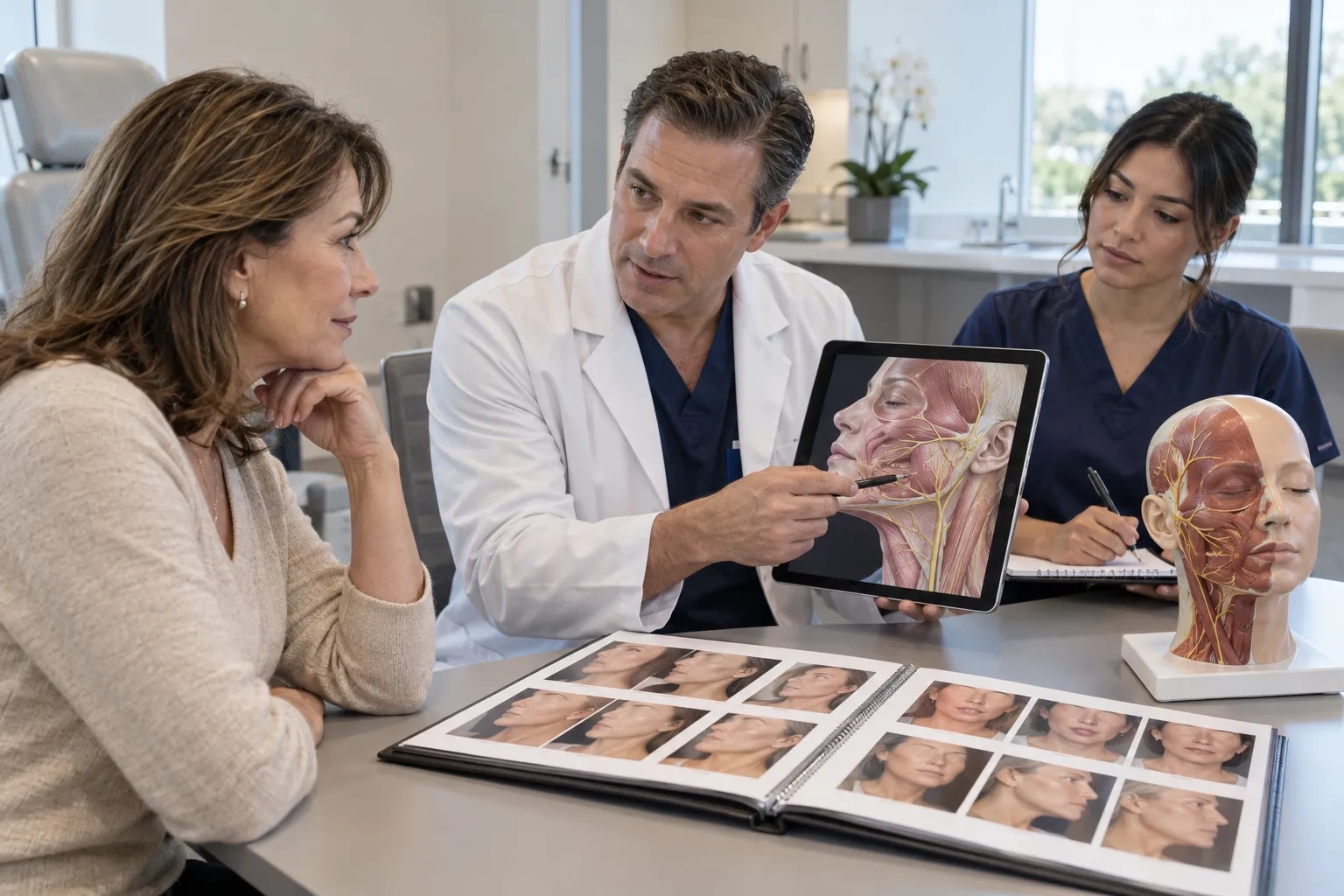
Choosing a surgeon takes more than finding someone who uses a particular technique name. Verify credentials, discuss experience with the planned operation, and assess whether explanations address your anatomy, goals, and medical history. Review photographs and patient feedback as supporting information, not proof of an individual outcome. A useful consultation allows questions about risks, limitations, follow-up, and the plan if healing does not proceed as expected.
The credential checklist: board certification, FACS, hospital privileges, and deep plane case volume
- Verify certification by the American Board of Plastic Surgery.
- Check whether the surgeon is a Fellow of the American College of Surgeons, if claimed.
- Ask where surgery would take place and what hospital privileges or facility credentials apply.
- Discuss the surgeon’s training and ongoing experience with the proposed technique.
- Ask how the surgeon defines and tracks complications, and who provides follow-up.
Ask about experience with the specific operation rather than relying on a broad lifetime procedure count. The surgeon should explain how training, anatomy, and dissection extent inform the plan. Credentials and experience can help assess qualifications, but neither guarantees a result or removes risk.
How to evaluate before-and-after photos and read reviews critically
Look for photographs with consistent lighting, angles, and facial expression, and ask how long after surgery each image was taken. Consider whether examples reflect concerns similar to yours, while remembering that images cannot predict your result. Read deep plane facelift reviews for recurring themes about communication, follow-up, and how concerns were handled. Online accounts are subjective and may describe a different procedure, surgeon, or patient circumstances. Ask what the images show, what they do not show, and what a realistic result might mean for your features.
10 questions to ask at your consultation
- Am I a reasonable candidate for this operation, and why?
- What specific changes do you expect the surgery to address?
- Which technique do you recommend for me, and what is the reasoning?
- What are the material risks in my case?
- How do you protect facial nerve branches during the planned dissection?
- What training and experience do you have with this technique?
- Where will surgery take place, and who will provide anesthesia?
- What care and follow-up are included in the written quote?
- Whom should I contact after hours if a concerning symptom develops?
- What costs or limitations could apply if additional treatment or revision is considered?
Why Dr. Mark Albert's training matters for your surgeon comparison
Dr. Mark Albert is certified by the American Board of Plastic Surgery, is a Fellow of the American College of Surgeons, and directs the MEETH Aesthetic Plastic Surgery Fellowship. His training includes plastic surgery residency and chief residency at the University of Massachusetts Medical School, followed by an aesthetic plastic surgery fellowship at Manhattan Eye, Ear, and Throat Hospital. These credentials provide concrete points for assessing a surgeon’s education and role, not proof that one surgeon is best for every patient. Learn more about Dr. Mark Albert. Candidacy, technique, recovery, risks, and outcomes require individualized clinical assessment. To discuss your questions in person, you may request a facelift consultation with Dr. Albert.
Frequently Asked Questions
What are the risks of having a facelift?
Facelift risks can include bleeding, infection, fluid collection, nerve changes affecting movement or sensation, skin-healing problems, scarring, and hair loss near incisions. No facelift approach is lower-risk, and individual risk depends on anatomy, health, technique, and surgeon training. A consultation with a qualified clinician is needed to discuss risks that apply to you.
What happens in a deep plane facelift?
A deep plane facelift releases selected retaining ligaments and repositions the SMAS, the supportive tissue layer beneath the skin, together with overlying facial tissues. This differs from approaches that tighten the SMAS without the same degree of release, or skin-only lifts that rely more on redraping skin.
What are the potential complications associated with a deep plane facelift?
Deep plane facelift complications can include hematoma, seroma, infection, temporary or lasting nerve injury, skin blood-flow problems, scarring, delayed healing, and hair loss near incisions. Many are uncommon, and timing varies. New or worsening symptoms should be reported promptly to the surgical team for assessment.
Which facelift complications need urgent medical attention?
Sudden vision changes, rapidly expanding swelling, or severe pain need immediate assessment. Rapid one-sided swelling may signal a hematoma, and dusky, pale, or darkening skin can indicate reduced blood flow. Infection signs such as increasing redness, warmth, drainage, or fever also warrant prompt clinical evaluation.
Does deep plane facelift surgery carry a higher nerve injury risk than other techniques?
Deep plane facelift surgery involves dissection near branches of the facial nerve that control facial movement, so temporary weakness or lasting injury is possible even with careful technique. More extensive release creates different technical demands than other approaches. Technique names alone cannot establish an individual risk level, which requires personalized assessment.
How common are deep plane facelift complications?
Reliable complication rates specific to the deep plane method are difficult to establish, because studies differ in technique, patient selection, definitions, and follow-up. A rate reported from one practice may not apply to another, and published rates cannot predict an individual outcome. Ask a surgeon what evidence supports their estimates.
How does a deep plane facelift compare to a SMAS or mini facelift in terms of risk and recovery?
A deep plane facelift releases and repositions deeper tissues, a SMAS facelift lifts or reshapes the supportive layer, and a mini or MACS lift uses a more limited approach. Dissection extent, recovery, cost, and potential risks vary by surgeon and patient. Claims that one method is universally safer deserve caution.
Leave a Reply