before and after mini facelift photos
Before and after mini facelift photos can show how changes may appear in real patients, but they cannot predict your result. The most useful before and after mini facelift photos use comparable facial angles, lighting, expression, and time after surgery. They can support a consultation about skin laxity, jowls, facial structure, health history, and your goals.
Key Takeaways
- Reviewing before and after images helps you visualize potential outcomes while acknowledging that individual results vary significantly.
- High quality comparative photos require consistent lighting, facial angles, and expressions to provide an accurate representation of surgical changes.
- These visual aids serve as a foundation for discussing specific concerns such as skin laxity and jowling during your consultation.
- A thorough evaluation of your medical history and facial structure remains necessary to determine if this procedure aligns with your aesthetic goals.
A mini facelift generally addresses early to moderate looseness in the lower face, including the jawline and jowl area. It does not address every concern related to facial aging. The degree of change depends on anatomy, tissue quality, surgical planning, and healing. Albert Plastic Surgery provides facelift care in New York City with Dr. Mark G. Albert.
What are before and after mini facelift photos?
Before and after mini facelift photos are visual records showing a patient before surgery and at a later stage of healing. They may illustrate changes in the lower face, jawline definition, cheek descent, and jowls. A photograph cannot show incision quality beneath the hairline, postoperative sensation, scar maturation, or the full surgical plan. It also cannot establish whether the same technique is appropriate for you.
Look for consistent frontal, oblique, and profile views, along with similar camera distance and a neutral facial expression. Ask when the after image was taken, whether the patient had a mini facelift or another facelift technique, and whether digital editing or special lighting may affect the appearance. A natural-looking result typically reflects proportionate improvement rather than an overcorrected appearance.
A consultation with a qualified plastic surgeon provides information photographs cannot. The surgeon can assess skin elasticity, soft-tissue descent, facial asymmetry, hairline considerations, and medical factors that may affect candidacy. Technique, anesthesia, recovery, risks, and expected outcomes require individualized clinical assessment. The Facelift page provides general information, while personal guidance requires an in-person evaluation.
What can before and after mini facelift photos help you evaluate?
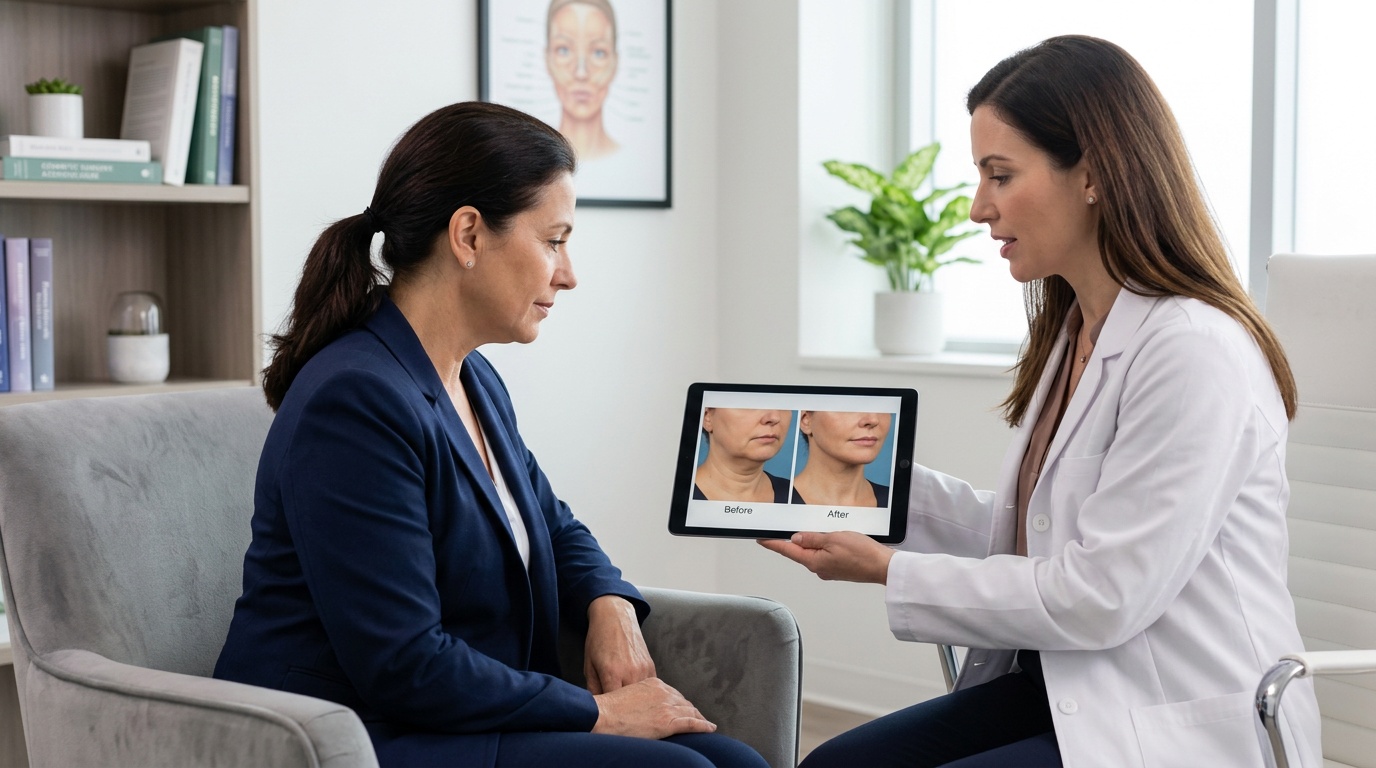
Well-presented photographs can help set realistic expectations. They may show visible changes after tissue repositioning and skin redraping, such as a smoother jawline or less prominent jowls. They also show that improvement is focused and individual. A mini facelift may suit someone with limited lower-face laxity, while a broader pattern of tissue descent may call for a different facelift plan.
Review several patients rather than focusing on one favorable image. Compare the eyes, cheeks, mouth, chin, and neck with the treated jawline to assess overall proportion. Healing varies; swelling, bruising, firmness, numbness, and scar visibility may affect early photographs and change over time. A responsible gallery should not suggest that every patient will heal in the same way.
Photos can also help you describe concerns such as jowls, loose skin near the jaw, or reduced lower-face definition. They cannot establish mini facelift cost, anesthesia planning, recovery needs, or surgical risk. Those details depend on the examination, facility, technique, and individualized treatment plan. If you are searching for a mini facelift near me, review credentials, consultation standards, informed consent, and continuity of care rather than relying on gallery images alone.
How should you choose before and after mini facelift photos?
Start with the quality of the documentation rather than the degree of visible change. Look for consistent lighting, camera distance, facial expression, background, and viewing angles. Frontal, oblique, and profile images can reveal different details along the jawline and lower face. Confirm when the after photograph was taken, since swelling, bruising, firmness, and temporary numbness may affect early images. The procedure should be identified accurately, without presenting selected photographs as a prediction of your result.
Next, consider whether the patients shown have concerns resembling yours. Someone researching mini face lift jowls can examine the transition from the cheek to the jawline, the degree of loose skin, and whether the mouth and chin remain proportionate after surgery. Pay attention to preserved facial character, not only smoother skin. The appropriate technique depends on anatomy, tissue quality, facial proportions, medical history, and aesthetic goals.
Photographs cannot establish mini facelift cost, candidacy, anesthesia planning, or individual risk. Those factors vary according to the surgical approach, operating facility, anesthesia requirements, surgeon experience, follow-up structure, and examination findings. A consultation with Dr. Mark G. Albert can provide individualized guidance about whether the Facelift option is appropriate for your anatomy and goals. Candidacy, technique, recovery, risks, and outcomes require individualized clinical assessment. Use before and after mini facelift photos as discussion material while allowing for variation in healing and final appearance.
Frequently Asked Questions
Can photographs predict my mini facelift result?
No. Photographs can illustrate how a surgeon’s patients looked before and after surgery, but they cannot predict your outcome. Facial anatomy, skin elasticity, tissue quality, age, healing response, incision design, and surgical technique differ from person to person. Use images to support a conversation about your goals and expectations, not as a guarantee of a particular jawline or degree of correction.
What should I ask about a photo gallery?
Ask whether each image represents the same procedure you are considering, when the after photograph was taken, and whether the patient’s views, lighting, expression, and camera distance are consistent. You may also ask how the surgeon evaluates facial balance, manages expected swelling, and follows scar maturation. A qualified surgeon should explain the limitations of photographs and discuss whether the examples are reasonably comparable to your facial concerns.
Can a mini facelift correct jowls?
A mini facelift may improve early or moderate laxity along the lower face and reduce the appearance of jowls in selected patients. The extent of improvement depends on the amount of skin looseness, soft-tissue descent, facial structure, and tissue support. More advanced aging or a broader distribution of laxity may require a different facelift plan. Only an in-person examination can determine which approach may be appropriate.
Does a gallery show the full surgical experience?
No. Images do not show anesthesia planning, postoperative monitoring, temporary numbness, bruising, firmness, scar care, or the schedule for follow-up visits. They also cannot communicate surgical risks, medical restrictions, or the possibility that healing may take longer than expected. Candidacy, technique, recovery, risks, and outcomes require individualized clinical assessment with a qualified clinician.
When should I seek a consultation?
Schedule a consultation when you want personalized guidance about facial laxity, jowls, incision placement, recovery, or realistic expectations. Bring questions about the images you reviewed and disclose relevant medical history, medications, allergies, and prior surgery. An evaluation with Dr. Mark G. Albert can determine whether the Facelift approach fits your anatomy and goals. General education cannot replace individualized medical advice.
Leave a Reply