natural facelift nyc
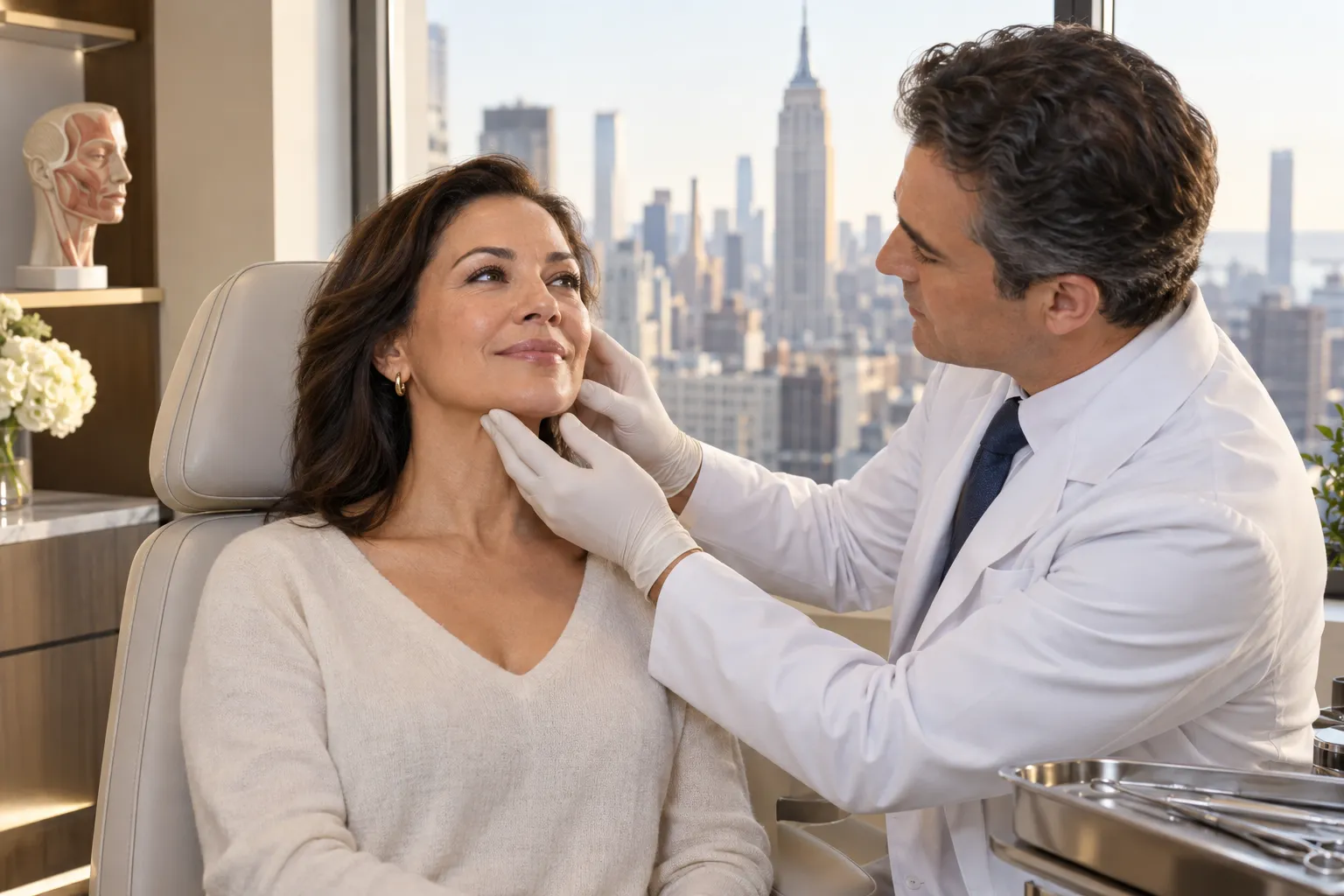
For readers researching a natural facelift NYC, “natural” describes an outcome and a surgical approach, not a standardized procedure name. The aim is to reposition descended facial tissue without relying on skin tension to create the lift. Dr. Mark Albert, certified by the American Board of Plastic Surgery and a Fellow of the American College of Surgeons, offers the Facelift in New York City. The appropriate technique depends on an individual clinical assessment.
Key Takeaways
- A natural-looking result depends on lifting deeper facial tissue rather than pulling the skin tight, which helps avoid an overdone or windswept appearance.
- Technique choice among deep plane, mini, and traditional facelift approaches is based on each patient's anatomy, degree of tissue descent, and personal goals.
- Dr. Mark Albert is certified by the American Board of Plastic Surgery and completed aesthetic fellowship training at Manhattan Eye, Ear, and Throat Hospital.
- Because every face ages differently, candidacy and surgical planning require an in-person evaluation rather than a one-size-fits-all decision.
- Scheduling a consultation with a qualified facelift surgeon is the most reliable way to understand which approach may suit your individual needs.
Deep plane, mini, and full facelift procedures differ in the areas and tissues addressed, their extent, and their tradeoffs. Compare the surgical plan, surgeon’s credentials, recovery expectations, and what a quote includes rather than relying on a “natural” label alone.
What 'Natural Facelift' Actually Means: and How Dr. Mark Albert Approaches It
A natural-looking result generally means facial contours remain proportionate and expression is not distorted by excessive skin tension. The term is not a distinct, standardized operation. Ask what tissue the surgeon plans to reposition, which areas the procedure addresses, and how the plan accounts for your facial anatomy.
Repositioning Tissue vs. Pulling Skin: The Real Difference
Facial aging can involve descent of deeper supporting tissues as well as changes in skin quality. Deep plane techniques release and reposition the SMAS, the supportive layer beneath the skin, and the platysma, a broad muscle in the lower face and neck. The goal is to improve facial position without making the skin carry the lift by itself. The surgeon must tailor the extent and direction of repositioning to the individual; the technique does not guarantee a particular appearance.
Deep Plane, Mini, and Nanolift: Which Techniques Earn the 'Natural' Label
Deep plane, mini facelift, and Nanolift™ refer to different approaches, not assurances of a natural result. The choice depends on areas of concern, anatomy, health, and the extent of change sought. Dr. Albert’s Facelift information describes care in New York City; his profile outlines his training and professional credentials. Ask how the proposed technique addresses your facial tissues, where incisions would be placed, and what limitations remain.
Non-Surgical 'Liquid Facelifts': What They Can and Cannot Do
“Liquid facelift” is a marketing phrase, not another name for facelift surgery. It does not describe the surgical repositioning of facial tissues discussed here, and should not be treated as an equivalent technique or used to judge whether a surgical plan is appropriate.
Natural Facelift Options in NYC Compared: Mini, Full, and Deep Plane
Procedure names alone cannot establish which option is right for an individual. Compare the facial areas addressed, extent of tissue repositioning, expected recovery, incision planning, anesthesia, and total quoted cost. Candidacy, technique, recovery, risks, and outcomes require individualized clinical assessment. Published descriptions can orient readers, but an in-person consultation is needed to discuss a personal plan.
How We Evaluated: Candidacy, Longevity, Recovery, and Cost Transparency
The options below are compared by scope and decision factors, not by a universal ranking. A smaller operation may involve a more limited treatment area, while a broader lift may address more extensive facial changes. Longevity varies with skin quality, lifestyle, technique, and individual aging. Ask the surgeon to explain the proposed extent, anesthesia plan, recovery needs, likely incision locations, and what the fee includes.
Dr. Mark Albert: Deep Plane Facelift in NYC
Dr. Mark Albert is certified by the American Board of Plastic Surgery and is a Fellow of the American College of Surgeons. His training includes plastic surgery residency and chief residency at the University of Massachusetts Medical School, followed by an aesthetic plastic surgery fellowship at Manhattan Eye, Ear, and Throat Hospital. In a deep plane approach, release and repositioning of deeper facial support structures are central to the surgical plan. Discuss whether this extent of surgery fits your anatomy, goals, and health, along with anesthesia and recovery considerations.
Mini Facelift: Candidacy, Limitations, and Tradeoffs
A mini facelift generally refers to a more limited surgical approach than a full facelift. It may be considered when a surgeon finds that the areas and degree of change sought suit a narrower plan. It may not address more extensive facial or neck changes. Incision placement, anesthesia, recovery, and results vary by operation and patient. A consultation can clarify whether a limited approach can address the concerns being discussed; “mini” does not mean suitable for everyone.
Full Facelift with Neck Lift: When More Extensive Repositioning Is Warranted
A broader facelift plan may be discussed when concerns extend beyond a limited area of the face. The surgeon should explain which regions are included, whether the neck is part of the plan, and how facial and neck tissues would be addressed. Discuss anesthesia, recovery support, risks, and incision locations. The examination and the patient’s priorities, not the procedure’s name, guide the conversation about candidacy.
Side-by-Side Procedure Comparison
This overview offers questions for a consultation, not not assured differences in recovery or results. The specific plan can vary within each category. Ask the surgeon to define the operation in plain language and explain why its scope matches your anatomy and goals.
| Option | Typical scope | Key discussion points | What to confirm |
|---|---|---|---|
| Deep plane facelift | Release and repositioning of deeper facial support tissues | Areas treated, extent of repositioning, and anesthesia plan | Incisions, recovery needs, risks, and individualized expectations |
| Mini facelift | A more limited surgical approach | Whether its scope addresses the areas of concern | Limitations, incision placement, anesthesia, and recovery |
| Full facelift with neck lift | A broader plan that may include the face and neck | Which regions are included and how tissues are addressed | Operative scope, risks, recovery support, and total quoted fee |
Facelift Cost in NYC: Real 2026 Price Bands and What Your Quote Includes
Published NYC facelift estimates vary because “facelift” can describe operations with different scopes, surgeon fees, anesthesia plans, and facility costs. For someone comparing a natural facelift NYC option, ask not only about the starting price but what the proposed operation includes and whether its scope fits the areas being treated. Dr. Mark Albert offers Facelift surgery in New York City. The total fee and clinical plan require an individualized consultation.
NYC Cost Breakdown by Procedure: Mini vs. Full vs. Deep Plane
Research estimates commonly place NYC facelift pricing between $20,000 and $80,000. deep plane facelift These are market estimates, not a quote for a specific patient or a guarantee of what a practice will charge.
Available research does not establish a dependable, apples-to-apples mini facelift price band. A mini procedure may cost less than a broader operation, but comparison is meaningful only when the surgical scope and included fees are clear. Ask for a written estimate identifying the planned procedure rather than relying on its label.
Line Items: Surgeon Fee, Anesthesia, Facility, and Follow-Up
Check whether estimates cover the same categories. A lower quoted amount may not include every service associated with surgery and follow-up. Ask the office to explain the full expected fee, any separately billed items, and how questions or concerns are handled after the procedure. Arrangements vary by practice.
| Quote component | What to confirm |
|---|---|
| Surgeon fee | Which operation and treatment areas the fee covers |
| Anesthesia | Whether the anesthesia plan and related fees are included |
| Facility | Whether facility charges are part of the estimate |
| Follow-up | Which scheduled postoperative visits are included |
Why Deep Plane Quotes Range from $30,000 to Over $100,000
Deep plane Differences may reflect the surgeon, operation’s extent, anesthesia and facility arrangements, and what the quoted fee includes. A wide spread does not show which quote represents better care.
When reviewing a deep plane facelift cost in NYC, request a personalized, itemized estimate and ask what could change the total. Confirm whether the proposed operation includes additional areas and whether related fees are included. This helps distinguish a complete estimate from a starting price.
How NYC Pricing Compares with Other US Markets
The available research does not provide a consistent, like-for-like national comparison across cities. Local estimates can differ, and a headline price may cover a different procedure or set of services. Compare the proposed surgical plan, credentials, anesthesia, facility, and follow-up rather than assuming a lower out-of-town quote includes equivalent care.
How to Vet a Facelift Surgeon: Checklist, Consultation Questions, and Recovery Reality
Choosing a surgeon calls for more than comparing procedure names or online claims. Review credentials, ask how the proposed operation fits your anatomy, and understand who will guide your care after surgery. Dr. Mark Albert is certified by the American Board of Plastic Surgery and is a Fellow of the American College of Surgeons. His Facelift service page describes care in New York City. A consultation is the setting for discussing whether a particular plan is appropriate for you.
Surgeon-Vetting Checklist: ABPS Certification, FACS, Hospital Privileges, Case Volume
Use this checklist to assess qualifications and practical details of care. Credentials offer useful context, but no credential alone establishes which surgeon or technique is right for an individual.
- Verify board certification: Confirm certification through the American Board of Plastic Surgery. The board requires accredited plastic surgery residency training and written and oral examinations.
- Understand FACS status: Fellowship in the American College of Surgeons reflects board certification, peer review, and a commitment to ethical standards.
- Ask about the surgical setting: Ask where surgery would take place, what safety protocols apply, and which hospital privileges are relevant to the planned operation.
- Discuss experience specifically: Ask how often the surgeon performs the proposed type of facelift and how that experience relates to your concerns. Do not assume a number or ranking without reliable documentation.
- Review continuity of care: Find out who answers questions after surgery and how follow-up visits are arranged.
Dr. Albert’s professional background and training are described in his surgeon profile. Consider verified credentials alongside communication, surgical planning, and clear expectations.
Questions to Bring to Any Consultation
Bring a written question list and ask for plain-language answers. Discuss your priorities and the limits of the proposed operation, not just its name or advertised benefits.
- Which facial areas would this operation address, and which would remain untreated?
- Why do you recommend this surgical approach for my anatomy and goals?
- Where would incisions be placed, and what should I understand about visible scarring?
- What anesthesia and surgical setting do you anticipate for my plan?
- What risks, possible complications, and recovery needs should I consider?
- What is included in the written estimate, and how is follow-up care arranged?
Consider whether the surgeon answers directly, discusses limitations, and allows time for questions. Ask how the plan may change after an examination or review of your health history.
Recovery Week by Week: Back to Work and Social Life
Recovery varies according to the operation, individual healing, and the surgeon’s instructions. Ask for guidance based on the planned procedure and your daily responsibilities rather than relying on a fixed return-to-work promise.
- Early recovery: Arrange help with transportation and routine tasks as directed. Ask which changes or symptoms merit a call to the surgical team.
- Following weeks: Healing and readiness for work or social activities differ. Confirm when the surgeon wants to see you and which activity limits apply.
- Ongoing follow-up: Keep scheduled visits and contact the care team if a concern arises. Do not change activity or aftercare instructions without clinical guidance.
Scars, Risks, and Honest Limitations
Facelift surgery involves incisions and may leave scars; their appearance varies with incision placement, healing, and individual factors. Other material risks can include bleeding, infection, anesthesia-related complications, changes in sensation, or injury to facial nerves. The likelihood and significance of risks vary by patient and operation. Ask the surgeon to explain personal risk factors, the plan’s limits, and when to seek urgent medical attention. No article can determine candidacy or replace an in-person clinical assessment.
Frequently Asked Questions
What is the most natural looking facelift?
The most natural looking facelift is generally one that repositions descended facial tissue without relying on skin tension to create the lift. Deep plane techniques release and reposition deeper support structures such as the SMAS, helping contours stay proportionate. The right approach depends on your anatomy, goals, and an individualized surgical assessment.
Is there such a thing as a natural facelift?
A natural facelift describes an outcome and a surgical approach, not a standardized procedure name. The goal is to restore facial position so contours remain proportionate and expression is not distorted by excessive skin tension. Ask any surgeon what tissue will be repositioned and how the plan accounts for your facial anatomy.
What is the newest non-invasive facelift?
A so-called liquid facelift is a marketing phrase for non-surgical injectable treatments, not another name for facelift surgery. It does not involve the surgical repositioning of facial tissues and should not be treated as an equivalent technique. Candidacy for any treatment requires an in-person consultation with a qualified clinician.
What is the average cost of a facelift in New York City?
The cost of a facelift in New York City varies widely with the technique, the extent of tissue repositioning, anesthesia, facility needs, and the surgeon's plan. Rather than comparing quotes on price alone, ask exactly what the fee includes, such as anesthesia, facility costs, and follow-up care. A consultation is needed for an individualized estimate.
What age is best for a facelift?
There is no single best age for a facelift, because facial aging varies with genetics, skin quality, lifestyle, and anatomy. Candidacy depends on a clinical assessment of your tissues and goals rather than your birth year. A consultation with a qualified surgeon can determine whether the timing is right for you.
What is the difference between a mini facelift and a full facelift?
A mini facelift is a more limited surgical approach than a full facelift and may suit narrower areas of change. A full facelift may address more extensive facial and neck changes through broader tissue repositioning. Which option fits depends on your anatomy, areas of concern, health, and the degree of change you seek.
Who performs deep plane facelifts in NYC?
Dr. Mark Albert, a board-certified plastic surgeon and Fellow of the American College of Surgeons, offers deep plane facelift surgery in New York City. His training includes plastic surgery residency at the University of Massachusetts Medical School and an aesthetic fellowship at Manhattan Eye, Ear, and Throat Hospital. Candidacy and technique require an individualized consultation.
Leave a Reply