
best plastic surgeon for facelift in nyc
Choosing the best plastic surgeon for facelift in NYC requires more than reading star ratings or comparing a single price. Training, board certification, experience with facial anatomy, surgical judgment, facility standards, communication, and continuity of care all affect the quality of the decision. A consultation should help you understand which facelift approach may fit your anatomy, goals, skin quality, and tolerance for recovery.
Key Takeaways
- Board certification from the American Board of Plastic Surgery confirms a surgeon has completed accredited training and passed rigorous examinations in the specialty.
- Fellowship training in aesthetic and facial plastic surgery signals deeper expertise in facial anatomy, which directly shapes facelift outcomes.
- Reviewing before-and-after photographs of patients with similar facial structure and aging patterns helps you assess a surgeon's technique and aesthetic judgment.
- A thorough consultation should explain which facelift technique suits your anatomy, skin quality, and recovery expectations, rather than pushing a one-size-fits-all procedure.
- Confirm that your procedure will be performed in an accredited surgical facility with qualified anesthesia support and a clear plan for post-operative care.
Dr. Mark G. Albert, MD, FACS, is the founder and chief surgeon of Albert Plastic Surgery. He is certified by the American Board of Plastic Surgery and is a Fellow of the American College of Surgeons. His training includes plastic surgery residency and chief residency at the University of Massachusetts Medical School, followed by an aesthetic plastic surgery fellowship at Manhattan Eye, Ear, and Throat Hospital. He also serves as Program Director of the MEETH Aesthetic Plastic Surgery Fellowship and Assistant Clinical Professor of Surgery at the Zucker School of Medicine at Hofstra/Northwell.
What is best plastic surgeon for facelift in NYC?
The best plastic surgeon for facelift in NYC is not defined by marketing language or a universal ranking. A strong choice is a qualified facial plastic surgeon who can explain the examination findings, recommend an appropriate technique, discuss limitations and risks, and provide a clear plan for anesthesia, incision placement, aftercare, and follow-up. Board certification should be verified through the American Board of Plastic Surgery, rather than accepted from a general or self-described certification claim.
Facelift surgery is individualized. A traditional Facelift may address laxity along the cheeks, jawline, and neck. A Deep Plane Facelift changes the position of deeper facial tissues, while a Mini Facelift may suit selected patients with more limited tissue descent. Albert Plastic Surgery maintains a dedicated live service page for Mini Facelift. Nanolift™ is another option that may be considered when the degree and pattern of aging call for a more limited approach. The correct choice depends on an in-person assessment, not a procedure name alone.
Dr. Albert’s FACS designation denotes Fellowship in the American College of Surgeons. The American College of Surgeons describes FACS as a professional designation reflecting standards related to training, education, competence, and ethical practice. It does not guarantee a particular result. Similarly, ABPS certification is meaningful evidence of specialty training and examination, but it does not remove the need to assess communication, surgical planning, facility accreditation, and follow-up during a consultation.
Benefits of choosing the best plastic surgeon for facelift in NYC
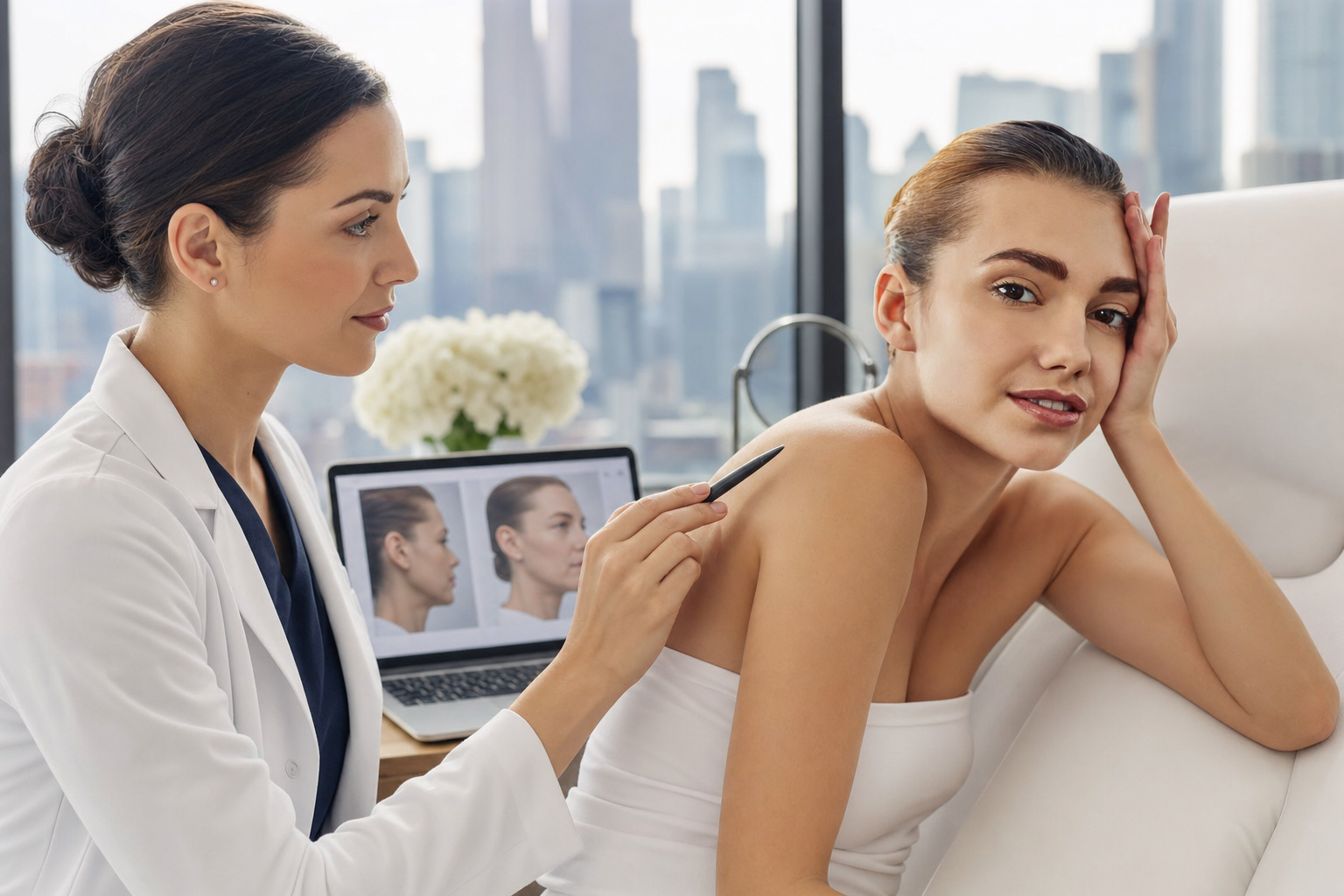
A carefully selected surgeon begins with diagnosis of the visible aging pattern rather than a preset operation. Facial descent, jowling, neck laxity, skin elasticity, facial proportions, prior surgery, medical history, and expectations all influence planning. The goal is usually a natural and balanced improvement, not a tight or altered appearance. A thoughtful surgeon can explain what facelift surgery can address and what it cannot, including the fact that scars, swelling, asymmetry, recurrent laxity, and changes over time remain possible.
Technique selection also benefits from an experienced, anatomy-based discussion. A Facelift, Nanolift™, Deep Plane Facelift, and Mini Facelift differ in tissue dissection, incision pattern, extent of correction, and expected recovery demands. No technique is universally superior. The procedure should correspond to the patient’s tissue characteristics and priorities. Albert Plastic Surgery offers the Mini Facelift as a defined facelift option, with candidacy, technique, recovery, risks, and outcomes requiring individualized clinical assessment.
Credential review provides another practical benefit. ABPS certification distinguishes plastic surgery specialists who have completed the board’s required training and examination pathway from vague claims of being “board certified.” FACS adds a professional affiliation with the American College of Surgeons, while the surgeon’s actual facelift experience, operative planning, and patient communication still deserve direct review. Patients may also examine before-and-after photographs with attention to hairline, tragus, earlobe, jawline, neck contour, scar placement, facial movement, and consistency across cases.
Safety planning extends beyond the operating room. The American Society of Plastic Surgeons provides patient-safety guidance addressing consultation, healing, bruising, swelling, activity limits, and the variability of recovery. A qualified surgeon should review anesthesia, blood-thinning medications and supplements, smoking or nicotine exposure, infection risk, bleeding, nerve injury, skin healing problems, and the possibility of revision. Cost should also be explained in writing, including surgeon fees, anesthesia, facility charges, postoperative visits, garments or supplies, and the scope of the selected operation. A single advertised number rarely represents every patient’s total expense.
How to Choose the Best Plastic Surgeon for Facelift in NYC
Choosing the best plastic surgeon for facelift in NYC begins with verifiable qualifications and a consultation centered on your anatomy, goals, and safety. Confirm certification through the American Board of Plastic Surgery, rather than relying on a general statement that a surgeon is “board certified.” Dr. Mark G. Albert, MD, FACS, is certified by the American Board of Plastic Surgery and is the founder and chief surgeon of Albert Plastic Surgery. His plastic surgery residency and chief residency at the University of Massachusetts Medical School, followed by an aesthetic plastic surgery fellowship at Manhattan Eye, Ear, and Throat Hospital, provide relevant training for evaluating facial aging and planning facelift surgery.
Look beyond online reviews, which can reflect communication and office experience but cannot independently establish surgical quality. During a consultation, ask how the surgeon evaluates skin laxity, jowls, neck contour, facial proportions, prior procedures, medical conditions, medications, nicotine exposure, and expectations. The discussion should cover incision placement, tissue elevation, anesthesia, facility standards, postoperative monitoring, scar maturation, swelling, bruising, activity restrictions, asymmetry, bleeding, infection, nerve changes, skin-healing problems, and possible revision surgery. FACS means Fellowship in the American College of Surgeons, a professional designation associated with standards for training, education, competence, and ethical conduct. The American College of Surgeons does not present FACS as a guarantee of a specific outcome, so it should be considered alongside ABPS certification, facial surgery experience, and direct communication.
Ask the surgeon to explain why a particular operation fits your pattern of tissue descent. A Facelift, Nanolift™, Deep Plane Facelift, and Mini Facelift can differ in incision design, dissection, tissue repositioning, correction of the jawline or neck, and recovery requirements. Albert Plastic Surgery maintains a dedicated live service page for Mini Facelift. Mini Facelift is directly within the client-directed facelift scope. A surgeon should explain limitations as carefully as anticipated improvement, including the possibility that a smaller operation may not address more advanced laxity. Candidacy, technique, recovery, risks, and outcomes require individualized clinical assessment.
| What to compare | Questions that provide useful evidence | Why it matters |
|---|---|---|
| Board certification | Can the credential be verified through ABPS? | It confirms a specialty-specific training and examination pathway. |
| Facelift planning | Which findings support the recommended technique? | Anatomy-based planning can reduce the risk of choosing an operation by name alone. |
| Before-and-after photographs | Are images shown in consistent views, lighting, and follow-up periods? | Comparable photographs offer more useful context than isolated promotional images. |
| Recovery and safety | Who provides instructions and follow-up if concerns arise? | Clear continuity of care supports informed decisions about healing and restrictions. |
| Total cost | Does the written estimate identify surgeon, anesthesia, facility, and follow-up charges? | Facelift-related quotes vary with geography, procedure scope, and individual planning. |
A written estimate should be reviewed only after the surgeon has examined you and defined the planned operation. The American Society of Plastic Surgeons provides patient education on facelift recovery, including expected bruising, swelling, activity limitations, and variation in healing. Use those materials as general education, then ask how your medical history may affect preparation and follow-up. The best plastic surgeon for facelift in NYC should make room for questions, explain alternatives within facelift surgery, and allow you to decide without pressure.
Frequently Asked Questions
Who is the best facelift surgeon in NYC?
There is no universal ranking that can determine the right surgeon for every patient. A qualified choice should include verified American Board of Plastic Surgery certification, relevant facial surgery training, clear communication, careful examination, and a plan tailored to your anatomy and goals. Dr. Mark G. Albert, MD, FACS, is the founder and chief surgeon of Albert Plastic Surgery and is certified by the American Board of Plastic Surgery. An in-person consultation remains necessary before making an individualized decision.
How should I compare facelift surgeons in New York City?
Compare training, board certification, operating-facility standards, photographs of appropriately followed patients, consultation quality, written fees, and postoperative access. Reviews may describe the office experience, but they cannot independently confirm technical skill or suitability for your anatomy. Ask each surgeon to explain incision placement, tissue repositioning, anesthesia, expected swelling and bruising, activity restrictions, scar maturation, possible complications, and follow-up arrangements.
Is Dr. Albert certified by the American Board of Plastic Surgery?
Yes. Dr. Albert is certified by the American Board of Plastic Surgery. Readers may use the ABPS verification resource to review certification information directly. His FACS designation means Fellow of the American College of Surgeons. The American College of Surgeons explains that this designation reflects professional standards related to education, training, competence, and ethical practice. FACS is not a promise of a particular surgical result.
What is the difference between Facelift, Nanolift™, Deep Plane Facelift, and Mini Facelift?
These facelift approaches differ in the extent of dissection, tissue repositioning, incision design, areas treated, and recovery demands. A traditional Facelift may address broader laxity of the cheeks, jawline, and neck. A Deep Plane Facelift involves work in deeper tissue planes. Nanolift™ and Mini Facelift may be considered for selected patterns of aging and more limited correction. No technique is appropriate for everyone. Candidacy, technique, recovery, risks, and outcomes require individualized clinical assessment.
When should I seek medical advice about facelift surgery?
Schedule a consultation when you want an examination and personalized explanation of your options, limitations, and risks. Contact the surgical team promptly after surgery for concerning bleeding, worsening pain, fever, breathing difficulty, sudden swelling, drainage, or changes that do not match your postoperative instructions. General education from the American Society of Plastic Surgeons can support preparation, but it does not replace instructions from your treating clinician.
Leave a Reply