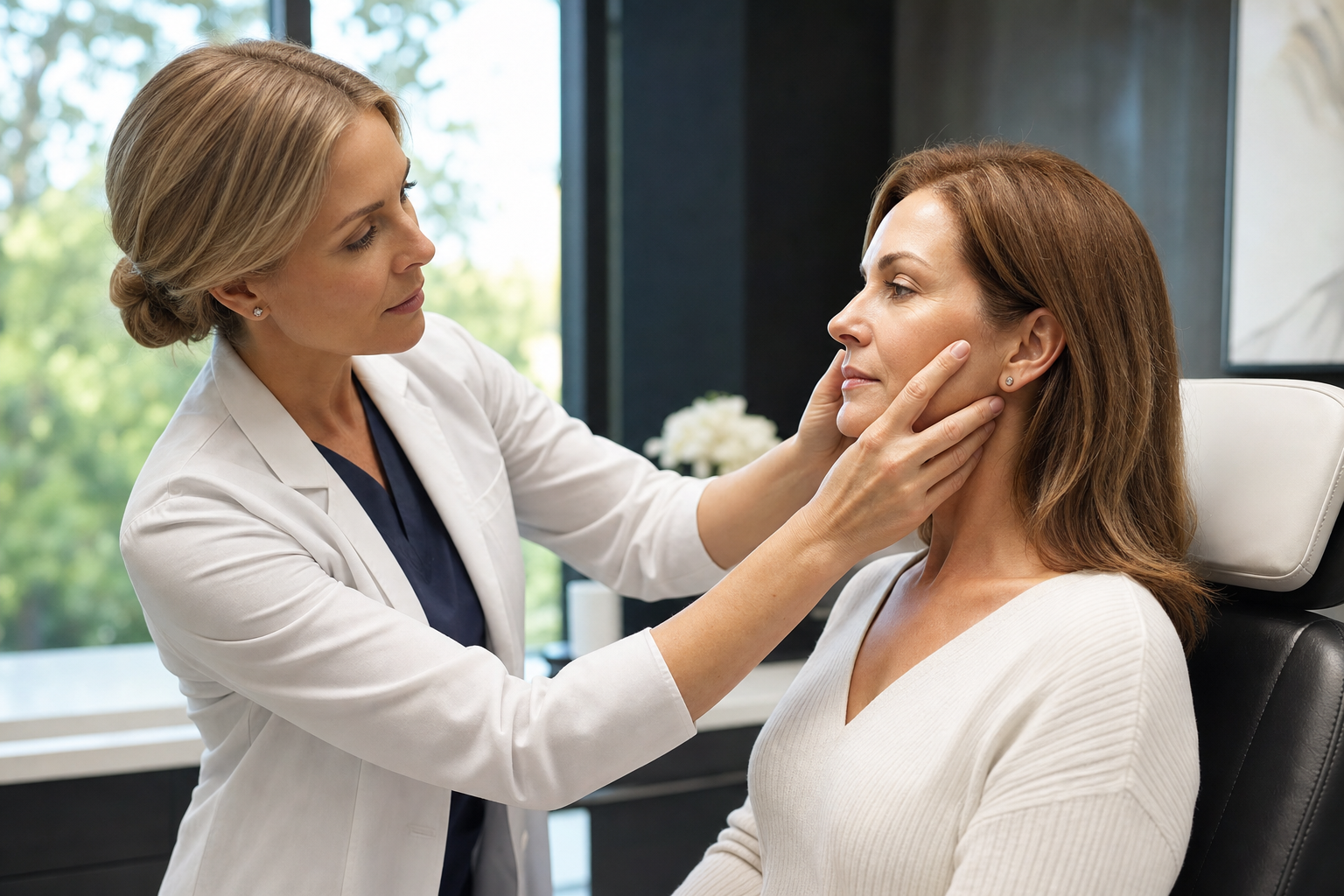
deep plane facelift experts
A deep plane facelift can reposition deeper facial tissues, including the cheek soft tissues and supporting ligaments, rather than relying only on skin tension. For adults considering deep plane facelift experts, the central question is not whether the technique sounds advanced. It is whether the operation matches the patient’s anatomy, skin quality, degree of laxity, and goals.
What Is a Deep Plane Facelift: Which Facial Concerns Can It Address?
A deep plane facelift releases selected retaining ligaments and repositions facial tissues at a deeper anatomical level. It may improve jowls, cheek descent, jawline definition, and some neck laxity. It does not erase every wrinkle or correct pigmentation, sun damage, or poor skin quality.
Skin, SMAS, retaining ligaments, and fat compartments: the anatomy in plain English
The face has several tissue layers. Skin is the visible outer covering. Beneath it lies connective tissue and the superficial musculoaponeurotic system, commonly called the SMAS. Facial muscles, fat compartments, and retaining ligaments sit in relation to these layers. Retaining ligaments help anchor soft tissue to deeper structures. With aging, skin loses elasticity, fat may shift or diminish, and supporting tissues can descend.
In a deep plane facelift, the surgeon works beneath the SMAS in selected areas and releases specific attachments so the cheek and lower-face tissues can move as a unit. This can reduce the need to pull the skin tightly. The precise dissection, incision design, tissue handling, anesthesia plan, and extent of surgery vary by patient and require an in-person assessment.
Jowls, jawline definition, and neck laxity: setting realistic goals
Patients often seek treatment for jowling, a less distinct mandibular border, descended cheek tissue, or loose skin beneath the chin and along the neck. A deep plane approach may address these concerns when the underlying tissue descent and skin laxity are appropriate for that operation. The goal is usually a rested, proportionate appearance, not a rigid or over-tight result.
What no facelift can fix: fine lines, pigmentation, sun damage, and skin quality
A facelift repositions and removes selected excess tissue, but it does not restore youthful skin biology. Fine lines, enlarged pores, uneven pigmentation, scars, sun damage, and changes in skin texture may remain. Skin quality also influences how smoothly tissues settle and how visible lines appear after healing. During consultation, a qualified surgeon should explain these limits rather than imply that deep plane surgery corrects every sign of facial aging.
How Does a Deep Plane Facelift Compare With Other Facelift Techniques?
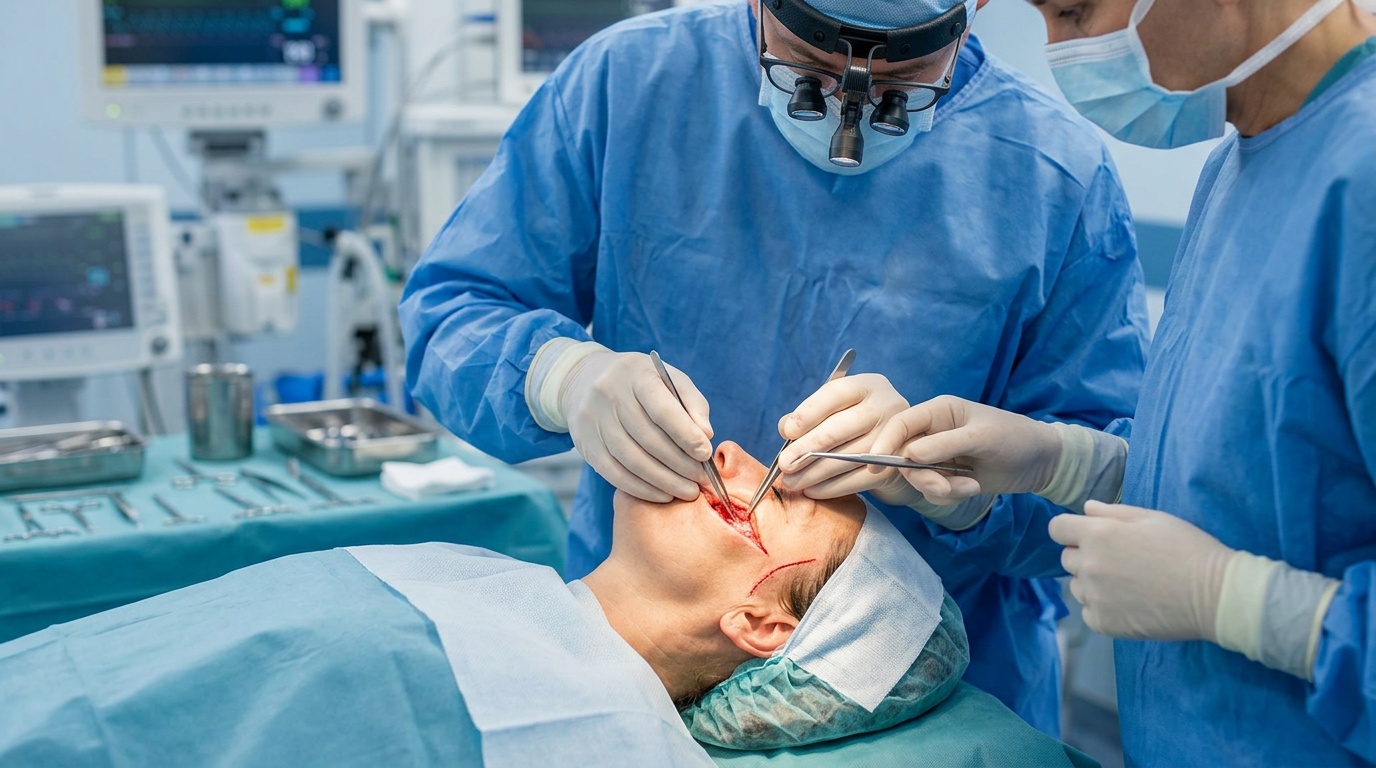
Deep plane release versus SMAS-focused lifting: what changes beneath the skin
A SMAS-focused facelift may tighten, fold, or reposition the SMAS layer through a different surgical design. A deep plane facelift involves release beneath that layer in selected regions, allowing certain facial tissues to move together. Neither description alone establishes which operation is appropriate. Tissue thickness, ligament position, skin laxity, neck anatomy, previous procedures, and the desired degree of change are more useful decision factors than a label.
Deep plane, traditional facelift, Mini Facelift, and Nanolift™ side by side
The following overview describes broad distinctions. Actual incisions, treatment areas, anesthesia, and recovery planning are individualized. The Mini Facelift is designed for selected patients with more limited laxity, while a broader operation may be considered when aging affects several facial zones.
| Technique | Tissue focus | Typical concern | General planning consideration |
|---|---|---|---|
| Deep Plane Facelift | Selected release beneath the SMAS | Moderate to more pronounced cheek, jowl, and neck descent | Broader dissection may require careful recovery planning |
| Traditional Facelift | Skin and deeper supporting layers, according to surgical design | Lower-face and neck laxity | Approach varies substantially among patients |
| Mini Facelift | More limited lifting of facial tissues | Selected early or localized laxity | May not address advanced neck or midface descent |
| Nanolift™ | Limited, individualized facelift approach | Subtle aging changes in appropriate candidates | Suitability depends on laxity, anatomy, and desired correction |
Is deep plane “better”? Why the honest answer depends on your anatomy and laxity
There is no universally superior facelift technique. A deeper operation may be unnecessary for a patient with modest laxity, while a limited procedure may not provide the intended correction for more advanced tissue descent. The most reliable discussion with deep plane facelift experts should address the anatomical reason for the recommendation, the areas it will treat, the areas it will not treat, incision placement, anesthesia, recovery demands, and material risks.
Patients researching deep plane facelift experts should also ask whether a surgeon is comfortable recommending a different facelift approach when that better fits the examination. At Albert Plastic Surgery, the Mini Facelift remains within the dedicated facelift scope, and candidacy, technique, recovery, risks, and outcomes require individualized clinical assessment.
What Qualifies a Surgeon as a Deep Plane Facelift Expert: How Can You Verify It?
Choosing among deep plane facelift experts requires more than searching for a technique name. A sound evaluation considers board certification, formal training, surgical judgment, facility standards, communication, and the surgeon’s ability to explain why a particular facelift approach fits your anatomy. Candidacy, technique, anesthesia, recovery, risks, and outcomes require individualized clinical assessment. A consultation should feel like a careful medical discussion, not a sales presentation.
Credentials you can verify: American Board of Plastic Surgery certification, fellowships, and teaching roles
American Board of Plastic Surgery certification indicates that a physician has completed recognized plastic surgery training and met the board’s examination and professional requirements. It is distinct from membership in a professional organization. Patients can use the American Board of Plastic Surgery certification-verification tool to confirm a surgeon’s current status and specialty. The American Society of Plastic Surgeons also advises patients to evaluate board certification, an accredited surgical facility, and qualified anesthesia care when considering surgery.
Additional training can provide useful context, particularly when it relates directly to facial anatomy and aesthetic surgery. Ask where the surgeon completed residency, whether advanced fellowship training followed, and whether the surgeon teaches or holds an academic appointment. These details do not guarantee a specific result. They help establish the scope of education behind the surgeon’s assessment and operative planning.
Marketing claims versus evidence: a surgeon-evaluation checklist
Words such as “expert,” “natural,” or “advanced” are not independent proof of skill. Look for clear answers about the surgeon’s credentials, the procedure’s intended tissue changes, facility accreditation, anesthesia provider, postoperative contact, and management of complications. A responsible surgeon should also explain when a deep plane operation may not be appropriate and should be willing to recommend postponement or a different facelift technique when the examination supports that choice.
- Confirm American Board of Plastic Surgery certification through the board’s verification resource.
- Ask about plastic surgery residency, facial aesthetic fellowship training, and current teaching responsibilities.
- Verify the surgical facility’s accreditation and the anesthesia provider’s qualifications.
- Request a specific explanation of the recommended tissue plane, treatment area, incision design, and limitations.
- Discuss follow-up access, warning signs, possible revisions, and the plan for concerns during healing.
- Evaluate whether the consultation includes questions about medical history, prior facial surgery, medications, smoking, skin quality, and personal goals.
How to read before-and-after photos with a critical eye
Before-and-after photographs can illustrate a surgeon’s aesthetic judgment, but they should not be treated as a promise. Compare images with similar lighting, camera distance, head position, facial expression, and hair placement. Review front, oblique, and profile views when available. Ask how long after surgery the second photograph was taken, since swelling and scar maturation can change the appearance over time. A useful gallery should show a range of ages, skin types, facial structures, and degrees of laxity rather than only highly selected examples.
- Check whether the patient’s posture, expression, lighting, and camera angle match.
- Look at the hairline, ears, jawline, cheeks, and neck instead of focusing only on one feature.
- Ask whether the images represent healed results and whether the patient consented to their use.
- Notice proportion and movement. A natural result should not be judged by tightness alone.
- Discuss what remains visible, including fine lines, texture changes, or asymmetry.
Dr. Mark G. Albert’s training, certifications, and facelift practice focus
Dr. Mark G. Albert, MD, FACS, is certified by the American Board of Plastic Surgery and is a Fellow of the American College of Surgeons. His training includes plastic surgery residency and chief residency at the University of Massachusetts Medical School, followed by an aesthetic plastic surgery fellowship at Manhattan Eye, Ear, and Throat Hospital. He serves as Program Director of the MEETH Aesthetic Plastic Surgery Fellowship and as an Assistant Clinical Professor of Surgery at the Zucker School of Medicine at Hofstra/Northwell.
These qualifications offer context for evaluating his approach, but they do not replace an examination. During a facelift consultation, the relevant questions remain personal: which tissues have descended, how much skin elasticity remains, what degree of change is desired, and which risks or limitations apply to you. Those factors guide whether deep plane surgery, a traditional facelift, a Mini Facelift, or another facelift plan is medically and aesthetically appropriate.
What Do Recovery and Natural-Looking Results Realistically Involve?
Facelift recovery is a staged process, not a single milestone. Early swelling, bruising, tightness, numbness, and uneven healing can obscure the developing result. The pace differs with the operation, tissue handling, anesthesia, health history, and individual healing response. No technique name can guarantee the shortest recovery or a particular appearance. Your surgeon should provide personalized instructions and explain when postoperative evaluation is needed.
A healing timeline from week one to month six
- Early recovery: Swelling, bruising, facial tightness, and fatigue may occur. Incision care and activity restrictions require close attention to your surgeon’s instructions.
- As healing progresses: Visible surgical changes may begin to settle, though residual swelling, altered sensation, firmness, and side-to-side differences may remain.
- Later healing: Contours may become easier to assess as scar maturation and sensory recovery continue, while subtle swelling may still fluctuate.
- With further healing: The result may become more stable, while scar color, softness, and fine contour changes can continue to evolve.
Why early swelling and day-seven photos are not your final result
Early postoperative photographs can capture inflammation, fluid retention, dressings, bruising, and protective muscle tension. One side may appear fuller because each area can heal at a different rate. Judging the outcome too early can create unnecessary alarm or unrealistic confidence. Follow-up examinations allow the surgeon to distinguish expected healing from a problem requiring attention.
Asymmetry, contour irregularities, and other risks to discuss openly
Facelift surgery carries material risks, including bleeding, infection, unfavorable scarring, nerve injury, temporary or persistent numbness, hairline or ear changes, contour irregularities, asymmetry, skin-healing problems, and the possibility of revision surgery. Medical and anesthesia risks also depend on health history and the operative plan. Published studies can describe outcomes in particular patient groups, but their findings do not predict an individual result. Ask how your surgeon identifies, prevents, and manages these concerns.
Looking rested rather than “operated on”: what a natural outcome actually depends on
A natural-looking facelift depends on proportion, conservative judgment, appropriate tissue repositioning, skin elasticity, facial structure, incision placement, and healing. It also depends on recognizing the limits of surgery. Removing or tightening too much skin can create an unnatural appearance, while insufficient correction may leave the patient dissatisfied. A thoughtful plan aims to restore balance in the cheeks, lower face, jawline, and neck without erasing normal expression or individual character.
When meeting with deep plane facelift experts, ask how the proposed operation will preserve facial movement and fit your features. The most meaningful discussion includes realistic photographs, recovery expectations, residual skin-quality concerns, long-term aging, and the possibility that healing may not be perfectly symmetrical. A qualified surgeon should welcome those questions and give you time to make a considered decision.
How Should You Prepare for a Consultation, Whether You’re in NYC or Traveling From Abroad?
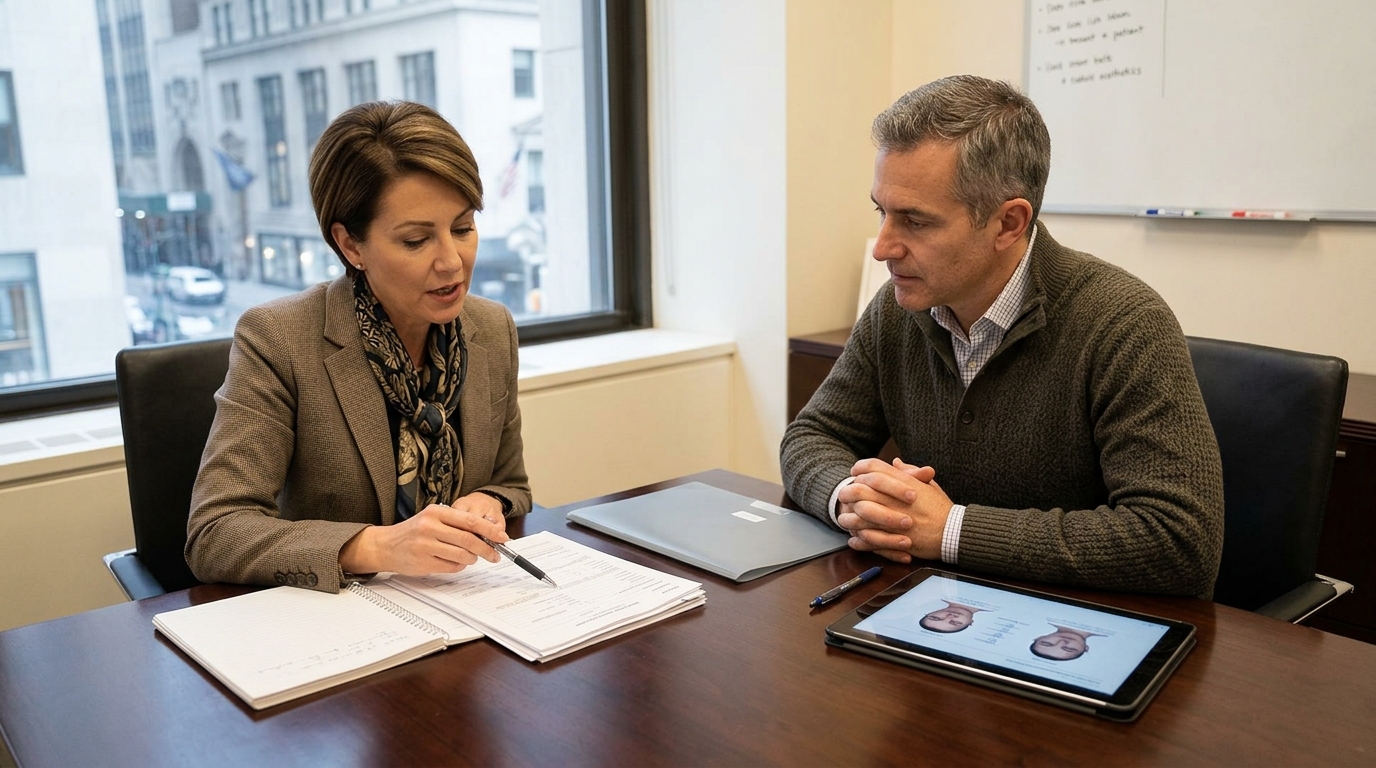
Preparation helps make a facelift consultation focused and useful. Bring a complete medical history, a list of medications and supplements, information about prior facial surgery, and a clear description of the changes you hope to see. Candidacy, technique, anesthesia, recovery, risks, and outcomes require individualized clinical assessment. The purpose of the visit is not to persuade you to proceed. It is to determine whether surgery fits your anatomy, health, timing, expectations, and personal circumstances.
Questions to ask any qualified facelift surgeon before surgery
Ask questions that reveal the reasoning behind the proposed plan rather than focusing only on a procedure label. You should understand which facial areas the operation is intended to address, what will remain unchanged, and why the surgeon recommends one facelift approach instead of another. Ask about incision placement, anesthesia, facility accreditation, postoperative visits, activity restrictions, and the process for addressing concerns during healing.
- Ask about the examination: Which findings support the recommended approach, and which findings limit the expected correction?
- Ask about alternatives within facelift surgery: Would a traditional facelift, Nanolift™, or Mini Facelift be more appropriate for your degree of laxity?
- Ask about safety: Is the facility accredited, and is anesthesia provided by a qualified professional?
- Ask about recovery: When are follow-up appointments scheduled, and which symptoms require prompt contact?
- Ask about expectations: What changes may be visible after healing, and which wrinkles, pigmentation, scars, or texture concerns will remain?
When the right answer is “not yet” or “not this procedure”
A responsible consultation may end with a recommendation to wait or to decline surgery. Timing can be affected by an unstable medical condition, unrealistic expectations, an inability to complete follow-up care, major life commitments, or insufficient time for recovery. A surgeon may also determine that the planned tissue change does not match your anatomy or that your goals require a different facelift design. Hearing “not yet” is a sign that the assessment is centered on safety and suitability, not on completing a booking.
Consider postponing a decision if you feel pressured, do not understand the risks, or cannot explain the intended outcome in your own words. You should have time to review written instructions, arrange support at home, and consider whether the anticipated improvement justifies the recovery and possible complications.
Revision facelifts, prior surgery, and specialized consultation scenarios
Previous facial surgery can alter scar tissue, tissue mobility, hairline position, sensation, and available skin. A revision consultation requires a careful history, examination of scars and contours, and realistic discussion of what may be improved or may remain. Bring operative reports and postoperative records when available, along with photographs from before earlier surgery. Prior surgery does not automatically exclude a patient, but it can make planning more complex and may affect anesthesia, incision design, recovery, and risk.
Tell the surgeon about previous complications, wound-healing concerns, changes in facial nerve function, smoking or nicotine use, allergies, and significant medical conditions. Complete disclosure allows the clinician to assess the surgical plan more responsibly. No consultation can guarantee correction of a prior result or eliminate the possibility of further asymmetry or contour irregularity.
Traveling to New York City: planning early recovery near your surgical team
Patients traveling from another state or country should plan around the operation and the early postoperative period, not only the procedure date. Ask how long you should remain near the surgical team, when the first examination will occur, and which clinician should evaluate you if a concern develops after returning home. Arrange a responsible adult for immediate support, transportation, private lodging with elevator access when possible, and enough flexibility for follow-up changes.
International patients may also need time for medical records, language support, travel documents, and communication with their local physician. Air travel, activity, and departure timing require individualized clearance. Keep written instructions, emergency contact information, medication details, and a plan for receiving care after returning home.
Next step: scheduling a facelift consultation with Albert Plastic Surgery
At Albert Plastic Surgery, a consultation with Dr. Mark G. Albert is an opportunity to discuss your facial anatomy, goals, medical history, and the facelift approach that may fit your needs. The practice includes the Mini Facelift within its dedicated facelift scope. A thoughtful decision may involve proceeding, waiting, or choosing not to have surgery. To begin an individualized discussion, schedule a facelift consultation with Albert Plastic Surgery.
Frequently Asked Questions
Who is the best deep plane facelift surgeon?
A suitable deep plane facelift surgeon is a board-certified plastic surgeon with focused facelift training, appropriate facility standards, and the judgment to recommend another technique when indicated. Deep plane facelift experts should explain anatomy, incision placement, anesthesia, recovery, risks, limitations, and expected outcomes during an individualized consultation.
How much should a deep plane facelift cost?
Deep plane facelift cost varies according to surgical scope, surgeon experience, facility fees, anesthesia, geographic location, and related procedures. A personalized consultation is needed for an accurate estimate, and patients should ask what the quoted fee includes, such as postoperative care and possible additional expenses.
What celebrities have had a deep plane facelift?
Celebrity reports do not reliably establish who has had a deep plane facelift, because cosmetic procedures are often private and media speculation may be inaccurate. Deep plane facelift suitability depends on facial anatomy, tissue laxity, skin quality, medical history, and personal goals, not on a celebrity comparison.
What is the downside of a deep plane facelift?
Deep plane facelift downsides can include a more involved operation, swelling, bruising, scarring, bleeding, infection, asymmetry, anesthesia complications, and temporary or lasting nerve changes. The technique also does not correct pigmentation, sun damage, or every fine line, and risks and recovery demands require discussion with a qualified surgeon.
What is the best age to have a deep plane facelift?
The best age for a deep plane facelift is based on facial anatomy and tissue laxity rather than a specific number. Candidates may have cheek descent, jowls, jawline changes, or neck laxity that fit the operation, while skin quality, medical history, prior procedures, and personal goals also guide individualized planning.
Leave a Reply