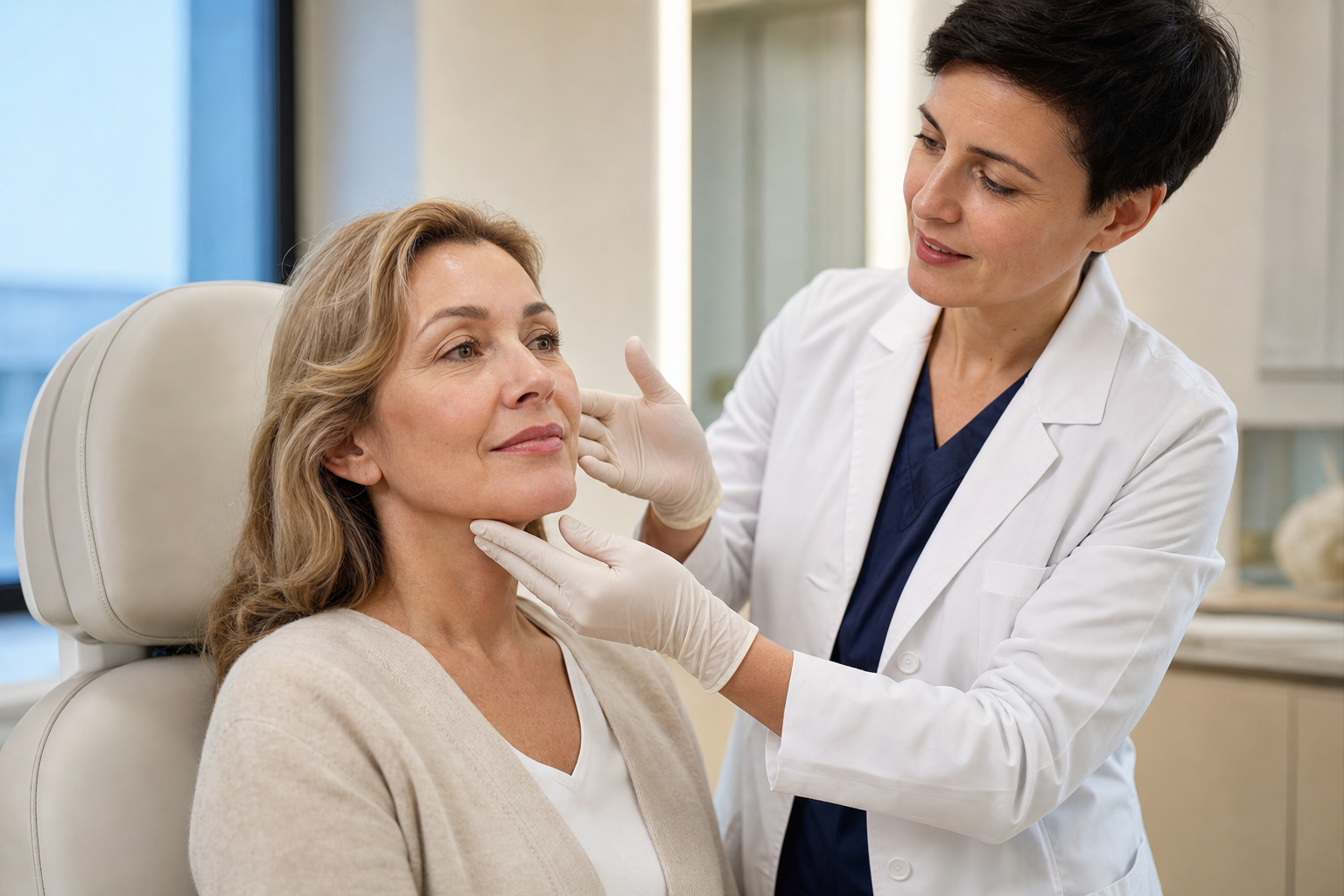
deep plane facelift plastic surgery
Deep plane facelift plastic surgery repositions deeper facial tissues rather than relying on skin tension alone. The technique may address sagging through the midface, jawline, and neck, but candidacy, technique, recovery, risks, and outcomes require individualized clinical assessment. Dr. Mark G. Albert, MD, FACS, is certified by the American Board of Plastic Surgery and is a Fellow of the American College of Surgeons.
What Is a Deep Plane Facelift, and Why Does the “Plane” Matter?
A Plain-English Definition of the Deep Plane Technique
A deep plane facelift is a form of facelift surgery that releases selected facial retaining ligaments and moves a connected layer of soft tissue into a more supported position. This layer includes structures beneath the skin, allowing the surgeon to address tissue descent with less dependence on outward skin pull. The goal is a balanced, natural-looking change in facial contour, not a stretched appearance. The depth and direction of dissection must be tailored to facial anatomy, skin quality, age-related laxity, and the patient’s aesthetic goals.
The Anatomy Behind It: SMAS, Retaining Ligaments, and Facial Fat Compartments
Several anatomical layers influence how the face changes with age. The superficial musculoaponeurotic system, or SMAS, is a supportive tissue layer connected with facial muscles and soft-tissue structures. Retaining ligaments anchor facial tissues to deeper anatomy. With aging, these attachments may loosen, and fat compartments can descend or become less evenly distributed. A deep plane approach works beneath selected SMAS-related structures and releases certain tethering points so the midface and lower face can be repositioned as a unit. Surgical planning must protect important nerves, blood vessels, and surrounding tissue.
Deep plane facelift plastic surgery may be considered when facial laxity involves the cheeks, jawline, and neck, particularly when a patient wants more than isolated skin tightening. It cannot stop future aging, correct every facial concern, or guarantee a specific appearance. A Mini Facelift is also within Albert Plastic Surgery’s facelift-only scope and may suit a different pattern or degree of laxity. The appropriate operation depends on an in-person examination.
Quick facts: The procedure is performed by a qualified plastic surgeon using carefully planned incisions, tissue release, repositioning, and skin redraping. Anesthesia, operative details, scar location, downtime, and follow-up vary by patient. A Mini Facelift may involve a more limited treatment plan, while a deep plane approach can address broader facial descent when clinically appropriate.
What Are the Benefits and Trade-Offs of a Deep Plane Facelift?

Potential Benefits: Natural-Looking Movement and Rejuvenation of the Midface, Jawline, and Neck
By repositioning deeper soft tissue, this facelift technique may improve the transition between the lower eyelid and cheek, soften jowling, and define the mandibular border and upper neck. Some patients value movement that remains natural during facial expression because the plan is not based solely on pulling the skin. These potential benefits depend on anatomy, tissue behavior, surgical judgment, and healing. The operation is intended to restore proportion, not erase normal facial character.
Trade-Offs to Weigh: Longer Recovery, Technical Complexity, and Cost Considerations
Deep plane facelift surgery involves tissue dissection in an anatomically sensitive area. Swelling, bruising, temporary numbness, tightness, asymmetry, bleeding, infection, wound-healing problems, visible scars, and temporary or lasting nerve effects are material risks. Recovery can require meaningful time away from work and social activities. Fees vary according to surgical scope, anesthesia, facility needs, geographic location, and follow-up arrangements. A consultation should explain the expected financial commitment without presenting cost as the only decision factor.
Who May or May Not Be a Candidate: Indications and Contraindications Explained
Adults with facial and neck laxity, descended cheek tissue, jowls, or loss of jawline definition may wish to discuss this approach with a qualified clinician. Good general health, realistic expectations, stable weight, and the ability to follow preoperative and postoperative instructions can support surgical planning. Significant medical conditions, uncontrolled health issues, impaired healing, certain medications, or expectations that do not match surgical limits may affect eligibility. Only an individualized examination can determine whether deep plane facelift plastic surgery or another facelift plan is appropriate.
Key Considerations Before Choosing
Pros
- May address connected changes across the cheek, jawline, and neck.
- Repositions deeper tissue rather than depending on skin tension alone.
- Can support a proportionate, natural-looking facial contour when appropriately selected.
Cons
- Requires technically demanding dissection and individualized planning.
- May involve substantial swelling, bruising, and recovery limitations.
- Results vary, and natural aging continues after surgery.
How Does a Deep Plane Facelift Compare with Other Facelift Options?
Deep Plane vs. Traditional SMAS Facelift vs. Mini Facelift: A Side-by-Side Comparison
Deep plane facelift plastic surgery, a traditional SMAS facelift, and a Mini Facelift differ mainly in tissue depth, surgical scope, and the pattern of laxity they address. A deep plane approach releases selected retaining ligaments and repositions connected deeper tissues. A SMAS facelift modifies the supportive SMAS layer through a technique selected for the patient’s anatomy. A Mini Facelift generally uses a more limited treatment plan. The distinctions below are general; incision design, anesthesia, operative time, and recovery vary by patient. Patients can review Albert Plastic Surgery’s facelift surgery options when comparing approaches.
| Facelift option | Primary tissue approach | Common treatment focus | Incision and recovery considerations |
|---|---|---|---|
| Deep plane facelift | Deeper facial soft-tissue plane with selected ligament release | Midface descent, jowls, jawline, and upper neck laxity | Usually broader incisions and a more involved recovery |
| Traditional SMAS facelift | SMAS layer repositioning or modification | Lower-face and neck laxity, based on individual anatomy | Incision length and downtime depend on surgical extent |
| Mini Facelift | More limited access and tissue correction | Selected early or localized lower-face laxity | Often a smaller operative plan, though recovery remains patient-specific |
Where Incisions and Scars Are Placed, and How Visible They May Be
Facelift incisions commonly follow natural contours near the temple, around the ear, and into the hairline behind the ear. Their length and exact position depend on the chosen operation, hairline, skin quality, prior surgery, and the amount of tissue requiring repositioning. Incisions may mature into fine lines, though scars can remain noticeable or heal unevenly. Wound separation, pigment changes, thickening, and delayed healing are possible. Careful closure and follow-up support healing, but no surgeon can guarantee an invisible scar.
Matching the Technique to the Concern: Which Approach Addresses What
Technique selection should begin with the anatomy rather than a preferred label. Broad cheek descent with jowling and neck laxity may prompt discussion of a deeper operation. Lower-face looseness with a more limited distribution may make a SMAS-based plan or Mini Facelift appropriate. Skin elasticity, facial proportions, bone structure, nerve anatomy, medical history, and expectations all influence the recommendation. An in-person assessment is needed to determine whether the goal is realistic and which facelift plan provides a proportionate result.
What Happens During Consultation, Surgery, and Recovery?
What to Expect at a Facelift Consultation
A consultation includes a medical history, medication review, examination of skin laxity and facial support, discussion of aesthetic goals, and photographs for planning. The surgeon should explain the proposed tissue plane, incision pattern, anesthesia, facility, fees, follow-up, limitations, and material risks. Patients should disclose nicotine use, prior facial surgery, health conditions, and all medications or supplements. Candidacy and operative planning cannot be established through photographs or an online article alone.
Anesthesia, Incisions, and How the Procedure Is Performed
Facelift surgery may involve general anesthesia or monitored anesthesia with local anesthesia, according to the operation and patient factors. After carefully placed incisions, the surgeon separates and repositions selected facial tissues, addresses laxity according to the surgical plan, and redrapes the skin without relying on excessive tension. The incisions are closed with sutures or other closure materials. Deep plane facelift plastic surgery requires detailed knowledge of facial anatomy because important nerves and blood vessels lie near the operative field.
A Realistic Recovery Timeline: Week 1 Through Month 6
During the first week, swelling, bruising, tightness, drainage, and numbness are common possibilities, with activity restrictions and wound checks as directed. During weeks two through four, many patients gradually resume routine activities, though residual swelling and altered sensation may remain. Between months two and three, facial contours generally continue settling, while scar color and firmness may still change. By month six, healing is more mature, but subtle refinement can continue. Individual recovery varies, and scheduled follow-up is part of safe care.
How Long Results May Last, and How Aging Continues
Facelift results can be long-lasting, but they are not permanent. Natural aging, sun exposure, weight fluctuation, skin elasticity, and inherited traits continue to influence facial tissues after surgery. Possible complications include hematoma, infection, wound-healing problems, asymmetry, numbness, and temporary or lasting facial nerve effects. Rapid swelling, increasing pain, fever, drainage, breathing difficulty, or sudden weakness warrants prompt contact with the surgical team or emergency medical care. Published clinical references, including the NCBI StatPearls review of rhytidectomy, describe these risks and the need for individualized postoperative monitoring.
How Do You Choose the Right Deep Plane Facelift Surgeon?

Credentials and Experience Worth Verifying Before You Book
Begin with credentials that can be independently confirmed. Look for certification by the American Board of Plastic Surgery, hospital privileges appropriate to facelift surgery, focused training in facial plastic surgery, and a clear plan for postoperative care. Fellowship training can provide additional experience with facial anatomy, surgical judgment, and aesthetic proportion. Dr. Mark G. Albert, MD, FACS, is certified by the American Board of Plastic Surgery and is a Fellow of the American College of Surgeons. His training includes plastic surgery residency and chief residency at the University of Massachusetts Medical School, followed by an aesthetic plastic surgery fellowship at Manhattan Eye, Ear, and Throat Hospital. He serves as Program Director of the MEETH Aesthetic Plastic Surgery Fellowship and Assistant Clinical Professor of Surgery at the Zucker School of Medicine at Hofstra/Northwell.
10 Questions to Ask at Your Deep Plane Facelift Consultation
Bring written questions so the discussion covers both the desired change and the responsibilities of surgery. A qualified surgeon should welcome questions about limitations, safety, and follow-up:
- Am I a reasonable candidate for this technique?
- Which areas of facial laxity would the operation address?
- Why is this tissue plane appropriate for my anatomy?
- What changes should I realistically expect?
- Where would you place the incisions and scars?
- What anesthesia and surgical facility would you use?
- What recovery restrictions should I plan around?
- Which complications require an urgent call?
- Who provides care after surgery, including nights and weekends?
- What fees, follow-up visits, and facility services are included?
Why Individualized Planning and Continuity of Care Matter
A surgical label cannot replace an examination. Skin elasticity, facial structure, soft-tissue descent, neck laxity, medical history, medications, scar behavior, and personal goals all affect the plan. The Mini Facelift may be considered when laxity is more limited, while a broader operation may be discussed for more extensive changes. Albert Plastic Surgery maintains a dedicated live service page for Mini Facelift. Candidacy, technique, recovery, risks, and outcomes require individualized clinical assessment. Consistent communication with the operating surgeon supports informed consent, wound monitoring, and appropriate decisions during healing.
Key insight: Choose a surgeon who explains anatomy, alternatives within facelift surgery, expected scars, recovery, complications, and long-term limitations in language you understand. A calm consultation should leave you informed, not pressured.
Next Step: Discuss Your Goals with Albert Plastic Surgery
If you are considering facial rejuvenation, an in-person consultation can help determine whether a deep plane approach, a Mini Facelift, or another facelift plan fits your anatomy and priorities. You may schedule a consultation with Albert Plastic Surgery to discuss facial balance, incision planning, recovery logistics, and questions about long-term expectations. The decision should remain yours, based on clear information and individualized medical advice.
Frequently Asked Questions
What is the downside of a deep plane facelift?
Deep plane facelift plastic surgery may involve technically demanding dissection, substantial swelling and bruising, recovery limitations, and risks such as bleeding, infection, numbness, scarring, asymmetry, wound-healing problems, or nerve effects. Fees and recovery needs vary by surgical scope and patient factors. An in-person consultation is needed to weigh these trade-offs.
What is better, a facelift or a deep plane facelift?
A deep plane facelift is not universally better than another facelift technique because the appropriate choice depends on facial anatomy, tissue laxity, skin quality, and aesthetic goals. Deep plane facelift plastic surgery repositions selected deeper tissues, while other facelift plans may modify the SMAS or use a more limited approach. A qualified plastic surgeon can compare options during an examination.
How long does a deep plane facelift last?
Deep plane facelift results can last for years, but the exact duration varies and cannot be not assured. Aging, skin quality, weight changes, genetics, and lifestyle continue to affect facial tissues after surgery. Deep plane facelift plastic surgery does not stop future aging, so long-term results differ among patients.
Is a deep plane facelift available in the USA?
Deep plane facelift plastic surgery is available in the United States, including through Albert Plastic Surgery in New York City with Dr. Mark G. Albert, MD, FACS. The procedure requires individualized planning, and consultation details should address technique, anesthesia, incisions, risks, recovery, follow-up, and fees.
What age is best for a deep plane facelift?
There is no single best age for a deep plane facelift because candidacy depends more on facial and neck laxity, overall health, skin quality, stable weight, and realistic expectations. Deep plane facelift plastic surgery may be discussed by adults with descended cheek tissue, jowls, or reduced jawline definition. An examination determines whether this or another option fits.
How is a deep plane facelift different from a mini facelift?
A deep plane facelift generally addresses broader facial descent by releasing selected retaining ligaments and repositioning connected deeper tissues, while a Mini Facelift uses a more limited treatment plan. The better option depends on the pattern and degree of laxity, anatomy, goals, and medical factors. Albert Plastic Surgery offers both procedures for individualized evaluation.
Leave a Reply