
deep plane facelift surgeons usa
Choosing among deep plane facelift surgeons in the USA patients can trust begins with understanding the operation, not with a marketing label. A deep plane facelift is a form of facelift surgery that repositions deeper facial tissues to address age-related descent in the cheeks, jowls, and selected areas of the neck. The appropriate technique depends on facial anatomy, skin quality, tissue movement, medical history, and the result a patient hopes to achieve.
Key Takeaways
- A deep plane facelift works below the superficial layers, lifting cheek and jowl tissue at its foundation to correct the downward drift that develops with age.
- Patients should evaluate a surgeon's understanding of the anatomy and technique rather than relying on advertising language when comparing providers across the country.
- The right surgical approach is never one size fits all, since skin quality, tissue mobility, medical background, and personal goals all shape the operative plan.
- Improvement in the cheeks, jowls, and neck comes from repositioning deeper structures, which is why this technique can produce results that look natural over time.
I am Dr. Mark G. Albert, MD, FACS, founder of Albert Plastic Surgery. I am certified by the American Board of Plastic Surgery and a Fellow of the American College of Surgeons. This article provides general education only. Candidacy, technique, anesthesia, recovery, risks, and outcomes require individualized clinical assessment with a qualified plastic surgeon.
What is deep plane facelift surgeons usa?
A deep plane facelift is performed beneath the superficial muscular aponeurotic system, commonly called the SMAS, within a deeper anatomical layer of the face. This approach may allow the surgeon to mobilize and reposition connected facial soft tissues rather than relying on skin tension alone. The goal is a refreshed, proportionate appearance that preserves individual expression and avoids an overly tight look. A deep plane facelift does not correct every concern involving the face, and it is not automatically better than a SMAS facelift, composite facelift, or Mini Facelift.
During planning, a surgeon evaluates the midface, cheek descent, nasolabial folds, jowls, jawline, neck contour, skin elasticity, facial volume, and soft-tissue laxity. Skin texture and sun damage can affect the visible finish, while deeper repositioning addresses structural descent. A deep plane facelift may suit some adults with moderate to advanced lower-face or midface laxity, yet age alone does not establish candidacy. Medical conditions, tobacco or nicotine use, medication history, healing capacity, and expectations must be reviewed in person.
Key insight: The name of a facelift technique is only one part of the decision. Surgical judgment includes layer selection, incision design, preservation of facial anatomy, management of the neck when appropriate, anesthesia planning, and a careful assessment of how the result will relate to the eyes, brow, lips, and overall face.
Benefits of deep plane facelift surgeons usa
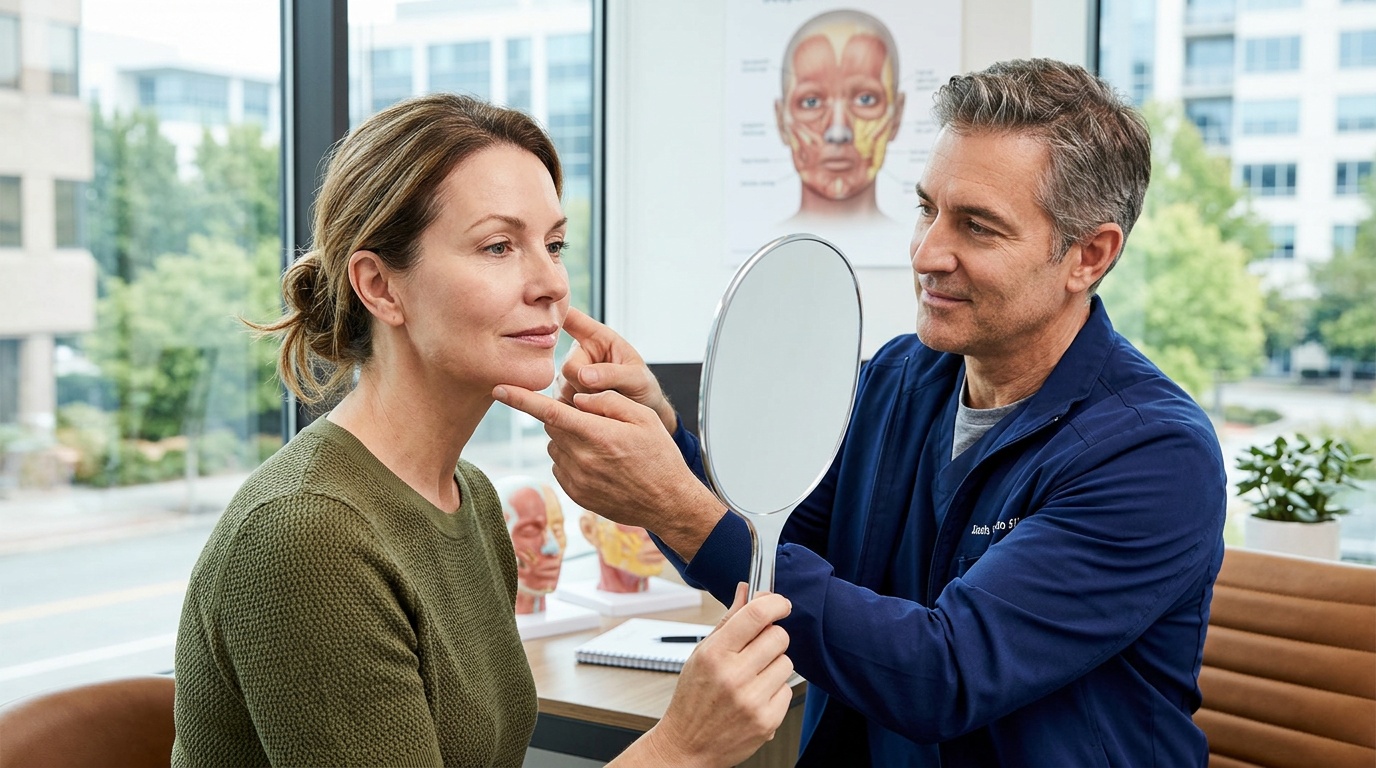
The potential benefit of a deep plane facelift is improvement in facial contour through deeper tissue repositioning. Depending on anatomy, treatment may soften cheek descent, reduce the appearance of jowls, define the mandibular border, and improve selected neck changes. Releasing and redraping deeper retaining structures can reduce the need to pull the skin tightly. This may support a more natural transition from the cheek to the jawline, though the final appearance varies with tissue quality, healing, surgical design, and individual anatomy.
Deep plane surgery may also help address the connection between the midface and lower face in patients whose aging changes extend beyond isolated skin laxity. A carefully planned operation considers facial balance rather than focusing on one fold or contour. The brow and eyes remain part of the overall assessment, even when the planned operation is limited to facelift surgery. A facelift does not directly correct every upper-face concern, and a surgeon should explain those boundaries before surgery.
Patients often seek this approach because they want to look rested while still looking like themselves. That objective requires restraint. A deep plane facelift cannot stop future aging, remove every wrinkle, correct poor skin elasticity, or guarantee a particular degree of longevity. It also carries meaningful risks, including bleeding, infection, fluid collection, scarring, sensory changes, facial nerve injury, asymmetry, contour irregularity, hairline or earlobe changes, and the possibility of revision. The risk profile depends on the patient, technique, anesthesia, and surgical facility.
A Mini Facelift is a distinct facelift option that may be considered when laxity is more limited and the treatment plan can be appropriately smaller in scope. It is not a substitute for deeper surgery in every patient. The meaningful question is whether the chosen operation matches the location and degree of tissue descent, skin characteristics, neck findings, and the patient’s goals. Consultation with a board-certified plastic surgeon is necessary before making that determination.
How to Choose deep plane facelift surgeons usa
Choosing deep plane facelift surgeons usa patients can evaluate responsibly requires more than reviewing photographs or reading a procedure description. Begin with credentials, operative judgment, and the quality of the consultation. A surgeon performing facelift surgery should be certified by the American Board of Plastic Surgery, which indicates completion of defined training and examination requirements in plastic surgery. Patients can verify certification through the American Board of Plastic Surgery. Medical licensure, board certification, hospital privileges, fellowship training, and facility accreditation each provide different information and should not be treated as interchangeable.
I am Dr. Mark G. Albert, MD, FACS, founder of Albert Plastic Surgery. I am certified by the American Board of Plastic Surgery and a Fellow of the American College of Surgeons. FACS identifies membership in a professional organization whose requirements include training, ethical standards, professional standing, and ongoing review. It is an authority signal, not a promise of a particular result. Aesthetic plastic surgery fellowship training can add focused experience, yet patients should still ask how the surgeon evaluates anatomy, selects a tissue plane, manages the neck when appropriate, and addresses facial balance.
Which questions should you ask during a facelift consultation?
A useful consultation should be an anatomical discussion rather than a sales presentation. Ask which areas the proposed operation is intended to address, such as cheek descent, nasolabial folds, jowls, jawline definition, or neck laxity. Ask what the technique cannot correct, how skin quality may affect the visible result, and how the plan accounts for the relationship among the brow, eyes, cheeks, lips, and lower face. A surgeon should explain incision placement, scar maturation, facial nerve considerations, anesthesia, facility setting, follow-up, and possible revision without presenting any outcome as not assured.
Before selecting among deep plane facelift surgeons usa patients should review before-and-after photographs with attention to natural expression, facial proportions, ear and hairline position, neck contour, and consistency across different patients. Photographs cannot predict an individual result, and lighting, posture, image selection, and follow-up timing affect interpretation. Request a written estimate that identifies surgeon fees, anesthesia, facility charges, postoperative visits, and any items excluded from the quoted amount. Cost alone does not establish quality, and a practice should be able to explain its estimate clearly.
Safety planning deserves specific attention. Ask whether surgery occurs in an appropriately accredited facility, who provides anesthesia, how medical conditions and medications are reviewed, and how urgent concerns are handled after discharge. Meaningful risks include bleeding, infection, fluid collection, unfavorable scarring, numbness, asymmetry, contour irregularity, delayed healing, and facial nerve injury. Nicotine exposure, uncontrolled medical conditions, bleeding tendencies, and unrealistic expectations may affect eligibility or timing. A qualified clinician must determine whether surgery is reasonable after reviewing your health history and examining your face in person.
Frequently Asked Questions
What is a deep plane facelift?
A deep plane facelift repositions facial soft tissue beneath the SMAS layer, a connective tissue structure associated with facial movement and support. The operation may address descent involving the cheeks, jowls, jawline, and selected areas of the neck. The technique is not automatically appropriate for every patient. Facial anatomy, skin elasticity, medical history, healing factors, and aesthetic goals all influence the surgical plan.
Is a deep plane facelift better than a Mini Facelift?
Neither approach is universally better. A Mini Facelift may be considered when laxity is more limited and a smaller surgical plan matches the patient’s anatomy. A deep plane facelift may be considered when aging changes involve broader or deeper tissue descent. The appropriate choice depends on the location and degree of laxity, neck findings, skin quality, and the desired degree of correction. Albert Plastic Surgery maintains a dedicated live service page for facelift surgery.
Can a deep plane facelift improve the neck, cheeks, and nasolabial folds?
It may improve several of these areas when the underlying changes result from facial soft-tissue descent. Cheek elevation can influence the transition between the midface and lower face, while jawline and neck improvement depend on anatomy and the scope of the operation. Nasolabial folds may soften, but no facelift can erase every crease or correct all skin texture concerns. The examination should address facial balance, including how the lower face relates to the brow and eyes.
How should I verify a facelift surgeon’s credentials?
Confirm American Board of Plastic Surgery certification through the board’s verification resources, then review medical licensure, hospital privileges, fellowship training, facility accreditation, anesthesia arrangements, and postoperative follow-up. FACS status reflects professional qualifications and standing within the American College of Surgeons, but it does not guarantee a particular outcome. A consultation should include a clear discussion of scars, bleeding, infection, nerve injury, asymmetry, healing, cost, and realistic limitations.
When should I seek individualized medical advice?
Anyone considering facelift surgery should receive an in-person assessment from a qualified clinician before selecting a technique or scheduling an operation. Candidacy, technique, recovery, risks, and outcomes require individualized clinical assessment. Bring a complete medical history, medication list, nicotine-use information, and specific concerns about facial proportion or recovery to the consultation.
Leave a Reply