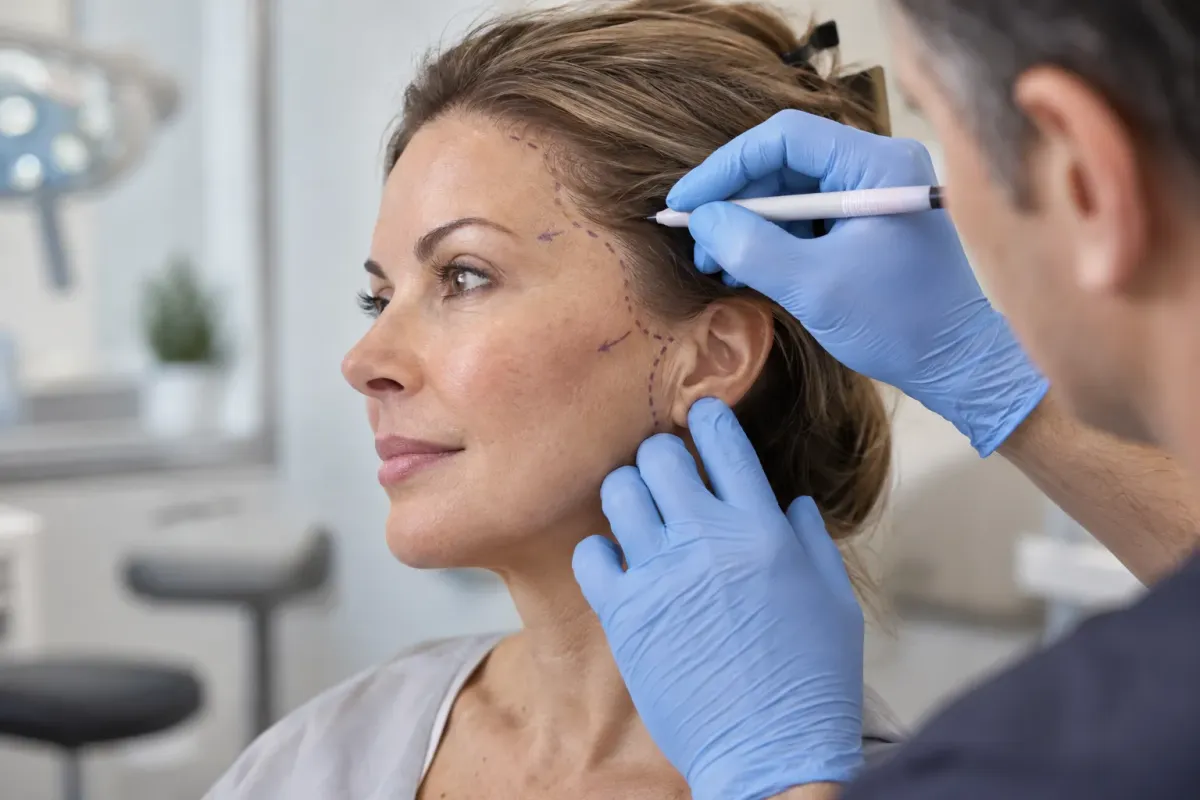
how facelift incisions are planned around the hairline and sideburns
How facelift incisions are planned around the hairline and sideburns depends on facial anatomy, hair growth, hairline position, and the areas being addressed. Dr. Mark Albert plans incision placement with these features in mind, while recognizing that the surgical approach and its trade-offs require an individualized consultation.
Key Takeaways
- Incision placement is shaped by each patient's anatomy, hair growth pattern, and the position of the hairline.
- Thoughtful planning around the sideburns helps protect hair density and supports a discreet, natural-looking result.
- The location and length of incisions vary with the areas of the face and neck being addressed.
- Trade-offs between surgical access and visible scarring are best discussed in a personalized consultation.
- Readers should speak with a qualified facelift surgeon to understand which approach may suit their goals and healing characteristics.
The Facelift service page describes facelift surgery in New York City with Dr. Albert. The aim of incision planning is to place cuts where they can be concealed by natural contours or hair, while avoiding unnecessary changes to the hairline and sideburns.
The Short Answer: Where Facelift Incisions Go and Why Placement Matters
Facelift incisions commonly begin near the temple hairline, continue around the natural contours of the ear, and may extend into the hair behind the ear. Exact locations vary with the patient’s hairline, sideburn position, skin characteristics, and surgical plan. Planning balances scar concealment with preserving the natural hair-bearing boundaries of the face. An incision hidden in hair may be less visible when the hair is worn down, but placement must account for hair density and direction.
Why incisions follow the temple hairline, natural creases around the ear, and contours behind the ear
At the temple, the surgeon considers whether the incision should sit within the hair-bearing area or near its edge. Around the ear, natural folds and the junction between the ear and face can offer places where a healing line may be less noticeable. The incision may continue behind the ear, with its position shaped by the planned lift and the patient’s anatomy. These paths are not identical for everyone, and scar visibility cannot be predicted from location alone.
Inside the hairline vs. just in front of it: the trade-off between hiding scars and preserving your hairline
An incision within the hair may be concealed by surrounding strands, but it can require cutting through hair-bearing skin and may affect how hair grows near the line. An incision at or just in front of the hairline can avoid moving the hairline backward, though a visible scar is possible if healing is unfavorable. The choice depends on hairline shape, density, styling habits, and the amount of movement planned. Discussing how you wear your hair helps inform the plan.
Traditional, limited-incision, and neck lift incisions compared
Incision patterns differ according to the area being treated and the extent of the surgical plan. A more extensive facelift may require a longer incision around the ear and into the hairline; a limited-incision approach may use a shorter path. A neck-focused plan may include an incision around the ear and, when indicated, a separate incision beneath the chin. The table summarizes general patterns, not a recommendation for any individual.
| Planning focus | General incision pattern | Key consideration |
|---|---|---|
| Traditional facelift | May extend from the temple around the ear and into hair behind it | Placement reflects the broader area addressed |
| Limited-incision facelift | May use a shorter incision around the ear | A shorter pattern does not suit every surgical goal |
| Neck-focused surgery | May involve incisions around the ear, sometimes with an under-chin incision | Plan depends on the areas requiring treatment |
Inside the Pre-Op Planning Appointment: How Your Hairline and Sideburns Are Measured and Marked
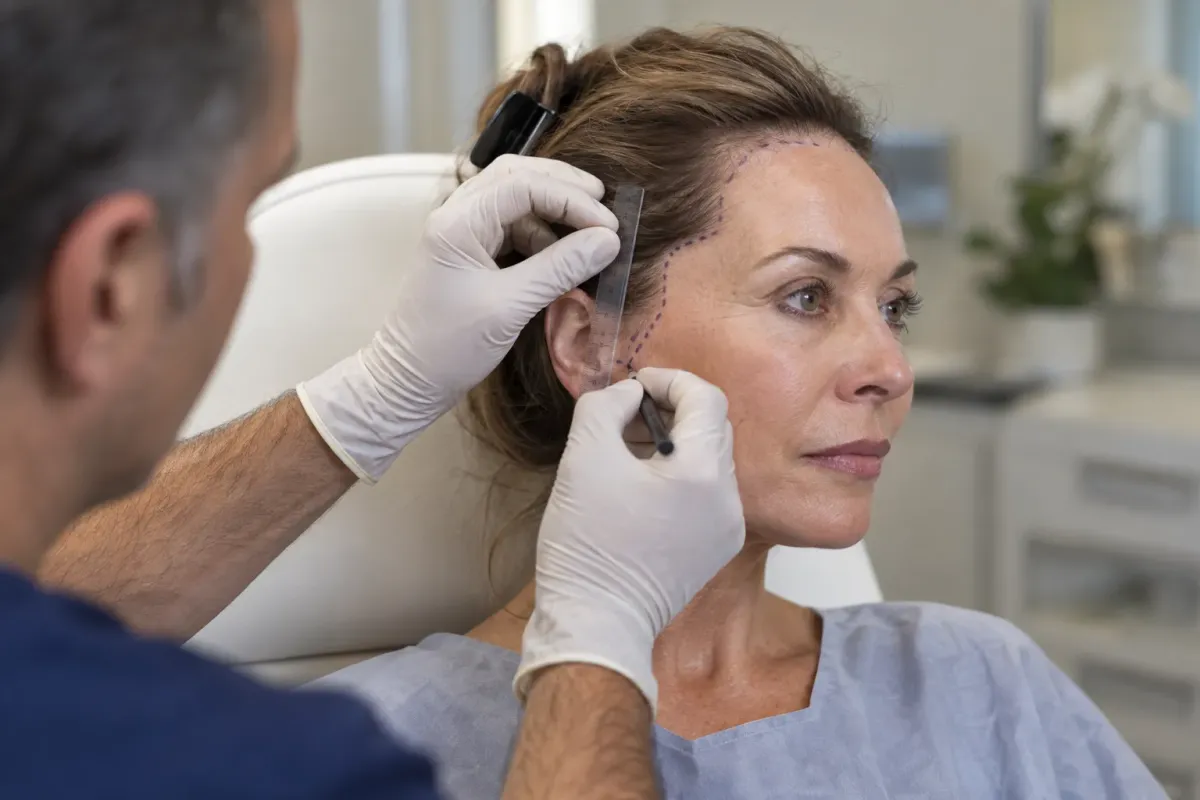
Preoperative planning gives the surgeon a chance to assess the hairline and sideburns at rest, rather than relying on a generic incision diagram. Dr. Mark Albert is certified by the American Board of Plastic Surgery and is a Fellow of the American College of Surgeons. The specific markings and surgical plan depend on an in-person assessment; the steps below describe considerations that may inform that discussion.
Step 1: Measuring hairline height and assessing temporal tuft density
The surgeon observes the height and shape of the temple hairline and the density of hair near it. This helps identify where an incision may be less conspicuous and whether sparse areas could make a line more noticeable. Hairline position is considered alongside facial proportions and the patient’s usual hairstyle.
Step 2: Marking sideburn position and planning to keep it from riding up
The sideburn’s location, length, and border are assessed in relation to the ear and surrounding hair. Markings can help the surgeon plan a closure that accounts for this landmark. The discussion should include concerns about a shortened or elevated sideburn, while recognizing that no plan can guarantee a particular appearance.
Step 3: Mapping follicle direction and choosing incision angles that spare hair follicles
Hair follicles grow at an angle, and their direction can vary across the temple and sideburn. The surgeon considers that pattern when choosing the incision path and angle, with the goal of limiting avoidable injury to nearby follicles. Hair growth, skin quality, and the planned incision all affect what is feasible.
Step 4: Deciding on trichophytic closure when the incision must sit at the hairline
When an incision is placed at a hairline, a trichophytic closure may be considered. This closure technique is designed to allow hair to grow through or near the healed incision edge, which may help camouflage it. It is not appropriate for every incision or patient, and it cannot ensure that a scar will be hidden.
Step 5: Testing the direction of pull before surgery to protect the temple, sideburn, and brow tail
Before surgery, the surgeon can assess how planned skin movement may affect nearby landmarks, including the temple hairline, sideburn, and outer end of the brow. This assessment informs the direction and extent of the planned movement. The final approach, anesthesia, recovery, risks, and expected outcome require individualized clinical assessment.
How Sideburn and Temporal Hairline Preservation Protects a Natural Look
Why sideburns can end up shortened or raised, and how careful planning prevents it
A sideburn may appear shorter or higher if the incision and skin movement shift the hair-bearing skin near the ear. Its position also depends on the individual’s anatomy and the direction of closure. During planning, the surgeon assesses the sideburn’s height, shape, and relationship to the ear, then considers how the proposed incision and movement could affect that landmark. Careful planning can reduce avoidable distortion, but it cannot guarantee an unchanged appearance. Patients concerned about a particular sideburn shape should raise that concern before surgery and ask how the plan accounts for it.
Trichophytic closure and follicle-sparing techniques explained
Hair follicles grow at an angle, so incision direction and closure technique matter near hair-bearing skin. A surgeon may consider a trichophytic closure when an incision lies at the hairline. This approach places the cut so hair may grow through or close to the healed edge, potentially helping camouflage the line. It is not suitable for every location, and hair growth through a scar is not assured. Follicle-sparing planning also means accounting for the direction of hair growth when positioning and closing an incision. The resulting scar and hair growth vary with individual healing and other factors.
Avoiding a widened or recessed lateral hairline after surgery
At the temple, the lateral hairline can look wider or more recessed if hair-bearing skin is displaced or follicles are injured. The surgeon considers hairline shape, density, skin movement, and incision position together, rather than treating scar concealment as the only goal. A plan that suits a dense temple may not suit a naturally sparse or receding hairline. With Facelift surgery, incision placement and closure are individualized; scarring, altered hair growth, and changes in hairline appearance remain possible. Ask Dr. Mark Albert to explain the trade-offs for your anatomy and hairstyle.
Special Planning Considerations for Men: Beard Lines, Shorter Hairlines, and Sideburn Shape
Why male facelift incisions are planned differently
Men may have facial hair extending toward the sideburn and around the ear, along with hairstyles that leave the temple or incision area more visible. These features affect where an incision can sit and how the hair-bearing skin may move during closure. The surgeon assesses the beard boundary, sideburn shape, hairline, and usual grooming preferences as part of an individualized Facelift plan. The aim is to avoid an unnatural shift in hair-bearing skin, while recognizing that scar visibility and hair growth cannot be predicted with certainty.
Working around the beard line so hair does not grow in the wrong place
When the incision approaches beard-bearing skin, the surgeon considers whether movement could leave hair-bearing skin in an unexpected position near the ear. Incision placement and the direction of closure are planned with the existing beard border in view. Men should describe how they maintain their facial hair and identify any change in the beard line they would find concerning. The surgical plan must account for the patient’s anatomy and the areas being treated.
Planning for men with short hair, shaved heads, or thinning hairlines
Short hair, a shaved head, or thinning at the temples can make hairline placement and scar concealment more important to discuss. A surgeon may consider how visible the incision could be from different angles and how a change in hairline shape might affect appearance. The table outlines planning topics to raise in consultation, not a prediction of an individual result.
| Hair or grooming pattern | Planning consideration | Useful consultation question |
|---|---|---|
| Beard extending toward the ear | Position of the beard boundary relative to the incision | Could closure move hair-bearing skin near my ear? |
| Short haircut or shaved head | Visibility of the incision without longer hair to cover it | Where may the scar be visible from the front or side? |
| Thinning temple hairline | Hair density and the appearance of the lateral hairline | How does my hairline affect incision placement? |
Hair After a Facelift: Shock Loss, Permanent Hairline Change, and How to Read Before-and-After Photos
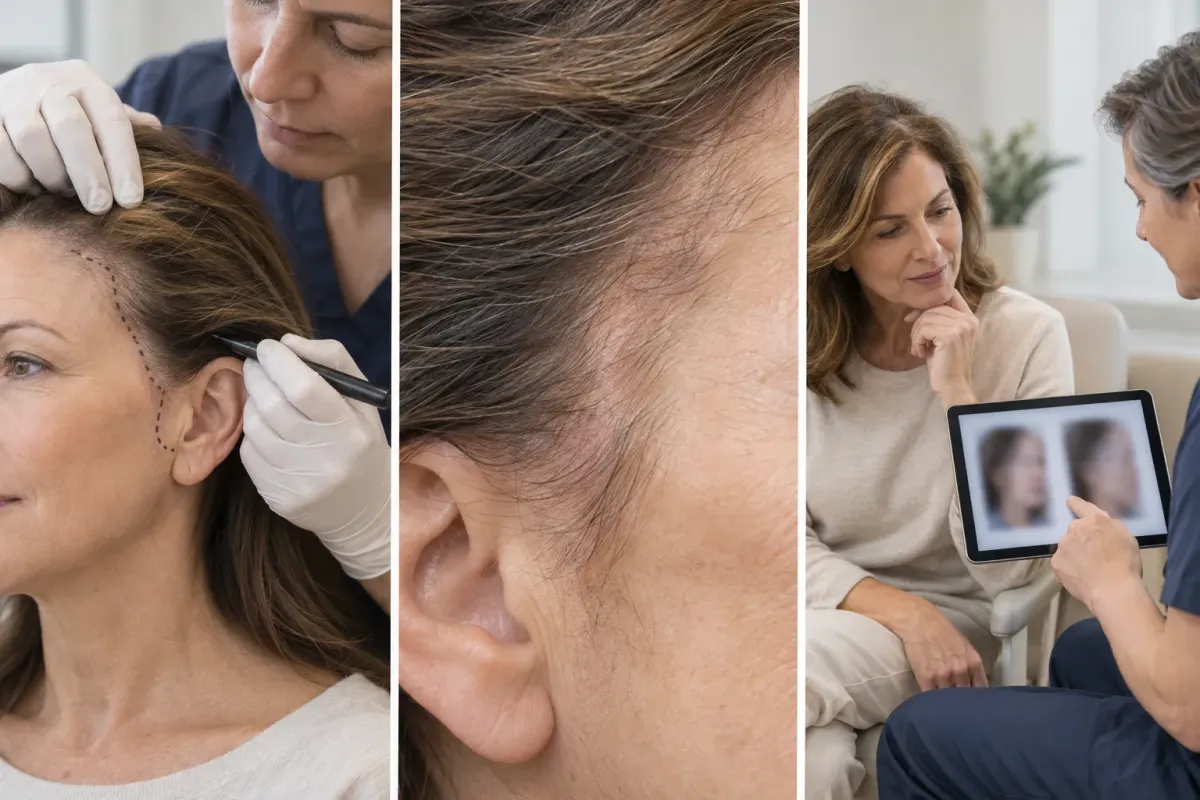
Hair shedding near an incision and a lasting change in hairline position are different concerns, and neither can be assessed from a photograph alone. With Facelift surgery, healing, hair growth, and scar appearance vary by patient. Understanding the usual healing stages and asking specific questions about the incision plan can help you discuss realistic expectations with Dr. Mark Albert.
Temporary shock loss vs. permanent hairline change: an honest comparison
Temporary “shock loss” refers to hair shedding near a surgical incision after the stress of surgery. Hair may grow back, but regrowth is not assured. Permanent thinning can occur if follicles are damaged, and a hairline may also look different if hair-bearing skin shifts. These possibilities are not interchangeable: shedding concerns hair growth, while a change in hairline position concerns the location or shape of hair-bearing skin. Ask your surgeon what signs to monitor and when follow-up is appropriate. New or worsening concerns should be assessed by a qualified clinician.
Healing timeline from sutures to final scar fading, week by week
Healing is gradual rather than a single event. Sutures are typically removed within 7 to 14 days. Redness and swelling often lessen over the following 3 to 4 weeks, though individual recovery varies. During the first weeks, incision lines may appear more noticeable than they will later. Scars continue to mature, flatten, and fade over 6 to 12 months, and some continue softening for up to a year. Follow-up visits let the surgeon assess healing and address concerns; the schedule varies, with visits often arranged around the first day, one week, and three months after surgery.
Factors that affect scar healing: genetics, sun exposure, and smoking
Scar appearance is influenced by personal healing tendencies, incision tension, and the location of the cut. Sun exposure can affect the color of a healing scar, so ask your clinician when and how to protect the area. Smoking may impair healing; discuss smoking and any nicotine use with your surgeon before surgery. Follow the specific wound-care guidance you receive rather than applying products or changing care on your own. A scar can widen, remain visible, or heal differently than expected despite careful planning.
How to evaluate before-and-after photos for hairline and sideburn changes
Look for comparable lighting, camera distance, head position, hairstyle, and hair length in both images. Review the temple, sideburn, and area around the ear, not only the overall facial contour. Ask whether the photographs show patients at similar points in healing, since early redness and swelling can change how an incision looks. Images are useful discussion tools, not a prediction of your own result. If editing or artificial intelligence concerns you, ask how the practice prepares and presents its photographs.
Questions to ask your surgeon about your hairline plan
Before choosing Facelift surgery, ask Dr. Mark Albert to explain the planned incision location and the trade-offs for your hairline, sideburns, and usual hairstyle. A consultation can help you understand the approach, limitations, and follow-up plan; it cannot guarantee a specific scar or hair-growth outcome.
- Where will the incision sit in relation to my hairline and sideburn?
- What changes in hair growth or scar appearance should I understand?
- How will healing be monitored, and whom should I contact with a concern?
Frequently Asked Questions
How does a surgeon decide where to place facelift incisions around the hairline and sideburns?
Surgeon incision planning around the hairline and sideburns depends on facial anatomy, hairline position, hair density and growth direction, sideburn location, and the areas being lifted. During preoperative planning, Dr. Mark Albert assesses these features in person and places incisions where they can be concealed by natural contours or hair. The final approach requires individualized consultation.
Will a facelift change my sideburns or make them ride up?
A facelift can shorten or raise the sideburns if skin movement and closure are not planned carefully, which is why sideburn position, length, and border are assessed and marked before surgery. Careful planning aims to preserve the sideburn's natural position, though no plan can guarantee a particular appearance.
Will a facelift raise or distort my hairline?
A well-planned facelift aims to avoid unnecessary changes to the hairline. Incision placement at or just in front of the hairline can help prevent the hairline from moving backward, while placement inside the hair may be better concealed but involves hair-bearing skin. The right choice depends on your anatomy and goals.
Are facelift incisions placed inside the hairline or in front of it?
Facelift incisions can be placed either inside the hairline or just in front of it, and each option involves a trade-off. An incision within the hair may hide well under styled hair but can affect nearby hair growth, while an incision at the hairline edge avoids moving the hairline back but may leave a visible scar if healing is unfavorable.
How is a male facelift incision planned differently because of the beard and sideburns?
In men, facelift incision planning must account for beard-bearing skin and the sideburns, since incisions placed within hair-bearing areas can affect how hair grows near the healed line. Hair density, follicle direction, and typical grooming habits all inform where incisions are placed and at what angle to help spare follicles.
What is a trichophytic closure and when is it used in facelift surgery?
A trichophytic closure is a technique considered when a facelift incision must sit at the hairline. It is designed to allow hair to grow through or near the healed incision edge, which may help camouflage the scar. It is not appropriate for every patient or incision and cannot ensure a hidden scar.
Why does incision placement matter so much in facelift surgery?
Incision placement matters because it affects how visible scars are, whether the hairline and sideburns keep their natural position, and how hair grows near the healed incisions. Thoughtful planning along the temple hairline, natural creases around the ear, and contours behind the ear supports a natural-looking result, though scar visibility varies by patient.
Leave a Reply