
expert deep plane facelift surgeon
Choosing an expert deep plane facelift surgeon requires more than reviewing a polished website. Look for verifiable board certification, facial anatomy training, surgical privileges, accredited facilities, and a consultation that addresses your goals without promising a predetermined result. The technique must fit your skin quality, tissue laxity, facial proportions, medical history, and recovery tolerance.
Key Takeaways
- Verify board certification and specific training in facial anatomy to ensure your surgeon has the specialized knowledge required for a deep plane facelift.
- Confirm that your surgeon operates only in accredited surgical facilities and holds active hospital privileges, as these credentials demonstrate a commitment to safety standards.
- During the consultation, your surgeon should evaluate your unique skin quality, tissue laxity, and facial proportions rather than offering a predetermined surgical plan.
- Your individual medical history and tolerance for recovery should guide the discussion about whether a deep plane facelift is the right choice for you.
- Rely on verifiable credentials and in‑person consultation insights, not glossy marketing materials, to make an informed decision about your surgeon.
At Albert Plastic Surgery, I am Dr. Mark G. Albert, MD, FACS, certified by the American Board of Plastic Surgery and a Fellow of the American College of Surgeons. The information below is general education, not individualized medical advice. Candidacy, technique, anesthesia, recovery, risks, and outcomes require an in-person assessment with a qualified clinician.
Finding an Expert Deep Plane Facelift Surgeon: What to Look For
Understanding the Deep Plane Facelift Technique
A deep plane facelift repositions selected facial soft tissues beneath the superficial musculoaponeurotic system, often called the SMAS. By releasing and moving deeper tissue layers together, it can address descent through the cheek, jawline, and upper neck. It is not simply a more extensive skin lift and is not appropriate for every face. Planning depends on anatomy, ligaments, skin elasticity, tissue volume, asymmetry, and visible laxity. Read more about the deep plane facelift approach and how it may be evaluated during consultation.
What Constitutes “Expertise” in Facelift Surgery?
Expertise involves more than a procedure name or photograph collection. Look for a surgeon who explains relevant anatomy, identifies the source of visible aging, describes why a plane is being considered, and discusses limitations as plainly as benefits. The consultation should cover incision placement, scar maturation, nerve-related risks, contour irregularities, swelling, healing variability, and the possibility that the final appearance may differ from expectations.
Verifying Surgeon Credentials: Board Certification and Fellowship Training
Confirm certification by the American Board of Plastic Surgery. This indicates defined education, training, examination, and continuing professional requirements in plastic surgery. Fellowship training focused on aesthetic facial surgery may provide additional exposure to facial rejuvenation, patient selection, and operative planning. It should complement independent verification of certification and state licensure.
The Role of Experience and Surgical Volume
Ask how regularly the surgeon performs facelifts and how often deep plane techniques form part of the practice. A useful answer addresses patient selection, differing anatomy, revision concerns, and complication management, not just procedure numbers. Ask who performs each portion of surgery, who gives postoperative instructions, and how urgent concerns are handled. Experience is most useful when paired with judgment and individualized planning.
Accredited Surgical Facilities and Patient Safety Protocols
Safety planning includes an accredited operating facility, qualified anesthesia professionals, appropriate monitoring, emergency equipment, and a clear discharge process. Ask where surgery occurs, who provides anesthesia, whether the surgeon has hospital or surgical-center privileges, and how follow-up is arranged. Patients traveling to New York City should understand the recommended local recovery period and how in-person evaluation will occur before returning home.
Comparing Deep Plane Facelift Techniques and Your Candidacy
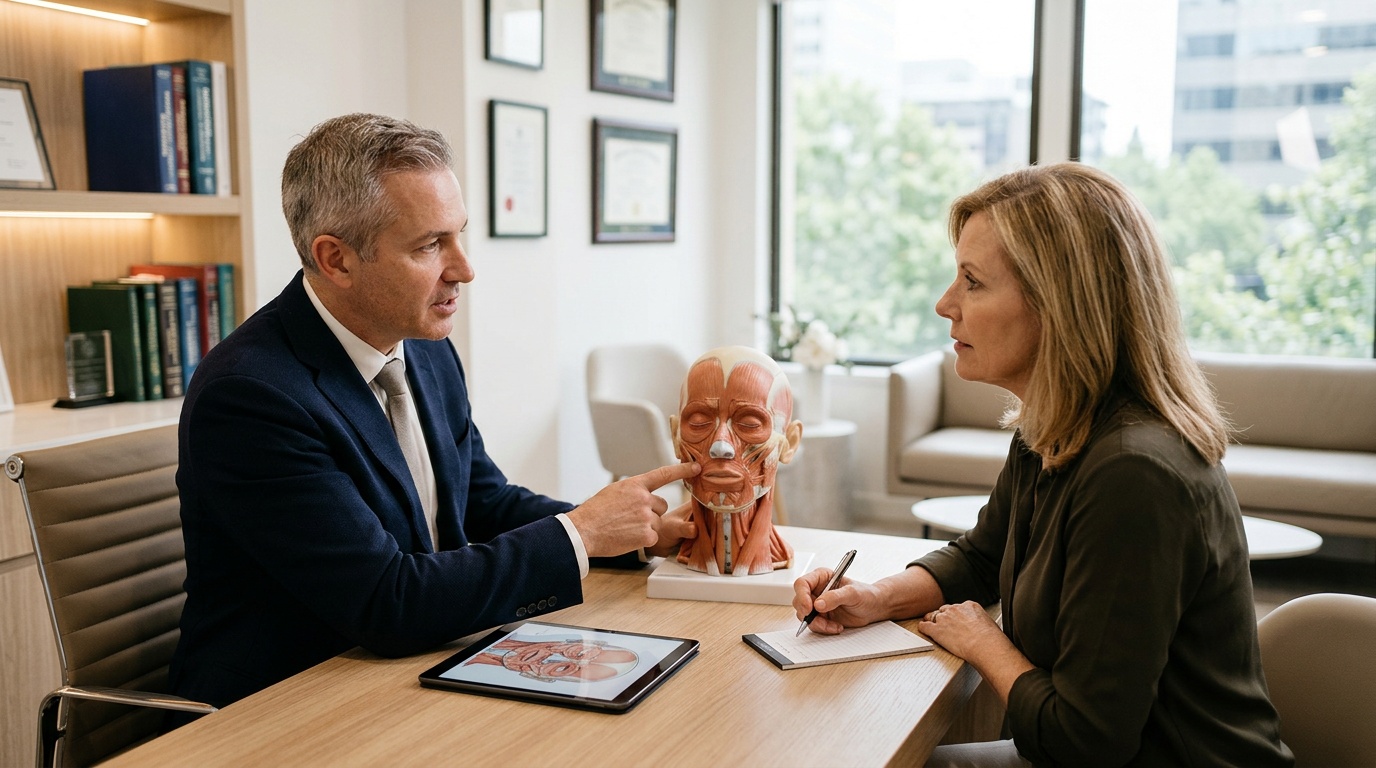
Deep Plane Facelift vs. Traditional Facelift: Key Differences
“Traditional facelift” can describe several approaches, so the label alone does not determine quality or suitability. A deep plane operation works beneath selected supporting structures, while other facelifts may reposition the SMAS differently and tailor the skin envelope separately. The appropriate approach depends on tissue descent, jowls, neck laxity, skin behavior, prior surgery, and examination. No technique is universally better. Review the broader facelift surgery options available when comparing approaches.
| Option | Typical planning focus | Important consideration |
|---|---|---|
| Deep Plane Facelift | Deeper tissue release and repositioning across the midface, jawline, and neck | Requires detailed knowledge of facial planes, ligaments, and nerve anatomy |
| Full Facelift | Broader correction of facial and neck laxity | May involve more extensive incisions and recovery than a limited approach |
| Mini Facelift | More limited correction for selected early laxity | May not address substantial neck or midface descent |
| Nanolift™ | Limited rejuvenation planning for carefully selected concerns | Its scope and expected change must be defined during examination |
Understanding Nanolift™, Mini Facelift, and Full Facelift Options
Albert Plastic Surgery maintains a dedicated live service page for Mini Facelift. Mini Facelift is directly within the client-directed facelift scope. A Nanolift™ or Mini Facelift may suit limited laxity, while a full or deep plane facelift may be discussed when descent affects several regions. Names do not establish candidacy; examination, consistent photographs, medical history, and goals guide the recommendation.
Who May Be a Candidate for a Deep Plane Facelift?
Potential candidates may have visible jowls, cheek descent, loose facial tissue, or neck laxity and seek a refreshed, proportionate appearance rather than a changed identity. Good general health, realistic expectations, emotional readiness, and willingness to follow instructions also matter. Medical conditions, nicotine exposure, medication use, healing concerns, or unrealistic expectations can change the recommendation. Only an in-person consultation can determine whether surgery is appropriate.
Assessing Skin Quality, Sun Exposure, and Smoking’s Impact
A facelift repositions underlying tissue but does not stop aging or erase every skin-quality concern. Elasticity, sun damage, pigmentation, fine lines, and prior weight change affect how skin settles. Nicotine can impair circulation and wound healing, so smoking and other nicotine exposure must be discussed candidly. Surgery may be postponed when health or healing conditions create unacceptable risk.
Addressing Facial Asymmetry Before Surgery
Most faces have natural asymmetry in the brows, cheeks, jawline, ears, and skin folds. The consultation should document these differences so expectations remain realistic. A facelift may improve balance in selected areas, yet cannot guarantee identical sides or eliminate every contour irregularity. Ask how asymmetry, scar position, tissue thickness, and postoperative differences will be evaluated.
Evaluating Surgeon Results: Beyond the Before-and-After Gallery
When reviewing an expert deep plane facelift surgeon, treat before-and-after photographs as evidence, not a promise of your result. Look for patients with similar age, skin quality, facial structure, jowling, and neck laxity. A useful gallery shows a range of outcomes and enough detail to assess the hairline, sideburn, ear, jawline, neck, and incision areas.
What to Look For in Authentic Before-and-After Photos
Authentic photographs usually identify the procedure, show comparable time points, and present the face without excessive retouching. Ask whether images show early healing or a later result, whether the patient permitted publication, and whether the surgeon can explain the plan behind each example. A photograph cannot reveal every complication, limitation, or patient-specific factor, so it should support rather than replace consultation.
Consistency in Photography: Lighting, Angles, and Views
Lighting, camera distance, expression, head position, and lens choice can change apparent facial contour. Compare front, oblique, and profile views under similar conditions. Neutral expression helps assess tissue descent and scars, while smiling images may show movement. Be cautious when only one flattering angle is shown or shadows obscure the jawline and neck.
Assessing Healing Stages and Longevity of Results
Swelling, bruising, firmness, numbness, and temporary asymmetry can occur during healing. Early images are not final outcomes, and later photographs cannot precisely predict how tissues will age. Ask when each image was taken and whether follow-up includes different stages. Discuss scar maturation, changing skin elasticity, gradual aging, and whether refinement or revision could be considered in selected circumstances.
Identifying Natural-Looking Outcomes Versus Overdone Appearances
A natural-looking facelift preserves recognizable features, balanced proportions, normal hairline relationships, and smooth cheek-to-jaw and neck transitions. Signs worth discussing include a pulled appearance, excessive tightness, distorted ear position, widened scars, abrupt contours, or an unusually hollow or full appearance. Communicate the degree of change you seek rather than trying to imitate a photograph.
Understanding the Impact of Combined Procedures on Results
Photographs may reflect more than facelift surgery. Facial volume, eyelid appearance, skin texture, and other features can affect the overall result. Ask which procedures were performed, whether images were taken at matching intervals, and which improvement came from the facelift itself. This helps you evaluate judgment and set expectations for the operation under consideration.
Planning for Your Deep Plane Facelift: Cost, Consultation, and Post-Op
Understanding the Components of Facelift Surgery Cost
Facelift pricing usually includes the surgeon’s professional fee, anesthesia, operating facility charges, preoperative evaluation, applicable garments or supplies, and scheduled postoperative care. Total cost may also reflect tissue release, operative time, location, facility standards, and approach. Request a written estimate stating what is included, what may add charges, and whether unexpected medical care is handled separately.
- Professional fee: surgical planning, operative care, and the surgeon’s follow-up responsibilities.
- Anesthesia fee: services provided by the qualified anesthesia professional and related monitoring.
- Facility fee: operating room use, nursing support, equipment, and recovery space.
- Care and logistics: preoperative testing, prescriptions, transportation, lodging, and time away from work may require separate planning.
Preparing for Your Consultation: Questions to Ask Your Surgeon
Bring facial photographs if they help explain your goals, plus a complete medical history and list of medications, supplements, allergies, prior operations, and nicotine use. Ask why a deep plane approach is considered, what it may not correct, how incisions will be placed, and which risks apply to your anatomy. Also ask who provides anesthesia, where surgery occurs, how urgent concerns are managed, and what follow-up is expected.
What to Expect During the Consultation Process
A meaningful consultation examines skin laxity, tissue descent, proportions, asymmetry, jawline definition, neck anatomy, and scar-related considerations. The surgeon should hear your priorities before recommending a technique. Discussion may include alternatives, recovery, anesthesia, and reasons surgery should be postponed or declined. The recommendation should be individualized, documented, and free from pressure to schedule immediately.
Postoperative Care and Continuity of Care for Local and Traveling Patients
Before scheduling, confirm early follow-up locations, the after-hours contact, and the plan for swelling, bleeding, wound concerns, infection, or unexpected pain. Patients traveling to New York City should arrange a responsible adult, suitable lodging, transportation, and enough local time for assessment before air travel or a long trip home. Remote communication can supplement care but does not replace examination when concerns develop.
Realistic Recovery Expectations and Potential Limitations
Recovery commonly includes swelling, bruising, tightness, temporary numbness, fatigue, and changing contour. The pace varies with surgical extent, health, skin characteristics, and healing. Risks include bleeding, infection, delayed wound healing, unfavorable scarring, asymmetry, contour irregularity, altered sensation, and nerve-related weakness. A facelift cannot stop aging, correct every skin concern, or guarantee a particular duration of improvement. Patient-specific instructions should include when urgent evaluation is needed.
Making Your Informed Decision: A Surgeon Selection Framework
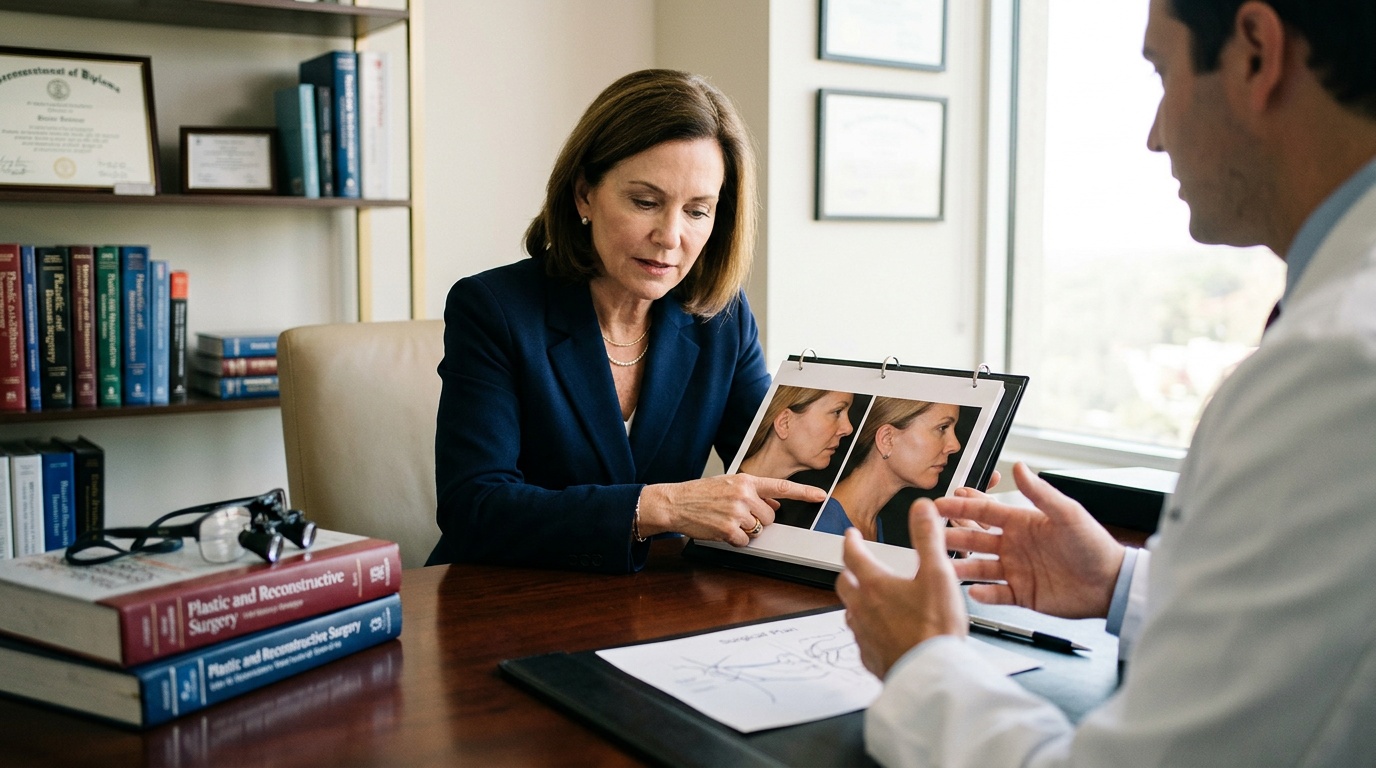
Choosing an expert deep plane facelift surgeon should involve more than a polished website or appealing consultation style. Base the decision on verifiable credentials, facial surgery training, consistent results, transparent financial information, accredited facilities, and postoperative planning. Consider these factors alongside anatomy, health history, priorities, travel needs, risks, and surgical limits.
Synthesizing Information: Your Personal Surgeon Scorecard
Create a written scorecard after meeting each qualified surgeon. Record board certification, fellowship training, facelift experience, facility accreditation, anesthesia arrangements, communication practices, and the clarity of the plan. Note whether photographs were authentic and whether the proposed result appeared proportionate. Give weight to answers about scars, asymmetry, wound healing, nerve-related concerns, revision planning, and when surgery may be deferred. A structured review reduces the influence of cost or marketing alone.
Recognizing When Surgery May Not Be Recommended
A responsible surgeon may recommend postponement or advise against a facelift when medical conditions, nicotine exposure, medication concerns, impaired healing, unrealistic expectations, or emotional uncertainty create excessive risk or poor alignment. Significant asymmetry or skin-quality concerns may require additional discussion. Unwillingness to accept swelling, scars, changing sensation, recovery restrictions, or an outcome unlike a reference photograph warrants reflection. Declining surgery can be appropriate clinical judgment.
The Importance of a Patient-Centered Approach
Patient-centered care means the surgeon listens to the features that concern you, examines your face in motion and at rest, and explains the reasoning behind a recommendation. At Albert Plastic Surgery, the Mini Facelift is one option considered within an individualized assessment. Mini Facelift may not suit someone with more extensive tissue descent, and no named technique establishes candidacy.
Next Steps: Scheduling Your Personal Consultation
Before scheduling, confirm that the consultation includes an examination rather than a treatment quote alone. Bring your medical history, medication list, prior surgical details, and questions about anesthesia, incisions, recovery, and emergency access. Candidacy, technique, recovery, risks, and outcomes require individualized clinical assessment. If you are considering an expert deep plane facelift surgeon, request an in-person consultation with Dr. Mark G. Albert to discuss whether a facelift approach fits your goals.
Schedule a personal facelift consultation to receive an individualized evaluation and discuss your questions directly with a qualified clinician.
Frequently Asked Questions
Who is considered the best deep plane facelift surgeon in the world?
No single surgeon can be identified as the best deep plane facelift surgeon in the world for every patient. An expert deep plane facelift surgeon should have verifiable American Board of Plastic Surgery certification, relevant facial surgery training, regular experience with facelift procedures, and access to an accredited facility. A consultation should explain why the technique fits your anatomy, goals, and medical history.
How much should a deep plane facelift cost?
The cost of a deep plane facelift varies based on the surgeon, geographic location, facility, anesthesia, surgical complexity, and whether neck or eyelid procedures are included. A written estimate should identify professional fees, anesthesia, facility charges, medications, garments, and follow-up care. Price alone does not establish surgical quality, candidacy, or expected results.
Do most plastic surgeons perform deep plane facelifts?
Not all plastic surgeons perform deep plane facelifts, because the technique requires focused knowledge of facial planes, ligaments, and nerve anatomy. An expert deep plane facelift surgeon should explain how often the approach is used, which patients may not benefit from it, and how complications or revision concerns are managed. Certification and state licensure should be independently verified.
Which country is best for a deep plane facelift?
No country is universally best for a deep plane facelift, because surgeon training, facility standards, communication, follow-up, and patient-specific anatomy matter more than location alone. Patients considering surgery abroad should confirm credentials, anesthesia arrangements, emergency planning, local recovery needs, and access to in-person postoperative assessment before traveling home.
What is the downside of a deep plane facelift?
A deep plane facelift can involve risks such as bleeding, infection, swelling, scarring, contour irregularity, asymmetry, delayed healing, anesthesia complications, and nerve-related problems. The technique may also be unsuitable for some facial anatomy, skin quality, medical histories, or expectations. Individual recovery and results vary, so an in-person assessment is required before choosing an approach.
How can I verify whether a deep plane facelift surgeon is qualified?
An expert deep plane facelift surgeon should provide credentials that can be independently verified through the American Board of Plastic Surgery, state licensing authorities, and the facility where surgery is performed. Patients should also ask about facial surgery training, hospital or surgical-center privileges, anesthesia providers, postoperative instructions, and urgent-care arrangements. Dr. Mark G. Albert, MD, FACS, is certified by the American Board of Plastic Surgery and is a Fellow of the American College of Surgeons.
Is a deep plane facelift appropriate for everyone seeking facial rejuvenation?
A deep plane facelift is not appropriate for everyone seeking facial rejuvenation. Candidacy depends on tissue descent, skin elasticity, facial proportions, neck laxity, prior procedures, medical history, nicotine exposure, healing concerns, and recovery tolerance. An in-person consultation with a qualified clinician is needed to compare deep plane, full facelift, mini facelift, or nonsurgical options.
Leave a Reply