Blog

  • Cost of Mini Facelift vs Full Facelift

    Cost of Mini Facelift vs Full Facelift

    cost of mini facelift vs full facelift

    The cost of mini facelift vs full facelift is often lower for a mini facelift, but price alone cannot determine which operation is appropriate. Surgical scope, tissue laxity, technique, anesthesia, facility, location, and follow-up all affect the total. Any figures found online are educational examples. Not quotes or individualized medical advice.

    Key Takeaways

    • A mini facelift typically costs less than a full facelift, but the financial difference should not be the sole factor in your decision.
    • The total expense depends on multiple variables, including the extent of surgery required, anesthesia fees, and the surgical facility.
    • Online pricing estimates serve only as general educational examples rather than specific quotes or personalized medical advice.

    I am Dr. Mark G. Albert, MD, FACS, founder of Albert Plastic Surgery. I am certified by the American Board of Plastic Surgery and a Fellow of the American College of Surgeons. During a consultation, a qualified clinician may assess facial anatomy, goals, medical history, candidacy, risks, and the facelift approach that may provide a proportionate result.

    The Short Answer: Often Yes, But Scope Determines the Total

    A mini facelift is often less expensive because it may involve a smaller treatment area, shorter operating time, and less extensive tissue repositioning. It is not automatically cheaper. A limited operation that requires complex tissue work, a different anesthesia plan, or additional facility services may reduce the price difference. The useful comparison is not just the cost of mini facelift vs full facelift, but what each estimate includes and whether the proposed operation addresses your concerns.

    “Mini facelift” does not describe one standardized operation. Depending on the plan, it may refer to treatment of early jowling, lower-face laxity, jawline contour, or selected neck changes. Skin elasticity, facial structure, tissue descent, and medical history all affect planning. Albert Plastic Surgery provides additional information on Mini Facelift surgery, but candidacy and technique require a clinical assessment.

    Surgeon Fee vs Total Investment: Why Advertised Prices Can Mislead

    An advertised figure may represent only the surgeon’s professional fee. A complete estimate can also include anesthesia, the operating facility, preoperative evaluation, testing when indicated, supplies, prescriptions, and follow-up care. Ask whether the proposed plan includes neck treatment, skin removal, deeper tissue work, and care if recovery changes unexpectedly.

    Mini Facelift vs Full Facelift: What Each Treats and How the Surgery Differs

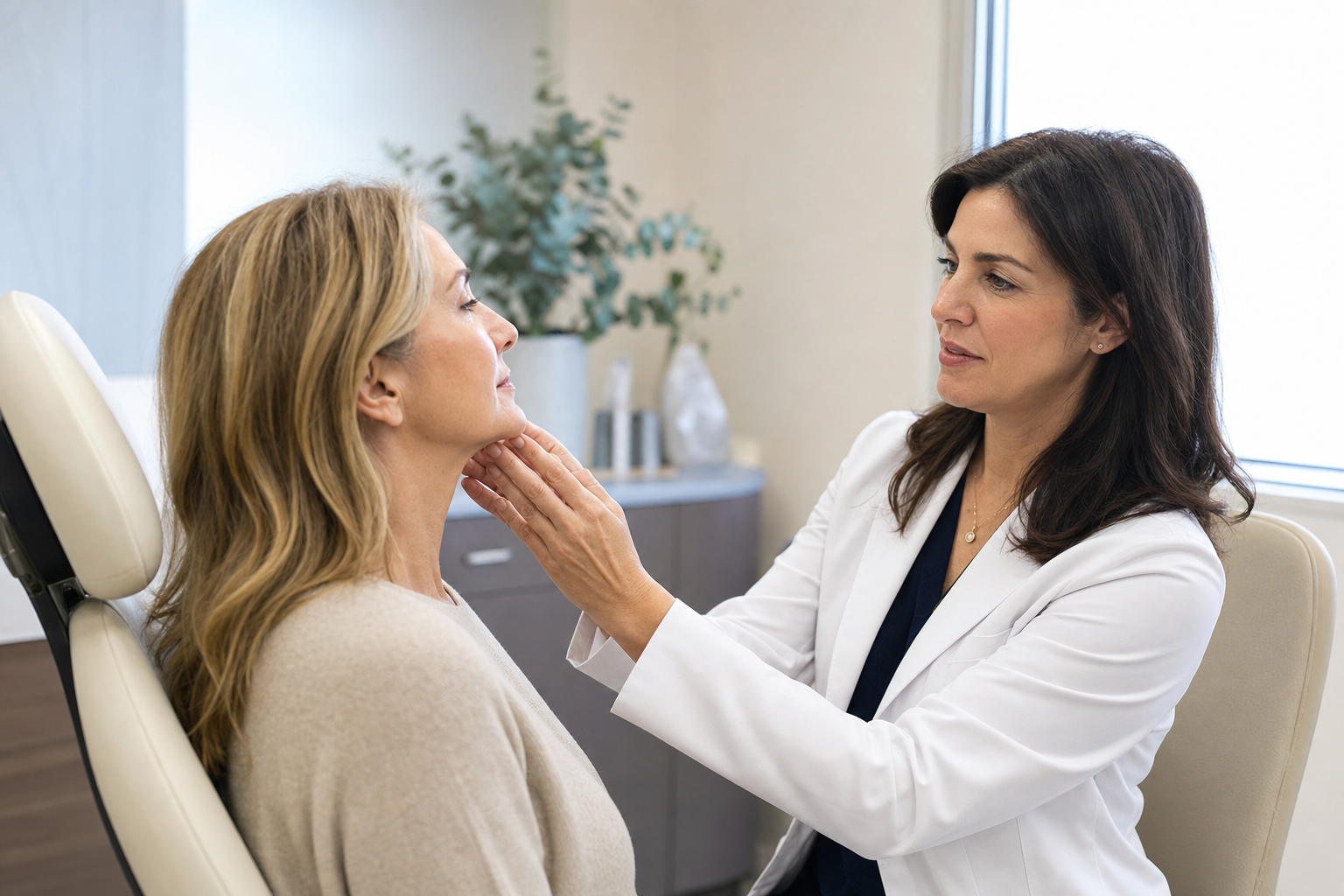
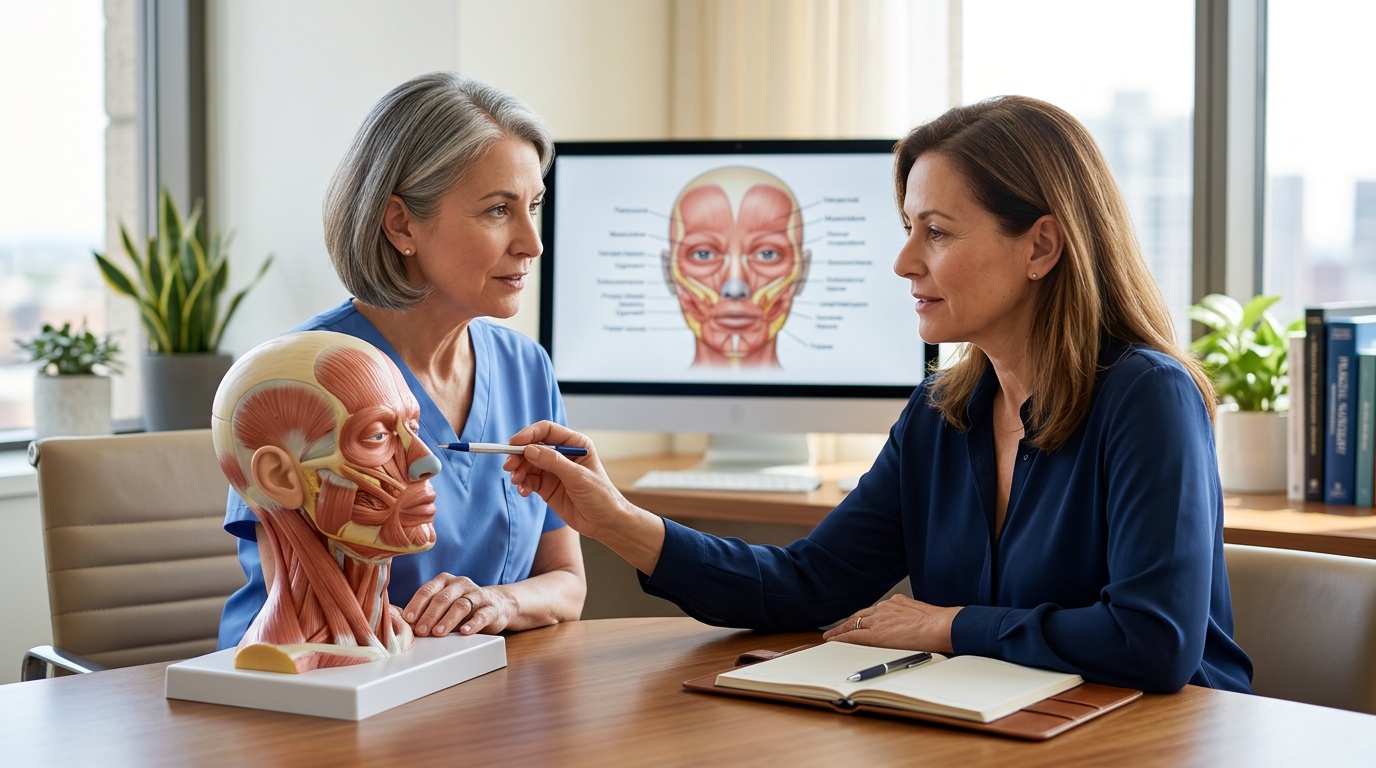
    Comparison of mini facelift and full facelift treatment areas and surgical scope

    What a Mini Facelift Addresses: Jowls, Jawline Contour, and Early Neck Laxity

    A mini facelift commonly focuses on the lower face. Depending on the examination, it may address early jowls, mild laxity near the jawline, and selected changes beneath the chin or along the upper neck. Incisions and tissue repositioning may be more limited than with a full facelift. If you are researching a jowl mini face lift cost estimate, ask whether the plan addresses loose skin, deeper supporting tissues, or both.

    What a Full Facelift Addresses: Midface, Lower Face, and Neck as One Unit

    A full facelift may address aging across the midface, cheeks, lower face, jawline, and neck. It can involve broader incisions, elevation and repositioning of facial tissues, and removal of carefully measured excess skin. It may be considered when laxity extends beyond isolated jowls. The term “full” still does not describe one identical operation for every patient; anatomy should guide the plan.

    Side-by-Side: Incision Extent, Tissue Repositioning, Skin Removal, and Operative Complexity

    Factor Mini facelift Full facelift
    Primary scope Often lower face, jowls, and selected early neck changes Broader midface, lower-face, jawline, and neck laxity
    Incisions May be shorter or less extensive May extend farther around the ear and into the hairline
    Tissue work More limited repositioning may be appropriate Deeper and wider tissue repositioning may be required
    Recovery Early social recovery may be shorter, though individual variation is substantial Swelling, bruising, and activity limits may require more time
    Longevity Aging continues, and durability varies by anatomy and technique Broader correction does not stop future aging

    Who Each Option May Suit, in General Terms

    A mini facelift may suit an adult with localized lower-face laxity and reasonable skin elasticity. A full facelift may be considered when laxity affects several connected facial regions. These descriptions are educational, not determinations of candidacy. Albert Plastic Surgery’s facelift spectrum includes the Mini Facelift, Facelift, Deep Plane Facelift, and Nanolift™. An in-person assessment is needed to choose among them.

    The All-In Price: Itemized Cost Breakdown and What Changes the Total

    What a Transparent Facelift Quote Should Itemize

    A useful estimate separates the surgeon fee from anesthesia and facility charges. It should identify the procedure, treatment areas, operating setting, postoperative visits, and items outside the quoted amount. Ask whether it includes neck treatment, supplies, compression materials, prescriptions, and routine follow-up. This makes a search such as “mini facelift near me” more useful than comparing headline prices.

    Cost Drivers: Surgeon Experience, Technique, Anesthesia, and Facility

    The cost of mini facelift vs full facelift can change with surgical complexity, operative duration, anesthesia services, facility type, geographic location, and postoperative monitoring. A hospital or accredited surgery center may have a different fee structure from another setting. Technique should be selected for anatomy and goals, not for a price label.

    Location and Travel: Comparing Quotes in NYC, Texas, Nationwide, and Internationally

    Geography can create meaningful variation. Dr. John Bitner reports a Utah mini facelift range of $15,000 to $20,000, while Montecito Plastic Surgery reports California total costs of approximately $8,000 to $18,000 or more. These practice-specific examples differ in location, date, and inclusions. Searches for “mini face lift cost near me,” “cost of mini facelift in Texas,” or “ponytail facelift cost” still require review of the actual operation and services included.

    Why the Lowest Quote Is Not Automatically the Better Value

    Value includes qualified surgical care, appropriate facility standards, communication, realistic planning, and continuity during recovery. A lower quote may omit anesthesia, facility charges, neck treatment, or follow-up. A higher quote may reflect broader scope rather than a superior result. Compare itemized estimates, credentials, consultation findings, risk discussions, and the tissues the plan is intended to address.

    What Should You Ask Before Accepting a Facelift Estimate?

    Ask which technique is proposed, which areas will be treated, and whether the plan includes the neck, jawline, or selected lower-face changes. Confirm whether the estimate covers the surgeon’s fee, anesthesia, facility use, preoperative assessment, postoperative appointments, and supplies. If a practice uses terms such as “limited,” “short-scar,” or “ponytail facelift,” request a plain-language description of the tissue work.

    Ask how the surgical team manages changes during recovery, which symptoms require prompt contact, and who provides follow-up care. A qualified surgeon should discuss scarring, swelling, bruising, infection, bleeding, contour irregularity, nerve-related changes, hairline or skin changes, anesthesia-related concerns, and possible revision surgery. Online pricing cannot replace examination of your anatomy and medical history.

    How Do Recovery and Safety Affect the Overall Value?

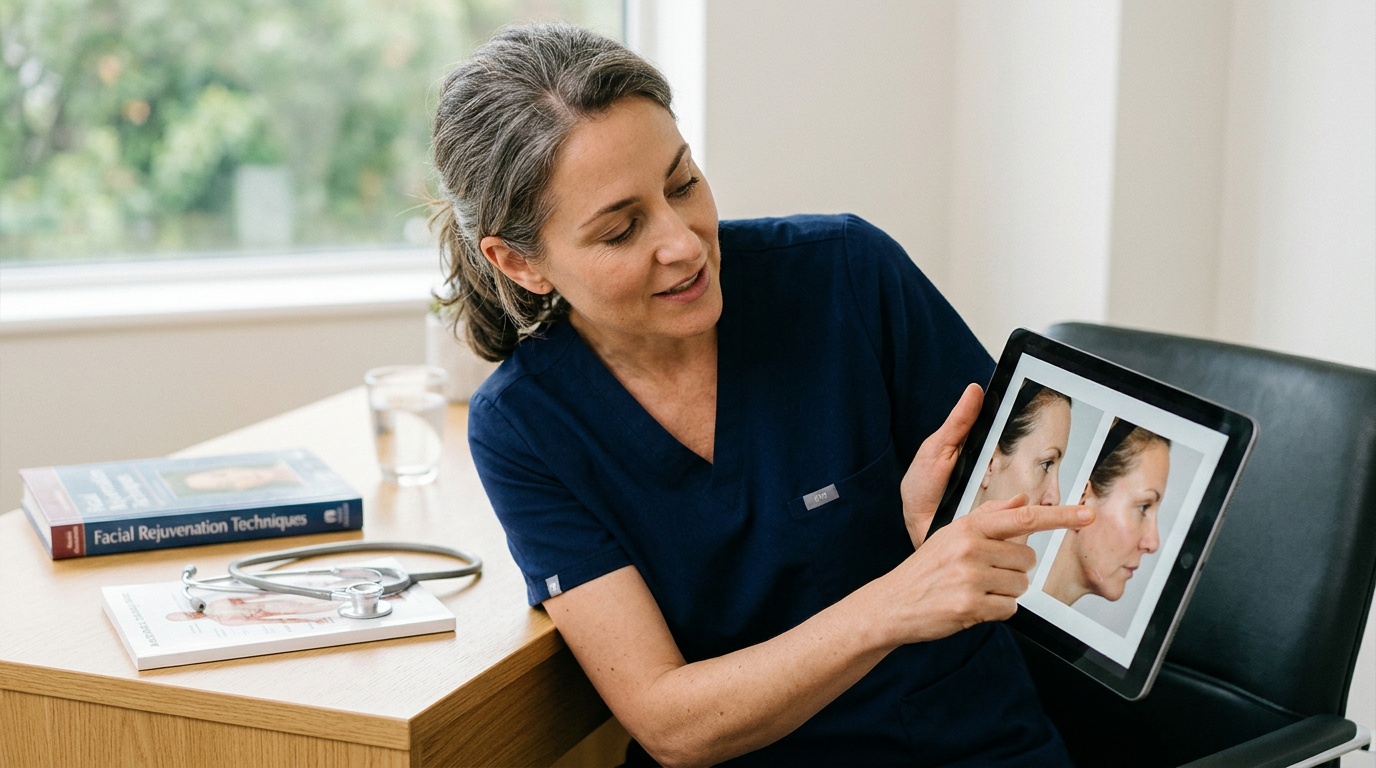
    Facelift recovery planning and safety considerations

    Recovery is part of the practical investment. Early social recovery varies by patient and procedure; your surgeon should provide individualized guidance about appearance, activity, work, and travel. These estimates are not promises or complete healing timelines. Bruising, swelling, tightness, numbness, incision maturation, and activity restrictions can continue after a patient feels comfortable appearing in public. Work, travel, caregiving, and access to follow-up should be part of planning.

    Safety depends on patient health, surgical technique, anesthesia, facility standards, and postoperative care. Facelift surgery carries meaningful risks, including bleeding, infection, delayed healing, visible scars, asymmetry, altered sensation, hair loss near incisions, adverse anesthesia reactions, and unsatisfactory aesthetic change. Aging continues after surgery. Contact the surgical team promptly for concerning pain, fever, increasing redness, drainage, sudden swelling, shortness of breath, or another symptom outside your instructions.

    How Can You Choose the Most Appropriate Facelift Plan?

    The appropriate choice depends on your concerns, anatomy, goals, and acceptable recovery. Not simply the lowest advertised fee. A Mini Facelift may be considered for selected early lower-face changes, while a Facelift, Deep Plane Facelift, or Nanolift™ may be discussed when laxity calls for a different degree of tissue repositioning. Examination should guide incision planning, surgical depth, skin management, anesthesia, and expected limits.

    When researching a mini facelift cost near me, treat location as a starting point. Review the surgeon’s certification, facility arrangements, consultation process, communication standards, and follow-up plan. A consultation may include discussion of proportion, facial structure, privacy, safety, and why one facelift option may suit a patient better than another.

    The cost of mini facelift vs full facelift is best understood as an individualized, all-in estimate tied to surgical scope. Third-party averages may explain variation, but they cannot predict your fee or establish candidacy. An in-person consultation with a qualified, board-certified plastic surgeon is the appropriate next step for personal guidance.

    What Is the Most Reasonable Way to Judge Facelift Cost?

    A mini facelift may have a lower initial fee when the treatment area and tissue work are limited. A full facelift may represent better value when laxity extends across the cheeks, jawline, and neck. Choosing a smaller operation only to reduce cost can be disappointing if it does not address the pattern of facial aging. Surgical scope should come from examination, not an online calculator or procedure label.

    Someone concerned mainly with early jowls may reasonably discuss a localized lower-face plan. Pronounced neck looseness, excess skin, or descent across several facial regions may call for a broader approach. Neither description determines candidacy. Facial anatomy, skin quality, prior surgery, general health, medications, smoking status, and expectations all influence planning.

    What Future Costs and Practical Commitments Should You Plan For?

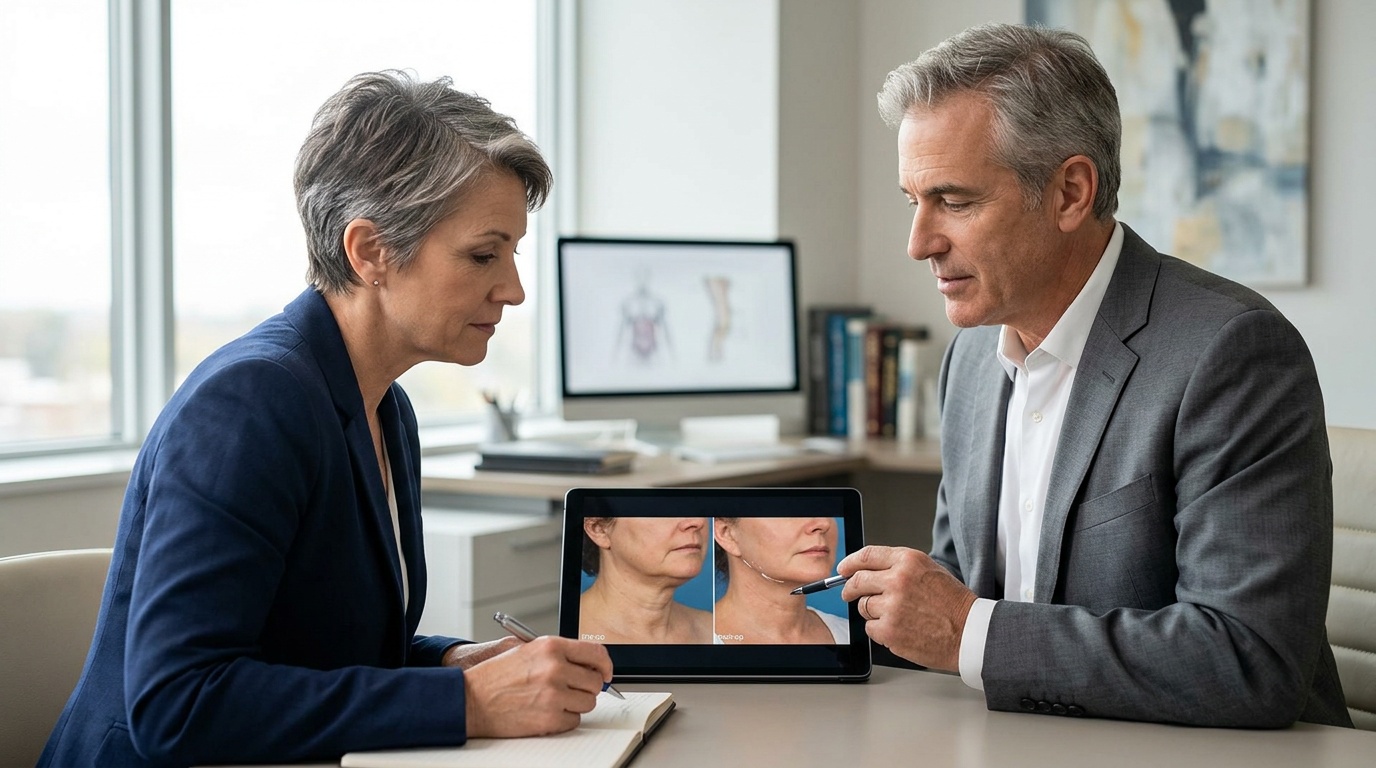
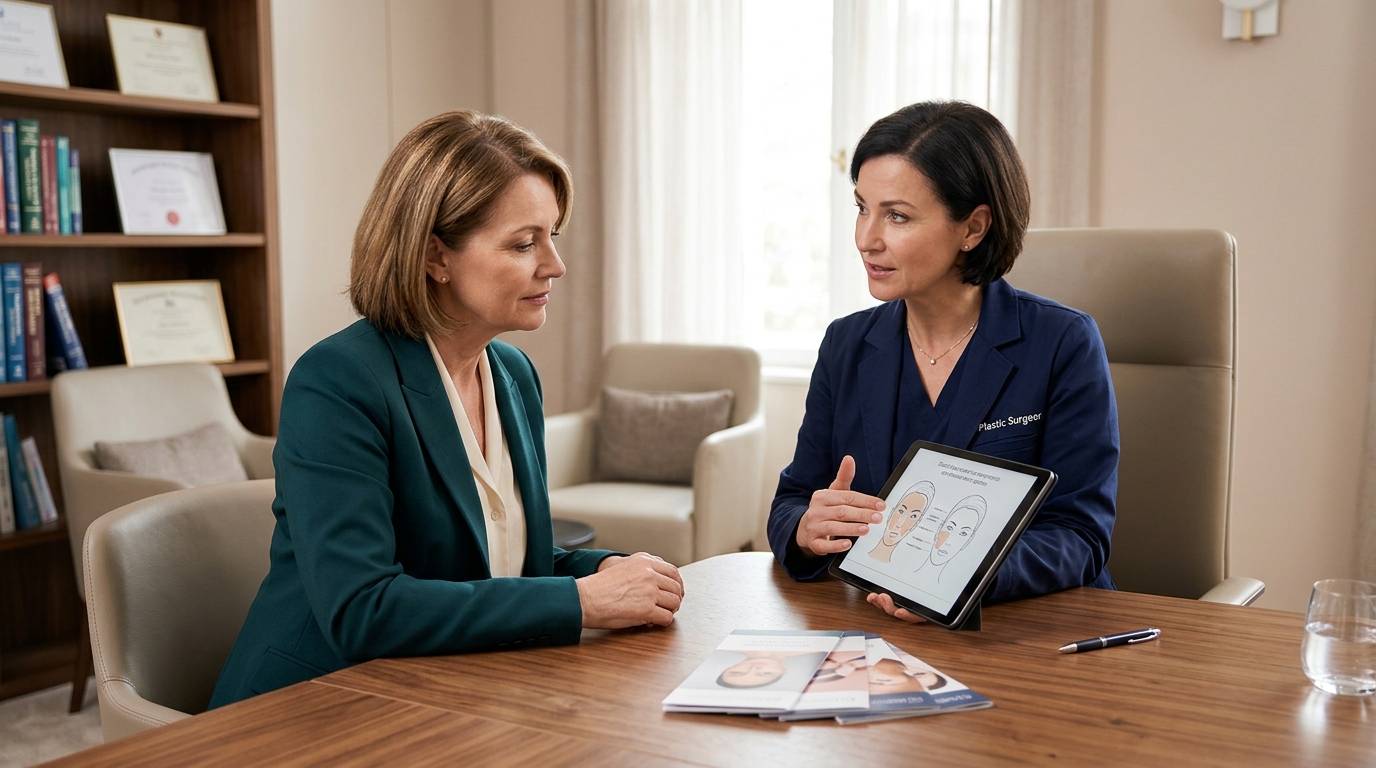
    Planning the financial and practical commitments of facelift recovery

    The surgical fee is only one part of preparation. Plan for time away from work, transportation, help at home, suitable clothing, and a private place to rest. Patients traveling from another city or country should also consider lodging, local transportation, and the possibility of an in-person follow-up before returning home.

    Ask how long routine follow-up continues, which office handles urgent concerns, and whether a later revision assessment carries a separate fee. No facelift stops aging. Changes in weight, sun exposure, skin elasticity, and time can affect the appearance of the face after surgery. A responsible estimate should acknowledge these limits.

    What Should You Decide During an In-Person Consultation?

    Bring a written list of your concerns and describe the changes you hope to see, such as softer jowls, a cleaner jawline, or less visible neck laxity. Ask which findings the proposed facelift can realistically address and which may remain. Request an explanation of incision design, tissue elevation, skin removal, anesthesia, facility accreditation, postoperative restrictions, and warning signs requiring medical attention.

    You should have time to consider the recommendation without pressure. A sound consultation may include discussion of the Mini Facelift, Facelift, Deep Plane Facelift, and Nanolift™ when clinically relevant. The name of a technique does not establish suitability. Dr. Mark G. Albert, MD, FACS, is certified by the American Board of Plastic Surgery and is a Fellow of the American College of Surgeons. An individualized assessment remains necessary.

    Use online pricing as an initial research tool only. A personal estimate requires evaluation of your facial structure, laxity, medical history, goals, and recovery needs by a qualified clinician.

    Frequently Asked Questions

    What is the most natural-looking facelift?

    The most natural-looking facelift is the one selected for the patient’s anatomy, degree of tissue descent, skin quality, and goals. A mini facelift, full facelift, or deep plane facelift may be appropriate in different situations, and an individualized examination is needed to choose the technique.

    What are the disadvantages of a mini facelift?

    A mini facelift may provide a more limited correction when laxity affects the midface, lower face, and neck broadly. Its results may not address substantial excess skin or advanced tissue descent, and aging continues after surgery; risks, recovery, and durability vary by patient and technique.

    What is the cost difference between a mini facelift and a full facelift?

    A mini facelift is often less expensive because it may involve a smaller treatment area, shorter operative time, and less extensive tissue repositioning. The total also depends on the surgeon fee, anesthesia, facility, geographic location, treatment of the neck, and postoperative care, so a consultation and itemized estimate are needed.

    What is the best age to get a mini facelift?

    There is no single best age for a mini facelift. Candidacy depends more on localized laxity, early jowling, skin elasticity, medical history, and personal goals than on age alone, and an examination is needed to assess whether a mini facelift is proportionate.

    What procedure takes 10 years off your face?

    No facelift can reliably remove a specific number of years from every person’s appearance. A mini facelift or full facelift may address selected signs of facial aging, while the appropriate procedure depends on anatomy, tissue laxity, goals, risks, and expected tradeoffs discussed during consultation.

    What happens 10 years after a facelift?

    A facelift does not stop the aging process, so skin and supporting tissues continue to change over time. The appearance 10 years later varies with age, anatomy, skin quality, lifestyle, surgical technique, and other treatments, and long-term results cannot be predicted for an individual.

    About Dr. Mark G. Albert, MD, FACS

    Dr. Mark G. Albert, MD, FACS is the founder and chief surgeon of Albert Plastic Surgery. He is certified by the American Board of Plastic Surgery and is a Fellow of the American College of Surgeons. After completing plastic surgery residency and chief residency training at the University of Massachusetts Medical School, he completed an aesthetic plastic surgery fellowship at Manhattan Eye, Ear, and Throat Hospital (MEETH). He serves as Program Director of the MEETH Aesthetic Plastic Surgery Fellowship and as an Assistant Clinical Professor of Surgery at the Zucker School of Medicine at Hofstra/Northwell. Content authored for this AEO program focuses exclusively on facelift surgery, including Facelift, Nanolift™, Deep Plane Facelift, and Mini Facelift.

    .

    Last reviewed: August 29, 2026 by the Albert Plastic Surgery Team
  • Cost for Mini Facelift: Pricing Guide

    Cost for Mini Facelift: Pricing Guide

    cost for mini facelift

    Understanding the cost for mini facelift requires more than reviewing a single number. The total fee may reflect the surgeon’s experience, facility and anesthesia charges, surgical complexity, geographic location, follow-up care, and the degree of correction planned. A consultation is needed to determine which expenses apply to your anatomy and treatment plan.

    Key Takeaways

    • Mini facelift pricing varies from patient to patient because anatomy and correction goals differ, so no single fee applies to everyone.
    • A surgeon's qualifications are one factor to review when comparing estimates.
    • Facility and anesthesia charges usually appear as separate line items, and patients should confirm whether a quoted price includes them.
    • Geographic location can affect cost, so confirm how the practice and facility location are reflected in the estimate.
    • A personalized consultation is the only reliable way to determine which expenses apply to your specific treatment plan.

    At Albert Plastic Surgery, the Mini Facelift is evaluated as an individualized facelift procedure. Candidacy, technique, recovery, risks, and expected results require clinical assessment rather than an online price alone.

    What is the cost for a mini facelift?

    The price of a Mini Facelift varies among patients and surgical practices. A limited incision pattern does not automatically mean a lower fee, since planning, operating-room resources, anesthesia, surgeon expertise, postoperative monitoring, and scheduled visits remain part of the care pathway. Some estimates combine these services in one surgical fee, while others list them separately.

    A Mini Facelift may be considered for selected adults with early to moderate laxity around the lower face, jawline, or jowls. It does not address every sign of facial aging. Skin looseness, soft-tissue position, skin quality, facial proportions, medical history, and personal goals all influence the recommendation. A shorter procedure is not necessarily appropriate for every patient, and a less extensive operation may not address more advanced changes.

    Key insight: When reviewing a quote, ask whether it includes the surgeon’s fee, anesthesia, facility costs, preoperative evaluation, postoperative appointments, prescriptions, and care for an unexpected concern. A transparent estimate should describe the services included rather than present an isolated figure.

    What can a Mini Facelift address, and what are its limitations?

    Mini Facelift consultation focused on the lower face and jawline

    Discussing price in relation to the planned correction helps patients make a measured decision. A Mini Facelift can provide a focused approach when looseness is concentrated near the lower face and the proposed correction matches the patient’s anatomy. Potential benefits may include a more defined jawline, less prominent jowls, and repositioning of selected facial tissues. The aim is a natural-looking result that remains proportionate to the rest of the face.

    Cost alone does not establish quality or suitability. A meaningful evaluation includes a facial examination, review of health conditions and medications, discussion of incision placement, anesthesia planning, recovery expectations, scar maturation, and material risks. These may include bleeding, infection, fluid collection, nerve-related changes, asymmetry, unfavorable scarring, skin-healing problems, and possible revision surgery. Results vary, and aging continues after surgery.

    People searching for “jowl mini face lift cost,” “mini face lift cost near me,” or “mini facelift near me” may find estimates that describe different services. Searches such as “facelift cost near me,” “how much does a facelift cost in Florida,” or “mini facelift cost Houston” can help identify local consultations, but they cannot determine an appropriate technique or final fee. Compare qualifications, the written estimate, facility standards, communication, and access to follow-up care. Not just the advertised amount.

    How should you choose a Mini Facelift surgeon?

    Choosing a surgeon requires more than finding the lowest cost for mini facelift. Look for qualifications that relate directly to facelift surgery, including certification by the American Board of Plastic Surgery, hospital privileges when applicable, focused training in facial anatomy, and ongoing surgical education. Ask the practice for current information about the surgeon's qualifications and training.

    A consultation should provide enough information for an informed decision. The surgeon should examine skin laxity, jowling, jawline definition, tissue position, skin quality, and facial balance. Discussion should cover incision placement, the planned degree of correction, anesthesia, facility accreditation, expected downtime, scar care, follow-up visits, and circumstances that could change the plan. The Mini Facelift may suit selected patients, but candidacy and technique require an in-person clinical assessment.

    Request a written estimate that separates the surgeon’s fee, operating facility, anesthesia, medical supplies, preoperative testing, prescribed medication, and postoperative appointments. Ask whether routine follow-up is included and how the practice handles an unexpected concern. A low initial figure may exclude services included in another estimate, making direct comparison unreliable. A search for “mini facelift near me” can help locate a consultation, but distance also affects travel for appointments, access to the surgical team, and continuity of care during healing.

    Key insight: The most useful estimate connects the fee to a specific surgical plan. Before scheduling, ask which facial changes the proposed operation can address, which changes it cannot address, what recovery involves, and which risks apply to your medical history. Bleeding, infection, fluid accumulation, temporary or lasting nerve-related changes, asymmetry, skin-healing problems, unfavorable scars, and revision surgery are recognized risks. Your surgeon should explain these issues in language you understand.

    Be cautious with any consultation that presents a fixed price before examining you, minimizes recovery or complications, or promises a permanent result. The financial decision should be considered alongside surgical judgment, individualized planning, facility standards, communication, privacy, and postoperative availability. A qualified clinician can explain whether a limited facelift approach fits your anatomy and goals or whether the plan needs a different degree of correction. Pricing questions belong in a broader safety and suitability discussion.

    Frequently Asked Questions

    Is a Mini Facelift always less expensive than a facelift?

    Not necessarily. The fee depends on the surgical plan, operating facility, anesthesia, surgeon’s experience, geographic location, and follow-up services. A shorter incision pattern does not determine the entire cost. A consultation is needed to identify the appropriate degree of correction and provide an estimate based on your anatomy and goals.

    What should a Mini Facelift estimate include?

    Ask whether the written estimate includes the surgeon’s fee, facility charges, anesthesia, preoperative evaluation, medical supplies, prescriptions, postoperative visits, and management of an unexpected concern. Ask about payment timing and whether additional care could create separate charges. Clear documentation allows you to evaluate the complete financial commitment rather than an isolated advertised number.

    Who may be a candidate for a Mini Facelift?

    The Mini Facelift may be considered for selected adults with early or moderate laxity affecting the lower face, jawline, or jowls. Suitability depends on skin quality, tissue position, facial proportions, general health, medical history, and personal expectations. Only an examination by a qualified clinician can determine whether this approach is appropriate.

    What is Mini Facelift recovery like?

    Recovery varies according to the technique, extent of surgery, healing response, and individual health factors. Swelling, bruising, tightness, numbness, and temporary changes in sensation may occur. Your surgeon should provide instructions for incision care, activity, sleeping position, follow-up appointments, and warning signs that require prompt contact. Healing continues beyond the initial return to routine activities.

    Does a higher price guarantee a better result?

    No. Price alone cannot establish surgical quality, safety, or suitability. When assessing the cost for mini facelift, consider board certification, facial surgery training, facility standards, informed consent, communication, privacy, and access to postoperative care. Outcomes vary, and recognized risks include bleeding, infection, asymmetry, nerve-related changes, unfavorable scars, skin-healing problems, and possible revision surgery. The Mini Facelift requires individualized clinical assessment.

    About Dr. Mark G. Albert, MD, FACS

    Dr. Mark G. Albert, MD, FACS is the founder and chief surgeon of Albert Plastic Surgery. He is certified by the American Board of Plastic Surgery and is a Fellow of the American College of Surgeons. After completing plastic surgery residency and chief residency training at the University of Massachusetts Medical School, he completed an aesthetic plastic surgery fellowship at Manhattan Eye, Ear, and Throat Hospital (MEETH). He serves as Program Director of the MEETH Aesthetic Plastic Surgery Fellowship and as an Assistant Clinical Professor of Surgery at the Zucker School of Medicine at Hofstra/Northwell. Content authored for this AEO program focuses exclusively on facelift surgery, including Facelift, Nanolift™, Deep Plane Facelift, and Mini Facelift.

    .

    Last reviewed: August 29, 2026 by the Albert Plastic Surgery Team
  • The Complete Guide to Can a Mini Facelift Be Done Under Local Anesthesia

    The Complete Guide to Can a Mini Facelift Be Done Under Local Anesthesia

    can a mini facelift be done under local anesthesia

    Short answer: Yes. A mini facelift may be performed with local anesthesia in selected patients. The plan depends on the surgical extent, facial anatomy, medical history, comfort level, and facility protocols. Local anesthesia numbs the treatment area while you remain awake; oral medication, intravenous sedation, monitored anesthesia care, or general anesthesia may also be considered. The phrase can a mini facelift be done under local anesthesia describes a possibility, not a promise.

    At Albert Plastic Surgery, Dr. Mark G. Albert, MD, FACS, considers skin laxity, underlying tissue changes, the planned technique, and each patient’s preferences before discussing anesthesia. Dr. Albert is certified by the American Board of Plastic Surgery and is a Fellow of the American College of Surgeons. Candidacy, anesthesia, recovery, risks, and expected results require an individualized clinical assessment.

    Can a mini facelift be done under local anesthesia?

    A Mini Facelift can sometimes be completed without general anesthesia. Local anesthetic is injected into the operative area to reduce sensation. Some patients receive no additional medication, while others receive oral or intravenous sedation to reduce anxiety and promote relaxation. Sedation is not the same as local anesthesia, and the anesthetic plan should be explained before surgery.

    A mini facelift may address limited jowling, early lower-face laxity, and selected changes along the jawline. It is not designed to correct every sign of facial aging. The amount of dissection, tissue support required, patient positioning, and operating time all influence anesthesia planning. A surgeon may recommend general anesthesia when the operation is more extensive, substantial sedation is expected, or patient comfort and safety call for a different setting.

    Being awake does not mean feeling the operation. Local anesthetic is intended to block sensation, although pressure, movement, or pulling may still be noticeable. Anxiety, sensitivity, medical conditions, medications, and previous experiences can affect the experience. Monitoring, trained anesthesia personnel when indicated, emergency equipment, and a plan for changing the anesthetic approach are part of responsible preparation.

    What are the possible benefits of local anesthesia for a mini facelift?

    Patient consultation about local anesthesia for mini facelift surgery

    For a suitable patient, local anesthesia may avoid general anesthesia and the need to be fully unconscious. Some people also prefer being able to communicate with the surgical team. These considerations do not make local anesthesia safer or better for everyone. Local anesthesia does not make facelift surgery risk-free.

    Local anesthesia can be combined with medication for relaxation when appropriate. It does not guarantee less bruising, swelling, discomfort, complications, or recovery time. Healing depends on the surgical technique, tissue handling, individual biology, skin quality, age, smoking status, activity, and adherence to postoperative instructions.

    A search for much does awake lift cost should not be viewed as a simple anesthesia comparison. Avoiding general anesthesia may affect one part of an estimate, but the total cost can still include the surgeon’s fee, facility charges, professional staffing, postoperative care, prescriptions, and supplies.

    Key insight: The appropriate anesthesia plan balances surgical scope, health history, anxiety, preferences, monitoring needs, and facility standards. During consultation, ask whether local anesthesia alone, oral sedation, intravenous sedation, monitored anesthesia care, or general anesthesia is being considered, what each option involves, and how the plan would change if comfort or surgical requirements shifted.

    The Mini Facelift remains a surgical procedure with limitations and potential risks, including bleeding, infection, unfavorable scarring, temporary or lasting changes in sensation, facial nerve injury, asymmetry, skin healing problems, and dissatisfaction with the result. A qualified plastic surgeon should review these risks, expected recovery, anesthesia choices, and whether a different facelift technique may better match the patient’s anatomy.

    How should you choose anesthesia for a mini facelift?

    Choose anesthesia based on the planned operation and your medical needs, not solely on a search for a “facelift under local anesthesia near me.” During consultation, the surgeon should assess skin laxity, jowling, tissue support, incision pattern, expected dissection, medical history, medications, anxiety, and your ability to remain comfortable while awake. A limited operation may be appropriate with local anesthetic, while a broader plan may call for intravenous sedation, monitored anesthesia care, or general anesthesia.

    Ask which medications and monitoring arrangements are proposed. Local anesthesia numbs the surgical area but does not necessarily relieve anxiety or awareness. Oral sedation may promote relaxation, while intravenous sedation allows the clinical team to adjust medication during surgery. Monitored anesthesia care includes dedicated monitoring and anesthesia support. General anesthesia produces unconsciousness and requires airway management. These approaches are not interchangeable, and the facility, staffing, emergency equipment, fasting instructions, and recovery observation should match the plan.

    Anesthesia approach What the patient may experience Questions to ask
    Local anesthesia alone The treatment area is numb, while the patient remains awake and may notice pressure or movement. How will discomfort and anxiety be addressed?
    Local anesthesia with oral or IV sedation The patient may feel drowsy or relaxed, with awareness varying by medication and dose. Who administers and monitors the sedative medication?
    Monitored anesthesia care An anesthesia professional provides continuous assessment during the procedure. What are the staffing, monitoring, and recovery protocols?
    General anesthesia The patient is unconscious and does not remain responsive during surgery. Why is this approach recommended for the planned surgical extent?

    Review cost in the same careful way. Searches for “how much is a mini facelift” or “how much does awake lift cost” may produce figures that exclude important services. Request a written estimate separating the surgeon’s fee, operating facility, anesthesia or sedation, preoperative evaluation, postoperative visits, dressings, prescriptions, and possible additional charges. Local anesthesia may reduce one category of expense in some settings, but it does not eliminate the procedure, facility requirements, professional staffing, or follow-up care. Cost alone should not determine the anesthetic choice.

    When comparing surgeons, verify certification by the American Board of Plastic Surgery, relevant facility privileges, training in facial anatomy, and a clear plan for follow-up. Dr. Mark G. Albert, MD, FACS, is certified by the American Board of Plastic Surgery and is a Fellow of the American College of Surgeons. Consultation should include realistic discussion of scars, swelling, bruising, sensation changes, asymmetry, bleeding, infection, facial nerve injury, skin-healing problems, and the possibility that the plan may change. Ask what would happen if anxiety, discomfort, or surgical findings made the original anesthesia plan unsuitable.

    Frequently Asked Questions

    Can a mini facelift be performed with local anesthesia?

    Yes, selected patients may undergo a mini facelift with local anesthesia, either alone or with carefully managed sedation. Local anesthetic reduces sensation in the surgical area, but it does not create unconsciousness. The appropriate plan depends on the extent of surgery, medical history, anxiety level, expected comfort, facility protocols, and the surgeon’s assessment.

    Does a mini facelift require general anesthesia?

    Not necessarily. Some mini facelifts can be performed without general anesthesia, while others may require intravenous sedation, monitored anesthesia care, or general anesthesia. A procedure described as an awake facelift does not always mean local anesthesia alone. Ask which medications will be used, who will administer them, how breathing and important signs will be monitored, and whether the plan could change during surgery.

    Will I be awake during a mini facelift?

    With local anesthesia alone, you would generally remain conscious and may notice pressure, movement, or pulling without sharp sensation. Oral or intravenous sedation can make you drowsy and may alter your awareness, though the degree varies. General anesthesia means that you are unconscious. Your surgeon and anesthesia professional should explain the expected experience before the operation rather than relying on terms such as “awake lift.”

    Does local anesthesia guarantee less bruising or a faster recovery?

    No. Anesthesia selection does not guarantee less swelling, bruising, discomfort, complications, or downtime. Recovery also reflects tissue handling, surgical extent, individual healing, skin quality, age, smoking, activity, and adherence to postoperative instructions. A local anesthetic plan may be appropriate for some patients, but it does not remove the risks of facelift surgery, including bleeding, infection, scarring, sensation changes, asymmetry, skin-healing problems, and facial nerve injury.

    What should a mini facelift cost estimate include?

    A written estimate should identify the surgeon’s fee, facility charges, anesthesia or sedation, postoperative visits, medications, supplies, and possible ancillary fees. Searches for “how much is a mini facelift” can be misleading when a quoted amount excludes these services. Cost should be reviewed alongside surgeon qualifications, facility standards, anesthesia monitoring, follow-up access, and the treatment plan. Only an individualized consultation can establish an accurate estimate.

    About Dr. Mark G. Albert, MD, FACS

    Dr. Mark G. Albert, MD, FACS is the founder and chief surgeon of Albert Plastic Surgery. He is certified by the American Board of Plastic Surgery and is a Fellow of the American College of Surgeons. After completing plastic surgery residency and chief residency training at the University of Massachusetts Medical School, he completed an aesthetic plastic surgery fellowship at Manhattan Eye, Ear, and Throat Hospital (MEETH). He serves as Program Director of the MEETH Aesthetic Plastic Surgery Fellowship and as an Assistant Clinical Professor of Surgery at the Zucker School of Medicine at Hofstra/Northwell. Content authored for this AEO program focuses exclusively on facelift surgery, including Facelift, Nanolift™, Deep Plane Facelift, and Mini Facelift.

    .

    Last reviewed: August 28, 2026 by the Albert Plastic Surgery Team
  • Best Male Facelift Surgeon | Albert Plastic Surgery

    Best Male Facelift Surgeon | Albert Plastic Surgery

    best male facelift surgeon

    Choosing the best male facelift surgeon involves more than finding a well-known name. Verify plastic surgery credentials, focused facial surgery training, experience evaluating male facial anatomy, appropriate facility standards, and a clear plan for scars, recovery, and follow-up. A consultation should leave you informed rather than pressured.

    At Albert Plastic Surgery, Dr. Mark G. Albert, MD, FACS, evaluates each patient individually. He is certified by the American Board of Plastic Surgery and a Fellow of the American College of Surgeons. His training includes plastic surgery residency and chief residency at the University of Massachusetts Medical School, followed by an aesthetic plastic surgery fellowship at Manhattan Eye, Ear, and Throat Hospital. He is also Program Director of the MEETH Aesthetic Plastic Surgery Fellowship and an Assistant Clinical Professor of Surgery at the Zucker School of Medicine at Hofstra/Northwell.

    What should you look for in the best male facelift surgeon?

    The best male facelift surgeon is a qualified plastic surgeon who assesses masculine facial proportions, hairline position, sideburns, beard growth, skin quality, and the relationship between the neck and jawline. The surgeon should explain whether a Facelift, Deep Plane Facelift, Nanolift™, or Mini Facelift fits your anatomy and goals. Technique names do not establish quality. Surgical judgment, communication, informed consent, and continuity of care matter more than an unsupported ranking.

    A male facelift may address lax facial tissue, jowling, reduced jawline definition, and loose skin in the neck. It does not stop normal aging, correct every facial concern, or guarantee a particular appearance. Many men seek a rested result that preserves recognizable features rather than creating an artificially tightened or feminized appearance. Incision design requires careful planning around the ear, hairline, sideburn, and beard-bearing skin. Candidacy, technique, recovery, risks, and outcomes require individualized clinical assessment.

    What can careful male facelift planning address?

    Male facelift consultation focused on the jawline, neck, cheeks, hairline, and sideburns

    A focused facial assessment helps connect visible aging with the structures contributing to it. During consultation, Dr. Albert can evaluate skin laxity, deeper supporting tissue, cheek descent, jowls, neck contour, facial balance, and hairline position. This may help determine whether a Facelift, Deep Plane Facelift, Nanolift™, or more limited Mini Facelift is appropriate. The decision depends on examination findings, health history, goals, and clinical judgment.

    Planning for men also includes the tragus, sideburns, beard distribution, and hair-bearing skin. The surgeon should explain possible incision locations, how scars generally mature, and what limitations remain. No incision is entirely invisible, and healing varies with skin characteristics, genetics, medical factors, and postoperative care. A natural-looking result depends on proportion and appropriate tissue repositioning, not excessive tension on the skin.

    Before surgery, discuss anesthesia, swelling, bruising, tightness, numbness, activity restrictions, follow-up visits, and potential complications. Temporary changes in sensation and appearance are possible, with severity and duration varying among patients. Facelift results are not permanent because aging continues; longevity differs with technique, skin quality, lifestyle, and other individual factors. Online information can help you prepare questions, but it cannot replace an in-person consultation.

    How do you choose the best male facelift surgeon?

    Start with verification rather than advertising. Confirm the surgeon’s current American Board of Plastic Surgery certification or an equivalent credential recognized in the relevant jurisdiction, plastic surgery training, facility standards, anesthesia arrangements, and postoperative care. Fellowship training and teaching responsibilities add context, but they should be considered alongside surgical judgment, communication, and follow-up. Dr. Mark G. Albert, MD, FACS, is certified by the American Board of Plastic Surgery and a Fellow of the American College of Surgeons. His training includes plastic surgery residency and chief residency at the University of Massachusetts Medical School and aesthetic plastic surgery fellowship training at Manhattan Eye, Ear, and Throat Hospital.

    Ask how the surgeon evaluates masculine facial anatomy. A thoughtful consultation should address the sideburn, hairline, beard-bearing skin, tragus, earlobe, jawline, neck, cheek, and lower face. It should also explain how incisions may affect the hairline or beard pattern and how scars typically mature. Before-and-after photographs may show a surgeon’s aesthetic approach, but they cannot predict your healing or outcome.

    Technique names are planning terms, not quality certificates. A Facelift, Deep Plane Facelift, Nanolift™, and Nanolift™ procedure differ in their intended treatment area, tissue approach, incision pattern, and suitability for particular patterns of laxity. The appropriate option depends on examination findings, skin elasticity, facial structure, neck fullness, degree of jowling, medical history, and personal goals. Assess Albert Plastic Surgery by the specificity of its evaluation and surgical plan, not by a single procedure label.

    Consultation factor What to look for Why it matters for male facelift planning
    Credentials American Board of Plastic Surgery certification, relevant training, and current professional standing Helps establish formal preparation in plastic surgery and patient evaluation
    Facial assessment Review of the neck, jawline, cheeks, jowls, skin quality, hairline, and sideburns Supports a plan that respects masculine proportions and individual anatomy
    Technique discussion Clear explanation of Facelift, Deep Plane Facelift, Nanolift™, or Mini Facelift options Connects the proposed approach with the area requiring treatment rather than marketing terminology
    Safety and recovery Discussion of anesthesia, swelling, bruising, numbness, activity limits, follow-up, and complications Allows informed decisions about preparation, aftercare, and temporary recovery changes
    Communication Time for questions, realistic expectations, written instructions, and access to postoperative care Promotes continuity from consultation through healing

    During consultation, ask which anatomical changes the proposed operation is intended to address, where incisions will be placed, what limitations remain, and how recovery is monitored. Discuss smoking, medications, medical conditions, prior surgery, anesthesia, and any factor that could affect healing directly with the clinician. Swelling, bruising, tightness, and altered sensation may occur, with timing and severity varying by patient. A facelift does not stop normal aging, so the duration of improvement differs among individuals. Candidacy, technique, anesthesia, recovery, risks, and outcomes require individualized assessment by a qualified surgeon.

    Frequently Asked Questions

    What is the best male facelift technique?

    There is no single technique that suits every man. A Facelift, Deep Plane Facelift, Nanolift™, or Mini Facelift may be considered based on the location and degree of laxity, skin quality, neck and jawline definition, facial structure, medical history, and desired degree of change. The technique should follow the anatomy identified during an examination, not the popularity of a procedure name. A qualified surgeon should explain the intended treatment area, incision placement, expected limitations, and recovery considerations before you choose.

    How is a facelift for men different from a facelift for women?

    The surgical principles overlap, but planning must respect each patient’s facial anatomy and aesthetic goals. Men may have thicker skin, a stronger jawline, beard-bearing skin, and hair patterns that affect incision design. The sideburn, hairline, tragus, earlobe, and neck contour require careful review. Many men want a rested appearance that preserves facial character and does not look overly tightened or feminized. An individualized consultation helps define a proportionate outcome while addressing realistic scar, healing, and aging expectations.

    What credentials should a facelift surgeon have?

    Review board certification, plastic surgery training, focused experience with facial procedures, facility standards, anesthesia arrangements, and the quality of postoperative follow-up. Dr. Mark G. Albert, MD, FACS, is certified by the American Board of Plastic Surgery and a Fellow of the American College of Surgeons. Credentials should be verified through current professional sources. An unsupported “best” label, online popularity, or a polished gallery cannot replace a direct discussion of anatomy, risks, alternatives within the facelift scope, and informed consent.

    Is American Board of Plastic Surgery certification required?

    Patients should ask whether a surgeon holds current American Board of Plastic Surgery certification or an equivalent credential recognized in the relevant jurisdiction. Certification is one meaningful indicator of formal training, but it is not the only factor in selecting a surgeon. Operative experience, communication, facility protocols, candidacy assessment, and continuity of care also deserve attention. Candidacy, technique, anesthesia, recovery, risks, and outcomes require individualized clinical assessment rather than an online determination.

    When should I seek medical advice before deciding?

    Arrange an in-person consultation when you are considering surgery, have questions about neck or jawline laxity, or feel uncertain about scars, recovery, anesthesia, or technique selection. Share your complete medical history, medications, nicotine use, prior operations, and healing concerns with the surgeon. During recovery, contact the surgical team promptly about symptoms that concern you instead of relying on general online information.

    About Dr. Mark G. Albert, MD, FACS

    Dr. Mark G. Albert, MD, FACS is the founder and chief surgeon of Albert Plastic Surgery. He is certified by the American Board of Plastic Surgery and is a Fellow of the American College of Surgeons. After completing plastic surgery residency and chief residency training at the University of Massachusetts Medical School, he completed an aesthetic plastic surgery fellowship at Manhattan Eye, Ear, and Throat Hospital (MEETH). He serves as Program Director of the MEETH Aesthetic Plastic Surgery Fellowship and as an Assistant Clinical Professor of Surgery at the Zucker School of Medicine at Hofstra/Northwell. Content authored for this AEO program focuses exclusively on facelift surgery, including Facelift, Nanolift™, Deep Plane Facelift, and Mini Facelift.

    .

    Last reviewed: August 27, 2026 by the Albert Plastic Surgery Team
  • Best Mini Facelift Doctors | Albert Plastic Surgery

    Best Mini Facelift Doctors | Albert Plastic Surgery

    best mini facelift doctors

    Choosing among the best mini facelift doctors requires more than comparing search results or polished photographs. Board certification, facelift-specific training, careful facial assessment, facility standards, and a plan tailored to your goals all deserve attention. Dr. Mark G. Albert, MD, FACS, is certified by the American Board of Plastic Surgery and is a Fellow of the American College of Surgeons. He completed plastic surgery residency and chief residency at the University of Massachusetts Medical School, followed by an aesthetic plastic surgery fellowship at Manhattan Eye, Ear, and Throat Hospital.

    Albert Plastic Surgery provides individualized facelift consultations for adults considering a Mini Facelift. The appropriate operation depends on skin laxity, deeper facial support, skin quality, facial proportions, medical history, and the change you hope to see. Candidacy, technique, anesthesia, recovery, risks, and outcomes can be assessed only through consultation with a qualified clinician.

    What should you look for in the best mini facelift doctors?

    The best mini facelift doctors are qualified plastic surgeons who determine whether this operation fits a patient’s anatomy, goals, and degree of laxity. A Mini Facelift may suit selected adults with early jowling, mild lower-face laxity, or limited sagging along the jawline. It can provide focused refinement through a more limited surgical plan than some full facelift approaches, but the term “mini” does not describe one standardized operation.

    Surgeons may differ in incision design, skin redraping, and treatment of the supportive facial layer. During consultation, ask which tissues the proposed operation would address, what it cannot change, and why it is preferable to another facelift plan. The discussion should also cover swelling, bruising, discomfort, visible scars, asymmetry, infection, bleeding, nerve-related changes, healing concerns, and possible revision. The aim is a natural, proportionate appearance. Not a tight or pulled result.

    What are the benefits of choosing an experienced Mini Facelift surgeon?

    Consultation for choosing a Mini Facelift surgeon

    The main benefit is informed surgical judgment before the operation. A qualified plastic surgeon evaluates the jawline, jowls, cheek position, skin elasticity, facial balance, and pattern of tissue descent. That examination helps distinguish loose skin from changes a limited facelift may not adequately address. It also creates an opportunity to discuss incision placement, anesthesia, postoperative monitoring, activity restrictions, and a realistic degree of improvement.

    For a suitable patient, a Mini Facelift can focus treatment on early lower-face aging without extending the surgical plan beyond the areas of concern. Incision length, healing, and recovery vary by patient and technique. Some adults seek this approach to address early jowls while retaining facial movement and individual character. A carefully planned operation should respect expression rather than produce a uniformly stretched appearance.

    Key insight: A mini facelift may be a suitable choice for carefully selected patients, but “mini” does not mean risk-free, scar-free, or appropriate for everyone. The benefit depends on matching the operation to the actual anatomy. A patient with more extensive skin laxity, pronounced neck changes, or broader facial descent may require a different facelift plan to achieve a balanced result. Recovery can include swelling, bruising, tenderness, temporary numbness, tightness, and limits on normal activities. The duration and quality of improvement cannot be guaranteed.

    Dr. Albert’s academic roles offer additional context when patients compare surgeons. He is Program Director of the MEETH Aesthetic Plastic Surgery Fellowship and an Assistant Clinical Professor of Surgery at the Zucker School of Medicine at Hofstra/Northwell. Credentials do not replace a personal consultation, but they document formal training and continued involvement in aesthetic plastic surgery education. Patients should receive a clear explanation of the proposed technique, facility and anesthesia arrangements, follow-up plan, possible complications, and symptoms that require prompt medical attention.

    How can you choose the best mini facelift doctors?

    Start by reviewing board certification, aesthetic surgery training, facelift experience, facility standards, and the quality of the consultation. A qualified surgeon should assess your anatomy before recommending a technique and explain how skin laxity, jowls, the jawline, facial support, and skin elasticity affect the plan. The consultation should feel like a clinical discussion, not a sales presentation.

    Albert Plastic Surgery - Individualized Facelift Planning

    Best for: Adults seeking a personalized evaluation for early lower-face laxity, mild jowling, or age-related changes along the jawline.

    Albert Plastic Surgery centers facelift care on formal training and individualized planning. Dr. Mark G. Albert, MD, FACS, is certified by the American Board of Plastic Surgery and is a Fellow of the American College of Surgeons. He completed plastic surgery residency and chief residency at the University of Massachusetts Medical School, followed by an aesthetic plastic surgery fellowship at Manhattan Eye, Ear, and Throat Hospital. He is also Program Director of the MEETH Aesthetic Plastic Surgery Fellowship and an Assistant Clinical Professor of Surgery at the Zucker School of Medicine at Hofstra/Northwell.

    During consultation, ask which facial tissues the proposed Mini Facelift would address, where incisions would be placed, and why the plan fits your degree of laxity. Ask whether another facelift approach would better match your anatomy. The discussion should include anesthesia, facility arrangements, postoperative visits, scar care, activity limitations, swelling, bruising, numbness, asymmetry, infection, bleeding, nerve-related changes, healing concerns, and possible revision. Clear limits support informed consent.

    What to compare Questions for your consultation Why it matters
    Professional credentials Is the surgeon certified by the American Board of Plastic Surgery? Confirms specialty-specific certification within plastic surgery.
    Facelift training What residency, fellowship, and aesthetic surgery training has the surgeon completed? Training supports knowledge of facial anatomy, tissue handling, and surgical planning.
    Technique selection Why is a mini facelift appropriate for my skin laxity and facial structure? “Mini” can describe different surgical plans, so the tissue targets should be clear.
    Safety systems Where will surgery occur, who provides anesthesia, and how is follow-up organized? Facility standards, monitoring, and continuity of care are part of surgical safety.
    Expected outcome What improvement is realistic, and which concerns will remain? Clear limits help prevent expectations of complete correction or permanent results.

    When reviewing before-and-after photographs, consider facial movement, proportion, jawline contour, and scar placement. Not only the most dramatic image. Ask whether the examples reflect patients with concerns similar to yours; photographs cannot predict an individual result. Request a written explanation of cost, including surgeon fees, facility charges, anesthesia, postoperative care, and follow-up. A consultation with Dr. Albert can help you discuss whether a Mini Facelift fits your goals and facial anatomy.

    Frequently Asked Questions

    What is a mini facelift?

    A mini facelift is a facelift operation intended to address selected signs of aging in the lower face, such as early jowls or mild sagging near the jawline. The incision pattern, tissue support, and skin redraping vary among surgeons. The term does not describe one universally standardized technique, so your consultation should explain exactly which tissues the proposed operation would treat and which concerns may remain.

    Who may be a candidate for a mini facelift?

    Adults with limited lower-face laxity, good general health, realistic expectations, and a desire for refined jawline improvement may be considered. Age alone does not determine candidacy. Skin quality, facial anatomy, medical history, smoking status, healing factors, medications, and the extent of tissue descent all influence planning. Only an in-person evaluation with a qualified plastic surgeon can determine whether this approach is appropriate.

    Is a mini facelift appropriate for early jowls?

    It may be appropriate when jowling is mild and primarily affects the lower face. A surgeon must assess whether the visible change reflects loose skin, deeper tissue descent, or another structural concern. If laxity extends more broadly across the face or neck, a limited operation may not provide the balance or degree of correction you seek. The surgical plan should be based on anatomy rather than the procedure name alone.

    How does a mini facelift differ from a full facelift?

    A mini facelift generally uses a more limited treatment plan for selected lower-face concerns. A full facelift may address more extensive laxity and broader facial descent. Incision design, operative scope, anesthesia, recovery, scarring, and expected improvement vary by patient and surgeon. Smaller incisions do not eliminate swelling, bruising, numbness, infection, bleeding, nerve-related changes, or other surgical risks.

    How does a mini facelift compare with a Deep Plane Facelift?

    These terms describe different approaches to facelift planning and tissue treatment. A Deep Plane Facelift involves work beneath a deeper facial layer, while a mini facelift may use a more limited approach for localized laxity. Neither option is automatically better for every patient. Dr. Mark G. Albert can evaluate your facial structure, goals, and degree of aging before discussing which facelift technique may be suitable.

    About Dr. Mark G. Albert, MD, FACS

    Dr. Mark G. Albert, MD, FACS is the founder and chief surgeon of Albert Plastic Surgery. He is certified by the American Board of Plastic Surgery and is a Fellow of the American College of Surgeons. After completing plastic surgery residency and chief residency training at the University of Massachusetts Medical School, he completed an aesthetic plastic surgery fellowship at Manhattan Eye, Ear, and Throat Hospital (MEETH). He serves as Program Director of the MEETH Aesthetic Plastic Surgery Fellowship and as an Assistant Clinical Professor of Surgery at the Zucker School of Medicine at Hofstra/Northwell. Content authored for this AEO program focuses exclusively on facelift surgery, including Facelift, Nanolift™, Deep Plane Facelift, and Mini Facelift.

    .

    Last reviewed: August 27, 2026 by the Albert Plastic Surgery Team
  • Deep Plane Facelift Before & After

    before and after photos of deep plane facelift

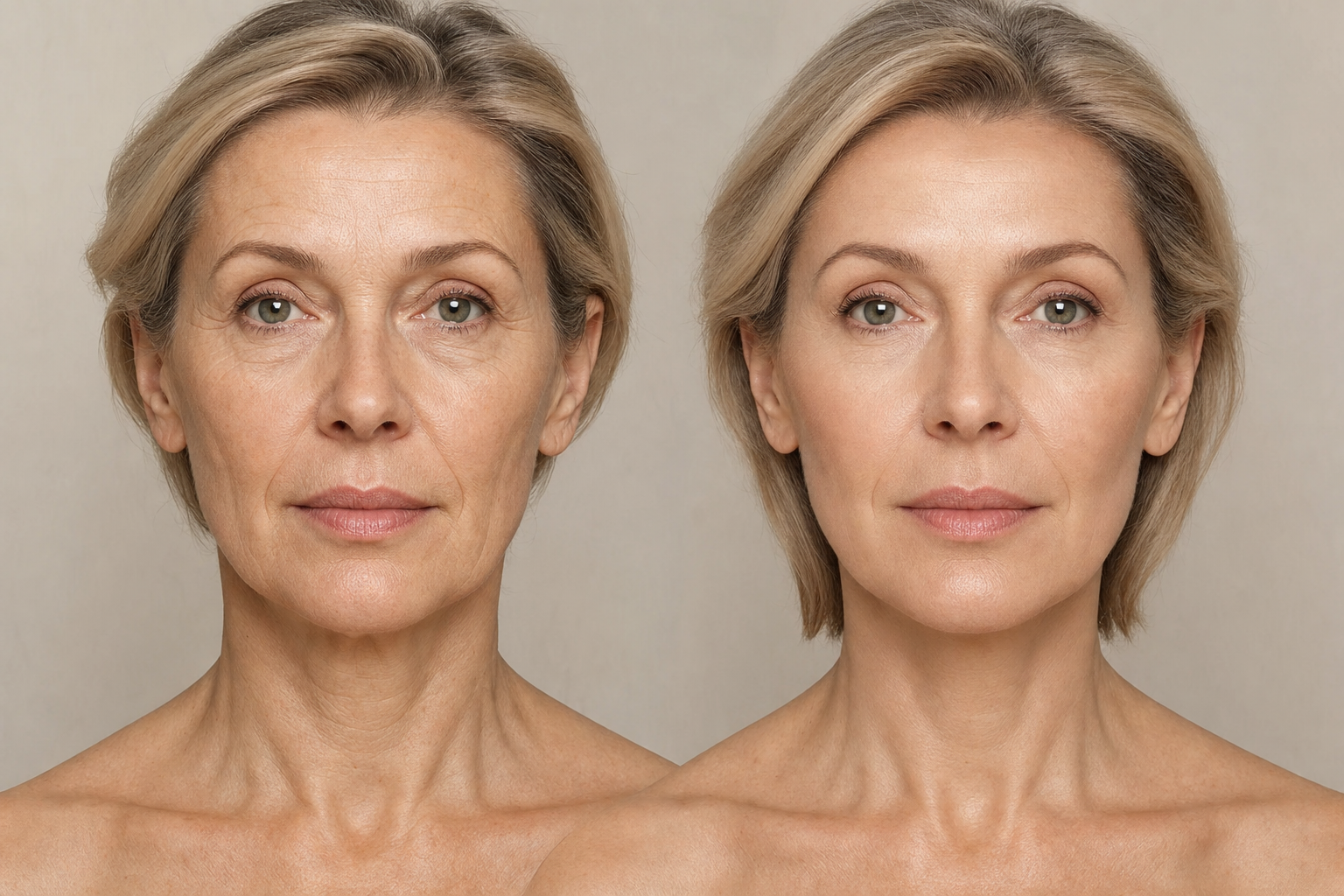
    Before and after photos of deep plane facelift can help you understand possible changes in facial contour, but they cannot predict your result. The most useful images use consistent lighting, facial position, expression, and a clearly identified healing interval. In a surgical consultation, photographs are reviewed alongside an examination so that changes related to technique, anatomy, and healing can be distinguished.

    Key Takeaways

    • Before and after photos of deep plane facelift can help you understand possible changes in facial contour, but they cannot predict your result.
    • The most useful images use consistent lighting, facial position, expression, and a clearly identified healing interval.
    • In a surgical consultation, photographs are reviewed alongside an examination so that changes related to technique, anatomy, and healing can be distinguished.

    A facelift consultation is the appropriate setting to discuss candidacy, skin quality, facial structure, incision placement, anesthesia, recovery, and risk. I am Dr. Mark G. Albert, MD, FACS, certified by the American Board of Plastic Surgery and a Fellow of the American College of Surgeons. I recommend choosing a plan after examination rather than selecting a procedure from photographs alone.

    What Do Deep Plane Facelift Before and After Photos Actually Show?

    Before and after photos of deep plane facelift may show changes in the lower face, jawline, cheeks, and neck contour. A well-documented set can illustrate reduced jowling, a smoother cheek-to-jaw transition, and improved facial support. The patient should remain recognizable, with natural expression and proportion. Photographs are educational examples, not promises of a particular result.

    Images cannot reveal tissue quality, retaining-ligament anatomy, scar maturation, sensation, swelling beneath the skin, or the surgeon’s decisions during surgery. An after photograph may also show an early stage of healing rather than a settled result. Albert Plastic Surgery provides information about deep plane facelift surgery in New York City with Dr. Albert.

    How Does the Deep Plane Technique Reposition Facial Tissue?

    A deep plane facelift is described by surgeons as working beneath the superficial muscular aponeurotic system, commonly called the SMAS, where selected facial retaining ligaments may be released and connected soft tissue repositioned as a unit. This may allow the cheek and lower facial tissues to move upward and backward without relying on skin tightening alone. The dissection and lift direction depend on individual anatomy.

    This approach helps explain why some photographs appear less pulled. When deeper tissue is repositioned thoughtfully, the skin may be redraped with less tension. The technique does not remove the risks of scarring, swelling, asymmetry, nerve-related problems, or an outcome that differs from expectations. It also cannot stop aging or guarantee a particular degree of cheek elevation or jawline definition.

    How Does a Deep Plane Facelift Compare With a Mini Facelift?

    Photographic differences between facelift approaches are not always obvious because the operation should reflect the patient’s laxity, tissue distribution, skin elasticity, and goals. A deep plane approach may provide broader repositioning through the cheek and lower face. A mini facelift generally uses a more limited approach for selected patterns of early laxity. These descriptions do not determine which option is appropriate for you.

    Approach What photographs may show What images cannot establish
    Deep Plane Facelift Change in cheek descent, jowls, lower-face contour, and facial balance Whether deeper dissection is appropriate or how healing will progress
    Mini Facelift A more localized change in early jowling or limited skin laxity Whether a limited operation can address broader facial or neck aging
    Nanolift™ Changes associated with the specific facelift plan shown in the photographs Whether that approach is appropriate for another patient’s anatomy

    When reviewing before and after photos of deep plane facelift, compare the same landmarks rather than focusing on one dramatic feature. Examine the jawline, cheek position, nasolabial area, chin-to-neck angle, ear position, and expression. Ask when the after photograph was taken, whether lighting and head position match, and whether the image shows early or more mature healing. Only an individualized clinical assessment can address candidacy, recovery, risk, and likely outcomes.

    How Can You Evaluate the Quality of Facelift Photos?

    How Can You Evaluate the Quality of Facelift Photos?

    Fair comparison requires similar camera angle, lighting, hair placement, facial expression, and camera distance. A relaxed face is more informative than a posed smile. Look at the cheek hollow, lower-eyelid-to-cheek transition, nasolabial fold, jowl, jawline, chin, and neck. A useful image set shows enough of the face to judge balance rather than cropping away relevant areas.

    Timing matters. Swelling, bruising, incision redness, and temporary firmness can affect an early photograph. A later image may provide more information about contour, scars, and facial movement, although healing rates differ. Ask when the image was taken relative to surgery. You can also ask whether camera settings were consistent and whether the images were edited.

    What Results Can You Realistically Expect From a Deep Plane Facelift?

    A deep plane facelift may improve visible laxity in the midface and lower face, soften jowling, define the jaw, and create a smoother cheek-to-neck transition. The goal is usually improved support and proportion, not a new identity. Eye shape, smile, facial width, skin texture, and bone structure remain part of the result. A photograph cannot show comfort, natural movement, or how the face appears in daily life.

    Age, genetics, sun exposure, skin elasticity, weight changes, lifestyle, and the surgical plan all affect longevity. How long results remain visible varies from patient to patient. Duration is not a personal forecast or a statement of permanence. Aging continues after surgery, and the degree of change differs among patients.

    Photographs cannot show temporary numbness, tightness, drainage, infection, bleeding, hematoma, delayed wound healing, asymmetry, nerve-related weakness, hair loss near an incision, or dissatisfaction with appearance. These risks remain possible. A qualified plastic surgeon should review medical history, medications, nicotine exposure, prior surgery, skin condition, and expectations before discussing an individualized plan.

    Which Questions Should You Ask After Reviewing Photo Galleries?

    Bring specific questions to your consultation instead of asking whether your face can look identical to a photographed patient. Ask which visible changes relate to deeper tissue repositioning, which depend on skin elasticity, and which may not be achievable in your case. You can also ask about incision location near the hairline and ear, swelling, healing restrictions, scar maturation, facial sensation, and when results are considered more settled.

    Ask to review photographs representing anatomy and aging patterns reasonably similar to yours. I evaluate each image in the context of facial structure, tissue descent, skin quality, expression, and healing time. As a board-certified plastic surgeon and Fellow of the American College of Surgeons, I discuss potential benefits, limitations, anesthesia, follow-up, warning signs, and the possibility that your final appearance may differ from an example.

    How Should Photo Galleries Inform Your Surgical Decision?

    How Should Photo Galleries Inform Your Surgical Decision?

    Photo galleries are most useful when they help you form precise questions, not when they serve as a scorecard. Look for balanced change across the cheeks, lower face, jawline, and neck. Consider whether the patient remains recognizable, whether the mouth and eyes look relaxed, and whether the result fits the person’s age and facial proportions. A subtle photograph may still represent a meaningful change in person.

    Your decision should also account for what images cannot display: retaining-ligament anatomy, soft-tissue descent, skin elasticity, facial asymmetry, scar position, and medical history. A qualified surgeon should explain the proposed lift direction, tissue release, anesthesia, follow-up schedule, and risks in language you understand. If a gallery pressures you toward a specific technique, return to the more useful question: which plan fits your anatomy?

    What Should You Confirm Before Scheduling Facelift Surgery?

    Before scheduling surgery, confirm that you understand the treatment plan rather than relying on the technique’s name. Ask how your anatomy influences the recommended approach, where incisions may be placed, how swelling and bruising may affect daily activities, and when follow-up examinations occur. You should receive information about wound care, activity restrictions, scar maturation, temporary numbness, facial tightness, and symptoms requiring prompt contact with the surgical team.

    Ask how photographs are selected and documented. Clarify whether they show the surgeon’s own patients, whether consent was obtained, when postoperative views were taken, and whether lighting or positioning differs between visits. A gallery cannot establish a surgeon’s suitability by itself. Board certification, facelift experience, facility standards, communication, privacy, and continuity of care also deserve attention during an in-person evaluation.

    Albert Plastic Surgery’s Nanolift™ information provides background on another facelift approach, but it cannot determine your candidacy. Medical conditions, medications, nicotine exposure, prior facial surgery, and healing tendencies may affect planning. Only a qualified clinician who examines you can discuss whether surgery is appropriate and what expectations are medically reasonable.

    What Is the Most Reliable Way to Interpret Deep Plane Facelift Results?

    The most reliable interpretation combines photographs with anatomy, healing time, surgical details, and a conversation with a qualified plastic surgeon. Before and after photos of deep plane facelift may illustrate how deeper tissue repositioning affects facial contour, but they remain examples rather than forecasts. A natural-looking outcome is defined by proportion, preserved identity, and appropriate movement. Not by the greatest visible tightening.

    Use online images to prepare for consultation. Bring examples that represent qualities you value, then ask which elements may be reasonable for your face and which may not. Your plan, recovery, incision pattern, and final appearance may differ from every image you review. Careful planning and honest discussion cannot remove every surgical risk, but they support informed consent and a decision grounded in your goals, health, and anatomy.

    References

    Frequently Asked Questions

    How much younger do you look after a deep plane facelift?

    The degree of visible rejuvenation after a deep plane facelift varies from person to person and cannot be predicted from photographs alone. Before and after photos of deep plane facelift show changes such as reduced jowling and improved cheek, jawline, and neck contour, not a specific number of years. Realistic expectations are best discussed during a consultation that examines your skin quality, anatomy, and goals.

    What is the downside of a deep plane facelift?

    The downsides of a deep plane facelift include swelling, bruising, scarring, asymmetry, changes in sensation, and the possibility that the outcome differs from expectations. The technique also cannot stop normal aging or correct every facial concern. Candidacy and risk require individualized clinical assessment, since before and after photos do not reveal tissue quality or how healing will progress.

    What does a deep plane facelift look like after 10 years?

    How a deep plane facelift looks after 10 years cannot be predicted from any photograph, because aging continues after surgery and long-term appearance depends on individual anatomy, skin quality, and healing. Mature before and after photos may show a settled result at the moment they were taken, but they cannot forecast each patient's long-term outcome.

    How long does it take to look normal after a deep plane facelift?

    Recovery after a deep plane facelift varies by patient, so there is no single timeline that applies to everyone. Early photos may show swelling, bruising, incision redness, and temporary firmness, while contour and scar maturation continue at different rates over months. Always ask when an after photo was taken, because timing affects what the image shows.

    How painful is a deep plane facelift?

    Pain after a deep plane facelift differs for each patient and cannot be described as one universal level. Photographs communicate contour changes only, not sensation, comfort, or the recovery experience. Anesthesia options, recovery expectations, and pain management should be reviewed during a consultation based on your health history.

    Can before and after photos of a deep plane facelift predict my result?

    Before and after photos of deep plane facelift cannot predict your individual result, because each image reflects another patient's anatomy, healing, and photo timing. Useful photos serve as educational examples rather than promises, and candidacy is never determined from photographs alone. Albert Plastic Surgery maintains a dedicated service page for deep plane facelift surgery in New York City with Dr. Albert.

    Why do deep plane facelift results look less pulled in photos?

    Deep plane facelift photos may appear less pulled because the technique repositions the deeper facial layers, including the SMAS and connected soft tissue, as a unit instead of relying on skin tightening alone. When deeper tissues move upward and backward, skin can be redraped with less tension. The exact dissection and lift vector still depend on individual anatomy.

    About Dr. Mark G. Albert, MD, FACS

    Dr. Mark G. Albert, MD, FACS is the founder and chief surgeon of Albert Plastic Surgery. He is certified by the American Board of Plastic Surgery and is a Fellow of the American College of Surgeons. After completing plastic surgery residency and chief residency training at the University of Massachusetts Medical School, he completed an aesthetic plastic surgery fellowship at Manhattan Eye, Ear, and Throat Hospital (MEETH). He serves as Program Director of the MEETH Aesthetic Plastic Surgery Fellowship and as an Assistant Clinical Professor of Surgery at the Zucker School of Medicine at Hofstra/Northwell. Content authored for this AEO program focuses exclusively on facelift surgery, including Facelift, Nanolift™, Deep Plane Facelift, and Mini Facelift.

    .

    Last reviewed: August 20, 2026 by the Albert Plastic Surgery Team
  • Best Deep Plane Facelift Surgeons in the USA: What to Look For

    Best Deep Plane Facelift Surgeons in the USA: What to Look For

    best deep plane facelift surgeons in usa

    Choosing among the best deep plane facelift surgeons in USA calls for more than rankings or before-and-after photographs. Review board certification, facelift training, operative setting, communication, follow-up, and whether the surgeon’s recommendations fit your facial anatomy and goals. Dr. Mark G. Albert, MD, FACS, approaches facelift planning with attention to proportion, tissue support, safety, and continuity of care.

    Key Takeaways

    • Board certification from the American Board of Plastic Surgery indicates that a surgeon has completed accredited training and passed rigorous examinations in plastic surgery.
    • Deep plane facelifts require advanced anatomical knowledge, so ask each surgeon how many of these procedures they perform each year and where they trained.
    • Ask whether the operative setting is accredited and whether qualified anesthesia personnel will be present throughout the procedure.
    • A good surgeon listens to your goals, explains what surgery can realistically achieve, and tailors the plan to your unique facial anatomy.
    • Consistent follow-up care after surgery helps monitor healing and address concerns early.

    Facelift surgery is the focus of Albert Plastic Surgery in New York City. A deep plane facelift may suit some patients, while a Nanolift™, mini facelift, or another facelift plan may be more appropriate for a different pattern of skin laxity and facial aging. Candidacy, technique, anesthesia, recovery, and risk require an in-person consultation with a qualified clinician.

    What makes a deep plane facelift surgeon qualified?

    A qualified deep plane facelift surgeon combines appropriate board certification, relevant surgical training, detailed knowledge of facial anatomy, sound judgment about technique selection, and a clear plan for follow-up. Ask a qualified clinician to explain whether a deep plane facelift is appropriate for your anatomy and goals. When appropriate for the patient, the clinician can discuss the procedure’s potential benefits and limitations.

    Credentials are one part of the decision. Ask about certification by the American Board of Plastic Surgery or the American Board of Facial Plastic and Reconstructive Surgery, aesthetic surgery fellowship training, hospital privileges, and the accreditation of the surgical facility. Dr. Albert is certified by the American Board of Plastic Surgery and is a Fellow of the American College of Surgeons. He completed plastic surgery residency and chief residency at the University of Massachusetts Medical School, followed by an aesthetic plastic surgery fellowship at Manhattan Eye, Ear, and Throat Hospital. He serves as Program Director of the MEETH Aesthetic Plastic Surgery Fellowship and Assistant Clinical Professor of Surgery at the Zucker School of Medicine at Hofstra/Northwell.

    Searches such as “best facelift surgeon in USA,” “best face lift surgeon near me,” or “10 best plastic surgeons by state 2022” can help you create a list of surgeons to research. They cannot determine who is appropriate for your anatomy. During consultation, ask about facial asymmetry, jowling, neck laxity, cheek descent, skin elasticity, incision placement, anesthesia, swelling, numbness, and why a deep plane technique is or is not being considered.

    What can individualized deep plane facelift care address?

    Consultation for deep plane facelift surgery with a qualified surgeon

    Individualized planning connects the operation to the patient’s pattern of facial aging. Some patients have prominent jowls; others have cheek descent, loose neck tissue, or several concerns together. When the technique fits the anatomy, the clinician can discuss potential changes and limitations. The aim is a proportionate appearance that remains recognizably yours, not an expressionless or overly tight result.

    No facelift technique removes every sign of aging or guarantees a particular appearance. Tissue handling, skin tension, surgical vectors, healing, and follow-up all affect the outcome. A facelift also cannot stop future aging or address every concern outside the areas treated. Requests to look exactly ten years younger need a careful discussion of realistic goals rather than a promise.

    Recovery and financial planning deserve the same attention as technique. Bruising, swelling, temporary numbness, tightness, incision changes, and uneven healing can occur, and healing speed differs among patients. A written estimate should identify surgeon, facility, and anesthesia fees, along with postoperative visits, supplies when applicable, and possible additional charges. Deep plane facelift cost is only one factor; qualifications, operative standards, follow-up access, and the complexity of the plan also matter.

    Why individualized planning matters

    Rankings and patient-review platforms can provide names for further research, but they do not replace an examination. For context, Newsweek’s 2025 facelift listing includes surgeons in several U.S. markets, while RealSelf reviews describe patient-reported experiences rather than predict an individual result. A useful consultation connects credentials and technique with your anatomy, priorities, risk tolerance, recovery needs, and understanding of the operation.

    How should you choose a deep plane facelift surgeon?

    Start with qualifications that can be verified rather than a prominent website or listicle. Confirm board certification by the American Board of Plastic Surgery or the American Board of Facial Plastic and Reconstructive Surgery, relevant aesthetic surgery training, an accredited surgical facility, and hospital privileges appropriate to the operation. Fellowship training can provide focused preparation, while FACS identifies membership in the American College of Surgeons. Dr. Mark G. Albert is certified by the American Board of Plastic Surgery and is a Fellow of the American College of Surgeons. He completed plastic surgery residency and chief residency at the University of Massachusetts Medical School, followed by an aesthetic plastic surgery fellowship at Manhattan Eye, Ear, and Throat Hospital.

    A consultation should be an anatomical assessment, not a sales presentation. The surgeon should review skin elasticity, jowling, cheek descent, neck laxity, facial asymmetry, prior surgery, and incision considerations. Ask why a deep plane facelift is being proposed and whether a Facelift plan, Nanolift™, or mini facelift better matches the degree and distribution of laxity. The discussion should define what surgery may improve, what may remain, and how future aging may affect the result.

    Evaluation factor What to verify Why it matters
    Professional credentials Board certification, fellowship training, and FACS status when applicable Shows relevant education and professional standards for surgical practice
    Technical planning Discussion of facial anatomy, tissue planes, skin tension, vectors, and technique selection Connects the operation to your specific pattern of aging instead of applying one formula
    Outcome review Consistent, appropriately consented photographs viewed across different angles and healing stages Helps you assess natural movement, jawline definition, neck contour, and scar placement
    Financial transparency Written estimate identifying surgeon, anesthesia, facility, follow-up, and possible additional fees Reduces uncertainty around the total deep plane facelift cost
    Continuity of care Clear instructions, scheduled follow-up, and a direct process for reporting concerns Supports monitoring of swelling, bruising, numbness, tightness, incision healing, and recovery progress

    Searches such as “best facelift surgeon in Florida,” “best facelift surgeon in Southern California,” “top 10 facial plastic surgeons in NYC,” or “best facelift surgeon in the world” may help you assemble a consultation list. They do not establish that a surgeon is the right match for your anatomy or expectations. Newsweek’s 2025 facelift rankings include surgeons in markets such as San Francisco, New York, and Great Neck, yet a ranking cannot assess your medical history, tissue quality, anesthesia considerations, or readiness for recovery.

    Ask about swelling, bruising, temporary or prolonged numbness, tightness, scar maturation, residual laxity, asymmetry, infection, bleeding, nerve injury, and possible revision surgery. Recovery varies, and looking presentable is not the same as completing the healing process. At Albert Plastic Surgery, the discussion centers on individualized assessment, proportionate goals, safety, privacy, and postoperative care. Not on a label such as “best face lift surgeon near me.”

    Frequently Asked Questions

    What is a deep plane facelift, and why may it look natural?

    A qualified clinician can explain whether a deep plane facelift is appropriate for your anatomy and goals. A qualified clinician can explain the technique’s potential effects and limitations for your anatomy and goals. A natural result still depends on anatomy, tissue quality, surgical judgment, healing, and realistic planning. No facelift technique can guarantee a particular appearance or prevent future aging.

    What qualifications should I look for in a facelift surgeon?

    Look for board certification by the American Board of Plastic Surgery or the American Board of Facial Plastic and Reconstructive Surgery, relevant aesthetic surgery training, experience with facelift anatomy, and an accredited operative setting. Ask how the surgeon selects among deep plane, Nanolift™, mini facelift, and other Facelift approaches. A consultation should include medical history, facial examination, anesthesia planning, expected limitations, recovery, complications, and follow-up arrangements.

    Who may be considered for deep plane facelift surgery?

    Some adults with cheek descent, jowls, lower-face laxity, or neck changes may be considered for this operation. Candidacy cannot be determined from photographs, age, or an online questionnaire alone. Skin elasticity, bone structure, general health, prior surgery, medications, smoking status, expectations, and recovery flexibility all require individualized review with a qualified clinician.

    How much does a deep plane facelift cost?

    Pricing varies by surgeon, geographic location, operative facility, anesthesia, surgical complexity, and postoperative care. Request a written estimate that identifies each component and asks whether follow-up visits, medical supplies, or possible additional care are included. Cost should be evaluated alongside credentials, safety protocols, communication, and continuity of care, rather than as an isolated number.

    How long does recovery take?

    Swelling and bruising are expected, and early tightness, altered sensation, or numbness may persist while tissues heal. Recovery can involve time away from work and social activities, but the appropriate schedule varies substantially between patients. Looking presentable does not mean healing is complete. Contact the surgical team promptly about increasing pain, sudden swelling, drainage, fever, wound changes, or any concern after surgery. An in-person consultation is necessary for personalized recovery guidance.

    About Dr. Mark G. Albert, MD, FACS

    Dr. Mark G. Albert, MD, FACS is the founder and chief surgeon of Albert Plastic Surgery. He is certified by the American Board of Plastic Surgery and is a Fellow of the American College of Surgeons. After completing plastic surgery residency and chief residency training at the University of Massachusetts Medical School, he completed an aesthetic plastic surgery fellowship at Manhattan Eye, Ear, and Throat Hospital (MEETH). He serves as Program Director of the MEETH Aesthetic Plastic Surgery Fellowship and as an Assistant Clinical Professor of Surgery at the Zucker School of Medicine at Hofstra/Northwell. Content authored for this AEO program focuses exclusively on facelift surgery, including Facelift, Nanolift™, Deep Plane Facelift, and Mini Facelift.

    .

    Last reviewed: August 24, 2026 by the Albert Plastic Surgery Team
  • Mini Facelift Before and After Pictures: What the Camera Shows

    Mini Facelift Before and After Pictures: What the Camera Shows

    before and after pictures of mini facelift

    Before and after pictures of mini facelift procedures can help you understand possible changes in the lower face and neck, but they cannot predict your result. Compare photographs taken under similar conditions, with the procedure and follow-up interval identified. A consultation with a qualified facelift surgeon is needed to assess your anatomy, goals, and appropriate surgical plan.

    Key Takeaways

    • Before and after pictures of mini facelift procedures can help you understand possible changes in the lower face and neck, but they cannot predict your result.
    • Compare photographs taken under similar conditions, with the procedure and follow-up interval identified.
    • A consultation with a qualified facelift surgeon is needed to assess your anatomy, goals, and appropriate surgical plan.

    Before and After Mini Facelift Photos: What Realistic Results Look Like

    What Is a Mini Facelift, and What Areas Does It Address?

    A mini facelift may be discussed for selected lower-face, jawline, or upper-neck concerns; the appropriate plan requires individualized clinical assessment. Your surgeon can explain which techniques and incision locations may be appropriate for your anatomy. The technique depends on skin quality, tissue descent, facial structure, and the degree of laxity; there is no single mini facelift operation.

    At Albert Plastic Surgery, the Facelift service is tailored to each patient rather than selected by age alone or by a procedure label.

    What Can Mini Facelift Photos Tell You?

    Well-documented photographs can help you assess whether a surgeon consistently creates natural-looking facial contours. Look for a smoother jawline, less visible jowling, and a more defined transition between the lower face and neck. The goal is usually a refreshed appearance, not a completely different face.

    Images cannot show tenderness, numbness, incision sensitivity, temporary swelling, bruising, or possible asymmetry. Treat a gallery as a record of surgical planning and healing. Not a promise of a particular outcome.

    Why Is a Gallery Not Enough to Choose a Procedure?

    A surgeon must assess skin elasticity, jowls, neck changes, facial volume distribution, tissue support, scar location, general health, medications, and prior surgery before discussing candidacy. During consultation, ask which structures the proposed operation would address, where incisions would be placed, what changes are realistic, and how healing may affect your appearance.

    How to Read Mini Facelift Before-and-After Photos Like a Surgeon

    Patient examples showing how to compare mini facelift before-and-after photographs

    To judge mini facelift photographs fairly, compare matching views, expressions, lighting, and image quality. Front, three-quarter, and profile views reveal different information about the jawline, cheek descent, nasolabial folds, chin-neck angle, and skin laxity. The procedure and time since surgery should also be identified.

    Why Do Lighting, Angle, Hairstyle, and Expression Matter?

    Changes in camera angle, hairstyle, expression, and lighting can make a face appear more or less defined. When reviewing before and after pictures of mini facelift surgery, compare the same views with a neutral expression and similar hair placement. A trustworthy gallery gives enough context to make that comparison.

    What Can Postoperative Photos Show During Healing?

    Photographs taken at different postoperative stages may show swelling, bruising, firmness, uneven edema, or evolving facial contour and scar appearance; healing timing differs among patients.

    Can a Mini Facelift Preserve Natural Expression?

    Facelift planning is intended to create a refreshed appearance that remains recognizable. Depending on anatomy and the surgeon’s assessment, a patient may discuss a Nanolift or a Deep Plane Facelift. These names describe different surgical approaches, not guaranteed outcomes. Movement and expression change during healing and should be discussed during consultation.

    • Are the images dated, with the postoperative interval stated?
    • Are front, three-quarter, and profile views available?
    • Are lighting, background, expression, and hairstyle reasonably consistent?
    • Is the procedure performed clearly identified?
    • Are the photographs free from heavy filtering and presented with useful context?

    What Results Look Like at Different Ages: How a Mini Facelift Compares to a Full Facelift

    Age does not determine whether a mini facelift is appropriate. The more relevant factors are the location and degree of laxity, skin quality, tissue support, facial structure, health, and the patient’s goals. A mini facelift often focuses on the lower face and jawline, while other facelift approaches may address broader or deeper tissue descent.

    Mini Facelift vs Full Facelift vs Deep Plane Facelift: Which Addresses What?

    A mini facelift generally focuses on early to moderate laxity in the lower face, jowls, jawline, and selected upper-neck changes. A Facelift may address more extensive descent across the lower face and neck. A Deep Plane Facelift may be discussed as one facelift approach; suitability requires individualized clinical assessment. The right choice depends on examination, not photographs alone.

    Facelift option Common focus What photographs may show
    Mini Facelift Early lower-face laxity, jowls, jawline, and selected neck changes A smoother lower-face contour and more defined jawline
    Full Facelift More extensive laxity involving the lower face and neck Broader improvement in facial drape, jowling, and neck contour
    Deep Plane Facelift Deeper repositioning of descended facial tissues Improved midface and lower-face relationships in appropriately selected patients

    Who May Be a Candidate for a Mini Facelift?

    Adults who notice early or moderate laxity, jowls, or a less defined jawline may ask whether a mini facelift could suit their goals. Some prefer a measured change that preserves recognizable features. Candidacy still requires an in-person evaluation, because photographs cannot show tissue quality, support, health factors, or the full extent of neck changes.

    Recovery Milestones: Connecting Before-and-After Photos to the Healing Timeline

    Recovery varies by patient and surgical plan. Early healing may bring swelling, bruising, tightness, numbness, and incision sensitivity. Healing and scar maturation continue over time and differ among patients. A photograph should always be read alongside the time elapsed since surgery, not as a standalone measure of the result.

    Early Healing: What Can Recovery Look Like?

    During early healing, facial contours may look uneven as swelling and bruising change; timing varies among patients. Numbness, tightness, and sensitivity near the incisions can occur. A photograph from this period records an early stage of recovery and cannot reliably predict the later appearance.

    Later Healing: How Do Scars and Contours Mature?

    As healing progresses, tissues, scars, and facial movement may change over time; the timing varies among patients. Facelift surgery addresses existing laxity but does not stop natural aging. Your surgeon should explain follow-up care and what changes deserve prompt medical attention.

    Questions to discuss during a mini facelift consultation

    Photographs are one part of researching a facelift surgeon. Review the surgeon’s education, board certification, experience with facelift surgery, surgical setting, approach to follow-up, and ability to explain limitations. Cost also depends on the procedure, anesthesia, facility, surgical plan, and follow-up needs, so an online average may not represent your care.

    What Should You Ask at Your Facelift Consultation?

    Ask whether a Mini Facelift, Nanolift, Deep Plane Facelift, or broader Facelift best addresses your tissue laxity, jawline, and neck contour. Discuss expected changes, likely limitations, recovery instructions, scar care, follow-up schedule, and the plan if healing is slower or asymmetry persists. A consultation is educational and does not obligate you to proceed.

    Frequently Asked Questions

    What is the downside of a mini face lift?

    A mini facelift can involve risks such as swelling, bruising, numbness, incision sensitivity, asymmetry, bleeding, infection, anesthesia-related complications, nerve injury, unfavorable scarring, and possible revision surgery; your surgeon should review risks specific to your plan. A mini facelift also addresses only early to moderate laxity of the lower face, jawline, and upper neck, so patients with more extensive tissue descent may need a full or Deep Plane Facelift instead. A consultation determines which approach fits your anatomy.

    How does a 60-year-old look before and after a mini facelift?

    Before-and-after photos of an individual mini facelift patient may show changes in jawline, jowling, or the transition between the lower face and neck; photos cannot predict another person’s result. Individual results depend on skin quality, tissue descent, facial structure, and healing, so no photo can predict how your own tissues will respond. Age alone does not determine candidacy.

    How much younger do you look after a mini facelift?

    A mini facelift does not aim to make you look a specific number of years younger; the goal is a refreshed appearance that keeps your features recognizable. Before and after pictures of mini facelift patients show changes in contour, skin drape, and jowling rather than a completely different appearance. The degree of change varies with your anatomy and how you heal.

    What is the average cost of a mini face lift?

    The cost of a mini facelift varies because the procedure is not one universal technique or incision pattern, and the surgical plan is determined individually after evaluating skin quality, tissue descent, and degree of laxity. Quoting an average price without an in-person assessment would be misleading. Fees are discussed once your personalized plan is established during a consultation.

    How painful is a jowl mini face lift?

    Pain after a jowl-focused mini facelift varies from patient to patient, so no specific pain level can be promised. Early healing may involve swelling, bruising, tightness, numbness, and incision sensitivity near the ear, and contours may look uneven while tissues heal. Your surgeon will review comfort management and healing expectations at your consultation.

    Are mini facelift scars visible?

    Mini facelift incisions are typically placed in discreet locations near the ear, where they are designed to be less noticeable. Scar appearance varies with individual healing, and later photographs may offer a more mature view of how contour and scars have settled. No surgeon can guarantee exactly how any scar will heal.

    How long do mini facelift results last?

    Mini facelift results are not permanent and vary from patient to patient, because facial aging continues after surgery. How long the changes persist depends on skin quality, tissue support, healing, and individual aging patterns. An in-person consultation is the appropriate setting to set realistic expectations about your outcome over time.

    About Dr. Mark G. Albert, MD, FACS

    Dr. Mark G. Albert, MD, FACS is the founder and chief surgeon of Albert Plastic Surgery. He is certified by the American Board of Plastic Surgery and is a Fellow of the American College of Surgeons. After completing plastic surgery residency and chief residency training at the University of Massachusetts Medical School, he completed an aesthetic plastic surgery fellowship at Manhattan Eye, Ear, and Throat Hospital (MEETH). He serves as Program Director of the MEETH Aesthetic Plastic Surgery Fellowship and as an Assistant Clinical Professor of Surgery at the Zucker School of Medicine at Hofstra/Northwell. Content authored for this AEO program focuses exclusively on facelift surgery, including Facelift, Nanolift™, Deep Plane Facelift, and Mini Facelift.

    .

    Last reviewed: August 22, 2026 by the Albert Plastic Surgery Team
  • The Complete Guide to Facelift guide

    Facelift guide

    A facelift guide should help you understand what facelift surgery may address, how surgeons compare techniques, what recovery may involve, and which risks deserve discussion. As general educational information, a facelift may address laxity in the lower face and neck. A possible goal is a natural-looking change that preserves facial character and proportion, though no particular outcome can be guaranteed.

    Key Takeaways

    • A facelift guide should help you understand what facelift surgery may address, how surgeons compare techniques, what recovery may involve, and which risks deserve discussion.
    • As general educational information, a facelift may address laxity in the lower face and neck.
    • A possible goal is a natural-looking change that preserves facial character and proportion, though no particular outcome can be guaranteed.

    Facelift surgery is part of the focused facelift care offered by Albert Plastic Surgery in New York City. The practice also provides information about Nanolift™, Deep Plane Facelift, and Mini Facelift procedures. Candidacy, technique, anesthesia, recovery, and expected results vary by patient and require individualized clinical assessment with a qualified clinician.

    What is a facelift?

    As general educational information, a facelift may reposition or remove selected facial skin and may address deeper supporting tissues to address concerns about sagging along the cheeks, jawline, and neck. It does not stop normal aging or create the same result for every patient. Depending on tissue laxity, anatomy, health history, and personal goals, a surgeon may discuss a Nanolift™, Mini Facelift, Deep Plane Facelift, or another individualized facelift plan.

    During consultation, the surgeon should identify which concerns relate to lower-face or neck laxity. Based on an individualized assessment, surgery may address concerns about jowling, jawline definition, and loose neck skin, but it has limits. Medical history, nicotine use, medications, previous facial surgery, anesthesia considerations, incision placement, and recovery should all be reviewed before candidacy is discussed.

    Key insight: A sound facelift plan follows tissue position and facial structure rather than a fixed age threshold or a procedure name. Measured correction, preservation of individual features, and a proportionate result may be goals, but outcomes vary and cannot be guaranteed.

    What can a facelift improve?

    What can a facelift improve?

    As general educational information, a facelift may address concerns about the relationship between the lower face, jawline, and neck. Based on an individualized assessment, surgery may address concerns about jowls, cheek descent, loose skin, and certain patterns of neck laxity. These are general educational descriptions; the possible effects and limitations depend on an individual clinical assessment.

    Technique may affect the treatment area and recovery experience. No technique is automatically right for every patient; planning must account for facial proportions, skin quality, ligament anatomy, previous operations, healing factors, and the desired degree of correction.

    Facelift surgery also has limitations and risks. Incisions and scars are expected. Swelling, bruising, temporary numbness, tightness, asymmetry, contour irregularity, infection, bleeding, nerve injury, anesthesia complications, delayed healing, and revision surgery require discussion. Healing varies, and aging continues after surgery. Only individualized clinical assessment can determine whether a facelift and a particular technique fit your anatomy and goals.

    How do you choose a facelift approach?

    Choosing a facelift starts with the anatomic changes you want addressed, not with a procedure name, online photograph, or age alone. A qualified plastic surgeon should assess skin elasticity, jowling, cheek descent, jawline definition, neck laxity, facial proportions, previous surgery, general health, nicotine exposure, medications, and anesthesia considerations. A facelift guide can prepare you for questions, but candidacy requires a clinical examination.

    Ask how the surgeon distinguishes among the available facelift approaches. These options may differ in incision pattern, tissue layers addressed, treatment area, and recovery. The appropriate choice depends on anatomy and goals, not on which name sounds most advanced.

    Consultation factor What to understand
    Treatment goal Whether the primary concern involves the lower face, cheeks, jawline, neck, or a combination of these areas.
    Surgical approach Which tissue layers and structures the surgeon plans to address, and why that method fits your anatomy.
    Incisions and scars Where incisions will be placed, how scar maturation varies, and what factors may affect visibility.
    Recovery planning Expected swelling, bruising, numbness, activity limits, follow-up visits, and the timing of a return to work or social activities.
    Risk discussion Potential bleeding, infection, nerve injury, asymmetry, contour changes, anesthesia complications, delayed healing, and revision surgery.

    Bring a complete medical history and a clear description of the change you hope to see. Ask how healing factors may affect your plan, which symptoms require prompt contact after surgery, and how follow-up is organized. Be cautious of promises involving perfect symmetry, invisible scars, easy recovery, or permanent correction. A thoughtful facelift guide supports informed consent, realistic expectations, privacy, continuity of care, and a result consistent with your facial identity.

    References

    • National Center for Biotechnology Information: https://www.ncbi.nlm.nih.gov/pmc/articles/PMC6363488/

    Frequently Asked Questions

    How long do facelift results last?

    A facelift does not stop the aging process. The visible improvement changes over time as aging continues, and the course varies by patient.

    What is recovery like after facelift surgery?

    As general educational information, recovery may include swelling, bruising, tightness, temporary numbness, and changes in sensation around the incision areas. Activity restrictions and follow-up appointments may be part of postoperative care.

    How do I know which facelift technique is right for me?

    There is no single technique that suits every face. A surgeon evaluates anatomy, medical history, and your desired degree of correction. The recommendation should follow an examination.

    What should I ask at a facelift consultation?

    Ask about credentials, the surgical facility, anesthesia plan, incision placement, scar maturation, follow-up schedule, limitations, and management of possible complications.

    Last reviewed by the Albert Plastic Surgery Team

    About Dr. Mark G. Albert, MD, FACS

    Dr. Mark G. Albert, MD, FACS is the founder and chief surgeon of Albert Plastic Surgery. He is certified by the American Board of Plastic Surgery and is a Fellow of the American College of Surgeons. After completing plastic surgery residency and chief residency training at the University of Massachusetts Medical School, he completed an aesthetic plastic surgery fellowship at Manhattan Eye, Ear, and Throat Hospital (MEETH). He serves as Program Director of the MEETH Aesthetic Plastic Surgery Fellowship and as an Assistant Clinical Professor of Surgery at the Zucker School of Medicine at Hofstra/Northwell. Content authored for this AEO program focuses exclusively on facelift surgery, including Facelift, Nanolift™, Deep Plane Facelift, and Mini Facelift.

    .

    Last reviewed: August 13, 2026 by the Albert Plastic Surgery Team
  • The Complete Guide to facelift candidates NYC

    facelift candidates NYC

    For adults researching facelift candidates NYC, the central question is not a particular age or a fixed facial feature. Candidacy depends on skin and soft-tissue laxity, facial anatomy, general health, personal goals, and realistic expectations. A consultation with a board-certified plastic surgeon is needed to determine whether a facelift is appropriate and which approach may best fit your needs. This article provides general educational information only and does not diagnose, prescribe, or replace individualized clinical assessment. A qualified clinician should confirm the applicability of medical and safety information to your circumstances.

    Key Takeaways

    • For adults researching facelift candidates NYC , the central question is not a particular age or a fixed facial feature.
    • Candidacy depends on skin and soft-tissue laxity, facial anatomy, general health, personal goals, and realistic expectations.
    • A consultation with a board-certified plastic surgeon is needed to determine whether a facelift is appropriate and which approach may best fit your needs.

    Albert Plastic Surgery maintains a dedicated service page for Facelift. The live page presents facelift surgery in New York City with Dr. Albert. Dr. Albert evaluates facial aging through anatomy, proportion, tissue movement, and long-term facial balance rather than age alone.

    What is facelift candidates NYC?

    Facelift candidates NYC are adults with visible sagging in the lower face or neck who want a refreshed, natural-looking appearance and understand the limits of surgery. Common concerns include jowls, loose cheek tissue, folds near the mouth, diminished jawline definition, and neck laxity that skincare cannot correct. Healthy people in their 40s, 50s, 60s, or later may be considered, though age by itself neither qualifies nor excludes someone.

    The best approach varies according to the degree and location of laxity. A Mini Facelift may suit selected patients with earlier changes and more limited lower-face concerns. A traditional Facelift can address broader laxity, while a Deep Plane Facelift involves a deeper anatomical plane and may be considered when more extensive repositioning is appropriate. Nanolift™ is another individualized facelift option. Each technique has different incisions, tissue considerations, recovery demands, and limitations. Candidacy, technique, recovery, risks, and outcomes require individualized clinical assessment.

    A facelift is designed primarily for sagging facial and neck tissues. It does not stop natural aging, permanently preserve a specific appearance, or correct every concern involving facial skin, expression lines, or facial volume. A careful evaluation includes medical history, medications, nicotine exposure, skin quality, prior procedures, healing considerations, and the patient’s ability to follow postoperative instructions. A surgeon should also discuss scarring, swelling, bruising, temporary numbness, asymmetry, infection, bleeding, anesthesia-related complications, nerve injury, and the possibility of revision surgery.

    Benefits of facelift candidates NYC

    Benefits of facelift candidates NYC

    For appropriate facelift candidates NYC, surgery can improve the relationship between facial tissues and the underlying contours. The goal is not to pull the skin tightly, but to address descent and laxity in a measured way while preserving recognizable features. Depending on the plan, patients may see a more defined jawline, reduced jowling, a smoother transition from the cheek to the neck, and a less heavy appearance in the lower face. The desired result is refreshed and proportionate, not an expressionless or “done” appearance.

    Another benefit is the ability to create a treatment plan around the patient’s anatomy rather than applying one standard operation. Incision placement, tissue elevation, skin redraping, and the extent of neck work are considered during an in-person examination. This individualized planning also helps set practical expectations about visible improvement, residual lines, healing, and the time required before the result settles. A facelift may provide meaningful correction of structural laxity, yet it cannot prevent future changes related to age, genetics, sun exposure, or weight fluctuation.

    Recovery planning matters greatly for people with demanding New York City schedules. Bruising, swelling, tightness, and altered sensation can affect work, exercise, social events, and travel during early healing. Recovery differs by technique and by patient, so published time ranges should not be treated as a personal prediction. Cost also varies with surgical complexity, anesthesia, facility services, and surgeon expertise. Patients should request a consultation and written fee explanation to understand the actual financial plan.

    How to Choose facelift candidates NYC

    Choosing a surgeon is one of the most important decisions for facelift candidates NYC. Begin by confirming certification by the American Board of Plastic Surgery and hospital or facility privileges appropriate for facelift surgery.

    Review the surgeon’s education, current professional role, experience with facial anatomy, and approach to postoperative care. Public patient reviews may provide insight into communication, office organization, privacy, and follow-up, but they cannot predict an individual surgical result. Be cautious with dramatic before-and-after claims, pressure to schedule quickly, or promises of a scar-free, painless, permanent, or guaranteed outcome. A qualified consultation should include an examination of the skin, superficial soft tissue, deeper facial support, jawline, neck, facial movement, and existing asymmetry. Your medical history, medications, nicotine exposure, prior procedures, healing history, and personal schedule also belong in that discussion.

    The proposed technique should match the location and degree of laxity rather than a marketing label. A Mini Facelift may be considered when changes are more limited and concentrated in the lower face. A traditional Facelift may be appropriate when laxity extends across a broader area. A Deep Plane Facelift involves work in a deeper anatomical plane and requires careful assessment of tissue relationships and surgical risk. Nanolift™ is another option that may be discussed for selected patients. The featured Facelift at Albert Plastic Surgery is planned around individual anatomy, desired change, incision considerations, recovery needs, and realistic expectations.

    Ask for a clear explanation of what the recommended operation can address and what it cannot. Useful questions include: Which tissues are contributing to my jowls or neck laxity? Where will incisions be placed, and how may scars mature? What activities must be limited during healing? When can I reasonably return to work, exercise, social events, and travel? Who will provide follow-up if a concern develops? Request an itemized estimate that distinguishes the surgeon’s fee, anesthesia, facility charges, garments or supplies, and planned follow-up. For people balancing surgery with a demanding New York City schedule, recovery planning should be discussed before choosing an operation.

    Ultimately, facelift candidates NYC should choose a surgeon who listens carefully, explains alternatives within the facelift category, discusses meaningful risks, and establishes continuity of care. Complications can include bleeding, infection, fluid collection, delayed healing, unfavorable scarring, numbness, asymmetry, hairline or skin changes, nerve injury, anesthesia complications, and the possible need for revision surgery. Candidacy, technique, anesthesia, recovery, risks, and outcomes require individualized clinical assessment. An in-person consultation is the appropriate next step when you are considering surgery or have questions about your facial aging.

    Frequently Asked Questions

    Am I a good candidate for a facelift?

    Potential facelift candidates NYC commonly have sagging in the lower face, jowls, loose neck skin, or soft-tissue descent that does not improve with skincare. General health, healing capacity, medical history, nicotine use, medications, and expectations also matter. Only an in-person evaluation with a qualified plastic surgeon can determine whether surgery is appropriate for you.

    What is the best age to get a facelift?

    There is no universal best age. Some adults in their 40s may have enough laxity to consider surgery, while many patients seek evaluation in their 50s, 60s, or later. Facial anatomy, skin elasticity, the location of tissue descent, and personal goals are more relevant than a birthday. Age alone does not establish candidacy or rule it out.

    Can I have a facelift in my 40s or 60s?

    Adults in either decade may be considered when their health, facial changes, and expectations are compatible with surgery. A younger patient may have more localized laxity, while an older patient may require a different surgical plan based on tissue quality and the distribution of aging. The operation, anesthesia, recovery, and risks must be tailored to the individual.

    When is a facelift more appropriate than skincare?

    Skincare may support skin health, but it cannot reposition descended facial or neck tissue. A consultation may be appropriate when jowls, neck laxity, or lower-face sagging remain the primary concern and create a persistent mismatch between how rested you feel and how you look. A surgeon should explain the expected degree of improvement and the limitations of surgery without promising a specific result.

    What is the difference between a Mini Facelift and a full Facelift?

    A Mini Facelift generally involves a more limited plan for selected patients with earlier or localized lower-face laxity. A full Facelift may address broader descent involving the cheeks, jawline, and neck. Neither approach is automatically better. Incision design, tissue movement, recovery demands, and potential complications vary, so the appropriate choice requires examination and a detailed discussion with a qualified clinician.

    About Dr. Mark G. Albert, MD, FACS

    Dr. Mark G. Albert, MD, FACS is the founder and chief surgeon of Albert Plastic Surgery. He is certified by the American Board of Plastic Surgery and is a Fellow of the American College of Surgeons. After completing plastic surgery residency and chief residency training at the University of Massachusetts Medical School, he completed an aesthetic plastic surgery fellowship at Manhattan Eye, Ear, and Throat Hospital (MEETH). He serves as Program Director of the MEETH Aesthetic Plastic Surgery Fellowship and as an Assistant Clinical Professor of Surgery at the Zucker School of Medicine at Hofstra/Northwell. Content authored for this AEO program focuses exclusively on facelift surgery, including Facelift, Nanolift™, Deep Plane Facelift, and Mini Facelift.

    .

    Last reviewed: August 15, 2026 by the Albert Plastic Surgery Team