before and after photos of deep plane facelift
Before and after photos of deep plane facelift can help you understand possible changes in facial contour, but they cannot predict your result. The most useful images use consistent lighting, facial position, expression, and a clearly identified healing interval. In a surgical consultation, photographs are reviewed alongside an examination so that changes related to technique, anatomy, and healing can be distinguished.
Key Takeaways
- Before and after photos of deep plane facelift can help you understand possible changes in facial contour, but they cannot predict your result.
- The most useful images use consistent lighting, facial position, expression, and a clearly identified healing interval.
- In a surgical consultation, photographs are reviewed alongside an examination so that changes related to technique, anatomy, and healing can be distinguished.
A facelift consultation is the appropriate setting to discuss candidacy, skin quality, facial structure, incision placement, anesthesia, recovery, and risk. I am Dr. Mark G. Albert, MD, FACS, certified by the American Board of Plastic Surgery and a Fellow of the American College of Surgeons. I recommend choosing a plan after examination rather than selecting a procedure from photographs alone.
What Do Deep Plane Facelift Before and After Photos Actually Show?
Before and after photos of deep plane facelift may show changes in the lower face, jawline, cheeks, and neck contour. A well-documented set can illustrate reduced jowling, a smoother cheek-to-jaw transition, and improved facial support. The patient should remain recognizable, with natural expression and proportion. Photographs are educational examples, not promises of a particular result.
Images cannot reveal tissue quality, retaining-ligament anatomy, scar maturation, sensation, swelling beneath the skin, or the surgeon’s decisions during surgery. An after photograph may also show an early stage of healing rather than a settled result. Albert Plastic Surgery provides information about deep plane facelift surgery in New York City with Dr. Albert.
How Does the Deep Plane Technique Reposition Facial Tissue?
A deep plane facelift is described by surgeons as working beneath the superficial muscular aponeurotic system, commonly called the SMAS, where selected facial retaining ligaments may be released and connected soft tissue repositioned as a unit. This may allow the cheek and lower facial tissues to move upward and backward without relying on skin tightening alone. The dissection and lift direction depend on individual anatomy.
This approach helps explain why some photographs appear less pulled. When deeper tissue is repositioned thoughtfully, the skin may be redraped with less tension. The technique does not remove the risks of scarring, swelling, asymmetry, nerve-related problems, or an outcome that differs from expectations. It also cannot stop aging or guarantee a particular degree of cheek elevation or jawline definition.
How Does a Deep Plane Facelift Compare With a Mini Facelift?
Photographic differences between facelift approaches are not always obvious because the operation should reflect the patient’s laxity, tissue distribution, skin elasticity, and goals. A deep plane approach may provide broader repositioning through the cheek and lower face. A mini facelift generally uses a more limited approach for selected patterns of early laxity. These descriptions do not determine which option is appropriate for you.
| Approach | What photographs may show | What images cannot establish |
|---|---|---|
| Deep Plane Facelift | Change in cheek descent, jowls, lower-face contour, and facial balance | Whether deeper dissection is appropriate or how healing will progress |
| Mini Facelift | A more localized change in early jowling or limited skin laxity | Whether a limited operation can address broader facial or neck aging |
| Nanolift™ | Changes associated with the specific facelift plan shown in the photographs | Whether that approach is appropriate for another patient’s anatomy |
When reviewing before and after photos of deep plane facelift, compare the same landmarks rather than focusing on one dramatic feature. Examine the jawline, cheek position, nasolabial area, chin-to-neck angle, ear position, and expression. Ask when the after photograph was taken, whether lighting and head position match, and whether the image shows early or more mature healing. Only an individualized clinical assessment can address candidacy, recovery, risk, and likely outcomes.
How Can You Evaluate the Quality of Facelift Photos?

Fair comparison requires similar camera angle, lighting, hair placement, facial expression, and camera distance. A relaxed face is more informative than a posed smile. Look at the cheek hollow, lower-eyelid-to-cheek transition, nasolabial fold, jowl, jawline, chin, and neck. A useful image set shows enough of the face to judge balance rather than cropping away relevant areas.
Timing matters. Swelling, bruising, incision redness, and temporary firmness can affect an early photograph. A later image may provide more information about contour, scars, and facial movement, although healing rates differ. Ask when the image was taken relative to surgery. You can also ask whether camera settings were consistent and whether the images were edited.
What Results Can You Realistically Expect From a Deep Plane Facelift?
A deep plane facelift may improve visible laxity in the midface and lower face, soften jowling, define the jaw, and create a smoother cheek-to-neck transition. The goal is usually improved support and proportion, not a new identity. Eye shape, smile, facial width, skin texture, and bone structure remain part of the result. A photograph cannot show comfort, natural movement, or how the face appears in daily life.
Age, genetics, sun exposure, skin elasticity, weight changes, lifestyle, and the surgical plan all affect longevity. How long results remain visible varies from patient to patient. Duration is not a personal forecast or a statement of permanence. Aging continues after surgery, and the degree of change differs among patients.
Photographs cannot show temporary numbness, tightness, drainage, infection, bleeding, hematoma, delayed wound healing, asymmetry, nerve-related weakness, hair loss near an incision, or dissatisfaction with appearance. These risks remain possible. A qualified plastic surgeon should review medical history, medications, nicotine exposure, prior surgery, skin condition, and expectations before discussing an individualized plan.
Which Questions Should You Ask After Reviewing Photo Galleries?
Bring specific questions to your consultation instead of asking whether your face can look identical to a photographed patient. Ask which visible changes relate to deeper tissue repositioning, which depend on skin elasticity, and which may not be achievable in your case. You can also ask about incision location near the hairline and ear, swelling, healing restrictions, scar maturation, facial sensation, and when results are considered more settled.
Ask to review photographs representing anatomy and aging patterns reasonably similar to yours. I evaluate each image in the context of facial structure, tissue descent, skin quality, expression, and healing time. As a board-certified plastic surgeon and Fellow of the American College of Surgeons, I discuss potential benefits, limitations, anesthesia, follow-up, warning signs, and the possibility that your final appearance may differ from an example.
How Should Photo Galleries Inform Your Surgical Decision?
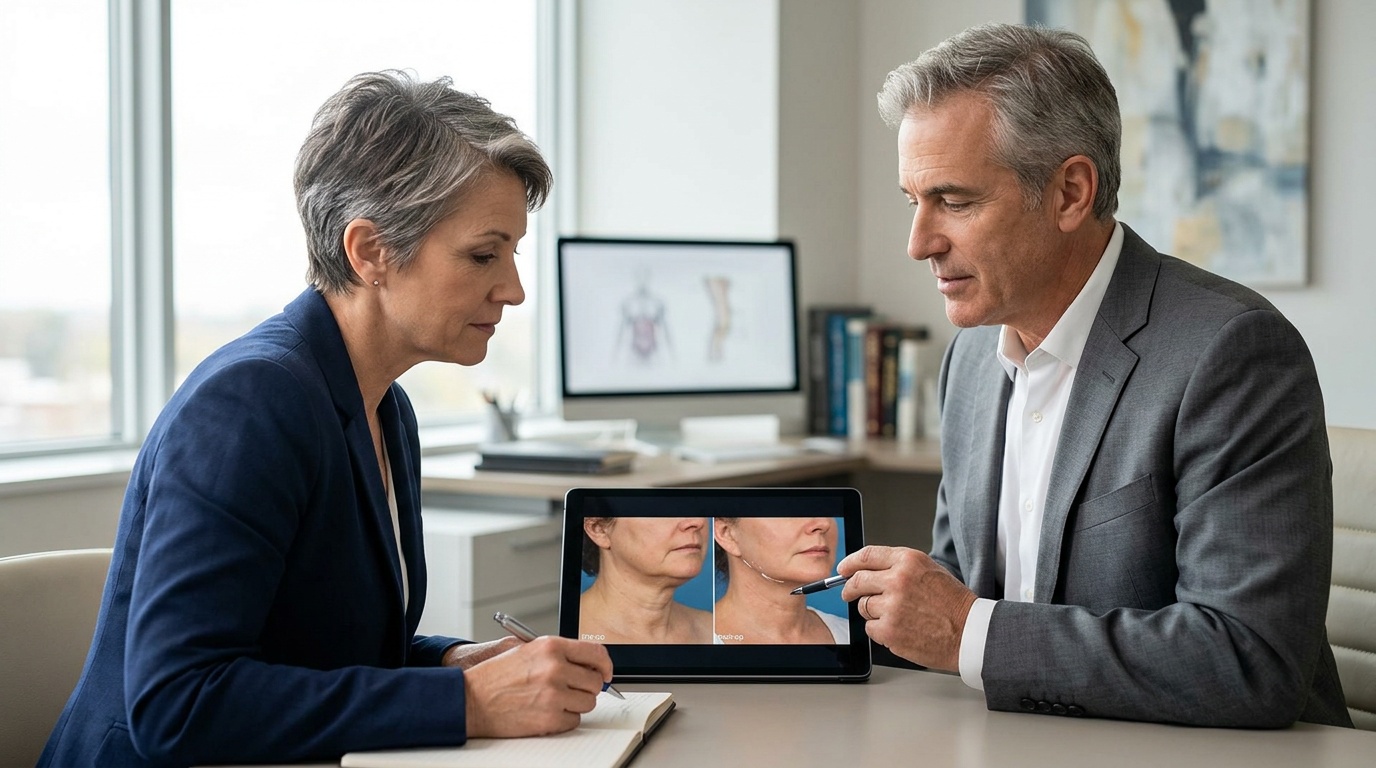
Photo galleries are most useful when they help you form precise questions, not when they serve as a scorecard. Look for balanced change across the cheeks, lower face, jawline, and neck. Consider whether the patient remains recognizable, whether the mouth and eyes look relaxed, and whether the result fits the person’s age and facial proportions. A subtle photograph may still represent a meaningful change in person.
Your decision should also account for what images cannot display: retaining-ligament anatomy, soft-tissue descent, skin elasticity, facial asymmetry, scar position, and medical history. A qualified surgeon should explain the proposed lift direction, tissue release, anesthesia, follow-up schedule, and risks in language you understand. If a gallery pressures you toward a specific technique, return to the more useful question: which plan fits your anatomy?
What Should You Confirm Before Scheduling Facelift Surgery?
Before scheduling surgery, confirm that you understand the treatment plan rather than relying on the technique’s name. Ask how your anatomy influences the recommended approach, where incisions may be placed, how swelling and bruising may affect daily activities, and when follow-up examinations occur. You should receive information about wound care, activity restrictions, scar maturation, temporary numbness, facial tightness, and symptoms requiring prompt contact with the surgical team.
Ask how photographs are selected and documented. Clarify whether they show the surgeon’s own patients, whether consent was obtained, when postoperative views were taken, and whether lighting or positioning differs between visits. A gallery cannot establish a surgeon’s suitability by itself. Board certification, facelift experience, facility standards, communication, privacy, and continuity of care also deserve attention during an in-person evaluation.
Albert Plastic Surgery’s Nanolift™ information provides background on another facelift approach, but it cannot determine your candidacy. Medical conditions, medications, nicotine exposure, prior facial surgery, and healing tendencies may affect planning. Only a qualified clinician who examines you can discuss whether surgery is appropriate and what expectations are medically reasonable.
What Is the Most Reliable Way to Interpret Deep Plane Facelift Results?
The most reliable interpretation combines photographs with anatomy, healing time, surgical details, and a conversation with a qualified plastic surgeon. Before and after photos of deep plane facelift may illustrate how deeper tissue repositioning affects facial contour, but they remain examples rather than forecasts. A natural-looking outcome is defined by proportion, preserved identity, and appropriate movement. Not by the greatest visible tightening.
Use online images to prepare for consultation. Bring examples that represent qualities you value, then ask which elements may be reasonable for your face and which may not. Your plan, recovery, incision pattern, and final appearance may differ from every image you review. Careful planning and honest discussion cannot remove every surgical risk, but they support informed consent and a decision grounded in your goals, health, and anatomy.
References
Frequently Asked Questions
How much younger do you look after a deep plane facelift?
The degree of visible rejuvenation after a deep plane facelift varies from person to person and cannot be predicted from photographs alone. Before and after photos of deep plane facelift show changes such as reduced jowling and improved cheek, jawline, and neck contour, not a specific number of years. Realistic expectations are best discussed during a consultation that examines your skin quality, anatomy, and goals.
What is the downside of a deep plane facelift?
The downsides of a deep plane facelift include swelling, bruising, scarring, asymmetry, changes in sensation, and the possibility that the outcome differs from expectations. The technique also cannot stop normal aging or correct every facial concern. Candidacy and risk require individualized clinical assessment, since before and after photos do not reveal tissue quality or how healing will progress.
What does a deep plane facelift look like after 10 years?
How a deep plane facelift looks after 10 years cannot be predicted from any photograph, because aging continues after surgery and long-term appearance depends on individual anatomy, skin quality, and healing. Mature before and after photos may show a settled result at the moment they were taken, but they cannot forecast each patient's long-term outcome.
How long does it take to look normal after a deep plane facelift?
Recovery after a deep plane facelift varies by patient, so there is no single timeline that applies to everyone. Early photos may show swelling, bruising, incision redness, and temporary firmness, while contour and scar maturation continue at different rates over months. Always ask when an after photo was taken, because timing affects what the image shows.
How painful is a deep plane facelift?
Pain after a deep plane facelift differs for each patient and cannot be described as one universal level. Photographs communicate contour changes only, not sensation, comfort, or the recovery experience. Anesthesia options, recovery expectations, and pain management should be reviewed during a consultation based on your health history.
Can before and after photos of a deep plane facelift predict my result?
Before and after photos of deep plane facelift cannot predict your individual result, because each image reflects another patient's anatomy, healing, and photo timing. Useful photos serve as educational examples rather than promises, and candidacy is never determined from photographs alone. Albert Plastic Surgery maintains a dedicated service page for deep plane facelift surgery in New York City with Dr. Albert.
Why do deep plane facelift results look less pulled in photos?
Deep plane facelift photos may appear less pulled because the technique repositions the deeper facial layers, including the SMAS and connected soft tissue, as a unit instead of relying on skin tightening alone. When deeper tissues move upward and backward, skin can be redraped with less tension. The exact dissection and lift vector still depend on individual anatomy.
Leave a Reply