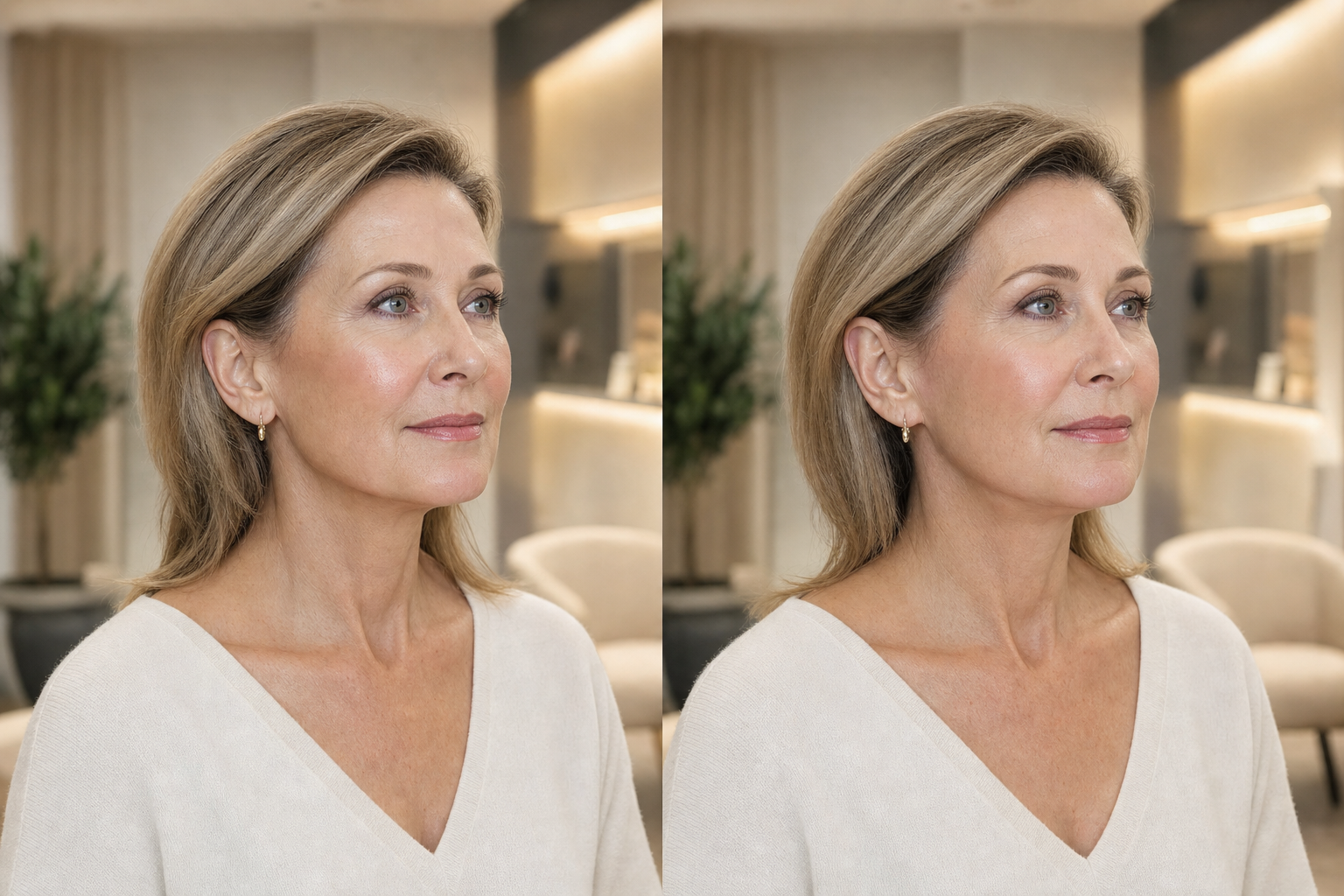
deep plane facelift vs mini facelift
Choosing between a deep plane facelift vs mini facelift begins with understanding what each operation is designed to change. A deep plane approach addresses deeper facial support and may be considered when aging affects the cheeks, lower face, jawline, and neck. A Mini Facelift generally involves a more limited lift for selected patients with earlier or more localized laxity. The appropriate operation depends on facial anatomy, skin quality, tissue descent, health history, and the result you hope to achieve.
Key Takeaways
- The deep plane facelift works beneath the muscle layer to reposition deeper facial support, while the mini facelift lifts more superficial tissue through a shorter approach.
- Patients whose aging affects the cheeks, lower face, jawline, and neck together may benefit from the deeper, more comprehensive correction.
- A mini facelift can suit patients with early or localized laxity who want meaningful improvement with a more limited procedure.
- Candidacy depends on facial anatomy, skin quality, the degree of tissue descent, health history, and the outcome you hope to achieve.
- A personal consultation with a board-certified plastic surgeon remains the most reliable way to determine which operation matches your anatomy and goals.
This educational guide is written by Dr. Mark G. Albert, MD, FACS, certified by the American Board of Plastic Surgery and a Fellow of the American College of Surgeons. Medical review: Dr. Mark G. Albert, reviewed February 2025. Online information cannot replace an examination and consultation with a qualified plastic surgeon.
What is deep plane facelift vs mini facelift?
A deep plane facelift releases and repositions facial tissues beneath the superficial musculoaponeurotic system, commonly called the SMAS. This deeper dissection can address descent through the midface and lower face, with planning that may include the jawline and neck when those areas require treatment. The goal is not to pull the skin tightly, but to restore the position of underlying facial tissues while allowing the skin to rest over the revised contours.
A Mini Facelift is typically more limited in incision pattern, tissue elevation, and treatment area. It may suit a person with mild to moderate skin laxity, early jowling, or a small amount of lower-face descent. The term “mini” is not a standardized measurement. Surgeons may use it to describe different operations, so the planned anatomy, technique, anesthesia, facility, and follow-up deserve more attention than the label alone.
| Consideration | Deep plane facelift | Mini Facelift |
|---|---|---|
| Typical treatment focus | Deeper support and broader facial descent | More localized lower-face laxity |
| Potential facial areas | Midface, cheeks, lower face, jawline, and selected neck concerns | Often the jawline and lower face, depending on the surgical plan |
| Patient selection | More advanced or distributed tissue descent may be present | Earlier aging changes and adequate skin elasticity may be present |
| Extent of surgery | Generally more comprehensive | Generally more limited |
Benefits of deep plane facelift vs mini facelift

The potential benefit of a deep plane facelift is its ability to reposition deeper facial structures rather than relying primarily on skin tension. This may support a softer transition through the cheek, lower face, and jawline when those tissues have descended together. A properly planned operation can help avoid an overly pulled appearance, though no technique can guarantee a particular aesthetic result. A deep plane approach may be less suitable when a patient’s concerns are limited, when medical factors increase risk, or when the proposed scope exceeds the person’s goals.
The benefit of a Mini Facelift is proportionate treatment for carefully selected patients. A more limited operation may address early jowls or mild laxity without undertaking a broader facial dissection. It can be a reasonable consideration when the midface remains well positioned and the principal concern is confined to the lower face. It may not provide the same correction when cheek descent, substantial neck laxity, pronounced skin excess, or wider facial aging is present. The Mini Facelift should be understood as a specific surgical plan, not simply a shorter version of every comprehensive facelift.
Patients often ask whether one approach is better. The answer depends on the anatomy being treated, the surgeon’s examination, realistic expectations, and the balance between correction and surgical extent. Neither operation stops future aging, and longevity varies with genetics, skin elasticity, weight changes, sun exposure, smoking, and postoperative care. Complications can include bleeding, infection, delayed wound healing, unfavorable scarring, numbness, hairline changes, facial nerve injury, asymmetry, contour irregularity, and the possibility of revision. The risk profile varies with the technique and the individual.
Cost comparisons also require care. A deep plane mini facelift cost discussion may involve different definitions of “mini,” surgeon fees, anesthesia, operating-room charges, facility standards, garments, medications, and postoperative visits. A quote with a lower price may not represent the same operation or level of care. During consultation, ask which tissue planes will be treated, which facial regions are included, who provides anesthesia, where surgery occurs, and how follow-up and complication management are organized. Albert Plastic Surgery maintains a dedicated live service page for Mini Facelift. Candidacy, technique, recovery, risks, and outcomes require individualized clinical assessment.
How to Choose deep plane facelift vs mini facelift
Choosing a deep plane facelift vs mini facelift should begin with the areas that show aging, not with a procedure label or advertised price. During an examination, a qualified plastic surgeon evaluates skin elasticity, cheek descent, jowling, jawline definition, neck laxity, facial proportions, prior surgery, general health, and your tolerance for recovery. A Mini Facelift may be considered when laxity is mild, localized, and concentrated in the lower face. A more comprehensive deep plane operation may be discussed when tissue descent extends through the cheeks, midface, lower face, jawline, or neck. The appropriate plan cannot be determined from photographs or an online questionnaire alone.
Ask the surgeon to describe the actual operation in anatomical terms. The word “mini” does not identify a uniform technique, and terms such as deep plane, vertical facelift, or vertical restore may be used differently among practices. Clarify the incision pattern, tissue plane, areas of elevation, expected effect on the midface and neck, treatment of excess skin, anesthesia plan, surgical facility, and follow-up schedule. If your concern includes upper-face aging, ask how the proposed facelift addresses the face as a whole rather than focusing only on the neck or jawline. A clear explanation should connect each surgical step with a specific concern identified during your examination.
Which surgeon and facility questions deserve attention?
When evaluating the best deep plane facelift surgeons for your needs, review credentials and technique-specific experience together. Dr. Mark G. Albert, MD, FACS, is certified by the American Board of Plastic Surgery and is a Fellow of the American College of Surgeons. In consultation, ask how frequently the surgeon performs the proposed operation, how patient selection is determined, and whether photographs show patients with facial anatomy and aging patterns similar to yours. Ask how bleeding, wound-healing concerns, asymmetry, nerve-related complications, scar issues, and contour changes are managed if they occur. Marketing language should not substitute for informed discussion of limitations and risk.
Facility and anesthesia details belong in the same review. Confirm whether surgery occurs in an appropriately accredited setting, such as one recognized by AAAASF, AAAHC, or The Joint Commission, and ask who administers and monitors anesthesia. Smoking and nicotine exposure can impair circulation and wound healing, so disclose current or past use along with medical conditions, allergies, and medications to the surgical team. Recovery plans should address swelling, bruising, numbness, incision care, activity restrictions, transportation, and access to postoperative assessment. Feeling ready to resume routine activities does not mean that visible swelling, scar maturation, or altered sensation has fully resolved.
How should facelift cost estimates be compared?
Comparing a deep plane mini facelift cost requires an itemized estimate rather than a single headline figure. Determine whether the quote includes the surgeon’s fee, anesthesia, facility charges, preoperative testing, garments, medications, postoperative visits, and treatment of an unexpected concern. Confirm whether the proposed surgery is a limited lower-face procedure or a broader operation involving the midface, jawline, and neck. Geographic pricing also varies, and a national fee average, even when accurately reported, does not predict a personalized New York City quote. The financial discussion should reflect the surgical plan and continuity of care, not just the shortest incision or fastest projected recovery.
Key insight: The soundest choice is the operation that matches the distribution of facial aging, your health profile, and your expectations. Request a written plan, ask which concerns may remain untreated, and allow enough time for questions before deciding. Candidacy, technique, recovery, risks, and outcomes require individualized clinical assessment.
Frequently Asked Questions
Is a deep plane facelift better than a Mini Facelift?
Neither operation is universally better. A deep plane approach may be appropriate when aging affects several connected areas, such as the cheeks, midface, lower face, jawline, and neck. A Mini Facelift may be considered when laxity is milder or concentrated in the lower face. The best choice depends on anatomy, skin quality, facial proportions, health history, expectations, and the amount of correction desired. An in-person examination is needed before a surgeon can recommend a technique.
Who may be a candidate for a Mini Facelift?
Someone with early jowling, limited lower-face laxity, and relatively preserved cheek and neck position may be considered for this more localized operation. A Mini Facelift may not address substantial midface descent, marked neck laxity, significant skin excess, or aging distributed across the face. The word “mini” does not describe one standardized procedure, so patients should ask which tissues will be lifted, which areas will be treated, and which concerns may remain.
Does a Mini Facelift lift the midface and neck?
Sometimes, but the answer depends on the specific surgical design. Many limited facelifts focus primarily on the lower face and jawline. They may provide less correction in the midface or neck than a more comprehensive operation. A consultation should include a direct discussion of cheek position, nasolabial folds, neck contour, platysmal laxity, skin redundancy, and the expected boundaries of treatment. Patients should not assume that a procedure name defines its full extent.
What are potential deep plane facelift complications?
Possible complications include bleeding or hematoma, infection, delayed wound healing, unfavorable scars, numbness, hairline changes, asymmetry, contour irregularity, facial nerve injury, and the need for revision. Risk varies with surgical technique, anatomy, medical conditions, nicotine exposure, medications, anesthesia, and postoperative care. Contact the surgical team promptly for concerning swelling, increasing pain, fever, drainage, skin color changes, breathing difficulty, or any symptom that seems unusual after surgery.
How long do facelift results last?
There is no universally applicable duration for facelift results. Aging continues after surgery, and longevity is influenced by genetics, skin elasticity, weight changes, sun exposure, smoking, and general health. Swelling, bruising, numbness, and scar maturation can continue after routine activities resume. A qualified plastic surgeon can provide a more individualized recovery discussion after examining your face and reviewing your medical history.
Leave a Reply