deep plane facelift anesthesia
Deep plane facelift anesthesia is not one fixed protocol. A deep plane facelift may be performed with local anesthetic, intravenous sedation, or general anesthesia, depending on the surgical plan, medical history, comfort needs, and the anesthesiologist’s assessment. Understanding these choices can make a consultation more productive and help set realistic expectations about awareness, sensation, monitoring, and recovery.
Key Takeaways
- A deep plane facelift can be performed under local anesthetic, intravenous sedation, or general anesthesia, and the safest option depends on the surgical plan and each patient's medical history.
- The anesthesiologist plays a central role in selecting the appropriate level of sedation after reviewing your health profile and comfort needs.
- Understanding your anesthesia choices before surgery helps you ask informed questions about awareness, sensation, and monitoring during the procedure.
- Recovery expectations differ across anesthesia types, so discussing these details during your consultation leads to a smoother experience overall.
At Albert Plastic Surgery, Dr. Mark G. Albert, MD, FACS, evaluates anesthesia as part of the complete facelift plan rather than as an isolated decision. Dr. Mark G. Albert reviews anesthesia as part of individualized facelift planning. Candidacy, technique, recovery, risks, and outcomes require individualized clinical assessment.
What is deep plane facelift anesthesia?
Deep plane facelift anesthesia describes the method used to control discomfort and maintain patient safety during surgery beneath the superficial musculoaponeurotic system, commonly called the SMAS. According to StatPearls, a deep plane facelift may be performed under local anesthesia, with intravenous medication such as propofol, or under general anesthesia. Muscle relaxants may sometimes be avoided when facial-nerve monitoring or stimulation is part of the surgical approach.
With local anesthesia, medication is placed in the operative tissues to reduce sensation. Tumescent anesthesia may add diluted local anesthetic and fluid to the treatment area. Sedation can range from light medication, in which a patient remains responsive, to deeper intravenous sedation, in which awareness and memory may be limited. “Awake,” “twilight,” and “conscious sedation” are not interchangeable technical guarantees, so the anesthesia professional should explain the intended level of alertness before surgery.
General anesthesia creates unconsciousness and typically includes airway support. Local anesthesia with sedation can reduce exposure to general anesthesia, yet it does not remove the need for careful screening, monitoring, emergency readiness, and post-anesthesia observation. The appropriate choice depends on operative length, tissue dissection, anxiety, airway considerations, medications, health conditions, and the facility where surgery occurs. No anesthesia method is risk-free, and a patient should receive individualized advice from the surgeon and qualified anesthesia professional.
Benefits of deep plane facelift anesthesia
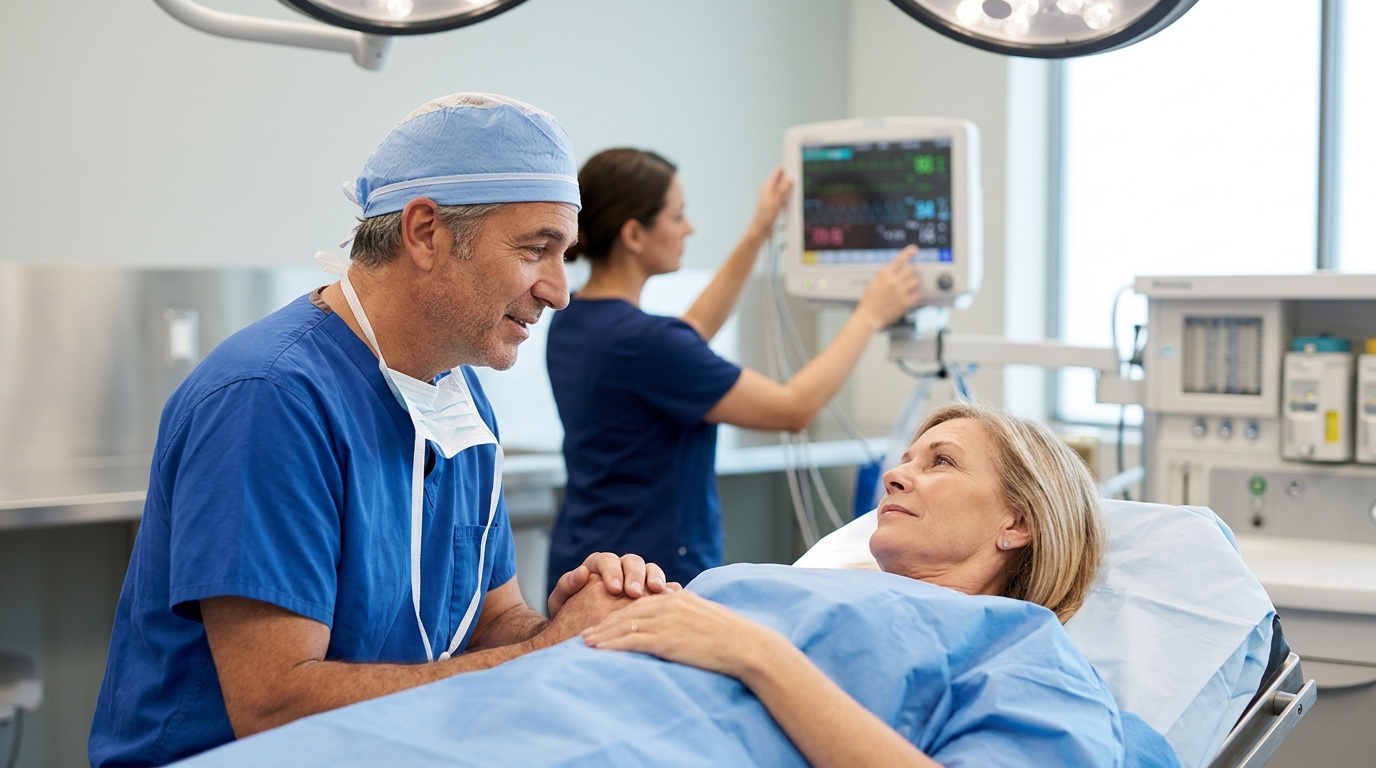
The principal benefit of a carefully selected deep plane facelift anesthesia plan is alignment between patient comfort and surgical requirements. Local anesthetic can numb the operative field, while intravenous medication may ease anxiety and reduce awareness of portions of the procedure. General anesthesia may be appropriate when a patient prefers complete unconsciousness or when the planned operation and medical assessment support that approach. The decision should account for breathing, cardiovascular health, prior anesthesia experiences, allergies, medication use, and anticipated postoperative observation.
Some patients value remaining responsive enough to communicate during portions of surgery, particularly when facial movement or nerve function is being assessed. That does not mean the operation is sensation-free or that every patient is a candidate for an awake approach. Pressure, pulling, movement, sounds, and intermittent discomfort can occur even when the skin and deeper tissues are numbed. Additional medication may be needed, and the anesthesia team must continuously assess breathing, oxygenation, blood pressure, heart rhythm, and responsiveness.
Key insight: A 2023 case series in an AAAASF Class A facility described 100 deep plane facelift patients treated with tumescent anesthesia. The authors reported one hematoma, five soft-tissue wound infections, three areas of wound-edge ischemia, and three temporary depressor angularis oris nerve palsies. These findings came from one practice and setting, with limitations in follow-up and generalizability. They should not be treated as a universal complication rate or a promise of similar results.
Anesthesia planning may also support focused facial-nerve assessment when muscle relaxants are not used, as described in StatPearls. Facility standards, trained personnel, sterile technique, rescue equipment, and recovery monitoring remain essential regardless of whether medication is local, intravenous, or general. The American Society of Anesthesiologists’ current standards and guidance address pre-anesthesia evaluation, monitoring, fasting, sedation, and post-anesthesia care. A Mini Facelift may involve a different operative plan, so its anesthesia discussion must also be individualized rather than inferred from deep plane surgery.
Choosing deep plane facelift anesthesia is ultimately a medical decision, not a preference that can be separated from technique, facility, and patient health. The Mini Facelift is directly within the client-directed facelift scope, but neither procedure should be selected from an online description alone. A private consultation allows the surgical and anesthesia teams to discuss comfort, awareness, medical risks, monitoring, discharge planning, and the safeguards appropriate to the individual patient.
How to Choose deep plane facelift anesthesia
Choosing deep plane facelift anesthesia begins with a private discussion about the operation, your health, and your comfort preferences. Ask which options the surgeon considers appropriate for the planned dissection: local anesthetic alone, local anesthetic with intravenous sedation, or general anesthesia. The answer may depend on the surgical duration, extent of tissue release, anxiety level, airway history, cardiovascular condition, prior reactions to anesthesia, current medications, and the anesthesia professional’s evaluation. A method that worked well for another patient may not be suitable for you.
Ask the team to define terms such as “awake,” “twilight,” “conscious sedation,” and “deep sedation” in practical terms. With local anesthetic and lighter sedation, you may respond to instructions and communicate during portions of surgery. Deeper medication can make you sleepy and reduce memory, while general anesthesia produces unconsciousness and usually requires more extensive airway management. Even an awake approach can involve pressure, pulling, sounds, and movement. Request a clear explanation of how discomfort will be assessed, how medication may be adjusted, and what happens if the original plan no longer provides adequate comfort.
The anesthesia professional should complete a pre-anesthesia assessment rather than relying only on a brief day-of-surgery conversation. Bring an accurate medical history, including allergies, prior airway difficulties, sleep-related breathing concerns, prescription and nonprescription medications, alcohol or nicotine use, and previous anesthesia experiences. Ask about fasting instructions, medication adjustments, intravenous access, oxygen support, blood pressure and heart rhythm monitoring, facial-nerve assessment, nausea prevention, and post-anesthesia observation. Do not change medication or fasting practices without specific instructions from your surgical and anesthesia teams.
Facility standards deserve the same attention as the medication choice. Ask where surgery will occur, which professionals will provide anesthesia, whether the facility is appropriately accredited or regulated, what emergency equipment is available, and who remains responsible for care after the operation. A practice-specific report in a peer-reviewed case series described 100 deep plane facelift patients receiving tumescent anesthesia in an AAAASF Class A facility. The authors reported their own discharge process and complications, but those findings cannot establish a universal safety profile or discharge expectation. Facility credentials and protocols should be verified for the location in which your surgery is planned.
Finally, ask for a written plan covering the expected awareness level, anesthesia provider, monitoring, recovery area, responsible adult arrangements, and instructions for contacting the practice. The decision should support both surgical precision and patient safety, without pressure to select a particular method. At Albert Plastic Surgery, Dr. Mark G. Albert reviews these factors as part of individualized facelift planning. A consultation with a qualified surgeon and anesthesia professional is the appropriate setting to determine which approach fits your anatomy, medical history, operative goals, and comfort needs.
Frequently Asked Questions
What anesthesia is used for a deep plane facelift?
Anesthesia may include local anesthetic alone, local anesthetic with intravenous sedation, or general anesthesia. The selection depends on the surgical plan, expected duration, medical history, airway considerations, anxiety level, facility protocols, and the anesthesia professional’s assessment. A qualified clinician should explain the recommended approach during consultation rather than applying a universal formula.
Can a deep plane facelift be performed under local anesthesia?
Yes. Local anesthetic can be used for selected patients and surgical plans. It numbs the operative tissues but does not necessarily eliminate awareness of pressure, movement, pulling, sounds, or touch. Some patients receive intravenous medication at the same time to promote relaxation and reduce awareness. Local anesthesia may not be appropriate for every patient, and the surgeon and anesthesia professional must assess comfort, health status, and operative requirements together.
Is sedation usually added to local anesthesia?
Sedation may be added, but there is no single routine that applies to every facelift. Light sedation can leave a patient responsive, while deeper sedation may produce substantial drowsiness and limited memory. Terms such as “twilight,” “awake,” and “conscious sedation” can describe different experiences in different practices. Ask which medications are planned, who administers them, how breathing and circulation will be monitored, and what level of responsiveness is expected.
What does a patient feel during an awake or tumescent facelift?
Numbing medication is intended to reduce sharp sensation, yet pressure, stretching, vibration, movement, or brief discomfort can still occur. Tell the surgical team promptly about discomfort rather than trying to tolerate it silently. Medication and the operative plan may be adjusted when clinically appropriate. Recovery instructions, transportation, observation, and follow-up should be arranged before surgery, and urgent symptoms after surgery require prompt contact with the practice or emergency medical care.
Leave a Reply