
mini facelift near me
Searching “mini facelift near me” often starts with a practical question: what will the final bill be? Broader national facelift totals, including surgeon, anesthesia, and facility fees, are roughly $12,000 to $30,000. The exact cost depends on the planned operation and what the quote includes.
Key Takeaways
- Mini facelift pricing varies widely, and quotes in the several-thousand-dollar range often exclude anesthesia and facility fees that larger national averages include.
- A full facelift cost estimate typically bundles the surgeon's fee with anesthesia and facility charges, so comparing numbers across practices requires checking what each quote covers.
- The final price reflects the specific surgical plan, since a smaller correction generally takes less operative time than a more extensive lift.
- Cost should be weighed alongside surgeon qualifications, technique, and safety rather than treated as the only deciding factor.
- A consultation with a qualified facelift surgeon is the most reliable way to get an accurate, individualized estimate for your anatomy and goals.
Mini Facelift is one facelift option offered by Dr. Mark Albert. A price estimate is most useful when you know which professional fees and services it covers. A consultation is needed to develop an individualized plan and quote.
How Much Does a Mini Facelift Cost: What Does That Number Actually Include?
These practice-quoted examples are not a not assured price or a complete regional average. Before comparing quotes, ask whether the total includes the surgeon’s fee, anesthesia, facility charges, and planned follow-up care. Search phrases such as “mini facelift cost near me” cannot show whether two estimates cover the same services.
The Three Fees Behind Every Quote: Surgeon, Anesthesia, and Facility
The surgeon’s fee covers the surgeon’s work and varies with the operation’s scope and complexity. Anesthesia fees depend on the plan and its provider; facility charges relate to the setting where surgery takes place. A quote listing only the surgeon’s fee may not reflect the total amount due. Request an itemized estimate and confirm whether preoperative assessments, routine follow-up visits, and charges for unforeseen needs are included or billed separately.
| Quote component | What to verify |
|---|---|
| Surgeon | Is the amount the surgeon’s fee only, or part of a bundled total? |
| Anesthesia | Is this fee included, and what anesthesia plan does the estimate assume? |
| Facility | Does the quote include the surgical facility and its associated charges? |
| Other services | Are assessments and follow-up visits included, or separately charged? |
Mini Facelift Cost Ranges in Philadelphia, Pittsburgh, Richmond VA, and New York
Available published examples do not establish reliable average prices for all four cities. The listings may differ in scope and included fees, so they are not direct comparisons. For “mini face lift cost philadelphia,” “mini facelift pittsburgh cost,” or “mini facelift richmond va,” ask local practices for current, itemized estimates rather than treating one city’s listing as a benchmark.
Why One Office Quotes $3,500 and Another $12,000: What a Low Quote Leaves Out
A lower advertised figure may be a starting surgeon’s fee rather than the full payment. Confirm the planned procedure, whether the estimate is all-inclusive, and which services could generate additional charges. Ask for the quote in writing so you can compare its components, not just its headline.
How Patients Actually Pay: Savings, CareCredit, and Financing Plans Compared
Payment approaches have different tradeoffs, and availability varies by practice and lender. Consider the full repayment amount and your budget before choosing.
- Personal savings: Avoids borrowing costs, but may require a longer saving period.
- CareCredit or similar financing: May spread payments over time; review interest, promotional terms, fees, and payment deadlines directly with the lender.
- Practice payment plans: Ask whether one is offered, what it covers, and when payments are due.
What Is a Mini Facelift, and How Does It Compare to a Full or Deep Plane Facelift?
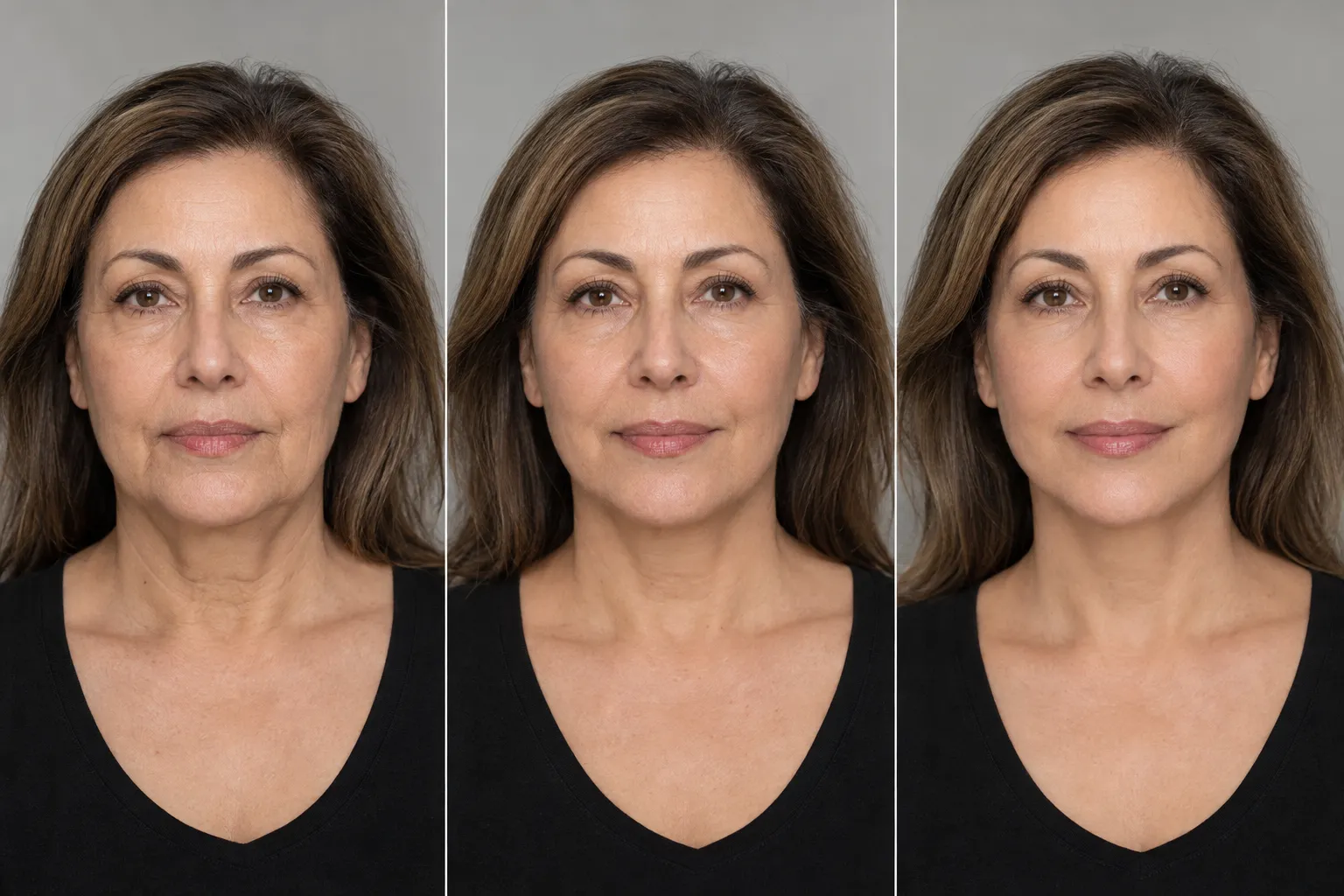
What a Mini Facelift Treats: Jowls, Jawline, and Mild Neck Laxity
A mini facelift generally focuses on early lower-face changes, such as jowling and reduced definition along the jawline. The extent of correction depends on anatomy and the technique selected. It may not address more substantial facial or neck laxity to the same degree as a broader operation. The name alone does not define how much tissue will be treated; ask the surgeon to explain the planned incisions and areas of correction.
Mini vs. Full vs. Deep Plane: Incisions, Tissue Handled, Anesthesia, and Downtime
“Mini” describes a more limited approach, while a full facelift may address a wider area. A deep plane facelift involves a distinct approach to deeper facial tissues. Incision placement, tissue handling, anesthesia, and recovery depend on the operation and the patient. No single approach is right for everyone, and a shorter-sounding procedure name does not predict downtime. Dr. Albert’s Deep Plane Facelift and Mini Facelift are distinct options requiring individualized assessment.
Who Is a Good Candidate, and Who Is Better Served by Another Approach
A person with mild lower-face laxity who wants a measured change may wish to discuss a limited lift. More extensive laxity, expectations beyond the procedure’s scope, or health factors affecting surgery may lead a clinician to discuss another plan or advise against surgery. Candidacy, anesthesia, risks, and recovery require assessment by a qualified clinician; this article cannot determine whether the procedure suits you.
How Long Mini Facelift Results Typically Last
Patients commonly report results lasting about five to ten years before ongoing aging changes become more apparent. This general range is not a promise or expiration date. Individual results vary with anatomy, healing, aging, and the operation performed. Ask the surgeon what changes the procedure is intended to address and what it is unlikely to change.
Mini Facelift Recovery: What the First Days and Weeks Physically and Emotionally Feel Like
Recovery deserves as much attention as the procedure. Healing varies with the operation, anesthesia, and individual health. A Mini Facelift still involves surgery, so plan time away from routine activities and follow your surgical team’s instructions. Published guidance indicates that swelling and bruising often settle over seven to ten days, while full healing can take longer. Your surgeon should provide a schedule tailored to your procedure and circumstances.
A Week-by-Week Physical Timeline: Swelling, Bruising, Work, and Exercise
First several days: Expect swelling, bruising, tightness, and a need to rest. Keep commitments light, arrange practical help if your surgeon recommends it, and avoid judging the result while tissues are swollen.
About one week: Bruising and swelling commonly improve over seven to ten days, though duration and visibility differ. Some people may feel ready for desk work; timing depends on healing, comfort, and job demands. Weeks two and three: Patients are commonly advised to avoid exercise and bending over for two to three weeks. Resume activity only according to your clinician’s guidance. Much of the surgical benefit may be visible by one month, but healing continues beyond that point.
The Emotional Recovery No One Warns You About (Weeks 1-3)
Early recovery can bring hope, impatience, worry about swelling, or uncertainty as your appearance changes from day to day. Temporary bruising and uneven swelling can make progress difficult to assess, but that reaction does not predict the final outcome. Give yourself room to heal, limit repeated photo-checking if it increases distress, and raise concerns with your surgical team at follow-up. If emotional distress feels intense or persistent, contact your clinician rather than trying to interpret healing alone.
Risks and Complications to Discuss Before You Commit
Facelift surgery has risks, and an article cannot determine an individual’s risk level. Ask the surgeon to explain possible bleeding or hematoma, infection, problems with wound healing or scarring, changes in sensation, nerve injury, anesthesia-related complications, asymmetry, and dissatisfaction with the result. Ask how complications are monitored, whom to contact after hours, and which symptoms need urgent assessment. Follow your care team’s directions and seek urgent medical attention for symptoms that may signal an emergency. Candidacy, technique, recovery, and risk require individualized clinical assessment.
Reading Before-and-After Photos With a Critical Eye
Photos can help you understand a surgeon’s aesthetic approach, but cannot predict your result. Look for comparable angles, lighting, facial expressions, and image distance. Ask whether examples show patients with similar concerns and anatomy, and how long after surgery each image was taken. A posed photograph may not show scars, movement, or the full course of healing. Discuss what the images demonstrate and whether the planned Mini Facelift addresses your goals.
How to Choose a Mini Facelift Surgeon Near You: A Vetting Checklist
Searching “mini facelift near me” can help you find local offices, but distance should be a convenience factor, not the main measure of qualifications. Start with clinicians whose training and credentials you can verify, then assess their facelift experience, communication, and follow-up care. A Mini Facelift is surgery, and the right plan depends on your anatomy, health, and goals. Evaluate the full experience, not just a nearby address or appealing estimate.
Why “Near Me” Should Mean Shortlisted by Criteria, Not Closest Zip Code
Consider whether you can attend required appointments, reach the practice, and contact the care team with questions. Evaluate the surgeon’s training, facility arrangements, explanation of risks, and postoperative follow-up plan. If traveling, ask how in-person assessments and recovery check-ins will be handled before and after your return home. Location matters, but should not replace a clear surgical plan and a relationship in which you feel comfortable raising concerns.
Credentials, Facelift Focus, and Before-and-After Volume to Verify
Confirm board certification through the relevant specialty board, and check the surgeon’s medical training and hospital or facility arrangements. Ask how often the surgeon performs facelift procedures, including the proposed approach. Review photographs for consistent lighting, angles, and healing intervals; ask whether examples reflect concerns similar to yours. Photos show an aesthetic approach, not a predicted result. Verify credentials and experience through reliable professional sources, and ask the surgeon to explain limitations as plainly as potential benefits.
The Exact Questions to Ask at a Consultation, and Which Answers Should Worry You
Ask for specific, understandable answers. Be cautious if you feel pressured to book, receive guarantees, or cannot get a clear explanation of the plan, costs, risks, and follow-up process.
- What changes do you expect this operation to address, and what will it not address?
- Why are you recommending this technique for my anatomy and goals?
- Who provides anesthesia, and where will surgery take place?
- What risks and possible complications should I understand?
- What services are included in my written estimate, and what may be billed separately?
- Who should I contact with a concern during recovery, including after hours?
Comparing Dr. Mark Albert, Albert Plastic Surgery
Dr. Mark Albert is a board-certified plastic surgeon in New York City and a Fellow of the American College of Surgeons. His practice offers individualized facelift surgery. Review his professional biography, then ask how the proposed approach fits your goals, what it can and cannot address, and how care is organized around surgery. He is one qualified option to evaluate, not a substitute for your own consultation and assessment.
| What to assess | Dr. Mark Albert | What to confirm for your own decision |
|---|---|---|
| Credentials | Board-certified plastic surgeon; Fellow of the American College of Surgeons | Verify certification and training through appropriate professional sources |
| Practice location | New York City | Consider travel, appointments, and access to follow-up |
| Care planning | Individualized facelift surgery | Ask how the recommendation addresses your anatomy, goals, and risks |
Mini Facelift Cost and Surgeon Questions: Your FAQs Answered

Is a Mini Facelift Cheaper Than a Full Facelift or Deep Plane Facelift, and by How Much?
A more limited operation may cost less than a broader procedure, but there is no fixed difference for every patient. Surgical scope, anesthesia, facility, and surgeon’s fee affect the estimate. Ask for an individualized written quote for the proposed operation rather than assuming “mini” guarantees a particular price.
How Do I Know if a Quote Is Fair for My City?
Compare itemized estimates for the same planned procedure and fee categories. A local price alone cannot establish value or quality. Confirm what is included, what could be billed separately, and whether the estimate changes if the surgical plan changes. Look for a transparent quote you understand, not simply the lowest advertised amount.
What Should I Bring to My Consultation?
Bring written questions, your priorities, and relevant medical and surgical history, including a list of medications and supplements for your clinician to review. You may bring a trusted support person to help remember details. Ask for time to consider the plan and written cost information before deciding.
When Should I Schedule a Consultation With Dr. Mark Albert?
Schedule when you are ready to discuss your goals, hear the limitations and risks, and consider recovery demands without pressure to proceed. Local access can help, but a thoughtful consultation is the more useful next step. You can request an appointment with Dr. Mark Albert through the consultation page.
Frequently Asked Questions
How much does a mini facelift cost near me?
The final figure depends on the planned operation and whether the quote includes surgeon, anesthesia, and facility fees. An individualized consultation is needed for an accurate estimate.
What is included in a mini facelift quote?
A mini facelift quote may include the surgeon's fee, anesthesia, facility charges, and follow-up care, or it may list only the surgeon's fee. Always request an itemized written estimate and confirm whether preoperative assessments, routine follow-up visits, and charges for unforeseen needs are included or billed separately.
Why do mini facelift prices vary so much between practices?
A lower advertised figure is often a starting surgeon's fee rather than the full amount due. Compare written, itemized quotes component by component rather than by headline number.
How can I pay for a mini facelift?
Mini facelift payment options commonly include personal savings, financing through lenders such as CareCredit, and practice payment plans where offered. Savings avoid borrowing costs but may take longer to accumulate. Review interest rates, promotional terms, fees, and payment deadlines directly with any lender before committing.
How long does a mini facelift last?
Mini facelift results commonly last about five to ten years before ongoing aging changes become more apparent, according to patient reports. This range is a general guide, not a promise or expiration date. Individual results vary with anatomy, healing, the aging process, and the specific operation performed.
What does a mini facelift treat compared to a full facelift?
A mini facelift generally addresses early lower-face changes such as jowling and reduced jawline definition, while a full facelift may treat a wider area of the face and neck. A deep plane facelift uses a distinct approach to deeper facial tissues. Incisions, tissue handling, anesthesia, and recovery depend on the operation and the patient.
Who is a good candidate for a mini facelift?
A good mini facelift candidate is generally someone with mild lower-face laxity who wants a measured improvement in jowls or jawline definition. More extensive laxity, expectations beyond the procedure's scope, or health factors affecting surgery may lead a qualified clinician to recommend a different plan. Candidacy requires an individualized consultation.
Leave a Reply